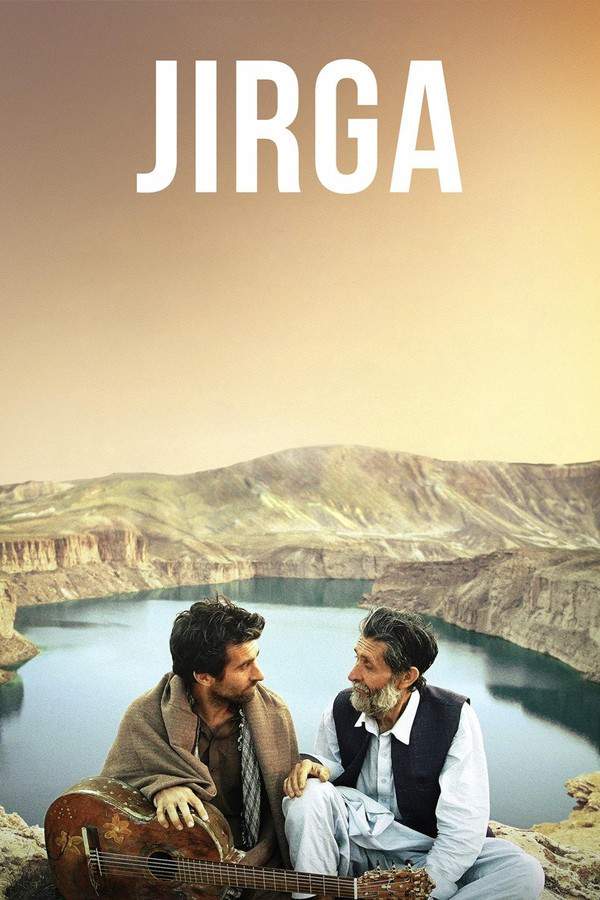
Jirga 2019

Directed by

Benjamin Gilmour
Made by

Lightyear Entertainment
Where to Watch Jirga
See current US streaming, rental, and purchase options for Jirga (2019) via JustWatch.

Fawesome
HD
FlixHouse
HD
Hoopla
SD
Kanopy
HD
Fandango at Home Free
HD
Filmzie
HD
Tubi TV
SD
Amazon Video
SD Fandango At Home
SD
Google Play Movies
SD
YouTube
SD Streaming availability powered by 
Jirga Plot Summary
Read the complete plot summary and ending explained for Jirga (2019). From turning points to emotional moments, uncover what really happened and why it matters.
During a helicopter raid, the Australian army sweeps a small Afghan village, Ghazi Ghar, in a bid to root out hidden Taliban fighters. The operation finds villagers defending their homes and families, and shots ring out as they try to shield one another. In the leaving chaos, Mike Wheeler—the young soldier in the midst of the action—unintentionally shoots and kills an unarmed man who steps into the doorway of his house; the man’s wife and children pull him back inside as the dust settles. The scene is stark and haunting, setting a tone of wartime fear, confusion, and the heavy weight of duty on those who hunt in the shadows of war.
Fast forward three years, and Mike Wheeler returns to Afghanistan, driven by a desire for forgiveness and a need to make amends with a substantial sum of money in hand. He lands in Kabul with a single purpose: to locate the family of the man he killed and offer restitution. His search quickly stalls when a man who had once arranged transport to the village refuses to help again, warning Mike that the journey is too dangerous. Undeterred, Mike hides in a curiosity shop to escape the noise of the city and, under the shopkeeper’s insistence, buys a guitar, a small beacon of normalcy amid the unsettled mission.
From Kabul, Mike seeks a path toward Ghazi Ghar and asks a hotel owner to arrange a ride with a Taxi Driver. The hotel owner balks at sending him into Kandahar Province, a Taliban stronghold, and offers instead to guide him only as far as Band-e-Amir Lake. Even this compromise leaves Mike restless, and he negotiates with the driver, offering more money to push further south. The two men stand on the brink of trust and language barriers, unable to communicate beyond gestures and stubborn resolve. That night, by the lake, Mike plays his guitar while the driver hums a Pashtun tune; Mike, ever adaptive, teaches the driver how the notes correspond to the strings, a moment of shared culture amid a sea of suspicion.
The following day brings a renewed push toward Ghazi Ghar. Mike offers even more money, and the driver finally agrees to drive to the village, though not without risk. At a roadblock, Taliban fighters open fire, prompting Mike to leap from the car and scramble down a cliff to escape. The pair never fully understand each other as Mike trudges through the desert, weakened by heat and dehydration, until Taliban fighters capture him and chain him in a cave. The tension tightens as the story moves from a personal quest to a raw clash of loyalties and reprisals.
In captivity, the Taliban commander—named Sher Khan in the narrative—deliberates how to handle the captured outsider. He chooses to hear Mike’s story first, speaking through an English-speaking Taleb who translates Mike’s account of the raid and his motive for returning. The commander is blunt: giving money as recompense would be seen as a betrayal, especially since many from Mike’s side have harmed their people. The conversation pivots on collective memory and individual guilt, framing forgiveness as a complicated but potentially transformative act.
As the caravan moves toward Ghazi Ghar, a important exchange unfolds: the English-speaking intermediary coaches Mike on how to say a sincere apology in Pashto, guiding him toward the moment when he will face the family he harmed. When they reach the village, Mike recounts the raid three years earlier and explains the motive behind his return—seeking forgiveness rather than retribution. The villagers guide him to the man’s family, where Mike offers his apology in Pashto. The man’s widow, Sherbano, reacts with tears and anger, throwing shoes in a display of hurt and judgment, while the two sons stare with a fierce mix of resentment and pain. The atmosphere is heavy with the gravity of a community weighing its own sense of justice against a soldier’s plea for mercy.
A village jirga, a traditional assembly of elders, is convened to decide Mike’s fate. The council entrusts Inam Khan, the son of the man who was killed, with the responsibility of delivering judgment. Inam steps through the crowd, a dagger raised briefly to Mike’s throat, then sheaths it and declares forgiveness. An elder’s voice echoes the prevailing sentiment: forgiveness is mightier and more honorable than revenge, signaling a quiet, symbolic victory for mercy over vengeance. The ritual closes with a sheep’s sacrifice to mark the ending of one chapter and the tentative beginning of another for Mike, who then leaves the village with a sense of responsibility fulfilled, though not erased.
Throughout, the film weaves a careful meditation on war, accountability, and cultural tension, showing how a single act can ripple through a community long after the gunfire has quieted. The story lingers on the moral complexity of choosing forgiveness in the aftermath of violence, the fragile bridges built between disparate worlds, and the enduring human need to seek peace even in the most unforgiving landscapes. In the end, the film leaves viewers with a quiet, unresolved reflection on whether mercy can truly heal the wounds of a war-torn past, and at what cost forgiveness must come.
Jirga Timeline
Follow the complete movie timeline of Jirga (2019) with every major event in chronological order. Great for understanding complex plots and story progression.
Raid on Ghazi Ghar: helicopter assault and a deadly mistake
Australian army helicopters raid Ghazi Ghar in search of hidden Taliban fighters. During the raid, Mike shoots and kills an unarmed man who steps into his doorway. The man's wife and children pull him back into the house as gunfire erupts around them.
Immediate aftermath: a village unsettled by the shooting
The raid continues as fear and tension spread through Ghazi Ghar. The shooting casts a pall over the village, with the family of the man who was killed left to process the tragedy. Villagers exchange wary glances as the soldiers push on.
Three years later: Mike returns to seek forgiveness
Three years after the raid, Mike returns to Afghanistan to search for the family and ask for forgiveness, bringing with him a large sum of money as recompense. He lands in Kabul and hopes to locate the family through a contact network he once relied on. The journey signals a change in his purpose from payment to reconciliation.
Reconnecting with the transport arranger and seeking shelter
In Kabul, Mike reconnects with a man who previously arranged his transport, but the man refuses to help, saying the venture is too dangerous. With options narrowing, Mike hides in an Afghan curiosity shop to avoid attention and ends up purchasing a guitar. The purchase foreshadows a new form of connection he seeks.
Hotel obstacles: Band-e-Amir Lake as a partial route
Mike asks a hotel owner to arrange a taxi to Ghazi Ghar, but the owner refuses the direct route to Kandahar and can only arrange a driver as far as Band-e-Amir Lake. The limitation highlights the danger of venturing into Taliban-controlled territory. Mike weighs the risk and continues to plan the journey toward the village.
Band-e-Amir: night of cultural exchange
At Band-e-Amir, the taxi driver sings a Pashtun song while Mike teaches him to match guitar strings to notes. The unlikely musical bond softens tension and deepens Mike's resolve to reach Ghazi Ghar. This late-evening moment foreshadows the collaboration that will follow.
The journey resumes: agreeing to drive to Ghazi Ghar
The next morning, the taxi driver agrees to drive to Ghazi Ghar and they begin the long, arduous trip toward the village. Language barriers persist, but the shared goal and the money on the line keep them moving. The road ahead is dangerous, but their cooperation grows.
Roadblock and escape: a near-miss at Taliban checkpoints
They are stopped at a Taliban roadblock and the driver warns Mike of the danger. Mike exits the car and scrambles down a nearby cliff to escape gunfire, with the Taliban not following. The narrow escape leaves him exhausted but determined to reach the village.
Capture and confinement: taken by the Taliban
Having trudged toward the village, Mike collapses from heat and dehydration and is found by Taliban soldiers who take him captive and chain him in a cave. The captivity sets the stage for the villagers' and militants' different perspectives on forgiveness. Mike's fate hangs on the mercy of his captors.
Sher Khan questions the purpose of mercy
The Taliban leader, Sher Khan, interviews Mike and questions the logic of forgiving him for the act years earlier. He notes the asymmetry between his people's suffering and Mike's single act. The conversation centers on whether forgiveness is the greater strength.
On the road to Ghazi Ghar: learning forgiveness in Pashto
Khan agrees to take Mike toward Ghazi Ghar, and an English-speaking Talib teaches Mike the Pashto phrase for asking forgiveness. This linguistic preparation symbolizes the film's central theme of reconciliation. The journey toward the village becomes a lesson in humility and apology.
Arrival in Ghazi Ghar: confronting the victim's family
Mike reaches Ghazi Ghar and explains that he killed a man in the raid. He apologizes to the man's family in Pashto, and the widow Sherbano cries while throwing shoes, as the two sons stare in anger. The village community watches the confrontation unfold.
Jirga decides: forgiveness by decree
A Jirga, or council of elders, convenes to decide Mike's fate. Inam Khan, the dead man's son, steps forward with a dagger but then chooses to forgive Mike, signaling a powerful moment of mercy. An elder proclaims that forgiveness can be mightier than revenge.
Rituals and departure: a village bids farewell
Mike participates in the ritual sacrifice of a sheep as part of the village's ceremony, marking the community's acceptance of forgiveness. After the rites, he quietly leaves Ghazi Ghar, carrying the weight of what has transpired. The journey away signals the end of his quest for absolution.
Jirga Characters
Explore all characters from Jirga (2019). Get detailed profiles with their roles, arcs, and key relationships explained.
Mike Wheeler (Sam Smith)
An Australian soldier haunted by guilt after killing an unarmed man during a raid. He travels back to Afghanistan seeking forgiveness and offers compensation, confronting cultural and linguistic barriers along the way. His attempt to make amends drives him through dangerous terrain as he questions duty, violence, and mercy.
Amir Tailbani (Amir Shah Talash)
A local intermediary who initially arranged Mike’s transport but refuses to help him when he arrives in Kabul. He embodies the fragile web of trust and risk in war-torn Afghanistan, illustrating the difficulties of aiding a foreigner in a dangerous setting.
Militant #1 (Janaat Gul Mastana)
A Taliban fighter encountered by Mike, representing the persistent threat in rural Afghanistan. The character embodies the danger and intimidation that pervades the landscape Mike must navigate.
Antiques Dealer (Kefayat Lag Humani)
A Kabul shopkeeper who helps Mike upon arrival and influences his decision to engage with Afghan culture, including obtaining a guitar that becomes a symbol of connection between strangers.
Dress Shop Owner (Mohammad Mosam)
Owner of the shop where Mike buys a guitar, illustrating ordinary commerce and small human touches amid conflict. This moment helps Mike blend into local life and reflect on his journey.
Hotel Receptionist (Naqibullah Khan Shinwari)
A Kabul hotel staff member who interacts with Mike during his search for transport, reflecting local caution and the limits of mobility in dangerous borderlands.
Roadblock Taliban (Samad Khan)
A Taliban fighter who blocks roads and ultimately captures Mike, underscoring the constant peril in insurgent-controlled areas and the obstacles to his mission.
Taxi Driver (Sher Alam Miskeen Ustad)
A Pashtun taxi driver who initially refuses to drive into Taliban territory but eventually accompanies Mike to Ghazi Ghar, bridging language gaps through shared songs and stories.
Bell Boy (Sharif Ullah)
A Kabul hotel bellboy who contributes to the atmosphere as Mike navigates his uncertain path, highlighting how ordinary locals are drawn into the broader conflict.
Jirga Settings
Learn where and when Jirga (2019) takes place. Explore the film’s settings, era, and how they shape the narrative.
Time period
Post-2001 Afghanistan
The events occur in the post-invasion era, when insurgency still undermines security in rural areas. Traditional practices like jirga coexist with foreign military actions, illustrating a society navigating conflict and reconciliation. The period emphasizes fragile stability, cultural rituals, and the hardship of rebuilding amid danger.
Location
Ghazi Ghar, Kabul, Kandahar Province, Band-e-Amir Lake
Ghazi Ghar is a small rural village in Afghanistan, depicted as a rugged community where families shield themselves from ongoing conflict. The narrative also travels through Kabul and Kandahar Province, with a detour to the Band-e-Amir lake area, highlighting contrasts between urban centers and remote villages. The setting features desert landscapes, roadblocks, and the looming Taliban presence that shapes Mike’s search for forgiveness.
Jirga Themes
Discover the main themes in Jirga (2019). Analyze the deeper meanings, emotional layers, and social commentary behind the film.
🕊️
Forgiveness
The film centers on a man seeking forgiveness for a killing he believes was misinterpreted during a raid. The Pashto apology scene and villagers’ willingness to listen explore moral responsibility and mercy. Forgiveness becomes a pathway to healing for both the victim’s family and the offender, suggesting mercy can be stronger than revenge.
⚖️
Justice
A jirga decides Mike’s fate, showing communal justice over personal vengeance. Elders weigh forgiveness against accountability, highlighting cultural rituals that guide conflict resolution. The process emphasizes collective voice and social harmony, reframing justice as mercy tempered with responsibility.
🎵
Cultural Exchange
Mike’s journey is a bridge between two worlds—the foreign soldier and Afghan villagers. Language barriers melt through music and shared moments, and the guitar becomes a symbol of empathy. Small acts of art and conversation humanize enemies and suggest reconciliation is possible even in war.

Coming soon on iOS and Android
The Plot Explained Mobile App
From blockbusters to hidden gems — dive into movie stories anytime, anywhere. Save your favorites, discover plots faster, and never miss a twist again.
Sign up to be the first to know when we launch. Your email stays private — always.
Explore the mobile appJirga Spoiler-Free Summary
Discover the spoiler-free summary of Jirga (2019). Get a concise overview without any spoilers.
In the aftermath of a harrowing overseas operation, an Australian soldier returns home carrying the weight of a mistake that continues to echo in his thoughts. The film opens on the quiet devastation that lingers long after the last shot has faded, painting Afghanistan as a landscape where the scars of war are as visible as the rugged mountains and bustling markets that surround them. The tone is contemplative and somber, a blend of stark realism and lingering melancholy that invites the audience to feel the lingering pulse of a place caught between conflict and the hope for peace.
Driven by an unshakable need for redemption, Mike Wheeler sets out on a perilous journey back to the country that haunts his conscience. Armed with a modest sum of money and a growing sense of responsibility, he navigates unfamiliar streets, the clamor of Kabul, and the stark beauty of the Afghan countryside. Along the way, small gestures—a guitar bought in a curiosity shop, a hesitant friendship with a local driver—hint at the fragile bridges he hopes to build. The world he re‑enters is both foreign and intimate, its cultural rhythms offering a stark contrast to the sterile discipline of military life and underscoring the film’s focus on personal connection amid sweeping geopolitical tides.
At its core, the story follows Mike as he confronts the lingering trauma of his past and seeks a path toward understanding. The narrative is less about action than about the quiet, internal struggle of a man wrestling with guilt, responsibility, and the possibility of forgiveness. Through measured pacing, evocative scenery, and understated performances, the film creates an emotionally charged atmosphere that asks whether mercy can ever truly mend the fractures left by war, leaving the audience to wonder how far a single act of contrition might travel in a world still reeling from conflict.
Movies with Similar Twists and Themes
Uncover films that echo the narrative beats, emotional arcs, or dramatic twists of the one you're exploring. These recommendations are handpicked based on story depth, thematic resonance, and spoiler-worthy moments — perfect for fans who crave more of the same intrigue.

Featured on this page

What's After the Movie?
Not sure whether to stay after the credits? Find out!
Check out our other apps:

SAT Sphere
Build confidence for the Digital SAT.

Mori Atlas
Discover wild places worth protecting.

Luntero
Search smarter for a home in Amsterdam.

Plot Explained
Unravel movie endings and hidden clues.

Pokechamp
Dive into Pokémon data and battle logic.

Driving Theory
Get ready for your European theory test.

Movie Dust
Plan your next cinema trip with ease.

Musemap
Find art and culture as you travel.

Selkobase
Compare credentials before committing.

Local Manual
Turn an unfamiliar country into practical next steps.

Lernavi
Compare school systems before your next move.

GymRoam
Find a workout stop wherever your plans take you.
Explore Our Movie Platform
New Movie Releases (2026)
Famous Movie Actors
Top Film Production Studios
Movie Plot Summaries & Endings
Major Movie Awards & Winners
Best Concert Films & Music Documentaries
Movie Collections and Curated Lists
© 2026 What's After the Movie. All rights reserved.
Privacy Policy