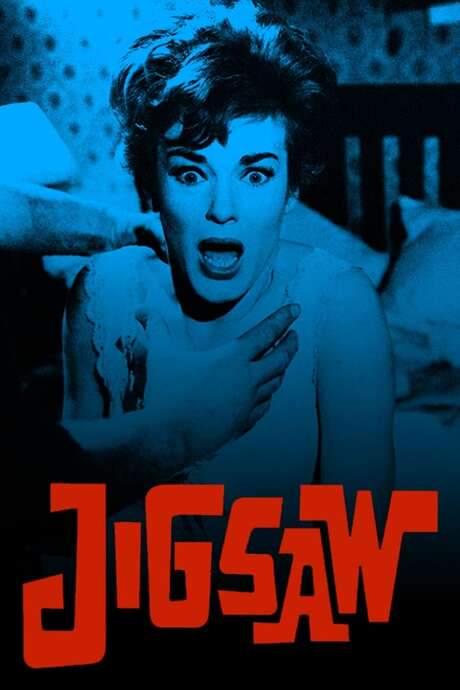
Jigsaw 1962

Directed by

Val Guest
Made by

Figaro Incorporated Production
Where to Watch Jigsaw
See current US streaming, rental, and purchase options for Jigsaw (1962) via JustWatch.

Cohen Media Amazon Channel
HD
Fawesome
HD
Kanopy
HD
Tubi TV
SD
Amazon Video
SD
Apple TV Store
HD
Fandango At Home
SD
Google Play Movies
SD
YouTube
SD Streaming availability powered by 
Jigsaw Plot Summary
Read the complete plot summary and ending explained for Jigsaw (1962). From turning points to emotional moments, uncover what really happened and why it matters.
A woman, later identified as Joan Simpson, argues with an unseen man; she wants to marry him, but he moves to attack. Her remains are later found dismembered and incinerated, along with a knife and a hacksaw, in a small furnace in Saltdean, near Brighton. The discovery sets off a tense investigation by two local detectives, who soon realize the case is as puzzling as it is grim.
The body cannot be identified at first, and the police lean toward a name that has surfaced through a clue: a suitcase with the initials JS at the scene leads them to think the victim could be Jean Sherman. This initial lead pushes the inquiry outward, as the team follows a trail that starts in Brighton, threads through Lewes, and even extends to Greenwich, as they methodically develop and chase down each possible line of inquiry. The search is careful and deliberate, driven by a need to separate fact from guesswork while keeping the case on a steady course.
DI Fellows goes to Jean Sherman’s house and finds that she is still alive, a startling turn that shifts the direction of the investigation. He uses his encounter to extract a name and a handwriting sample, both of which align with the evidence collected at the victim’s residence, providing a crucial link between the living woman and the dead one. The scene is punctuated by tense exchanges and calculated moves as the detective works to confirm his hunch with tangible proof, all while the clock ticks on the case.
Flashbacks in her story deliberately keep the viewer in the dark about the identity of the man named Campbell, a device that heightens the mystery and underscores the complexity of the truth the detectives are seeking. Miss Sherman herself reveals a one-night stand with the man described as Campbell, a detail that adds another layer to the web the investigators must untangle.
The team eventually tracks down and arrests a suspect described by several witnesses as the man who occupied the house, but the man claims he was merely a door-to-door salesman who was with the victim and denies any involvement in the murder. His account checks out on the surface, and the detectives are left to reassemble the fragments of testimony and circumstance to determine what truly happened.
After the dead woman is positively identified, the veteran inspector must break the devastating news to her parents, then grapples with a bold, almost audacious idea about another suspect. The plan is put into action through a standard procedure that is applied in an unorthodox fashion, and the move pays off in a way that forces the truth into the open. The suspect in question, Ray Tenby, admits knowledge of the death but maintains that it was an accident, a claim that initially resists refutation until the detectives uncover a crucial lie: Tenby had not bought the item he claimed to have bought on a Monday bank holiday, a detail that undoes his alibi and closes the circle on the case.
Jigsaw Timeline
Follow the complete movie timeline of Jigsaw (1962) with every major event in chronological order. Great for understanding complex plots and story progression.
Discovery of dismembered remains in Saltdean
A woman's remains are found dismembered and incinerated inside a small furnace at Saltdean near Brighton. The scene also contains a knife and a hacksaw, indicating a brutal disposal of the body. This grisly discovery triggers a murder investigation by two local detectives.
Initial investigation spurred by a burglary
Two local detectives investigate a minor burglary of leases at an estate agent's office, hoping it will illuminate the crime. As they chase the odd burglary pattern, the case widens beyond the scene and points toward a possible murder in Brighton and surrounding towns. The burglary pattern becomes a keystone linking to the dead woman’s fate.
Suitcase initials point toward a name
The dead woman is initially unidentified, but a suitcase with the initials JS is found at the scene. Police speculate the victim could be Jean Sherman based on the matching initials, though confirmation is still needed. The case tightens around the possibility that Sherman is connected to the murder.
Alias John Campbell rents the murder house
The main suspect is a man who used the alias John Campbell to rent the house where the woman was discovered. His false identity becomes a central thread investigators follow to uncover motive and opportunity. The rented residence anchors the link between the crime and the persons involved.
Handwriting sample links Sherman to the scene
DI Fellows visits Jean Sherman's house to obtain a name and address for a handwriting sample. The sample turns out to match handwriting found at the victim's house, providing a concrete connection to Sherman. This breakthrough pivots the investigation toward her.
Flashbacks reveal Sherman–Campbell connection
The film presents flashbacks about Miss Sherman, excluding the man John Campbell from view. She recalls a one-night stand with Campbell, hinting at a possible motive rooted in a personal history. The flashbacks complicate the trail and keep Campbell's identity ambiguous.
Arrest of a suspect with a plausible alibi
Investigators locate and arrest a suspect described by several witnesses as the man who occupied the house. He claims to be a door-to-door salesman who was with the victim but denies murdering her, and his story initially checks out. The inquiry must sift truth from a plausible alibi.
Victim identified; parents informed
After the dead woman is positively identified, the veteran inspector must tell her parents of the loss. The identification sharpens the focus on suspects and intensifies the emotional toll on the family. This moment marks a turning point in the case.
Wild theory shifts focus to a new suspect
The lead inspector develops a 'wild idea' about another suspect named Tenby and orders a standard procedure to test the theory. The method is non-standard, reflecting the detective's willingness to bend conventional rules to get results. The aim is to uncover a hidden link that explains the murder.
Tenby admits knowledge of the death
Tenby is interviewed and admits knowledge of the death, but claims it was accidental. He seems confident in that account until new inconsistencies emerge. His admission widens the conflict and keeps the case unresolved.
Tenby's alibi flaw revealed
Detectives discover Tenby has lied about buying something on a Monday bank holiday, a detail critical to supporting his accident theory. The falsified alibi undermines his entire narrative and points to a deliberate involvement. The lie becomes the turning point that challenges his credibility.
Investigation narrows to Tenby
With Tenby's credibility shattered, detectives close in on him as the likely killer. The combination of challenging alibis, investigative persistence, and cross-checking leads from Brighton to Lewes and Greenwich leads to a resolution. The case demonstrates the detectives’ methodical approach and how a single false detail can unravel a murderer.
Jigsaw Characters
Explore all characters from Jigsaw (1962). Get detailed profiles with their roles, arcs, and key relationships explained.
Det. Insp. Fred Fellows (Jack Warner)
A veteran inspector who leads the investigation with a calm, methodical approach. He pieces together leads across the Brighton area and uses a non-standard procedure to confirm his theory. His perseverance and sharp reasoning drive the case toward a breakthrough.
Jean Sherman
A living woman linked to the case who had a one-night stand with a man named Campbell. Her testimony and backstory help the detectives connect the victim to a name, while complicating alibis. She becomes a focal point in the search for identity.
Ray Tenby
A suspect who knew about the victim and the house, but who claims the death was accidental. His alibi is questioned as the investigation uncovers inconsistencies and lies about crucial details.
Mr Simpson
The victim's father, who receives the devastating news and must confront the reality of his daughter's death. His reaction illustrates the personal toll of the case and the pressure on investigators to deliver truth.
Mrs Simpson
The victim's mother, who shares in the grief and interacts with the detectives as the case unfolds. Her perspective underscores the human cost behind the mystery.
Det. Sgt. Jim Wilks
A seasoned detective who assists Fellows and contributes to the procedural work that keeps the investigation on track.
Sgt Gorman
A sergeant who helps manage leads and coordinate field work across locations as the case expands from Brighton to surrounding towns.
Jigsaw Settings
Learn where and when Jigsaw (1962) takes place. Explore the film’s settings, era, and how they shape the narrative.
Location
Saltdean (near Brighton), Lewes, Greenwich
The crime unfolds in a seaside English locale around Saltdean, with key action moving through nearby towns such as Lewes and Greenwich. The area combines quiet residential streets, small offices, and the coastline, creating a tense backdrop for a dispassionate police investigation. Investigators traverse the region as they piece together who the victim was and how the identity confusion began.
Jigsaw Themes
Discover the main themes in Jigsaw (1962). Analyze the deeper meanings, emotional layers, and social commentary behind the film.
🎭
Identity
The case hinges on who the victim really was and whether appearances hide the truth. False identities, such as the name John Campbell and the victim’s assumed identity, drive the plot and mislead both characters and viewers. The detectives must pierce the veil of disguise, using handwriting analysis and cross-referenced testimony to uncover reality.
🕵️
Investigation
The film emphasizes methodical police work: following up odd leases, tracking leads across Brighton-area towns, and interrogating suspects. The detectives build a case step by step, comparing alibis with physical evidence. The story revolves around patient deduction and the persistence required to connect disparate clues.
💡
Truth & Lies
Lies about identities and motives collide with stubborn facts, forcing the investigators to revise theories. A key suspect's alibi and a lie about a bank holiday purchase become turning points. The truth gradually emerges through careful reexamination of statements and documents.

Coming soon on iOS and Android
The Plot Explained Mobile App
From blockbusters to hidden gems — dive into movie stories anytime, anywhere. Save your favorites, discover plots faster, and never miss a twist again.
Sign up to be the first to know when we launch. Your email stays private — always.
Explore the mobile appJigsaw Spoiler-Free Summary
Discover the spoiler-free summary of Jigsaw (1962). Get a concise overview without any spoilers.
The quiet rhythm of the English coast is shattered when a woman’s body is found in a modest seaside house near Brighton, its secrets concealed behind a veil of salt‑laden air and the lingering echo of waves. The discovery draws the eye of a town that is both picturesque and shadowed, inviting curiosity about the lives that drift along its promenades and hidden alleys. From the outset, the film settles into a moody, almost claustrophobic atmosphere where the gentle sunrise over the sea contrasts sharply with the darkness lurking beneath the surface.
Enter Detective Inspector Fred Fellows, a seasoned officer whose methodical mind is tempered by a weary patience, and his partner Detective Sergeant Jim Wilks, whose sharp instincts often cut through the fog of uncertainty. Their partnership is less a clash of egos than a measured dance of complementary talents: Fellows’ disciplined approach balances Wilks’ gut‑driven inquiries, creating a compelling dynamic that drives the narrative forward. Their interactions are laced with understated tension, hinting at personal histories that inform their dedication to uncovering truth.
As the investigation unfolds, the detectives trace a trail that winds through the bustling streets of Brighton, the historic lanes of Lewes, and even reaches the distant docks of Greenwich. Each locale contributes its own texture—urban grit, historic solemnity, maritime bustle—painting a broader portrait of a region where old secrets linger in the corners of cafés and the shadows of old brickwork. The film’s tone remains relentless yet restrained, allowing the audience to feel the weight of each clue without rushing to resolution.
The story thrives on its atmosphere: rain‑slicked cobblestones, the distant call of gulls, and the ever‑present hum of the tide serve as a backdrop to a careful, almost reverent pursuit of answers. With a palpable sense of place and a pair of detectives whose quiet determination draws viewers deeper, the film promises an engrossing exploration of mystery, duty, and the unseen currents that shape human lives.
Movies with Similar Twists and Themes
Uncover films that echo the narrative beats, emotional arcs, or dramatic twists of the one you're exploring. These recommendations are handpicked based on story depth, thematic resonance, and spoiler-worthy moments — perfect for fans who crave more of the same intrigue.






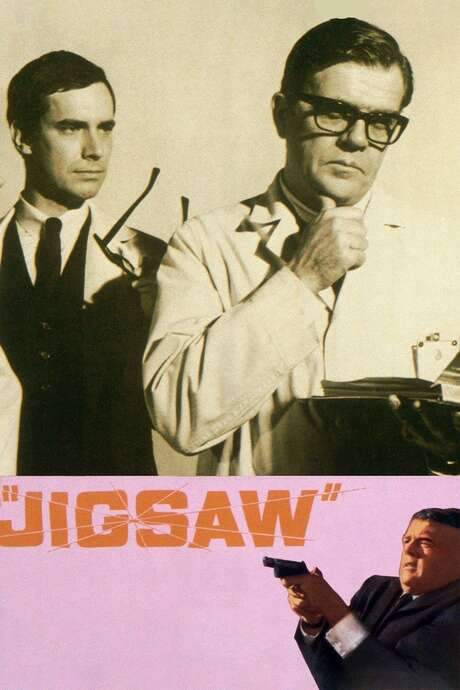


Featured on this page

What's After the Movie?
Not sure whether to stay after the credits? Find out!
Check out our other apps:

SAT Sphere
Build confidence for the Digital SAT.

Mori Atlas
Discover wild places worth protecting.

Luntero
Search smarter for a home in Amsterdam.

Plot Explained
Unravel movie endings and hidden clues.

Pokechamp
Dive into Pokémon data and battle logic.

Driving Theory
Get ready for your European theory test.

Movie Dust
Plan your next cinema trip with ease.

Musemap
Find art and culture as you travel.

Selkobase
Compare credentials before committing.

Local Manual
Turn an unfamiliar country into practical next steps.

Lernavi
Compare school systems before your next move.

GymRoam
Find a workout stop wherever your plans take you.
Explore Our Movie Platform
New Movie Releases (2026)
Famous Movie Actors
Top Film Production Studios
Movie Plot Summaries & Endings
Major Movie Awards & Winners
Best Concert Films & Music Documentaries
Movie Collections and Curated Lists
© 2026 What's After the Movie. All rights reserved.
Privacy Policy