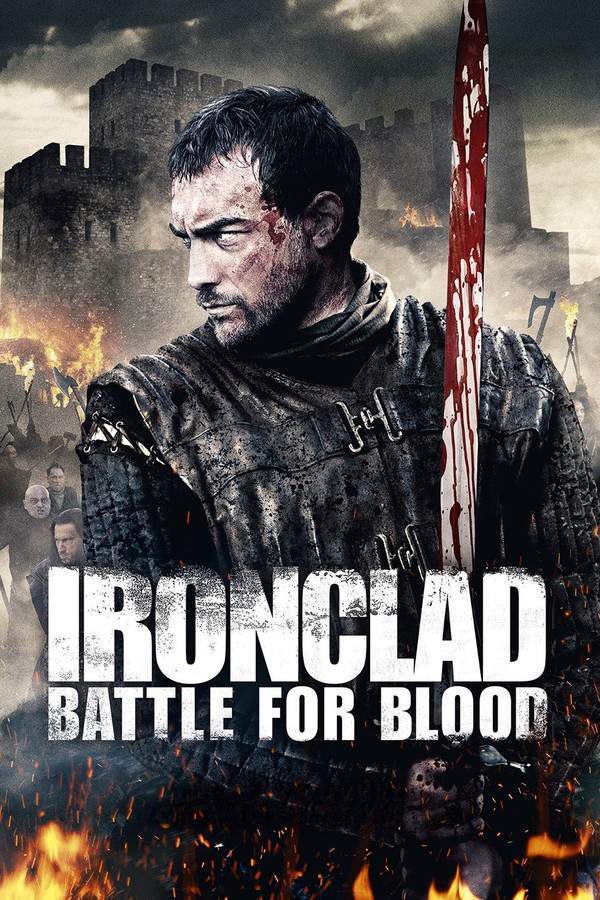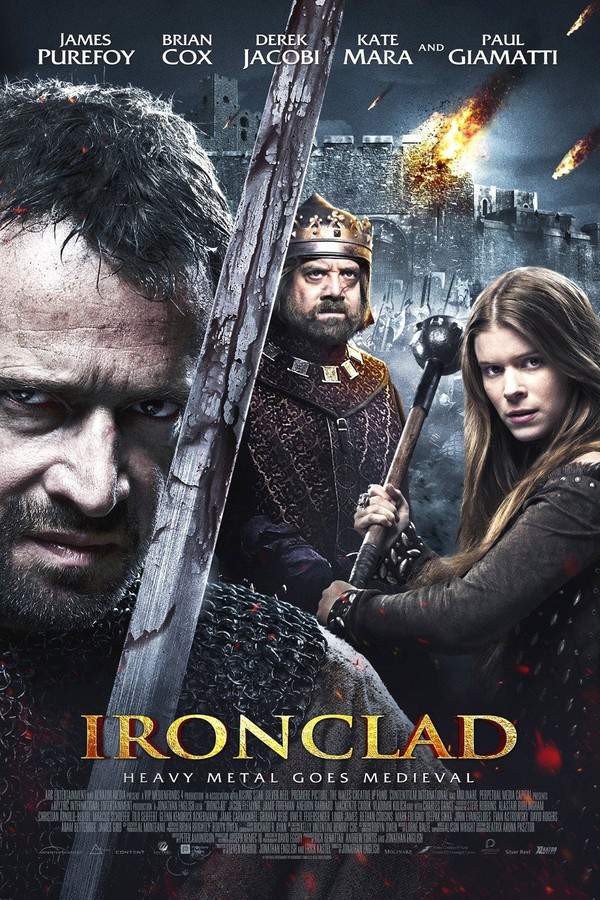
What Is Ironclad About?
The premise of Ironclad in 226 words, with nothing given away. The full story follows below.
In a bruised and turbulent medieval England, the aftermath of a historic charter leaves the kingdom teetering between fragile liberty and the iron grip of an assertive monarch. The landscape is a patchwork of conflicted barons, restless peasants, and the echo of distant war drums, all underscored by the looming presence of King John, whose determination to re‑assert absolute authority casts a dark shadow over the realm.
Against this backdrop, a small band of Knights Templar ventures northward, bound by solemn vows and a shared sense of purpose. At their helm is Marshall, a seasoned warrior whose disciplined exterior hides a yearning for redemption and a quiet resolve to protect what he deems just. Drawn to the strategic stronghold of Rochester Castle, the knights prepare to become the bastion’s unexpected guardians, their presence a flash of austere honor amid the looming tide of royal forces.
The film breathes a gritty, foreboding atmosphere, where stone walls speak of centuries of conflict and the cold wind carries whispers of impending siege. Within the castle’s stone corridors, loyalty is tested, camaraderie flourishes, and personal bonds begin to surface—most notably through Isabel, the young wife of the lord who dwells inside. Their interactions hint at the human heart beating beneath the armor, setting the stage for a desperate stand where honor, faith, and survival are poised on a razor’s edge.
What Happens in Ironclad?
The complete story of Ironclad, from the first scene to the last, in 829 words (about 4 minutes). Spoilers throughout. Names in the text link to 1 cast member page.
Spoilers ahead
An epic prologue sets the stage for a brutal clash over power in medieval England, where the barons, aided by the Knights Templar, wage a long, hard-fought war against the tyrannical King John. In the wake of their victory, John signs Magna Carta, a document meant to grant rights to all English freemen. Yet the king soon regrets that concession and retaliates by hiring an army of pagan Danish mercenaries led by the warlord Tiberius to reclaim absolute authority and reshape the realm in his own image.
At Darnay Castle, Abbot Marcus guides three Templar knights on a pilgrimage toward Canterbury, where Marshall, one of the knights, is assured that his release from the Templar Order will be pursued in Canterbury. By dawn, John arrives with a formidable force, and he orders the execution of Baron Darnay for signing Magna Carta. The Abbot tries to intervene, but the king cuts off the Abbot’s tongue. Marshall and his companions fight fiercely against the Danish invaders; in the chaos, the Abbot is mortally wounded, and the two other knights fall. Marshall escapes with the Abbot’s lifeless body, breaking his vow of silence to vow that the sacrifice will not be in vain.
Upon reaching Canterbury, Marshall meets with Archbishop Langton, the champion of Magna Carta, and Baron William d’Aubigny, a former soldier turned wool merchant. Langton reveals that the Pope has sided with King John and that he himself faces excommunication for signing Magna Carta. The trio agrees that John must be halted, and their target becomes Rochester Castle, a strategic fortress that controls access to London and the south. D’Aubigny persuades three men to join the effort—his squire, Guy, and a repentant petty criminal named Jedediah—while a fourth companion declines. Seven riders set out for Rochester, only to discover that Danish mercenaries have already claimed the fortress; the fourth man had betrayed them.
The rebels strike first, killing the Danes and seizing Rochester Castle in the name of rebellion, much to the displeasure of Cornhill, the standing lord of the castle. When John’s army arrives to lay siege, the garrison holds the line and repels the initial assault. In the aftermath, Aubigny offers his men leave, but none accept. A second assault tests the defenders’ resolve, and the Danes’ siege tower is destroyed by a trebuchet crafted from within the castle. John’s forces shift to starvation tactics, while the Archbishop learns that Prince Louis is biding his time in France and negotiating with John, prompting swift action to resolve the crisis.
As winter settles, hunger gnaws at the defenders. Marshall secretly slips out at night, returning with food stolen from the Danish camp and lifting morale. His burgeoning bond with Isabel, Cornhill’s young wife, breaks through his vow of celibacy, changing the dynamics inside the besieged keep and complicating loyalties all around.
Tiberius intensifies the pressure with a bold night raid, slipping a small force over the walls to open the gates from within. Guy discovers the breach and raises the alarm, but Tiberius spearheads a brutal assault that leaves Aubigny wounded and the defenders reeling. Marshall, restored enough to don armor, charges the Danes on his war-horse, buying precious moments for survivors to retreat to the keep.
Aubigny is dragged before the king and witnesses the brutal fates that befall prisoners: hands are chopped off, and after a defiant reply, Aubigny himself suffers the same fate and is hurled by the castle’s trebuchet into a wall. Cornhill attempts to surrender but ends up taking his own life in his upstairs room. Meanwhile, the king’s engineers have been digging a mine beneath the keep. They set a pig-drawn blast and use it to ignite the foundation, crippling the structure and bringing down the walls just as the final assault begins.
The last defenders fall one by one, with Guy and Isabel among the few remaining and Marshall knocked unconscious by falling rubble. Guy goes out to fight, finding Tiberius in the melee, and is nearly killed until a recovered Marshall intervenes for a savage, decisive duel. Horns sound in the distance as the combined English rebel and French army arrives, sending John and the remaining Danes into a panicked retreat. Marshall meets Prince Louis and Langton at the castle gates, where Langton declares that Marshall is now free of the Templar oath. With a solemn nod to England’s evolving future, Marshall rides off with Isabel, while Guy, gazing at his fallen baron, quietly proclaims, “We held.”
We held
In the closing epilogue, King John dies during his retreat, and Rochester Castle is rebuilt—standing once again as a testament to endurance, as is Magna Carta, a symbol of restraint that continues to shape the land.
The story closes with a note that Rochester Castle’s reconstruction mirrors the enduring legacy of Magna Carta, both of which endure long after the tumult of war, and with the sense that a fragile balance between power and rights remains the defining struggle of the realm.
Ironclad Timeline: Every Key Event in Order
14 key events in the order they happen, from “Magna Carta triggers long struggle and royal backlash” to “Epilogue: John's death and Rochester's reconstruction”. 14 events name a place, across 6 locations.
- 1
Magna Carta triggers long struggle and royal backlash
In the prologue, the barons of England, aided by the Knights Templar, wage a war against King John that lasts more than three years. Magna Carta is forced upon the King, granting rights to freemen and limiting royal power. In a later twist, John regrets signing Magna Carta and hires an army of pagan Danish mercenaries led by the warlord Tiberius to restore his absolute authority.
When:Prologue Where:England
- 2
Abbot Marcus leads a Templar pilgrimage to Canterbury
Abbot Marcus guides three Templar knights on a pilgrimage toward Canterbury. They seek shelter from the rain at Darnay Castle, where they pause to rest and plan their route. Marshall is assured that his release from the Templar Order will be sought at Canterbury.
When:During pilgrimage to Canterbury Where:Darnay Castle
- 3
King John attacks Darnay Castle; baron hanged; Abbot tongue cut
By morning, King John arrives with his army and Danish mercenaries. Baron Darnay signs Magna Carta and is executed in retaliation for his act, while the Abbot is ordered to have his tongue cut out. The castle's defenders are left reeling as the King's power asserts itself.
When:Morning Where:Darnay Castle
- 4
Marshall escapes with the Abbot; two knights die; vow broken
Marshall and his two fellow knights fight the Danes to cover a retreat. Marshall escapes on horseback, carrying the wounded Abbot, while the other two knights are slain. The Abbot dies of his wounds, and Marshall breaks his vow of silence to declare that his sacrifice will not be in vain.
When:During the escape Where:Darnay Castle
- 5
Canterbury meeting; Langton and d'Aubigny plan to stop John
Marshall reaches Canterbury and meets Archbishop Langton and Baron William d'Aubigny. Langton reveals that the Pope has sided with King John and that he himself faces excommunication for Magna Carta. The trio resolves to stop John at Rochester Castle, a strategic stronghold in the rebellion.
When:After arrival Where:Canterbury
- 6
Aubigny recruits allies; depart for Rochester
Aubigny gathers support, recruiting three men along with his squire Guy and the petty criminal Jedediah. A fourth man declines, leaving seven fighters ready to march on Rochester. They depart Canterbury to strike at the stronghold and challenge John's control.
When:Departure Where:Canterbury region
- 7
Rochester Castle captured from Danish forces
Arriving at Rochester, Aubigny's party finds Danish mercenaries already inside. They fight and kill the Danes, claiming Rochester Castle for the rebellion, much to Cornhill's displeasure. The castle becomes a new focal point in the struggle against John.
When:Arrival Where:Rochester Castle
- 8
John's siege begins; garrison holds initial assault
John's army arrives and lays siege to Rochester Castle. The garrison repels the initial Danish assault, and the siege settles into a grinding contest as resources dwindle. The Archbishop learns that Prince Louis is waiting in France and negotiates with John to hasten an end to the conflict.
When:Initial siege Where:Rochester Castle
- 9
Winter hunger and Marshall's forbidden liaison
As winter approaches, hunger gnaws at the defenders. Marshall slips out at night to raid the Danish camp and returns with food to bolster morale. His actions coincide with a forbidden entanglement with Isabel, Cornhill's wife, breaking his Templar vows.
When:Winter Where:Rochester Castle
- 10
Tiberius initiates an inside job; second assault
Tiberius orders a new tactic, slipping a small force over the walls to open gates from within. Guy discovers the breach and raises the alarm, but Tiberius leads the assault into the castle grounds, slaughtering the garrison.
When:Pre-dawn of second assault Where:Rochester Castle
Show the other 4 events of Ironclad Hide the last 4 events
- 11
Aubigny is executed; Cornhill's fate; the keep is sabotaged
During the second assault, Aubigny is dragged before King John and forced to watch as the hands of two prisoners are chopped off; after a defiant exchange, he meets the same fate and is hurled by the castle trebuchet into a keep wall. Cornhill attempts to surrender but ends his life by hanging. John's engineers have prepared a mine beneath the keep's foundation, using pigs and fat to fuel its destruction.
When:Second assault Where:Rochester Castle
- 12
Final stand; relief forces arrive; Tiberius defeated
With the keep crumbling, the last defenders fall; Guy, Isabel, and Marshall remain. Marshall recovers and engages in a savage duel with Tiberius, emerging victorious. The distant horns announce the arrival of the combined English rebel and French army, forcing John and the Danes to retreat in panic.
When:Final assault Where:Rochester Castle
- 13
Gates of Rochester; Marshall's meeting with Louis and Langton
At the gates, Marshall meets Prince Louis and Archbishop Langton; Langton proclaims that Marshall is free of the Templar Order. He and Isabel ride away together as Guy salutes the fallen baron and says, 'We held.'
When:After relief Where:Rochester Castle Gates
- 14
Epilogue: John's death and Rochester's reconstruction
King John's death occurs during his retreat, and Rochester Castle is rebuilt to stand as a lasting symbol of Magna Carta. The stronghold endures as a testament to the rebellion and the enduring rights won for English freemen.
When:Epilogue Where:England
Who Are the Main Characters in Ironclad?
5 characters, among them Sir Thomas Marshall, Isabel and Baron William d'Aubigny: who each one is and the part they play in the story.
- ST
Sir Thomas Marshall
A Templar knight whose journey begins in shelter at Darnay Castle and culminates as the siege's pivotal defender. He breaks his vow of silence to promise that his sacrifice will not be in vain, and his leadership helps unify the besieged defenders. His arc embodies duty, courage, and the cost of rebellion.
- ⚔️ Knight
- 🛡️ Courage
- 🗡️ Duty
- I
Isabel
Baron Cornhill's young wife whose presence and feelings complicate the siege. Her relationship with Marshall tests loyalty and personal risk, illustrating how love can become both a source of strength and a vulnerability within a political conflict.
- ❤️ Forbidden love
- 💃 Noblewoman
- 🕯️ Courage
- BW
Baron William d'Aubigny
A former soldier turned wool merchant who drives the rebellion by recruiting men and joining the Rochester defense. He endures wounds and setbacks, ultimately facing a brutal fate as the siege tightens its hold. His leadership mirrors the broader sacrifices made in pursuit of a political cause.
- 🛡️ Leader
- ⚔️ Warrior
- 🧭 Strategy
- KJ
King John
The tyrannical monarch who signs Magna Carta under pressure and then seeks to reclaim absolute authority, often through mercenary power. His siege tactics and political scheming shape the fate of Rochester and the realm, embodying the central conflict between power and law.
- 👑 Tyrant
- ⚔️ War
- 🗂️ Politics
- T
Tiberius
Danish warlord leading the mercenaries hired by King John, orchestrating stealthy incursions to breach the castle. His interventions escalate the siege into brutal, organized assaults and test the defenders' resolve.
- 🗡️ Mercenary
- 🧭 Tactics
- 🗺️ Invasion
Where and When Is Ironclad Set?
Ironclad is set in Darnay Castle, Canterbury and Rochester Castle (Early 13th century (circa 1215–1216)). Here is why the time and place matter to the story.
When
Early 13th century (circa 1215–1216)
Set in the immediate aftermath of Magna Carta, during a period of baronial revolt and royal resistance. The season moves through the Harsh winter siege, testing endurance, resources, and loyalty. This era is characterized by siege warfare, shifting allegiances, and political maneuvering as England grapples with King John’s attempt to reclaim authority.
Where
Darnay Castle, Canterbury, Rochester Castle
The action centers on key southern English strongholds. Darnay Castle serves as the initial refuge where the Templar knights are trapped and where the rebellion begins to form. Canterbury acts as a political hub for Magna Carta discussions and the strategic planning to oppose King John. Rochester Castle becomes the final fortress that the rebels defend against a coordinated assault, symbolizing the struggle to control southern England.
- 🗺️ England
- 🏰 Castles
- ⚔️ Siege
What Are the Themes of Ironclad?
3 ideas the story keeps returning to, among them Rebellion, Love and Duty and Siege and Survival.
-
01
Rebellion
A coalition of nobles and soldiers bands together to challenge royal authority and revive Magna Carta rights. The campaign hinges on strategic sieges and daring offensives that redefine loyalty and power. The narrative underscores the high stakes of resisting perceived tyranny.
-
02
Love and Duty
Isabel's relationship with Marshall tests vows of celibacy and unwavering allegiance. Personal desire collides with political obligation, highlighting the human costs of war. The romance adds emotional tension to the gritty realities of siege warfare.
-
03
Siege and Survival
Rochester Castle becomes a laboratory of medieval siegecraft, featuring trebuchets, covert breaches, and a mine under the keep. The defenders improvise from within, using ingenuity to blunt the assault. Hunger, strategic raids, and courage drive the culmination of the siege.
What Kind of Film Is Ironclad?
Dark in tone, with fast pacing and a straightforward story, going by the plot summary.
- Tone
- Dark
- Pacing
- Fast
- Story
- Straightforward
- Intensity
- High
- Ending
- Bittersweet
A relentlessly brutal and grim medieval war film that traps the viewer in a desperate siege, characterized by extreme violence, claustrophobic tension, and a heavy exploration of honor, sacrifice, and the high cost of defiance.
- brutal
- grim
- desperate
- claustrophobic
- oppressive
- heroic
- medieval siege
- tyranny and rebellion
- honor and vows
- survival
Content notes: graphic war violence, torture, mutilation, amputation, execution.
Quiz
How well do you remember Ironclad? Test yourself on the story.