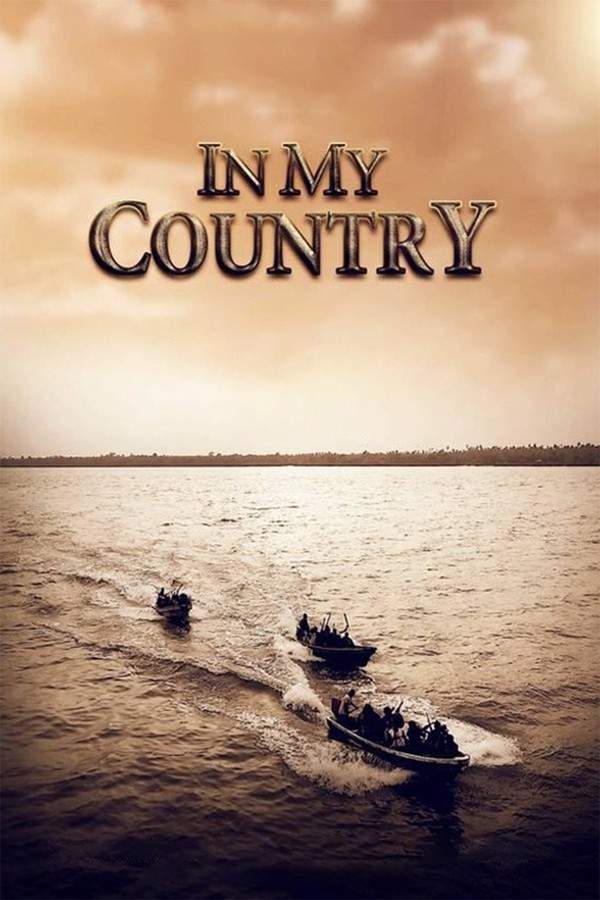
In My Country 2005

Directed by

John Boorman
Made by

Sony Pictures Classics
Where to Watch In My Country
See current US streaming, rental, and purchase options for In My Country (2005) via JustWatch.







In My Country Plot Summary
Read the complete plot summary and ending explained for In My Country (2005). From turning points to emotional moments, uncover what really happened and why it matters.
Set against the mid-1990s Truth and Reconciliation Commission hearings in South Africa, this reflective drama follows a white Afrikaner broadcaster named Anna Malan as she covers a nation grappling with memory, guilt, and the possibility of new beginnings. Starring Juliette Binoche as Anna Malan, Samuel L. Jackson as Langston Whitfield, and Brendan Gleeson as De Jager, the film explores how personal lives intersect with a collective past that refuses to stay buried.
As Anna travels the country with her colleagues, she is joined by her Black sound engineer partner, Dumi Mkhalipi, and by Langston, an American journalist sent to interrogate a former South African Army colonel accused of human rights abuses. What begins as a straightforward assignment gradually deepens into a nuanced examination of restorative justice and the philosophy of Ubuntu — the belief that a universal bond unites all humanity even when the recent past is marked by violence and division. The hearings reveal the stark asymmetry of victims and perpetrators, most of whom are Black and white respectively, though one session centers on Black guerrillas who killed a white farming family, challenging the usual narrative of white guilt.
Langston’s arrival and evolving friendship with Anna and Dumi add layers to the reporting. He starts with skepticism toward Ubuntu, shaped by a long American history with racism, but his attitude begins to soften as he and Anna grow closer, despite their differing worldviews. Their professional mission becomes a personal journey as they seek truth, sometimes clashing over editorial choices, yet gradually recognizing the humanity behind each story.
The investigation takes a decisive turn when Langston interviews De Jager, a white officer who insists he was merely following orders yet believes he has become a scapegoat. Through De Jager’s testimony, Langston and Anna uncover a hidden farm near Anna’s family property, used by the South African military to torture and kill African National Congress guerrillas. They also recover the body of a former guerrilla, an discovery that forces De Jager to reveal more about the higher-ups who ordered or concealed abuses. The possibility of amnesty through the TRC becomes a central tension, as De Jager’s fate hinges on whether his actions were proportionate to the objectives he pursued.
Anna’s personal life intersects with the ongoing moral reckoning when she confronts her brother Boetie about his complicity in the past horrors. The revelation is devastating: Boetie takes his own life. The family’s tragedy ripples outward as Anna’s mother confesses an extramarital affair with a Chilean poet, adding another layer of guilt and concealment to a country already wrestling with its own sins. In the wake of these revelations, Anna shares her romantic affair with Langston with her husband, and, after an initial storm, he finds it within himself to forgive. The three-way reconciliation hints at a broader healing that the country hopes to achieve, even as personal loyalties are strained.
The danger and volatility surrounding Dumi’s past as an informer catch up with him. On a later trip, a gang murders Dumi in retaliation for actions that had previously betrayed people to the police. Langston is left to reflect on the fragility of forgiveness in a landscape where violence continues to echo the old order. Anna, confronting the weight of collective guilt, pleads for the land itself to forgive its people, seeking a future built on accountability, remembrance, and mercy rather than retribution.
In the closing notes, the film situates the intimate stories within the larger truth-telling project: more than 21,800 victims testified to the Truth and Reconciliation Commission, and 1,165 perpetrators received amnesty under the peace process. The narrative remains a meditation on how a society can confront its darkest chapters while learning to coexist with the truth, demanding mercy where possible and demanding accountability where necessary.
In My Country Timeline
Follow the complete movie timeline of In My Country (2005) with every major event in chronological order. Great for understanding complex plots and story progression.
Anna begins covering the TRC hearings
Set during the 1995-1996 Truth and Reconciliation Commission hearings, Anna Malan starts reporting from Cape Town and travels with the process across the country. Her work places her at the center of South Africa's reckoning with the past. The reporting strains her relations with her parents and brother as post-Apartheid realities press in.
Meeting Dumi and Langston
At a Cape Town press conference, Anna meets her Black colleague Dumi Mkhalipi and American journalist Langston Whitfield. They form a working relationship to cover the TRC hearings. Whitfield's initial hostility toward White South Africans is confronted as he begins to collaborate with them.
Team travels the country to cover the TRC
Anna, Dumi, and Langston travel across South Africa to cover the hearings, witnessing victims testifying and perpetrators confessing under the framework of restorative justice and Ubuntu. The trio's reporting becomes a narrative thread through the nation’s healing process. Their perspectives begin to intertwine as the hearings progress.
Car breakdown in Gramadoelas
Their car breaks down in Gramadoelas, forcing them to spend the night at the home of an Afrikaner farmer. The unexpected stay highlights cultural and ideological tensions, but also moments of shared humanity and uneasy hospitality. The episode deepens the characters' understanding of each other.
De Jager interview
Langston interviews De Jager, a former South African Army colonel accused of human rights violations. De Jager insists he was following orders and casts himself as a scapegoat for higher-ups. The interview foreshadows the strategic revelations that follow.
Whitfield's incendiary article
Whitfield writes a sensationalist piece for the Washington Post, published on the front page. The article heightens tension between the international press and South African audiences. Anna confronts him about the piece’s impact on perceptions of justice and reconciliation.
Reconciliation with Anna and Whitfield
The two later reconcile after Anna convinces him that not all whites are guilty and by introducing him to her parents, who help him reevaluate his views. Trust begins to replace earlier tensions as shared humanity takes precedence. Their professional bond deepens into a complicated personal rapport.
Discovery of the torture site and incriminations
Using De Jager's information, Langston and Anna locate a farm near Anna's family homestead used by the SA military to torture and kill guerrillas. De Jager incriminates his superiors, providing a crucial link in the chain of accountability. The discovery intensifies the moral stakes of the amnesty process.
Amnesty decision rejected
De Jager's amnesty application is rejected on the grounds that his actions were disproportionate to the objective sought. The decision underscores the limits of amnesty and the moral complexity of the TRC's restorative justice model. The case continues to ripple through the hearings.
Boetie's suicide
When Anna confronts Boetie about his complicity in the tortures, Boetie commits suicide. The tragedy devastates the family and forces a reckoning with personal and national guilt. The funeral becomes a somber pivot point in the narrative.
Family secrets and reconciliations
During the funeral, Anna's mother confesses to an extramarital affair with a Chilean poet, triggering a broader airing of secrets. Anna reveals her own affair with Langston to her husband, and they move toward forgiveness. The family and couple begin to heal, even as the past continues to surface.
Dumi's death and forgiveness
Langston drives with Dumi toward his family, but Dumi is killed by a gang seeking revenge for past betrayals. Langston is forced to confront forgiveness anew as he contemplates the costs of the truth. Anna contemplates the wider sins of her people and pleads for the land to forgive them.
Postscript: victims and amnesty counts
The postscript notes that 21,800 victims testified to the Truth and Reconciliation Commission and that 1,165 perpetrators received amnesty under the peace process. The figures underscore the scale of the nation’s transition and the ongoing struggle for reconciliation. The film closes on a reflective note about memory, accountability, and forgiveness.
In My Country Characters
Explore all characters from In My Country (2005). Get detailed profiles with their roles, arcs, and key relationships explained.
Anna Malan (Juliette Binoche)
An Afrikaner broadcaster covering the Truth and Reconciliation Commission hearings, she navigates professional duty, family tensions, and romantic entanglements. Her work exposes the strains within a white South African family adjusting to Black majority rule. She helps uncover the truth behind atrocities and must decide how forgiveness fits into her personal life and loyalties.
Langston Whitfield (Samuel L. Jackson)
An African American journalist from The Washington Post invited to report on De Jager’s case. He forms a bond with Anna and Dumi, challenging his initial hostility toward White South Africans. His pursuit of sensational storytelling clashes with calls for nuanced truth and, over time, he reevaluates Ubuntu and his own views on forgiveness.
Colonel De Jager (Brendan Gleeson)
An unrepentant South African Army colonel who claims he was following orders. His testimony becomes a focal point for revealing higher-level complicity, and his willingness to incriminate superiors raises questions about justice and scapegoating. His stance and eventual revelations drive the moral core of the story and the amnesty process.
In My Country Settings
Learn where and when In My Country (2005) takes place. Explore the film’s settings, era, and how they shape the narrative.
Time period
1995–1996
The events unfold in the mid-1990s, during the Truth and Reconciliation Commission hearings that marked South Africa’s transition from apartheid to democracy. The period centers on restorative justice and the possibility of amnesty in exchange for truth. Personal and political tensions collide as victims, perpetrators, and journalists navigate a fragile peace.
Location
Cape Town, South Africa, Rural South Africa
The film is set across post-apartheid South Africa, with scenes in Cape Town and the rural countryside surrounding a family farm. It follows a broadcast journalist and her colleagues as they cover the Truth and Reconciliation Commission hearings across the country. The settings reflect the country’s social divisions, transitional politics, and the ongoing struggle to confront past abuses.
In My Country Themes
Discover the main themes in In My Country (2005). Analyze the deeper meanings, emotional layers, and social commentary behind the film.
🕊️
Reconciliation
Ubuntu and restorative justice frame how individuals and families attempt to heal after decades of oppression. The film shows how personal relationships cross racial lines when seeking common ground. Reconciliation emerges through confrontation of the past and tentative forgiveness in private and public life. The ending implies that reconciliation is possible, but earned through difficult truths.
🔎
Truth
The TRC hearings expose the complexities of accountability and memory. De Jager’s testimony and the pursuit of his superiors illustrate how truth can unmask systemic wrongdoing. Journalism plays a crucial role in shaping the narrative and challenging preconceptions. The discovery of sites of abuse anchors the factual dimension of the story.
💔
Trauma
Characters carry deep scars from decades of violence and oppression. Personal losses, betrayals, and the burden of past crimes haunt present choices. The suicide of a family member and the murder of a trusted ally highlight the human cost of political violence. Trauma shapes how characters relate to each other and to the truth they pursue.
🌿
Forgiveness
Forgiveness is presented as a contested, ongoing process for individuals and for the nation. Personal healing requires confronting uncomfortable truths and choosing mercy. The relationships—romantic, familial, and communal—test whether forgiveness can coexist with accountability. The film frames forgiveness as a long-term public project as evidenced by its postscript on victims and amnesty outcomes.

Coming soon on iOS and Android
The Plot Explained Mobile App
From blockbusters to hidden gems — dive into movie stories anytime, anywhere. Save your favorites, discover plots faster, and never miss a twist again.
Sign up to be the first to know when we launch. Your email stays private — always.
Explore the mobile appIn My Country Spoiler-Free Summary
Discover the spoiler-free summary of In My Country (2005). Get a concise overview without any spoilers.
In mid‑1990s South Africa, the nation’s newfound willingness to confront its past creates a charged backdrop for a reflective drama. Anna Malan, a white Afrikaner broadcaster, is assigned to cover the Truth and Reconciliation Commission hearings—a series of public testimonies that lay bare decades of violence and denial. The film opens with the hum of radio equipment and the uneasy silence of a country learning to speak its truth, setting a tone that is both intimate and politically resonant.
Joining Anna on the road are her Black sound‑engineer partner Dumi Mkhalipi and Langston Whitfield, an American journalist sent to probe the stories emerging from the hearings. Their dynamic instantly contrasts cultural perspectives: Dumi’s intimate familiarity with the local landscape, Langston’s skeptical outsider view shaped by his own nation’s racial history, and Anna’s personal grappling with the legacy of her family’s community. Together they navigate a mosaic of voices, each episode of testimony a thread in the larger tapestry of Ubuntu—the belief that humanity is bound together even amid recent trauma.
The world the film evokes is one of stark beauty and lingering tension: sprawling South African vistas juxtaposed with cramped studio booths, the lingering scent of diesel from a rural farm against the crisp, echoing halls of a televised commission. The narrative foregrounds the moral complexity of forgiveness and accountability, inviting the audience to feel the weight of collective memory without spelling out individual fates. Through careful, measured pacing, the story emphasizes how professional duty can become a personal pilgrimage, prompting each character to question what it means to bear witness.
Overall, the tone balances journalistic urgency with a contemplative, almost lyrical quality. The film’s visual style—muted palettes punctuated by moments of vivid color—mirrors the tentative hope that can arise when a society chooses truth over silence. In this charged atmosphere, Anna and her companions become conduits for a nation’s search for redemption, leaving viewers poised on the edge of discovery, curious about the paths their inquiries will illuminate.
Featured on this page

What's After the Movie?
Not sure whether to stay after the credits? Find out!
Check out our other apps:

SAT Sphere
Build confidence for the Digital SAT.

Mori Atlas
Discover wild places worth protecting.

Luntero
Search smarter for a home in Amsterdam.

Plot Explained
Unravel movie endings and hidden clues.

Pokechamp
Dive into Pokémon data and battle logic.

Driving Theory
Get ready for your European theory test.

Movie Dust
Plan your next cinema trip with ease.

Musemap
Find art and culture as you travel.

Selkobase
Compare credentials before committing.

Local Manual
Turn an unfamiliar country into practical next steps.

Lernavi
Compare school systems before your next move.

GymRoam
Find a workout stop wherever your plans take you.
Explore Our Movie Platform
New Movie Releases (2026)
Famous Movie Actors
Top Film Production Studios
Movie Plot Summaries & Endings
Major Movie Awards & Winners
Best Concert Films & Music Documentaries
Movie Collections and Curated Lists
© 2026 What's After the Movie. All rights reserved.
Privacy Policy