What Is I.C.U. About?
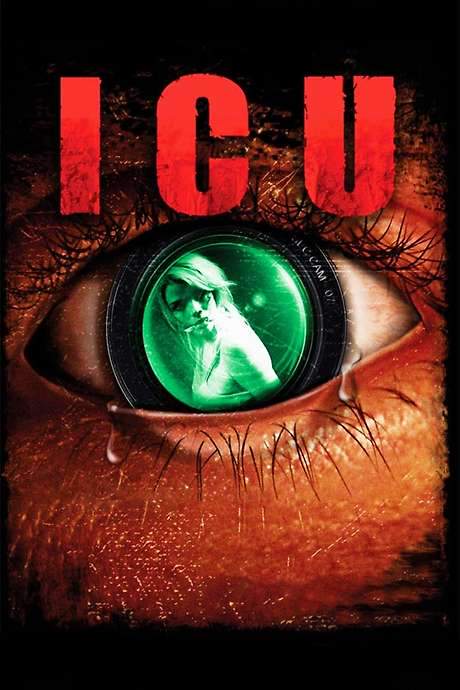
The premise of I.C.U. in 266 words, with nothing given away. The full story follows below.
In a gritty urban sprawl where anonymity clings to every window, a shadowy figure prowls, turning the act of watching into a twisted pastime. The city itself feels like a labyrinth of unseen eyes, its streets humming with the quiet certainty that someone is always observing. Against this backdrop, three adolescents become obsessed with the lives that flicker behind neighboring doors, convinced that they can piece together the identity of the elusive stalker. Their curiosity spirals into a game of surveillance that blurs the line between participant and spectator.
At the heart of this uneasy game is Tristen Waters, a sharp‑witted teen who balances a restless need for answers with the lingering echo of a broken family. Her brother Troy shares her intrigue, though his approach is more impulsive, while friend Ricky brings a measured, almost documentary eye to their investigations. Their father, William, a diligent police officer, juggles the pressures of his demanding job with the weight of past mistakes that have reshaped the family’s dynamic. The trio’s time together in their father’s holiday high‑rise becomes a makeshift laboratory for their voyeuristic experiments.
The apartment itself is a maze of mirrored surfaces and concealed lenses, a silent witness to the thin veil that separates private lives from public curiosity. As the teens set up their own improvised surveillance, they unwittingly step into a network where the observer may soon become the observed. The film maintains a tense, atmospheric tone that feels part thriller, part psychological study, inviting the audience to question who truly holds the power of sight in a world saturated with hidden cameras.
What Happens in I.C.U.?
The complete story of I.C.U., from the first scene to the last, in 482 words (about 2 minutes). Spoilers throughout. Names in the text link to 5 cast member pages.
Spoilers ahead
Young Tristan Waters, her brother Troy Waters and his friend Ricky Dickson head to their father William Waters’s holiday home, a place where the trio mostly finds themselves alone as he works as a policeman to pay off the fallout from a gambling problem that ended his marriage with Tristan and Troy’s mother. From the quiet windows and empty hallways, curiosity blooms into a troubling hobby: they begin to spy on their neighbours, watching for any sign of life in a house that seems to swallow people whole. It isn’t long before they notice something sinister—one neighbor is hiring a The Pimp to deliver prostitutes who vanish into the house and never reappear.
The thrill of their secret filming spirals into danger when the man discovers the youths are watching. They scramble into a nearby flat and try to lay low, but the killer tracks them down and drags them out of hiding, binding them with a cold precision. The tension inside the cramped space grows as the intruder asserts control, and the children feel the grip of fear tighten around them. In the chaos, William Waters arrives, a confrontation erupts, and he is knocked unconscious. When he regains consciousness, he faces the killer with a chilling line and a gun in hand: > “I thought I told you to wait till their mother was here,” before he shoots the killer to death.
The scene shifts with a frantic turn of events as William, surging with protective fury, moves to end the threat by targeting his own children. He is interrupted by the sudden, brutal stab of his ex-wife, the person who also hides a much darker pattern beneath the surface. The family’s troubles deepen as the ex-wife’s true role is revealed: she is the killer of the prostitutes and has been filming the murders, aided by the bodies supplied to her by the [The Pimp]. A chilling discovery follows when she finds a text that reads “I C U,” and she notices a camera in the room—one of many scattered across a hotel, part of a larger surveillance network. She seems to recognize the person operating these cameras, yet the identity behind the lens remains unresolved, leaving a haunting blank at the center of the mystery.
This unsettling chain of revelations threads together a tale of boredom turning into danger, a father’s attempt to protect his children, and a web of crime that reaches beyond the walls of a quiet holiday home. The narrative balances restraint and menace, keeping the audience in a tense orbit around the camera angles, the whispered fears, and the sudden, devastating shifts in allegiance and power. As the final pieces click into place, the film lingers on the unsettling reality that the people behind the lenses may be closer than anyone wants to admit, and that the line between guardian and threat can blur in an instant.
I.C.U. Timeline: Every Key Event in Order
11 key events in the order they happen, from “Arrival at the holiday home” to “The camera network and the unknown operator”. 11 events name a place, across 6 locations.
- 1
Arrival at the holiday home
Tristen Waters, her brother Troy, and his friend Ricky arrive at their father William's holiday home. William is a police officer who is preoccupied with work to pay off the gambling debt that ruined his marriage to the children's mother. The kids end up spending most of their time alone as he tries to manage his burdens.
When:Afternoon Where:William's holiday home
- 2
Neighbors under suspicion
The trio starts spying on their neighbors from the property and notices something troubling. They observe a man who hires prostitutes who go into the house but never come out. The pattern hints at a dangerous secret that could affect them all.
When:Evening Where:Neighbourhood vicinity
- 3
Filming the activity
Intrigued, the children begin filming the suspicious activity from their vantage point. They document the pattern of visits and disappearances, unaware of how perilous their actions may become. Their curiosity crosses into real risk as they get closer to the truth.
When:Evening Where:Neighbour's house / surrounding area
- 4
The killer discovers the cameras
The man responsible for the prostitution operation discovers that someone is filming him. He closes in on the kids, who realize they must hide inside the flat to avoid detection. Tension spikes as the threat draws nearer to them.
When:Night Where:Neighbour's flat
- 5
The children are captured
The murderer finds the hiding trio and ties them up, leaving them immobilized in the flat. Fear grips the kids as they face a direct threat to their safety. William remains away, unaware of the danger unfolding next door.
When:Night Where:Neighbour's flat
- 6
William arrives and fights
William arrives at the scene and a brutal fight erupts with the murderer. He is knocked out during the struggle, and the killer appears to have the upper hand. The confrontation sets the stage for a deadly turn of events.
When:Midnight Where:Neighbour's flat
- 7
William awakens and shoots
William regains consciousness and confronts the killer. In a grim moment, he declares his rage, saying, 'I thought I told you to wait till their mother was here,' and shoots the murderer to death. The act ends the immediate threat but leaves the family reeling from the violence.
When:Shortly after Where:Neighbour's flat
- 8
Descent into paranoia
In a frantic turn, William becomes fixated on protecting his children in a way that blinds him to his own fragility. He contemplates harming them, revealing how extreme stress can distort a parent’s judgment. The home becomes a place of impending danger rather than refuge.
When:After the fight Where:William's holiday home
- 9
The ex-wife's murder of William
William, in a final act of desperation, is stabbed to death by his ex-wife. Her violent act immediately shifts the focus from the immediate danger at the home to uncovering a larger conspiracy. Her involvement ties back to the murders and the camera network.
When:Night Where:William's holiday home
- 10
The reveal of a broader conspiracy
It is revealed that the ex-wife is the killer behind the prostitutes’ murders and has been filming the crimes. The bodies were provided to her by a pimp, indicating a wider network of crime at play. The revelation reframes the danger as a systemic one, not just a single killer.
When:Following night Where:Hotel / various locations
- 11
The camera network and the unknown operator
The ex-wife finds a text message reading 'I C U' and notices a camera in the room amid a hotel full of cameras. She seems to recognize the person operating them, though their identity remains unknown. The discovery closes the timeline with a lingering sense of unseen observers.
When:Later that night Where:Hotel
Who Are the Main Characters in I.C.U.?
7 characters, among them Tristan Waters (Margot Robbie), Ricky Dickson (James Dean) and William Waters (Matt Flannagan): who each one is and the part they play in the story. Every profile links to the actor’s page.
-

Tristan Waters (Margot Robbie)
Played by Margot Robbie
A curious and resourceful young girl who helps bridge the gap between childhood innocence and dangerous adult schemes. Her observations drive the children's spying on neighbors, pulling her deeper into the crime plot. She navigates fear with determination, contributing to the unraveling of the family’s secrets.
- 👧 Curious
- 🕵️♀️ Observant
- 🧭 Risk-taker
- RD
Ricky Dickson (James Dean)
Played by James Dean
Troy’s friend who joins the kids in spying on their neighbours. He adds a blend of bravado and impulsiveness to the group. His involvement highlights how peer pressure pulls the younger characters toward dangerous discoveries.
- 🧑🏻🤝🧑 👦 Youth ally
- 🕵️♀️ Collaborator
- WW
William Waters (Matt Flannagan)
Played by Matt Flannagan
The father and a police officer who is trying to pay off gambling debts and repair his broken family. He confronts the killer in a violent confrontation, and his actions drastically alter the family’s fate. His fate underscores the catastrophic consequences of adult choices on the children.
- 🧑 Father
- 🛡️ Protector
- 🗡️ Tragic figure
- TW
Troy Waters (Christian Radford)
Played by Christian Radford
Tristan’s brother who participates in the children’s surveillance and exploration. He is drawn into the danger through loyalty to his sister and friend, illustrating how siblings can become complicit in risky plans.
- 👦 Brother
- 🧭 Loyal
- 🕵️♂️ Curious
- LW
Linda Waters (Anna-Lisa Horton)
Played by Anna-Lisa Horton
The ex-wife of William and mother to Tristan and Troy. She is revealed to be the killer of the prostitutes and the mastermind behind the camera network, turning the domestic tragedy into a calculated crime operation.
- 👩👧👦 Mother
- 🗝️ Secretive
- 🗡️ Calculating
- TP
The Pimp (Ozzie Devrish)
Played by Ozzie Devrish
A crime facilitator who supplies bodies to Linda’s murders. His involvement connects the domestic crime with a broader, predatory network. He serves as a crucial link in the chain of violence surrounding the home invasion.
- 🧍♂️ Pimp
- 💼 Manipulative
- 🔗 Connector
- TM
The Mystery Woman (Natalie Hoflin)
Played by Natalie Hoflin
An enigmatic figure whose exact role is not fully disclosed in the summary. Her presence adds a layer of intrigue and hints at deeper surveillance or involvement in the events surrounding the killer.
- 🕵️♀️ Enigmatic
- 🧩 Mysterious
- 👀 Observer
Where and When Is I.C.U. Set?
I.C.U. is set in William Waters' holiday home and hotel. Here is why the place matters to the story.
Where
William Waters' holiday home, hotel
William Waters' holiday home serves as the claustrophobic starting point of the story, a secluded residence where the children spy on their neighbours. The house becomes a tense backdrop for confrontations and revelations, underscoring the fragility of the family unit. The plot later expands to a hotel where cameras surveil the murders, revealing a wider crime network connected to the domestic tragedy.
- 🏠 Domestic setting
- 👁️ Surveillance
- 🗝️ Family secrets
What Are the Themes of I.C.U.?
3 ideas the story keeps returning to, among them Surveillance, Family secrets and Murder & deception.
-
01
Surveillance
A central motif is watching and recording, as the children spy on neighbours and a network of cameras tracks movements. Filming blurs the line between innocence and crime, turning private spaces into stages for violence. Surveillance becomes a catalyst that exposes dark secrets and drives the plot toward its climax.
-
02
Family secrets
Gambling and marital breakdown fracture the family, culminating in an ex-wife who is revealed to be the killer. Trust dissolves as adults unleash violence, and the children become unintended witnesses to devastating acts. The revelations force a reevaluation of past loyalties and what really binds the family together.
-
03
Murder & deception
Murder drives the narrative, with bodies supplied by a pimp and killings filmed by the ex-wife as part of a hidden scheme. The killer's identity remains concealed for much of the story, creating tension and misdirection. The climactic revelations reframe the entire sequence of events and the motives behind them.
What Kind of Film Is I.C.U.?
Dark in tone, with steady pacing and a moderate story, going by the plot summary.
- Tone
- Dark
- Pacing
- Steady
- Story
- Moderate
- Intensity
- High
- Ending
- Bleak
A relentlessly tense and voyeuristic horror thriller that traps its characters in a web of surveillance, betrayal, and a deeply disturbing family secret, creating a profoundly unsettling and paranoid viewing experience.
- voyeuristic
- claustrophobic
- paranoid
- ominous
- terrifying
- unsettling
- serial killer
- voyeurism
- family secrets
- corruption
Content notes: graphic violence, murder, voyeurism, child endangerment, corruption.
Quiz
How well do you remember I.C.U.? Test yourself on the story.