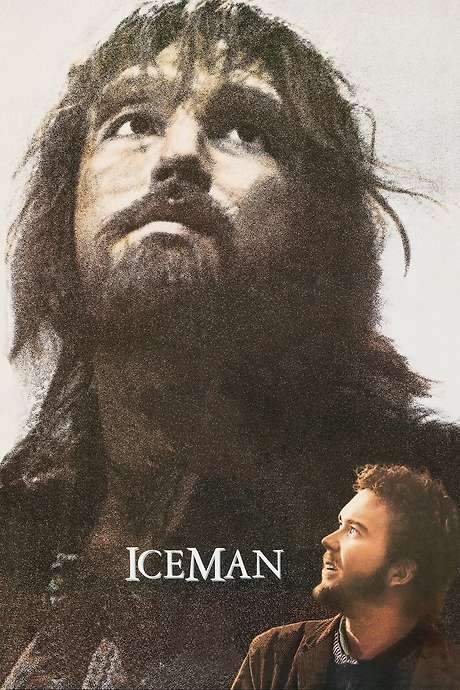
What Is Iceman About?
The premise of Iceman in 292 words, with nothing given away. The full story follows below.
In the stark, white silence of an Arctic research outpost, a team of scientists uncovers a perfectly preserved figure frozen for tens of thousands of years. The discovery promises a breakthrough that could reshape humanity’s understanding of survival, biology, and the very limits of the human body. Yet the moment the ancient man is revived, the pristine scientific experiment turns into a fragile, living encounter, forcing the remote laboratory to become a stage where cutting‑edge technology collides with primal mystery.
Dr. Stanley Shephard, an anthropologist drawn to the deeper currents of human culture, arrives with the conviction that the revived individual is more than a specimen. He is determined to bridge the gap between centuries, to listen to the whispers of a mind that has never known the modern world. Opposite him, Dr. Diane Brady leads a surgical team whose focus lies in the tantalizing possibility that the frozen man’s biology may hold the key to unprecedented medical advances, such as preserving life in a suspended state. Their contrasting motivations create a quiet tension that runs through the icy corridors, shaping every conversation and experiment.
The revived caveman, whom the researchers tentatively call Charlie, becomes the silent heart of the story. As he awakens to a world of masks, monitors, and humming machinery, his disorientation hints at a rich inner life that beckons the audience to wonder about the humanity hidden beneath the surface. The film’s tone balances the clinical chill of a high‑tech facility with the lingering, almost mystical awe of confronting a being who has survived an entire epoch. Against a backdrop of endless snow and low‑frequency hums, the narrative invites viewers to contemplate what it means to be human when the line between observer and companion begins to blur.
What Happens in Iceman?
The complete story of Iceman, from the first scene to the last, in 541 words (about 2 minutes). Spoilers throughout. Names in the text link to 3 cast member pages.
Spoilers ahead
Anthropologist Dr. Stanley Shephard is brought to an Arctic research base when explorers uncover the frozen remains of a Neanderthal caveman who has slept for 40,000 years. After thawing the specimen to perform an autopsy, the team notices brainwaves on the EEG monitor and manages to resuscitate the iceman, a moment that shifts the project from mere preservation to active study.
The revived caveman is bewildered by the masked scientists; only Shephard dares to remove his own covering, revealing a human, bearded face that helps the iceman settle into a peaceful, if unsettled, sleep. The scientists place the survivor in an artificial, controlled environment designed to simulate life, but Charlie quickly senses he is far from home.
Shephard believes the caveman’s culture could illuminate how the human body adapts to extreme conditions, pointing to ceremonies like firewalking as potential clues. Other researchers imagine the iceman’s DNA might unlock extraordinary medical possibilities, including the notion of “freezing” the sick until treatment becomes possible. Yet Shephard remains haunted by a larger question: is this man still a person, or a living specimen to be examined?
Determined to treat the iceman as a fellow human being, Shephard initiates a personal exchange with him, and the two form a tentative bond. He names the man Charlie after the caveman introduces himself with a clipped, unfamiliar syllable like “Char-u.” As communication grows, a linguist is brought in to help, and the scientists gradually begin to understand Charlie’s world. The exchange becomes more intimate when Shephard introduces Dr. Diane Brady, a colleague who helps translate the ideas and emotions that Charlie projects through drawings and gestures. Charlie’s lines in the sand hint that he was once married with children, deepening the sense that this is a life with meaning beyond science.
Charlie’s inner life is revealed as more than primitive instinct; Inuit elders recognize the name he chants and explain that it refers to a mythical bird, a messenger for the gods. From this, Shephard begins to glimpse a spiritual dimension to Charlie’s experience, suggesting that he was on a dreamwalk—a pilgrimage to redemption for a people facing a brutal ice age.
The emotional stakes rise when Charlie escapes briefly, frightened by unfamiliar technology, and accidentally spears Maynard, a base technician, before being recaptured. Despite the risk, Shephard chooses to help Charlie escape into the wild, believing that a return to nature may be essential for him. The pursuit leads them across glaciers and crevasses, with a helicopter hovering overhead as if the modern world itself is an obstacle to Charlie’s quest.
In the climactic moment, Charlie grabs onto a landing ski as the helicopter climbs, convinced that the “messenger” is taking him to his god. The pilot pulls away, and Charlie dangles in the air before slipping free, plunging toward a seemingly certain death. Yet what begins as tragedy becomes a hard-won triumph of faith: Charlie has reached his dreamwalk, a goal he pursued for 40,000 years, even at the cost of his own life.
Across the foreground of scientific ambition and personal conviction, the story leaves a quiet resonance: the boundary between humanity and spectacle is porous, and some journeys—no matter how ancient—demand not just study, but reverence for the lives touched along the way.
Iceman Timeline: Every Key Event in Order
12 key events in the order they happen, from “Discovery of the frozen caveman” to “Aftermath and reflection”. 12 events name a place, across 10 locations.
- 1
Discovery of the frozen caveman
Scientists discover a frozen Neanderthal caveman and transport his body to the Arctic Research Station. After thawing the body to perform an autopsy, they detect brain activity on an EEG and successfully resuscitate the iceman. The revived caveman awakens to masked scientists and a world far from his own.
Where:Arctic Research Station
- 2
Iceman awakens and mask removal
The iceman is alarmed by the surgical masks surrounding him. Stanley Shephard removes his mask, revealing a human face and a familiar appearance that calms him enough to drift back into peaceful sleep. This moment marks the iceman’s first connection with genuine humanity.
Where:Arctic Research Station – Medical Lab
- 3
Ethical debate and study plans
Researchers debate whether to treat Charlie as a person or a specimen. Some see him as a key to understanding human adaptability, while others push for DNA analysis and therapies. Shephard argues for recognizing Charlie’s humanity and his right to be treated with dignity.
Where:Biosphere Dome, Arctic Base
- 4
First bond and naming
Seeing his reactions and the potential bridge between worlds, Shephard initiates direct contact with Charlie. He names him 'Charlie' after the iceman says 'Char-u', signaling a growing bond. Charlie slowly accepts Shephard's presence and longs for his lost world.
Where:Biosphere Dome
- 5
Linguistics and personal history
A linguist arrives to help translate Charlie's speech. Shephard introduces Charlie to his colleague Dr. Diane Brady, hinting at collaboration in study. Charlie's drawings and lines in the sand reveal he once had a wife and children and a life beyond freezing.
Where:Arctic Base – Linguistics Wing
- 6
Spiritual dimension revealed
Local Inuit explain Charlie's chant 'Beedha' refers to a mythical bird—a messenger for the gods. They interpret it as a sign Charlie was on a dreamwalk pilgrimage, offering himself to the gods to redeem his tribe. Shephard begins to see a spiritual dimension to Charlie beyond science.
Where:Nearby Inuit Settlement / Arctic Outpost
- 7
Obsession with the helicopter
Charlie becomes obsessed with the helicopter that hovers above his habitat. He climbs toward the roof with urgent zeal, interpreting the world as a sign from the gods. The crew watches helplessly as he raises his arms in worship at the machine.
Where:Biosphere Dome Roof
- 8
Escape and unintended violence
An accidental escalation occurs when Charlie escapes after misinterpreting modern devices as enemies. He sprints through the base and unintentionally spears technician Maynard, prompting recapture and the suspension of the experiment. Shephard still believes the science can continue with safeguards.
Where:Arctic Research Station
- 9
Escape to the wild
Shephard helps Charlie flee into the wild, crossing glaciers as they seek safety. A crevasse opens, separating Shephard from Charlie and intensifying the peril. The pursuit moves toward a final, fateful meeting between the two.
Where:Arctic Landscape
- 10
Skyward pursuit and the god-like ascent
The helicopter appears over an ice shelf, and Charlie grabs a landing ski. The pilot pulls up to avoid the grasping caveman, but Charlie dangles beneath the aircraft, convinced it is taking him to his god. He seems joyfully fulfilled as he is lifted higher before finally letting go.
Where:Over Ice Shelf
- 11
Dreamwalk fulfilled and death
Charlie plunges to his death, but Shephard realizes the dreamwalk has been completed after 40,000 years. Charlie's death brings a sense of awe and spiritual closure to Shephard, replacing initial horror with a quiet joy.
Where:Over Ice Shelf
- 12
Aftermath and reflection
With the iceman’s end, the base reflects on Charlie’s humanity and the meaning of his sacrifice. Shephard documents the encounter, interpreting Charlie’s life as a bridge between science and spirit. The mission ends with a new respect for Charlie and his people.
Where:Arctic Base
Who Are the Main Characters in Iceman?
4 characters, among them Dr. Stanley Shephard (Timothy Hutton), Charlie and Dr. Diane Brady: who each one is and the part they play in the story. Every profile links to the actor’s page.
-
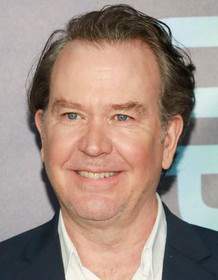
Dr. Stanley Shephard (Timothy Hutton)
Played by Timothy Hutton
An empathetic anthropologist who defends Charlie's humanity and pursues understanding of his culture. He forms a bond with the iceman, translating emotions into actions and seeking to learn from Charlie rather than dominate him.
- 🧠 Ethicist
- 🧬 Scientist
- 🗣️ Compassionate
- C
Charlie
Played by John Lone
The Neanderthal rediscovered after 40,000 years, Charlie is curious, cautious, and deeply spiritual. His reactions to modern technology reveal a longing for his vanished world as he navigates fear, wonder, and a sense of belonging.
- 🐾 Primal
- 🗺️ Curious
- 🕊️ Spiritual
-

Dr. Diane Brady
Played by Lindsay Crouse
A linguist who joins the base team and helps decode Charlie’s signals, acting as a bridge between Charlie and the scientists. She contributes to the growing picture of Charlie’s cognitive and emotional life.
- 🗣️ Linguist
- 🧠 Scientist
- 🔎 Investigator
- M
Maynard
Played by James Tolkan
A base technician who becomes entangled in Charlie’s violent misinterpretations, demonstrating the unpredictable risks of contact with a revived ancient human.
- 🛠️ Technician
- 🧰 Base Staff
- 🚁 Operational
Where and When Is Iceman Set?
Iceman is set in Arctic Research Base. Here is why the place matters to the story.
When
Set in a contemporary Arctic research facility era, the project uses modern medical technology to revive a prehistoric human, highlighting the clash between scientific ambition and ethical considerations in a remote environment.
Where
Arctic Research Base
A remote Arctic research base serves as the setting where scientists thaw a 40,000-year-old Neanderthal. The dome-like facility houses laboratories, a few technicians, and a helicopter pad, all amid snowfields and looming ice shelves. The environment is clinical yet isolating, emphasizing the contrast between cutting-edge science and primal human history.
- ❄️ Polar
- 🧭 Research
- 🏔️ Arctic
What Are the Themes of Iceman?
3 ideas the story keeps returning to, among them Ethics in Science, Communication and Dreamwalk / Spiritual Quest.
-
01
Ethics in Science
The revival of the iceman forces the scientists to weigh humanity against curiosity. Dr. Shephard argues for Charlie’s dignity and rights as a person, not merely a specimen. The film explores consent, exploitation, and the responsibilities that come with powerful medical tech in fragile ecosystems.
-
02
Communication
Charlie and the team overcome language barriers through gestures, drawings, and music. The linguist and Shephard bridge two worlds, revealing how understanding grows when people move beyond labels to shared meanings. The process highlights misinterpretations and breakthroughs in cross-cultural contact.
-
03
Dreamwalk / Spiritual Quest
Charlie’s behavior points to a spiritual journey rather than a simple biology story. Inuit knowledge hints at mythic flight, a dreamwalk toward redemption, and a willingness to sacrifice for kin. The climactic pursuit toward the helicopter becomes a ceremonial ascent toward a higher purpose.
What Kind of Film Is Iceman?
Bittersweet in tone, with steady pacing and a moderate story, going by the plot summary.
- Tone
- Bittersweet
- Pacing
- Steady
- Story
- Moderate
- Intensity
- Medium
- Ending
- Bittersweet
A thoughtful and melancholic sci-fi drama that builds tension around the ethical dilemma of scientific discovery, balancing moments of human connection with the profound sadness of a man lost in time.
- thoughtful
- melancholic
- tense
- claustrophobic
- hopeful
- isolated
- man out of time
- scientific ethics
- language barrier
- cultural clash
Content notes: animal death implied, medical confinement, psychological distress.
Quiz
How well do you remember Iceman? Test yourself on the story.