
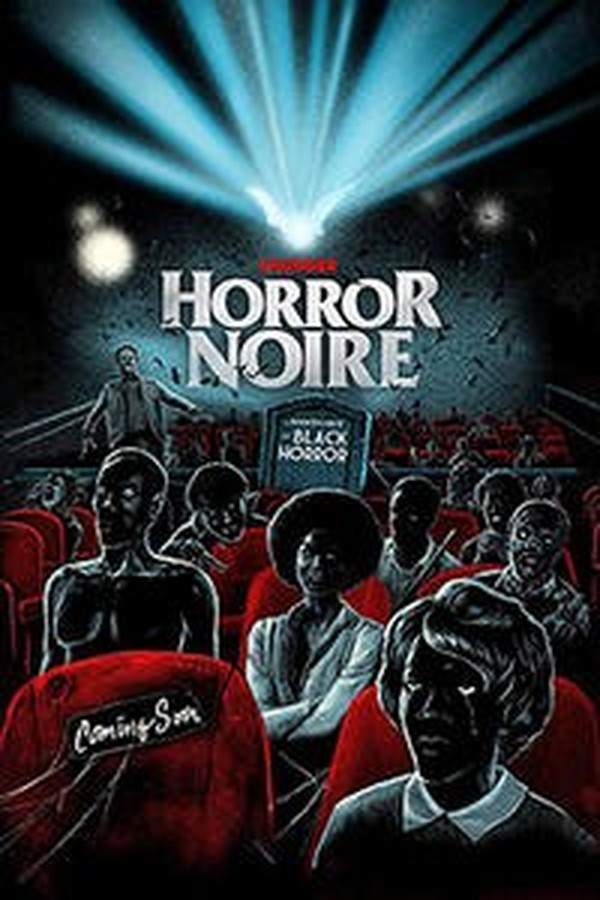
What Is Horror Noire: A History of Black Horror About?
The premise of Horror Noire: A History of Black Horror in 271 words, with nothing given away. The full story follows below.
Horror Noire: A History of Black Horror opens a window into a rich and often overlooked corner of cinema, assembling a chorus of voices from actors, directors, writers, and scholars — including figures like Jordan Peele, Keith David, and Tony Todd—to explore the role African Americans have played in shaping the horror genre. The film serves as both a celebration and a critical examination, inviting viewers to consider how terror on screen has reflected, reinforced, and occasionally resisted the cultural attitudes of its time.
With a thoughtful, conversational tone, the documentary traces a journey through decades of storytelling, beginning with the troubling legacy of early cinema and moving through eras of marginalization, breakthrough, and reinvention. It examines how Black characters were once relegated to the margins—appearing as sidekicks, servants, or tragic first victims—before highlighting the moments when filmmakers carved out their own space to tell stories rooted in distinct cultural identities. Conversations touch on the influence of blaxploitation, the mystique of voodoo on screen, and the emergence of heroes and antiheroes who defied long-standing tropes.
The atmosphere is one of passionate reflection, blending archival clips with intimate interviews that pulse with pride, frustration, and hope. Subjects discuss how horror became a powerful mirror for issues of race, identity, and resilience, while also examining how hip-hop aesthetics and modern voices reshaped the genre’s rhythm and language. The documentary treats its subject as living history, honoring pioneers while lighting a path forward. More than a retrospective, Horror Noire stands as a testament to the artistry, courage, and lasting influence of Black creators who turned the genre’s darkest impulses into vehicles for profound storytelling.
What Happens in Horror Noire: A History of Black Horror?
The complete story of Horror Noire: A History of Black Horror, from the first scene to the last, in 627 words (about 3 minutes). Spoilers throughout. Names in the text link to 16 cast member pages.
Spoilers ahead
This comprehensive documentary explores the complex and often turbulent history of African-Americans within the horror movie genre. To provide a deep dive into this subject, the film features insightful interviews with a diverse group of experts and industry professionals, including filmmaker Meosha Bean, Ashlee Blackwell, author and educator Robin R. Means Coleman, and the director of Blacula, William Crain. Further perspectives are provided by Rusty Cundieff, acclaimed actor Keith David, Loretta Devine, Tananarive Due, and the legendary Ken Foree. The discussion is further enriched by contributions from Richard Lawson, Kelly Jo Minter, Miguel A. Núñez Jr., Paula Jai Parker, Jordan Peele, Tony Todd, and Rachel True.
The narrative begins by examining the damaging legacy of the 1915 film The Birth of a Nation. The documentary analyzes how this film portrayed African-Americans—often played by white actors in blackface—as sexually aggressive threats to white women while framing the Ku Klux Klan as a righteous force. It is argued that this cinematic foundation emboldened the racist depictions of black characters that persisted in cinema for decades. Moving into the 1930s through the 1950s, the film discusses the severe lack of representation, noting that black characters were typically relegated to background roles or subservient positions. Even more sinister was the use of implied racial imagery in monsters, such as the lustful nature of King Kong or the exaggerated features of the Gill-man.
A pivotal shift is identified in 1968 with the release of Night of the Living Dead. The documentary highlights this film for casting Duane Jones as the protagonist, creating a heroic black character during a decade defined by the volatility of the civil rights movement.
The film then transitions into the 1970s to explore the emergence of the blaxploitation genre. Specific films are analyzed for their cultural impact, including Blacula and Abby, while the influence of voodoo is examined through Sugar Hill. Additionally, the production and thematic depth of Ganja & Hess are brought to light. As the timeline moves into the 1980s and 1990s, the documentary scrutinizes the persistence of tokenism. It examines the trope of the black “sidekick” to a white lead and the common cliché that black characters are always the first to be killed off—though the film notes that while they may not always die first, they frequently perish regardless. Other discussed tropes include the “Magical Negro” and the tendency for black characters to sacrifice themselves for white protagonists.
Despite these challenges, several milestones are celebrated:
- Candyman is praised for its portrayal of a vengeful African-American spirit, featuring the work of Tony Todd.
- Tales from the Hood, involving Rusty Cundieff, is recognized for tackling heavy themes of police brutality, gang violence, and systemic racism.
- Demon Knight is noted for providing a “black final girl” in the form of Jada Pinkett Smith.
- The film Eve’s Bayou is also mentioned for its unique contributions, despite not fitting the traditional horror mold.
The documentary also touches upon the intersection of hip-hop music and horror cinema before moving into the 21st century. It examines the rise of positive representation in modern hits such as Attack the Block and The Girl with All the Gifts. A significant portion of the finale is dedicated to the 2017 masterpiece Get Out, written and directed by Jordan Peele. The discussion focuses on its black protagonist, the nature of its white antagonists, and how the film mirrored the rise of the Black Lives Matter movement and the general state of American politics during its production.
The film concludes on a hopeful note, with the participants agreeing that African-American-centered horror is not only artistically vital but also marketable and profitable. There is a collective aspiration that the trend of positive, complex, and leading African-American representation in the horror genre will continue to grow and flourish.
Horror Noire: A History of Black Horror Timeline: Every Key Event in Order
15 key events in the order they happen, from “The Birth of a Nation Sets a Racist Template” to “Looking to the Future of Black Horror”.
- 1
The Birth of a Nation Sets a Racist Template
D.W. Griffith's 1915 film The Birth of a Nation is examined for portraying African-Americans, many played by white actors in blackface, as sexually aggressive toward white women while framing the Ku Klux Klan as a righteous force. The documentary's interviewees explain how the film emboldened racist depictions of Black characters across later Hollywood cinema. It is presented as the poisonous starting point for Black representation on screen.
When:1915 Where:United States
- 2
Invisible in Classic Horror
Horror films released between the 1930s and 1950s offered minimal representation of Black people, who were usually relegated to roles as servants or background characters. Blackness was often displaced onto monsters instead, with the lustful King Kong and the prominently-lipped Gill-man discussed as thinly veiled racial caricatures. The era established a lasting pattern of erasure and coded imagery.
When:1930s-1950s Where:United States
- 3
Duane Jones Leads Night of the Living Dead
The 1968 landmark Night of the Living Dead is highlighted for making African-American actor Duane Jones the protagonist of a mainstream horror film. The documentary connects this heroic portrayal to a turbulent decade defined by major moments in the civil rights movement. It stands as a groundbreaking image of a Black hero at the center of the genre.
When:1968 Where:United States
- 4
Blaxploitation Horror Emerges
The 1970s gave rise to the blaxploitation genre, and horror proved to be one of its most exciting playgrounds. For the first time, Black heroes, Black stories, and Black audiences drove genre cinema, spawning Black vampires, possession tales, and voodoo revenge stories. The documentary explores both the empowerment and the commercial formulas of the era.
When:1970s Where:United States
- 5
Blacula Reimagines the Vampire
The 1972 hit Blacula is discussed as a landmark of blaxploitation horror, recasting the vampire myth with a Black protagonist at its center. Its success proved that Black-centered genre films could find wide, paying audiences. Interviewees examine how it opened doors that decades of invisibility had kept shut.
When:1972 Where:United States
- 6
Ganja & Hess Goes Its Own Way
Ganja & Hess is examined for its unusual production history and its layered themes, standing apart from the era's more commercial output. The documentary treats the film as proof of the artistic ambition within 1970s Black horror. Interviewees reflect on how its ideas elevated the vampire story into something richer.
When:1973 Where:United States
- 7
Abby and Sugar Hill Channel the Spirit World
The blaxploitation wave continued with Abby, a Black-centered take on demonic possession, and Sugar Hill, whose heroine uses voodoo to raise undead avengers for revenge. The documentary discusses the role of voodoo in films like Sugar Hill, where African-derived spirituality becomes a source of power rather than mere exoticism. Together they showcased the range of 1970s Black horror.
When:1974 Where:United States
- 8
Token Sidekicks and Tired Tropes Take Over
In the 1980s and 1990s, African-American roles in horror often shrank into tokenism, with Black characters reduced to 'sidekicks' for white leads. The documentary dissects persistent tropes, including the Black character who dies first, the one who sacrifices themselves to save white characters, and the 'Magical Negro', while noting that a large percentage do not actually die first. The era's growing intersection between horror films and hip-hop music is also covered.
When:1980s-1990s Where:United States
- 9
Candyman Conjures a Black Legend
The 1992 film Candyman is highlighted for centering the vengeful spirit of an African-American man. His tragic origin ties the horror directly to America's history of racial violence, giving the boogeyman a pointed social resonance. The documentary considers it one of the most powerful Black horror figures of its era.
When:1992 Where:United States
- 10
Tales from the Hood Faces Real Horrors
The 1995 anthology Tales from the Hood is regarded for its depictions of racism, gang violence, and police brutality through a horror lens. The film demonstrated that Black filmmakers could use the genre to dramatize real-world terrors affecting their communities. Interviewees celebrate its fusion of social commentary and scares.
When:1995 Where:United States
Show the other 5 events of Horror Noire: A History of Black Horror Hide the last 5 events
- 11
Demon Knight Crowns a Black Final Girl
Demon Knight is noted for featuring Jada Pinkett Smith as a Black final girl, the character who survives to the end. The honor subverts a long-standing slasher tradition in which Black women rarely made it out alive. It is presented as a small but meaningful shift in who gets to be the hero of a horror film.
When:1995 Where:United States
- 12
Eve's Bayou Blurs the Genre Line
Eve's Bayou, though not generally classified as a horror film, is discussed for its haunting atmosphere and engrossing Black family drama. The documentary includes it to show how Black storytelling can evoke dread outside conventional genre boundaries. Its inclusion broadens the definition of what Black horror can be.
When:1997 Where:United States
- 13
A New Century of Positive Representation
The 21st century brought a notable increase in positive representation of African-Americans in horror, a shift the documentary examines with optimism. Films like Attack the Block and The Girl with All the Gifts are cited as examples of Black characters leading smart, well-crafted genre films. The groundwork was being laid for a historic breakthrough.
When:2000s-2010s
- 14
Get Out Rewrites the Rules
The 2017 phenomenon Get Out is discussed in depth, from its Black protagonist and white antagonists to its pointed themes and its famous ending. The documentary notes the state of American politics and the rise of the Black Lives Matter movement during the film's production, which shaped its social bite. Its enormous success proved that Black-centered horror could be both acclaimed and profitable.
When:2017 Where:United States
- 15
Looking to the Future of Black Horror
The documentary concludes with its subjects reflecting on what comes next for African-Americans in the genre. They hold that African-American-centered films have proved to be marketable and profitable, dismantling old industry excuses. With hope, they express the wish that positive African-American representation in horror will continue into the future.
When:Present day
Where and When Is Horror Noire: A History of Black Horror Set?
Horror Noire: A History of Black Horror is set in Hollywood and USA (20th century - 21st century). Here is why the time and place matter to the story.
When
20th century - 21st century
The documentary spans significant developments in both the 20th and 21st centuries, particularly focusing on the evolution of African-American representation in the horror genre. Key events include the civil rights movements of the 1960s, the emergence of blaxploitation in the 1970s, and the influence of modern films addressing racial themes.
Where
Hollywood, USA
The film industry hub of Hollywood in the USA has long been a dominant force in global cinema. Known for its elaborate storytelling and historically significant films, it has also been at the center of discussions regarding representation and diversity in film.
- 🎬 Film Industry
- 🌍 Cultural Landscape
What Are the Themes of Horror Noire: A History of Black Horror?
3 ideas the story keeps returning to, among them Representation, Horror and Society and Cultural History.
-
01
Representation
A central theme of the documentary is the evolution of representation of African-Americans in horror films. It traces how black characters have transitioned from marginalized figures to complex protagonists. The film highlights the efforts and struggles of creators and performers to challenge negative stereotypes and push for more authentic portrayals.
-
02
Horror and Society
The relationship between horror films and societal issues is examined, particularly the reflective nature of horror on real-world fears and experiences. The documentary discusses how horror can serve as both a commentary on and a critique of societal injustices, including racism and violence.
-
03
Cultural History
This theme explores the historical context of African-Americans in horror cinema. The documentary traces the impacts of early films like 'The Birth of a Nation' and shifts in narrative through films like 'Get Out,' which incorporate themes of race, identity, and cultural storytelling.
What Kind of Film Is Horror Noire: A History of Black Horror?
Hopeful in tone, with steady pacing and a complex story, going by the plot summary.
- Tone
- Hopeful
- Pacing
- Steady
- Story
- Complex
- Intensity
- Medium
- Ending
- Happy
An academic yet passionate documentary that journeys through decades of Black horror cinema, balancing critical analysis of racial stereotypes with celebratory recognition of groundbreaking contributions, ultimately landing on an inspiring note.
- reflective
- academic
- celebratory
- critical
- inspiring
- thoughtful
- black representation
- horror genre history
- racism in cinema
- civil rights
Content notes: racism, racial stereotypes, police brutality, systemic racism, depictions of violence in media.
Quiz
How well do you remember Horror Noire: A History of Black Horror? Test yourself on the story.
