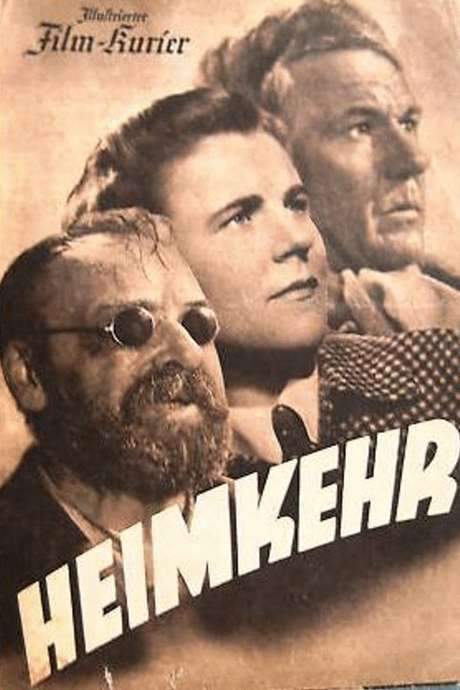



Homecoming Plot Summary
Read the complete plot summary and ending explained for Homecoming (1941). From turning points to emotional moments, uncover what really happened and why it matters.
In the Wołyń Voivodeship in eastern Poland, the German minority is subjected to growing oppression from the Polish majority. The physician Dr. Thomas cannot secure a hospital for his patients, while his daughter Marie, Paula Wessely, who teaches at a German school, faces an important operation that cannot be delayed. When her school is seized by Polish authorities and demolished by an angry mob, the pressure on the family mounts and underscores the escalating hostility around them. Dr. Thomas voices his protest to the mayor, arguing for constitutionally guaranteed minority rights, but his pleas fall on deaf ears, leaving him frustrated and powerless.
Marie, Paula Wessely, and her fiancé Dr. Fritz Mutius, Carl Raddatz, decide to travel to the provincial capital to present their case to the Voivode, hoping for a formal hearing that never arrives. Unable to obtain an audience, they choose to remain in the capital to pursue legal avenues the next day, and that evening they slip away to a cinema for a moment of normalcy in a tense time. They are not alone; Marie is accompanied by her friend Karl Michalek, a man pressed into service by the Polish Army, adding to the sense that life is being forced into unfamiliar and dangerous channels.
The mood darkens when the audience refuses to sing Mazurek Dąbrowskiego, the Polish national anthem, and Fritz is grievously hurt by a furious crowd. Marie’s attempt to get him to a hospital is in vain as he is refused admission and he dies from his injuries, a crushing blow that reverberates through their circle. Back home, the violence against the German minority continues to mount: Marie’s father, Dr. Thomas, is blinded in a brutal assault, and Martha Launhardt, the wife of innkeeper Ludwig Launhardt, collapses and dies after stones are thrown by Poles. The ensuing years of tension culminate as the Invasion of Poland begins and German villagers meet secretly in a barn to hear Hitler’s speech before the Reichstag, an act that leads to their discovery, arrest, and imprisonment.
Marie maintains hope, comforting those around her with the belief that they will escape and that the Germans will be able to hear only German again, free from the encroaching yiddish and Polish languages. The prisoners endure abuse at the hands of guards, yet they manage to escape through an underground cellar, narrowly avoiding a massacre, and are ultimately saved by invading Wehrmacht soldiers. The German escapees prepare for resettlement into the Reich, and Ludwig Launhardt resolves to seek Marie’s hand, a personal pivot amid the national upheaval. In the final sequence, the trek resumes across the border into the Reich, and the film closes with a stark image: a massive portrait of Hitler set up at the checkpoint, a sobering visual that caps a story of persecution, courage, and displacement.
Homecoming Timeline
Follow the complete movie timeline of Homecoming (1941) with every major event in chronological order. Great for understanding complex plots and story progression.
German school seized and demolished
In the Wołyń Voivodeship, the German minority endures escalating oppression. Marie watches as her German school is seized by Polish authorities and demolished by an angry mob. The act foreshadows the violence that will engulf the family and community.
Thomas protests to the mayor
Dr. Thomas formally protests to the mayor, arguing that minority rights are guaranteed by the constitution. His appeal is ignored, underscoring the authorities' refusal to protect the German community. The moment shows the growing power imbalance that fuels further actions.
Marie and Fritz travel to the capital
Marie and her fiancé Fritz drive to the provincial capital to present their case to the Voivode. They are not received by officials there, leaving them frustrated and determined. They decide to stay in the capital to pursue legal avenues the next day.
Cinema visit with Karl
That evening, they go to the cinema accompanied by Karl Michalek, who has been pressed into service by the Polish Army. The outing offers a chance for normalcy amid mounting tension. The crowd's mood soon turns dangerous.
Fritz attacked for not singing anthem
When the audience refuses to sing the Polish national anthem, a furious crowd assaults Fritz, inflicting serious injuries. Marie and Karl witness the brutality and fear for his life. The incident marks a brutal escalation of ethnic hostility inside the cinema.
Fritz dies after refused admission
Marie tries to have Fritz admitted to a hospital, but admission is refused. He dies from his injuries, and Marie faces the devastating consequence of institutional prejudice. The death deepens the community's grief and anger.
Dr. Thomas blinded in attack
Back home, violence against Germans continues as Marie's father, Dr. Thomas, is attacked and blinded. The assault removes a respected healer and symbol of the community's resilience. The family grapples with personal loss amid the broader chaos.
Martha Launhardt dies from stones
The innkeeper Ludwig Launhardt's wife, Martha, dies after being struck by stones thrown by Poles. Her death underscores the civilian cost of the escalating ethnic conflict and shocks the village. The tragedy compounds the residents' fear and anger.
Villagers listen to Hitler on 1 Sept 1939
At the outbreak of the invasion, German villagers secretly gather in a barn to hear Hitler’s speech on 1 September 1939. They are discovered, arrested, and imprisoned by occupying authorities. The scene dramatizes the rapid shift from oppression to outright militarized control.
Prisoners face abuse and plan escape
Marie consoles the prisoners, promising they will escape and return home where they can hear only German. They endure abuse from prison guards, but hold fast to the hope of freedom and reunion. The promise anchors their courage as the situation grows more dire.
Escape through underground cellar
The prisoners escape through an underground cellar, narrowly avoiding a massacre. They are saved by invading Wehrmacht soldiers, whose arrival shifts the odds in their favor. The evacuation marks a turning point from captivity to rescue.
Return to homeland and marriage offer
The escapees prepare for resettlement into the Reich homeland, and Ludwig Launhardt asks Marie for her hand. The family and community readies for departure under the looming prospect of exile. The personal offer of marriage adds a note of hope amid upheaval.
Crossing into the Reich; Hitler's image at the checkpoint
The group crosses the border into the Reich, signaling their transfer to the objective homeland. At the checkpoint, a massive image of Hitler dominates the scene, underscoring the propaganda environment of the era. The film closes on this somber, propagandistic note.
Homecoming Characters
Explore all characters from Homecoming (1941). Get detailed profiles with their roles, arcs, and key relationships explained.
Dr. Thomas
A physician in a town crowded by political hostility, he becomes a vocal advocate for minority rights and protests to the mayor. His actions highlight the clash between constitutional guarantees and real-world oppression. As tensions escalate, he is targeted and blinded in a brutal attack, underscoring the human cost of ethnic conflict.
Marie Thomas
Marie is Dr. Thomas's daughter and a German schoolteacher who resists the pressure of assimilation. She supports her fiancé and pursues avenues to address the injustices they face, including seeking help for those in need. She remains hopeful and steadfast, encouraging others to endure the looming threat.
Dr. Fritz Mutius
Marie's fiancé, a physician who stands with the minority community against oppressive currents. He is attacked by a furious crowd for refusing to sing the Polish anthem, illustrating the dangers of dissent in a charged atmosphere.His grave injuries and eventual death intensify the community's resolve to seek safety and justice.
Karl Michalek
Marie's friend who is pressed into service by the Polish Army and accompanies the group through tense circumstances. He embodies how ordinary civilians become entwined in political upheaval. His presence emphasizes the fragility of everyday life under occupation.
Ludwig Launhardt
An innkeeper whose family life is shattered when his wife, Martha, is struck down during violence. He later becomes a hopeful suitor, seeking solace and continuity in a community torn apart by conflict. His resilience reflects the strain on traditional local leadership during wartime upheaval.
Martha Launhardt
Wife of Ludwig Launhardt, she embodies the civilian casualties of ethnic conflict. Her death underscores the indiscriminate cruelty of mob violence. Her memory reinforces the stakes of the community's struggle to survive and rebuild.
Old Manz
A villager who experiences the pressure of war and persecution within the community. He witnesses the crackdown on dissent and the shifting loyalties as events unfold. His perspective helps show the broader social impact of the crisis.
Balthasar Manz
A member of the local Manz family who stands amid the social changes around him. His role highlights the personal and family-level strains that accompany wartime upheaval. He contributes to the tapestry of village life disrupted by conquest and fear.
Oskar Friml
A local figure whose actions illustrate the ways in which ordinary people navigate and respond to the invading and occupying forces. His presence adds to the network of relationships that define the community under strain.
Homecoming Settings
Learn where and when Homecoming (1941) takes place. Explore the film’s settings, era, and how they shape the narrative.
Time period
1939
The story is set in 1939, against the backdrop of mounting nationalist fervor and the onset of World War II. It depicts the lead-up to the invasion of Poland and the resulting violence against ethnic Germans. The timeline culminates with the German community attempting to flee to the Reich as the conflict escalates.
Location
Wołyń Voivodeship, eastern Poland
The action unfolds in the Wołyń Voivodeship, a border region in eastern Poland where a German minority lives under pressure from the Polish majority. The setting includes towns and a provincial capital where authorities enforce restrictions on German life and culture. Public spaces become focal points for conflict as tensions intensify toward the outbreak of war.
Homecoming Themes
Discover the main themes in Homecoming (1941). Analyze the deeper meanings, emotional layers, and social commentary behind the film.
⚖️
Oppression
The German minority faces systematic discrimination and civil rights violations. Local authorities ignore constitutional protections, signaling a climate of fear and intimidation. The escalating mistreatment drives the community toward quiet resistance and overt acts of defiance.
🪖
Escape & Resettlement
As violence mounts, the characters seek a path to safety by returning to the homeland. They move through dangerous conditions, including an underground escape, risking massacre at every turn. Their survival hinges on the arrival of invading forces that facilitate their crossing to the Reich.
🎭
Propaganda & Nationalism
Propaganda and nationalist sentiment color everyday life, from the crowd's reaction to the Polish anthem to the televised-like spectacle of Hitler's speech. The presence of a large Hitler image at a checkpoint underscores how politics permeates ordinary moments. The film explores how nationalist zeal can justify violence and erode moral boundaries.

Coming soon on iOS and Android
The Plot Explained Mobile App
From blockbusters to hidden gems — dive into movie stories anytime, anywhere. Save your favorites, discover plots faster, and never miss a twist again.
Sign up to be the first to know when we launch. Your email stays private — always.
Explore the mobile appHomecoming Spoiler-Free Summary
Discover the spoiler-free summary of Homecoming (1941). Get a concise overview without any spoilers.
In the eastern reaches of pre‑war Poland, a modest German community finds its daily life increasingly framed by uneasy political currents. The countryside and towns are painted with a stark, realist palette that emphasizes both the beauty of the landscape and the undercurrent of suspicion that clouds ordinary interactions. A somber, almost documentary tone pervades, hinting at a larger national drama while keeping the focus on the intimate world of a handful of families.
At the heart of the story is Dr. Thomas, a physician who balances his professional duties with a growing sense of helplessness as his patients’ needs clash with an uncooperative civic environment. His daughter, Marie, a schoolteacher, embodies a youthful determination to protect her cultural heritage, while her fiancé, Dr. Fritz Mutius, shares her resolve and adds a layer of personal commitment to the unfolding tensions. Their household becomes a micro‑cosm of the larger minority experience, where private aspirations constantly brush against public obstacles.
The film’s atmosphere is dense with anxiety and a lingering hope that reasoned appeals might still sway the authorities. Scenes of crowded streets, modest classrooms, and a beleaguered hospital convey a community striving to maintain dignity under increasing pressure. The dialogue often drifts between polite protest and quiet resignation, underscoring a weary yet stubborn optimism that still flickers amid the gathering gloom.
Against this backdrop, the narrative hints at an impending shift in the region’s political landscape, suggesting that the characters’ personal struggles are poised to intersect with broader forces beyond their control. The tone remains contemplative, inviting viewers to sense the fragile balance between cultural identity and the inexorable march of history.
Movies with Similar Twists and Themes
Uncover films that echo the narrative beats, emotional arcs, or dramatic twists of the one you're exploring. These recommendations are handpicked based on story depth, thematic resonance, and spoiler-worthy moments — perfect for fans who crave more of the same intrigue.



Featured on this page

What's After the Movie?
Not sure whether to stay after the credits? Find out!
Check out our other apps:

SAT Sphere
Build confidence for the Digital SAT.

Mori Atlas
Discover wild places worth protecting.

Luntero
Search smarter for a home in Amsterdam.

Plot Explained
Unravel movie endings and hidden clues.

Pokechamp
Dive into Pokémon data and battle logic.

Driving Theory
Get ready for your European theory test.

Movie Dust
Plan your next cinema trip with ease.

Musemap
Find art and culture as you travel.

Selkobase
Compare credentials before committing.

Local Manual
Turn an unfamiliar country into practical next steps.

Lernavi
Compare school systems before your next move.

GymRoam
Find a workout stop wherever your plans take you.
Explore Our Movie Platform
New Movie Releases (2026)
Famous Movie Actors
Top Film Production Studios
Movie Plot Summaries & Endings
Major Movie Awards & Winners
Best Concert Films & Music Documentaries
Movie Collections and Curated Lists
© 2026 What's After the Movie. All rights reserved.
Privacy Policy