What Happens in Halston?
The complete story of Halston, from the first scene to the last, in 326 words (about 1 minute). Spoilers throughout.
Spoilers ahead
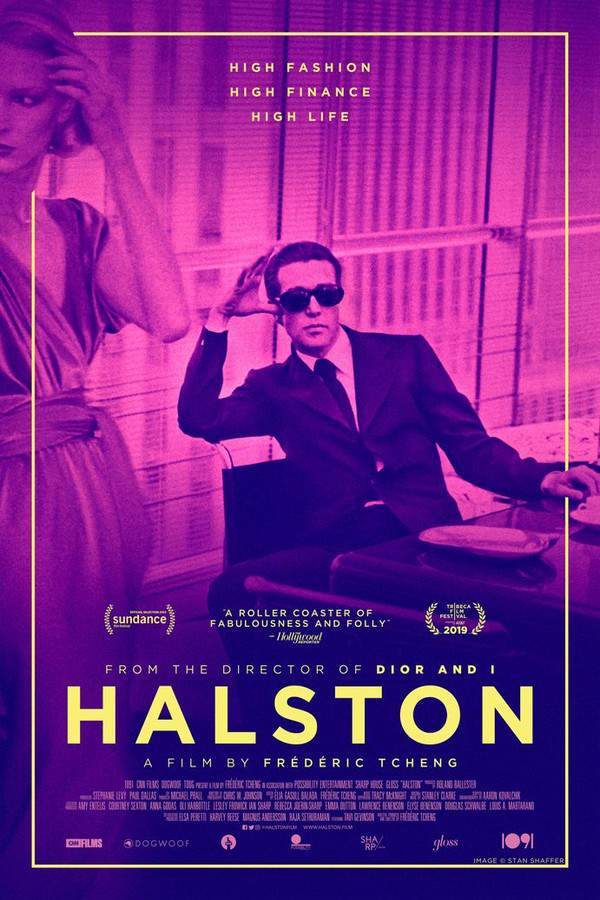
The film tells the story of Roy Halston Frowick, better known as Halston, and the fashion empire he built in the 70s and lost in the 80s. Framed by the fictional storyline of a researcher digging through archives to understand Halston’s downfall, the film begins with his early days working at Bergdorf Goodman as a milliner for society ladies. One of his most notable designs during that period was First Lady Jacqueline Kennedy’s iconic pillbox hat for her husband’s presidential inauguration in 1961. Halston opened his own fashion house in 1968, and quickly gained popularity for his free-flowing clothes that appealed to a liberated female clientele. A 1973 financial deal with the Norton Simon Inc. conglomerate solidified Halston’s place as America’s premier designer. It also allowed him to design his first fragrance, which became a runaway hit. Halston himself became a household name - pioneering the idea of fashion as media and of the designer as a star. His empire grew to include dozens of licenses. In the late 70s, he became a regular at Studio 54 and drugs took a toll on his output. As Halston’s behavior grew more erratic, he became more and more isolated in his Olympic Tower offices. In the early 80s, in an attempt to “dress America,” Halston announced a partnership with JCPenney. The move, the first such collaboration between a high fashion house and a mass retailer, drew ire in the fashion world, causing Bergorf Goodman to drop Halston from its store. The debacle was compounded by a simultaneous corporate take-over, in which Norton Simon was gobbled by Esmark and then Beatrice - a meatpacker from Chicago.
The film’s third act chronicles how Halston - notorious for his lavish lifestyle - was suddenly put under the supervision of executive Carl Epstein whose mission was to cut costs and manage Halston. Within a year, Halston was ousted from his company. Shortly after, he was diagnosed with HIV and died in 1990.
How Does Halston End?
The last act of Halston and what it means, in 296 words. Big spoilers: read the plot summary first if you have not seen it.
The final act, in full
Halston’s journey concludes with a profound reflection on the fleeting nature of creativity and fame. After experiencing the highs of fame and the lows of personal and professional crises, he finds himself completely stripped of his name and identity when the new management takes over his brand in 1983. Being reminded that they now own his name and all his work, Halston is left devastated, symbolizing how his identity was tied to his art and reputation. His personal struggles intensify when his partner Victor Hugo is diagnosed with HIV/AIDS, a blow that exposes Halston to even more hardship, including blackmail and public shame regarding his drug use and homosexual relationships. Despite continuing to design clothes for close friends like Martha Graham, he no longer uses his signature style, signifying his loss of creative control and confidence.
The ending scene is a hauntingly poetic moment where Halston sits by the Pacific Coast, contemplating the sky and the color blue. His words reveal a deep loss — from once marveling at the blue sky and imagining what he could transform it into, to simply acknowledging how beautiful it is now, without the spark of inspiration. This shift illustrates that for an artist, the end of creative vitality often signifies life’s final chapter. When Halston can no longer create, he feels he has stopped truly living; his passion and purpose have faded, leaving only peace, which ultimately becomes his resting place. His death in 1993 encapsulates the tragic truth that an artist’s life is rooted in their capacity to innovate. Without that drive to create, they metaphorically die inside. Halston’s story is a poignant reminder that success, fame, and even peace are ultimately fleeting, and that the true essence of an artist lives in the act of creation itself.