
From the Life of the Marionettes 1980

Directed by
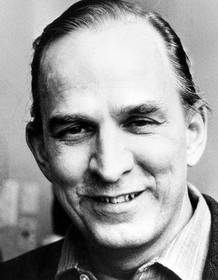
Ingmar Bergman
Made by

Personafilm
From the Life of the Marionettes Plot Summary
Read the complete plot summary and ending explained for From the Life of the Marionettes (1980). From turning points to emotional moments, uncover what really happened and why it matters.
Peter Egermann visits a Munich prostitute named Ka and, in a moment of shocking violence, murders her, followed by an act of necrophilia that becomes the center of a grueling investigation. The coroner’s questions probe the lives of Peter’s circle, searching for a motive or a hidden pattern that could explain such a crime. The drama unfolds through the testimonies and reactions of those who knew him, painting a portrait of a man whose private world is tangled with desire, fear, and a startling lack of self-awareness.
Peter is married to career-driven Katarina Krafft, a woman with no children and a taste for independence that often pushes the couple into unorthodox territory. Peter had confided in Mogens Jensen that he was plagued by homicidal thoughts aimed at Katarina, a confession that shocked Jensen. He told the coroner that he believed these thoughts were unlikely to become reality, and he advised Katarina to leave town—advice she dismissed, noting her demanding schedule and the impossibility of a sudden departure during a busy season.
Before the murder, Peter contemplated suicide by leaping from a building, a plan interrupted when Katarina called a friend to diffuse the crisis. He returned indoors and the couple quarrelled, their relationship laid bare as they discussed an open arrangement that Katarina openly sought to explore with other lovers. Peter claimed that he was the one who knew how to satisfy Katarina, while she candidly admitted that their bedroom has seen orgasms, faked ones, and even moments when she left to masturbate, followed by periods of small convulsions. The tension between desire, power, and fear threads through these intimate details, revealing a man who feels displaced within his own marriage.
The interrogator then turns to Tim Mandelbaum, a business partner of Katarina and a close friend within their circle. Tim, who identifies as homosexual, hesitates when asked about any affair with Peter, and ultimately confesses that he did indeed have desires for Peter and carries a guilty conscience for introducing Peter to Ka. Tim explains that his sexuality has made him blame his circumstances for bringing Peter and Ka together, and he reveals a calculated idea to draw Peter toward him.
The narrative reaches a grim milestone when Peter meets Ka at a Munich peep show, and Ka reveals her real name—Katarina—the very name of Peter’s wife. Overcome with emotion, Peter tears up and kills Ka in a moment that seals the tragedy. Mogens Jensen offers an interpretation: Peter, shaped by an aggressive mother and then living with an equally aggressive wife, did not recognize his own latent homosexuality, and meeting Ka disrupted his carefully maintained routine, triggering an emotional blackout that he could not recover from.
Ultimately, the story closes on Peter’s fate: he is confined to a mental institution, where, at night, he clutches a teddy bear as he tries to come to terms with what he has become. The film lingers on the difficult questions of desire, identity, and the fragility of the human psyche, inviting the viewer to consider how a single act can ripple through a life and leave lasting, haunting consequences.
From the Life of the Marionettes Timeline
Follow the complete movie timeline of From the Life of the Marionettes (1980) with every major event in chronological order. Great for understanding complex plots and story progression.
Peter murders Ka (necrophilia)
Peter Egermann visits a prostitute named Ka and murders her, an act that includes necrophilia with her body. The crime marks a violent tipping point and triggers a police inquiry into his life and relationships.
Coroner opens inquiry
The coroner interrogates Peter's friends to piece together the motive and circumstances behind the murder. The probing focuses on Peter's relationships, mental state, and any signs that could have foretold the tragedy.
Mogens Jensen's reaction
Mogens Jensen tells the coroner he is shocked by the murder and believes there were no signs this could happen. He notes that he warned Katarina to leave town, but his advice went unheeded.
Marriage and open relationship
Peter is married to Katarina, a career focused woman, and they have no children. Their open relationship provides a backdrop for Peter's growing inner conflict and sense of disconnection.
Peter confides homicidal thoughts
Peter confides in Jensen that he is plagued by homicidal thoughts, particularly toward Katarina. Jensen considers these thoughts signs of distress but does not see them as an immediate danger.
Warning to Katarina
Jensen advises Katarina to leave town, believing that distance might reduce the risk posed by Peter's unstable impulses. He treats the warning as a precaution rather than a certainty.
Katarina ignores the warning
Katarina dismisses the warning as preposterous, noting that her busy work schedule makes travel impractical. She underestimates the danger that Peter's thoughts could pose.
Suicidal thoughts and calm
Before the murder, Peter contemplates throwing himself from a building, signaling his despair. Katarina calls a friend to help calm him down, and he returns inside to a heated confrontation with her.
Open relationship tensions
The couple quarrels after Peter returns home, discussing their open relationship. Peter asserts he is the one who knows how to sexually satisfy Katarina, while she admits occasional dissatisfaction and detachment.
Katarina's sexual disclosures
Katarina explains that she sometimes has orgasms with Peter but also fakes them and sometimes leaves the bedroom to masturbate. She adds that on other occasions she experiences only small convulsions.
Interrogation of Tim
The interrogator questions Tim, Katarina's business partner and friend who knew Peter. Tim hesitates before admitting he had desires for Peter and feels guilty after introducing Peter to Ka.
Tim's motives and guilt
Tim blames his homosexuality for bringing Peter and Ka together and explains his motive to lure Peter into an affair. The confession reveals tangled motivations behind the circle's dynamics.
Ka is Katarina
When Peter first meets Ka at a Munich peep show, Ka reveals that her real name is Katarina, the same as Peter's wife. This revelation destabilizes Peter and foreshadows the looming tragedy.
Jensen's psychological conclusion
Jensen concludes that Peter, who grew up with an aggressive mother and later with an equally aggressive wife, is unaware of his latent homosexuality. Meeting Ka disrupts his routine and triggers an emotional blackout.
Peter's confinement
The film ends with Peter confined to a mental institution, where he cradles a teddy bear at night. The ending underscores his lingering fragility and isolation.
From the Life of the Marionettes Characters
Explore all characters from From the Life of the Marionettes (1980). Get detailed profiles with their roles, arcs, and key relationships explained.
Peter Egermann
A married man tormented by homicidal thoughts and tensions around his wife. He confesses to the coroner about his fantasies targeting Katarina and, in a moment of breakdown, murders a prostitute named Ka. The crime triggers a legal and psychological unraveling, ending with his confinement to a mental institution. His inside life reveals a volatile mix of desire, jealousy, and repressed anger.
Katarina Egerman
A career-oriented wife who keeps an open relationship, seeking others while remaining married to Peter. She dismisses warnings about Peter's dangerous thoughts and focuses on work during a busy season. Her volatile dynamic with Peter and her aggressive approach to the marriage contribute to the emotional climate that leads to tragedy.
Mogens Jensen
Peter's friend who is shocked by the murder and reveals Peter's admission of homicidal thoughts to the coroner. He advised Katarina to leave town, and his cautious interpretation stands in contrast to the dramatic outcome. His perspective highlights how easily perceived signs can be overlooked in a volatile marriage.
Tim Mandelbaum
Katarina's business partner and friend who acknowledges his own desires for Peter and admits his role in introducing Peter to Ka. He grapples with guilt over the consequences and a complicated dynamic of affection and manipulation within the group. His actions illuminate how hidden longings can contribute to a chain of tragic events.
Untersuchungsrichter
The coroner who interrogates Peter's circle to uncover motive and truth behind the murder. He methodically questions Tim and Jensen, building a case from conflicting testimonies. His examination reveals how personal histories and relationships intersect with crime and punishment.
Ka
A prostitute whom Peter murders; she initially tells Peter her name is Katarina, mirroring Peter's wife and triggering a fatal emotional breakdown. Her presence externalizes Peter's conflict between fantasy and reality and becomes the catalyst for the tragedy.
From the Life of the Marionettes Settings
Learn where and when From the Life of the Marionettes (1980) takes place. Explore the film’s settings, era, and how they shape the narrative.
Location
Munich, Germany
The story unfolds in Munich, a bustling German city that provides a sharp contrast between conventional domestic life and a darker underbelly. The urban setting frames the tense, interpersonal drama at its core. Public spaces like a peep show become stages for secrets, manipulation, and moral ambiguity.
From the Life of the Marionettes Themes
Discover the main themes in From the Life of the Marionettes (1980). Analyze the deeper meanings, emotional layers, and social commentary behind the film.
💋
Sexuality
The film probes complex sexual dynamics within a modern marriage. Katarina maintains an open relationship while Peter asserts he alone can satisfy her, revealing tension between desire and possession. Katarina admits she sometimes fakes orgasms or leaves the bedroom to masturbate, highlighting the distance between appearance and reality. Ka's revelation that her real name is Katarina deepens the deception and triggers Peter's murderous act.
🧠
Guilt and psychic conflict
Peter wrestles with latent homicidal thoughts and a sense of failure in his relationship. The coroner’s interrogation uncovers competing motives and the uncertainty of intent. Tim admits his own guilt and desires for Peter, complicating the moral landscape. Peter’s eventual institutionalization caps a life shaped by unspoken fears and a collapsing self.
🎭
Masks and social roles
The characters perform roles they cannot sustain: Katarina as a career woman with lovers, Peter as a protective husband, and Tim as a seemingly stable partner with hidden desires. The story ties personal aggression to family history, with the coroner and Jensen suggesting Peter grew up under an aggressive mother and then lived with an aggressive wife. The investigation peels away these masks, revealing a brutal breakdown beneath respectable façades.

Coming soon on iOS and Android
The Plot Explained Mobile App
From blockbusters to hidden gems — dive into movie stories anytime, anywhere. Save your favorites, discover plots faster, and never miss a twist again.
Sign up to be the first to know when we launch. Your email stays private — always.
Explore the mobile appFrom the Life of the Marionettes Spoiler-Free Summary
Discover the spoiler-free summary of From the Life of the Marionettes (1980). Get a concise overview without any spoilers.
In an austere Munich that feels simultaneously seductive and suffocating, the film glides between a dreamlike intimacy and a chilling undercurrent of dread. The world it builds feels meticulously observed—a bourgeois enclave where polished surfaces conceal restless anxieties. Light and shadow play across the streets, mirroring the characters’ own oscillation between longing and unease, and the tone hovers between lyrical lyricism and a stark, almost forensic disquiet.
At the heart of this tension stand Peter Egermann and Katarina Krafft, a married couple whose lives have settled into a routine of professional ambition and carefully negotiated freedoms. Katarina, driven and fiercely independent, pushes against the convention of monogamy, suggesting an open arrangement that both excites and unsettles Peter. Their conversations peel back layers of desire, power, and fear, revealing a marriage that is as fragile as it is passionate, a partnership that constantly negotiates the borders between belonging and self‑preservation.
Circling the couple are friends who amplify the sense of unresolved yearning. Mogens Jensen serves as a confidant, listening to Peter’s private confessions and offering a measured perspective on the darkness that simmers beneath the surface. Meanwhile, Tim Mandelbaum, a business partner with his own hidden currents, adds another dimension of ambiguity and unspoken longing, hinting at the complexities of identity that thread through the group. Even the peripheral figure known only as Ka—a woman from the city’s nocturnal realm—acts as a subtle catalyst, reflecting the ways external encounters can disturb internal equilibria.
The film lingers on questions of desire, identity, and the precarious balance of the human psyche. Its visual language—soft focus interlaced with stark close‑ups—creates a mood that is both hypnotic and unsettling, inviting viewers to contemplate how ordinary lives can be upended by the thinnest of cracks. Through its careful construction of atmosphere and character, the story asks what lies at the edge of a seemingly ordinary existence, and how far a single, unspoken impulse might carry someone before the world irrevocably changes.
Movies with Similar Twists and Themes
Uncover films that echo the narrative beats, emotional arcs, or dramatic twists of the one you're exploring. These recommendations are handpicked based on story depth, thematic resonance, and spoiler-worthy moments — perfect for fans who crave more of the same intrigue.

Featured on this page

What's After the Movie?
Not sure whether to stay after the credits? Find out!
Check out our other apps:

SAT Sphere
Build confidence for the Digital SAT.

Mori Atlas
Discover wild places worth protecting.

Luntero
Search smarter for a home in Amsterdam.

Plot Explained
Unravel movie endings and hidden clues.

Pokechamp
Dive into Pokémon data and battle logic.

Driving Theory
Get ready for your European theory test.

Movie Dust
Plan your next cinema trip with ease.

Musemap
Find art and culture as you travel.

Selkobase
Compare credentials before committing.

Local Manual
Turn an unfamiliar country into practical next steps.

Lernavi
Compare school systems before your next move.

GymRoam
Find a workout stop wherever your plans take you.
Explore Our Movie Platform
New Movie Releases (2026)
Famous Movie Actors
Top Film Production Studios
Movie Plot Summaries & Endings
Major Movie Awards & Winners
Best Concert Films & Music Documentaries
Movie Collections and Curated Lists
© 2026 What's After the Movie. All rights reserved.
Privacy Policy