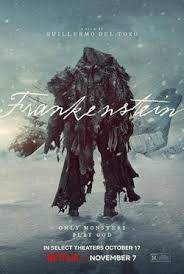
What Is Frankenstein About?
The premise of Frankenstein in 296 words, with nothing given away. The full story and the ending follow below.
In a bleak, frost‑bitten world where science collides with superstition, a Royal Danish vessel drifts through the Arctic, its crew haunted by whispers of a man who defied nature. The frozen horizon frames a story that feels both gothic and unsettlingly modern, a landscape where ambition is as cold and relentless as the ice itself. The atmosphere pulses with a quiet dread, hinting at secrets buried beneath snow and steel, while the ship’s uneasy silence suggests that the line between creator and monster may soon blur.
Victor Frankenstein is a brilliant yet selfish surgeon whose relentless curiosity drives him toward an impossible goal: to conquer death itself. Raised under the shadow of a demanding father and the loss of his mother, Victor’s intellect is matched only by his hubris. With the backing of a wealthy arms merchant, Henrich Harlander, he retreats to an isolated tower, where he assembles a laboratory that feels more like a cathedral of hubris than a place of healing. Surrounded by the stark beauty of the 19th‑century scientific elite, Victor’s obsession isolates him from those who might temper his reckless pursuit.
From the fragments of stolen flesh emerges the Creature, a towering being animated by Victor’s daring experiment. Though physically imposing, the creature’s yearning for acceptance and understanding mirrors the very humanity Victor seeks to outwit. As the creature stirs, it becomes a mirror for Victor’s own insecurities, drawing in characters such as Elizabeth, a poised woman caught between love and loyalty, and William, Victor’s brother whose presence adds familial tension. Their interconnected fates set the stage for a haunting exploration of power, responsibility, and the terrifying cost of playing god, leaving the audience to wonder how far each will go before the cold Arctic wind whispers the true price of creation.
What Happens in Frankenstein?
The complete story of Frankenstein, from the first scene to the last, in 1,094 words (about 5 minutes). Spoilers throughout. Names in the text link to 5 cast member pages.
Spoilers ahead
Prelude
In 1857, the Horisont, a Royal Danish Navy ship bound for the Arctic, becomes jammed in the ice and vulnerable to the cold. The crew discover the gravely injured Victor Oscar Isaac Frankenstein, and a frightening Creature emerges, demanding Victor’s surrender. Captain Anderson Lars Mikkelsen intervenes with a blunderbuss and sinks the Creature beneath the frigid water. As the ship braces for fate, Victor begins to tell his side of the story, and the tale of the Creature’s birth is set in motion with chilling clarity and a promise of conflict to come.
Part I: Victor’s Tale
Victor Oscar Isaac Frankenstein grows up amid loss and abuse, his mother dying in childbirth and his aristocratic father shaping him into a brilliant, if bitter, surgeon. His early brilliance is tempered by a fierce impatience with death and a hunger to master life itself. Yet his zeal leads him to the brink of sacrilege when he is expelled in 1855 from the Royal College of Surgeons of Edinburgh for reanimating corpses, a hush-denied achievement that provokes a stern disciplinary verdict.
Into Victor’s orbit steps the powerful and unsettling Henrich Harlander Christoph Waltz, an arms merchant who offers unlimited funding and a secluded tower for Victor’s experiments. With William Frankenstein Felix Kammerer by his side, Victor begins to assemble a laboratory that draws on spare parts from hanged criminals and Crimean War dead, driven by a fierce determination to defy death through science. Harlander’s conditions grow harsher as he reveals his own mortality—disease has bent his will—and he insists on a brain swap for the Creature. Victor refuses, even as the pressure grows, and Harlander dies attempting to sabotage the project.
Within the tower, Victor finally brings the Creature to life, a moment of awe tinged with dread as the creature awakens. The Creature’s strength and rapid healing astonish Victor, but the being learns to speak only a single word: “Victor.” Victor projects his fear and anger onto the Creature, mimicking his father’s harsh discipline and driving a wedge between them. Elizabeth Mia Goth, William’s beloved fiancée and Harlander’s niece, is drawn into the orbit of Victor’s obsession and begins to see the Creature not just as a monster but as a being capable of feeling.
A pivotal turn occurs when Elizabeth comforts the Creature and teaches him to speak her name, a moment of tenderness that Victor fears but cannot deny. Victor, in a desperate act, tries to shield his laboratory and the Creature inside by burning the tower, a blaze that traps them both and leads to a devastating explosion that wounds Victor’s leg. The next morning, the Creature survives the blast and is briefly chained within the wreckage, a wary, powerful presence who senses that it is now a creature without a place in human society. Victor escapes, but the shock of what he has wrought lingers, and he begins to realize the depth of the gulf that has opened between creator and creation.
As Victor recounts his portion of the tale, the Creature takes shape in the woods and reveals a different perspective on the events that followed. The ship’s crew listen with growing tension as the Creature’s story begins to unfold, even as a new world of danger and longing opens up around them.
Part II: The Creature’s Tale
The Creature escapes the explosion and wanders into the forest, where he is shot at by nearby hunters and forced to seek shelter in the mill gears of a farm. There, unseen, he watches a human family from behind walls and learns to move with quiet gentleness, a “Spirit of the Forest” he comes to understand through the warmth of a blind grandfather who teaches his granddaughter to read. The Creature learns to read and speak by listening to their quiet lessons, absorbing the rhythms of human speech and the ache of loneliness.
When winter comes, the family departs, and the Creature remains with the blind man, who helps him discover the fragments of his torn past and guides him toward the truth of his origin. The Creature’s growing comprehension of his own existence deepens his longing for companionship and a sense of purpose. He returns to the ruined laboratory and discovers the address to Victor’s estate, a map to the life that could have been his own. The Creature’s quiet kindness is revealed in small acts of protection—he helps the family, earns their gratitude, and earns the title of the “Spirit of the Forest” from those who sense his benign presence.
The Creature learns that his life is not meant to end in isolation. He travels back to confront Victor on the night of William and Elizabeth’s wedding, demanding that Victor create a companion who will share his life and ease the fear of perpetual solitude. Victor refuses, a decision that fractures their bond and leads to a violent confrontation. The celebration at the wedding erupts into chaos as the Creature attacks the guests, and Elizabeth is fatally wounded when she tries to shelter him with her own body. The accusations sharpen as a dying William calls Victor the true monster, a verdict that reverberates through Victor’s soul as the Creature carries Elizabeth to a cave and stays by her side as she dies.
With the wedding shattered and a future erased, the Creature resolves to hunt his creator for all eternity, a bitter, resolute vow that drives him toward the Arctic. Victor pursues the Creature with dwindling strength, their chase culminating in a final exchange of remorse and regret. Victor dies from his injuries, and the Creature, in a moment of fragile mercy, forgives his “father.” With the weight of their shared torment lifting, the Creature pushes the ship into open water and, for the first time, allows himself to reach toward the sunlight that Victor once taught him to seek. Anderson’s crew, weary but hopeful, turns back toward home, leaving the Creature alone with the vast, cold sea and the possibility of a new dawn.
Finale
The sea air washes over the Arctic as the Creature stands at the edge of the ice and looks toward the sunlit horizon. He is a being forged in pain and learning, capable of both violence and tenderness, now choosing to embrace a future where he can rise above his origins. In these final moments, the Creature embodies both the cost of creation and the possibility of redemption, a stark reminder that even the most terrible acts can yield a glimmer of light when confronted with truth, forgiveness, and the willingness to endure.
Frankenstein Timeline: Every Key Event in Order
15 key events in the order they happen, from “Prelude: Horisont trapped; Victor and the Creature revealed” to “The hunt, siege, and Arctic fate”. 15 events name a place, across 13 locations.
- 1
Prelude: Horisont trapped; Victor and the Creature revealed
The Horisont, a Royal Danish Navy ship bound for the North Pole, is trapped in thick ice. The crew discovers Victor Frankenstein gravely injured and confronted by a vengeful Creature demanding his surrender. Captain Anderson tries to quell the situation by sinking the Creature into the icy water, while Victor explains that he is the Creature's maker and begins recounting how it was created.
When:1857 Where:Horisont, Arctic ice
- 2
Victor's childhood and family pressures
Victor grows up under his aristocratic father's harsh discipline after his mother's death during the birth of his younger brother William. The loss fuels his grief and drives him toward brilliant, reckless ambition in the medical arts. The abusive dynamic shapes his later arrogance as a surgeon, pushing him to defy ethical boundaries.
Where:Victor's family home
- 3
Expulsion from Edinburgh College
In 1855, Victor is expelled from the Royal College of Surgeons of Edinburgh for reanimating corpses, an act the disciplinary tribunal denounces as sacrilege. He is banished from conventional practice and begins to seek private funding for his more dangerous experiments. The event marks a turning point toward lone research and secrecy.
When:1855 Where:Edinburgh, Royal College of Surgeons
- 4
Harlander offers resources and a secluded tower
Arms dealer Henrich Harlander approaches Victor with unlimited funding and a secluded laboratory tower where he can pursue experiments in isolation. Victor accepts, envisioning total control over life and death. The offer foreshadows Harlander's hidden motives and the costs of their collaboration.
Where:Harlander's tower
- 5
Harvesting parts from war and criminals
During the Crimean War, Victor harvests body parts from hanged criminals and battlefield casualties to assemble a reanimatable creature. He imagines a perfect being that can be brought to life through electric currents and the lymphatic system. The inaccessible lab becomes the birthplace of a being who will later challenge him.
When:Crimean War era Where:Harlander's tower laboratory
- 6
Harlander’s revelation and death
Harlander, suffering from syphilis, pushes for placing a brain into the Creature. Victor refuses, knowing the danger of granting such power. In a heated confrontation, Harlander sabotages the experiment and falls to his death, exposing the deadly stakes of their work.
Where:Laboratory tower
- 7
The reanimation attempt and awakening
Victor electrifies the Creature in a late-night attempt to reanimate it, but the initial effort fails. The next morning, the Creature lies alive, incredibly strong and newly aware. Victor stands over his creation with a mix of awe and horror.
When:the following morning Where:Laboratory tower
- 8
The Creature’s first attempts at language
The Creature begins to communicate by observation, able to speak only one word—'Victor'—as he is kept chained in the tower. He studies human speech and gradually grasps the basics of language as Victor grapples with his responsibility.
Where:Tower laboratory
- 9
Elizabeth teaches the Creature to speak her name
Elizabeth, William’s fiancée, visits the tower and forms a fragile bond with the Creature. She teaches him to say her name, giving him a glimpse of humanity and complicating Victor's control over his creation. The moment sows doubt and fear in Victor about his own project.
Where:Tower/lab
- 10
Fire and ruin: Lab destroyed
In a panic, Victor burns the laboratory, trapping the Creature inside. The blaze destroys much of the lab and leaves Victor with a wounded leg when the tower explodes. The incident cements the Creature's reality as a dangerous, sentient being in Victor's mind.
Where:Tower laboratory
Show the other 5 events of Frankenstein Hide the last 5 events
- 11
The Creature boards the Horisont and reveals his side
The Creature escapes the flaming lab and boards the Horisont, confronting Captain Anderson and revealing his side of the story. He accuses Victor of creating and abandoning him, igniting a manhunt that circles back to the ship.
Where:Horisont ship
- 12
The Spirit of the Forest and the farm family
The Creature wanders into the woods and finds shelter among a farm family, where a blind grandfather teaches his granddaughter to read. The Creature becomes their unseen helper, earning the villagers' gratitude as the 'Spirit of the Forest' while quietly learning to speak.
Where:Countryside farm and woods
- 13
Journey to the truth and return to the lab
Determined to uncover his origins, the Creature travels to the ruined laboratory and studies Victor's records to learn the truth and locate Victor's estate. He later returns to the farm, only to witness wolves attacking the blind man and be forced to flee again.
Where:Ruins of laboratory; Victor's estate
- 14
Wedding night confrontation and tragedy
On William and Elizabeth's wedding night, the Creature confronts Victor and demands a companion. Victor refuses, expressing disgust and regret for his creation. Elizabeth tries to defend the Creature and is shot; William dies calling Victor the true monster.
Where:Wedding hall
- 15
The hunt, siege, and Arctic fate
The Creature carries Elizabeth to a cave and comforts her as she dies, while Victor pursues the Creature across the Arctic. A dynamite attack fails, and Victor succumbs to his injuries, dying in the cold. The Creature drags the ship into open water and, finally free, reaches toward the sunlight as Anderson turns homeward.
Where:Arctic, near the lab ruins
Who Are the Main Characters in Frankenstein?
6 characters, among them Victor Frankenstein (Oscar Isaac), The Creature (Jacob Elordi) and Elizabeth (Mia Goth): who each one is and the part they play in the story. Every profile links to the actor’s page.
-
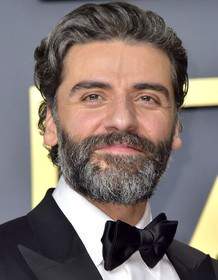
Victor Frankenstein (Oscar Isaac)
Played by Oscar Isaac
A brilliant but arrogant surgeon who is haunted by his mother’s death and driven to 'cure' death through unchecked science. His obsession with creation and control leads him to manipulate life, with tragic consequences for those around him. He alternates between charismatic leadership and cruel discipline, echoing his father's abuses.
- 🧠 Brilliant
- 🧨 Obsessive
- 🦴 Controlling
-

The Creature (Jacob Elordi)
Played by Jacob Elordi
A being of immense physical power who learns language and humanity by observing others. Cast into isolation, he seeks purpose and companionship while grappling with rage, fear, and longing. His perspective reveals the pain of being feared as a monster simply for existing.
- 🪨 Powerful
- 🗣️ Finding voice
- 🐾 Misunderstood
-

Elizabeth (Mia Goth)
Played by Mia Goth
William’s fiancée who offers a bridge of humanity to the Creature by teaching him to speak and showing kindness. She embodies compassion and resilience, becoming a catalyst that exposes Victor’s moral failure. Her presence deepens the tragedy with a humane counterpoint to the scientist’s arrogance.
- 💞 Compassion
- 👗 Grace
- 🗝️ Catalyst
-

William Frankenstein (Felix Kammerer)
Played by Felix Kammerer
Victor’s younger brother, favored by their father and caught in the crossfire of Victor’s ambition. His engagement with the Creature’s fate unveils the personal costs of scientific pride. His death marks a turning point that intensifies the moral stakes.
- 👶 Innocence
- 🕯️ Hope
- ⚖️ Innocence lost
- CA
Captain Anderson (Lars Mikkelsen)
Played by Lars Mikkelsen
The pragmatic, duty-bound captain who pursues the Creature across ice and sea. He embodies leadership under extreme pressure and serves as a foil to Victor’s reckless experimentation. His decisions drive the pursuit to its Arctic conclusion.
- ⚓ Duty
- 🧭 Pursuit
- 🧊 Cold resolve
-

Harlander (Christoph Waltz)
Played by Christoph Waltz
A wealthy patron who funds the experiments, driven by a mix of ambition and a terminal disease. His crude demands push Victor toward a dangerous path, revealing the corrupting influence of power and money on science.
- 💰 Power
- 🧪 Corruption
- ⚖️ Influence
Where and When Is Frankenstein Set?
Frankenstein is set in Horisont ship, Arctic ice, Victor's isolated laboratory tower, a rural farm… (1855–1857). Here is why the time and place matter to the story.
When
1855–1857
Set in the mid-19th century, the narrative sits in a period of rapid scientific curiosity and imperial conflicts. The events reference the era of the Crimean War and a culture that prizes intellectual ambition, often at the expense of ethics. Victorian-era institutions and reforms frame Victor's expulsion and the moral stakes surrounding reanimation experiments.
Where
Horisont ship, Arctic ice, Victor's isolated laboratory tower, a rural farm, ruins of the laboratory, a cave
The story unfolds across a ship trapped in polar ice and the bleak, wind-swept landscapes of a remote Arctic. Key locations include a secluded laboratory tower where dangerous experiments unfold, a nearby farm where an unseen guardian helps a blind family, and the open ice that becomes the pursuit ground and eventual revelation. The settings emphasize isolation, harsh weather, and the tension between scientific ambition and human connection.
- ❄️ Icebound
- 🚢 Naval
- 🧭 Isolation
- 🏔️ Remote
What Are the Themes of Frankenstein?
3 ideas the story keeps returning to, among them Hubris, Loneliness and Redemption.
-
01
Hubris
The film centers on scientific ambition unchecked by moral responsibility. Victor’s relentless drive to conquer death leads him to make dangerous choices, funding and guiding experiments that threaten those around him. The consequences ripple through the story, blurring the line between genius and monstrosity.
-
02
Loneliness
Isolation drives both Victor and the Creature, each seeking belonging in a world that rejects them. The Creature learns language and empathy by observing others, only to confront a society that fears him. Companionship becomes the most coveted, and its denial shapes motive and action.
-
03
Redemption
The ending reframes the story as a search for forgiveness rather than revenge. Victor admits fault, and the Creature shows mercy, suggesting possible peace after a cycle of abuse and violence. The final gaze toward sunlight signals a fragile, ambiguous hope rather than triumphant closure.
How Does Frankenstein End?
The last act of Frankenstein and what it means, in 331 words. The ending lands as bittersweet. Big spoilers: read the plot summary first if you have not seen it.
The final act, in full
In the film’s closing moments Victor Frankenstein, gravely wounded and surrounded by ice, recounts his tale to the Arctic captain. As his life wanes, he finally drops the mask of arrogance that has defined him throughout the story, admitting his culpability for the deaths of his brother, his fiancée, and countless others. He kneels before the creature—not as a master, but as a man seeking redemption—and asks for forgiveness. The monster, whose own immortality has become a curse, grants it, allowing Victor to die with a measure of peace.
After Victor’s breath fades, the creature stands alone on the frozen shore, watching the ship depart. The camera lingers on his solemn silhouette, suggesting that, freed from the weight of his creator’s condemnation, he must now confront an endless existence on his own terms. The film leaves his fate deliberately open‑ended: he is immortal, yet now carries the possibility of choosing how to live, rather than being driven solely by vengeance.
The tragedy that fuels this resolution is rooted in the brief, tender bond between the creature and Elizabeth, Victor’s intended bride. Their unexpected connection offers the monster a glimpse of humanity, but it also provokes Victor’s jealous rage. When Victor discovers them together on her wedding night, he fires a shot that mortally wounds Elizabeth, and she dies cradled in the creature’s arms, whispering that she never belonged in this world. Her death cements the creature’s turn from seeking acceptance to exacting retribution, while also cementing Victor’s ultimate realization that his own hubris made him the true monster.
Throughout these final scenes, the recurring vision of the flaming angel—once a symbol of Victor’s yearning for divine guidance—transforms into a skeletal visage, mirroring his descent from lofty ambition to bitter remorse. In the end, Frankenstein trades the novel’s bleak conclusion for a bittersweet note: the creator dies absolved, the creature gains a sliver of hope, and the lingering, icy landscape stands as a quiet testament to the monstrous consequences of unchecked ego.
What Kind of Film Is Frankenstein?
Dark in tone, with variable pacing and a moderate story, going by the plot summary.
- Tone
- Dark
- Pacing
- Variable
- Story
- Moderate
- Intensity
- High
- Ending
- Bittersweet
A dark and intense gothic tragedy that explores the profound loneliness and tragic consequences of playing god, creating a somber and melancholic atmosphere with moments of brutal horror.
- gothic
- somber
- tragic
- oppressive
- melancholic
- anxious
- father son relationship
- hubris and downfall
- man vs nature
- creation and responsibility
Content notes: body horror, public execution, animal death (wolves), suicide (implied), child death, emotional abuse.
Quiz
How well do you remember Frankenstein? Test yourself on the story.