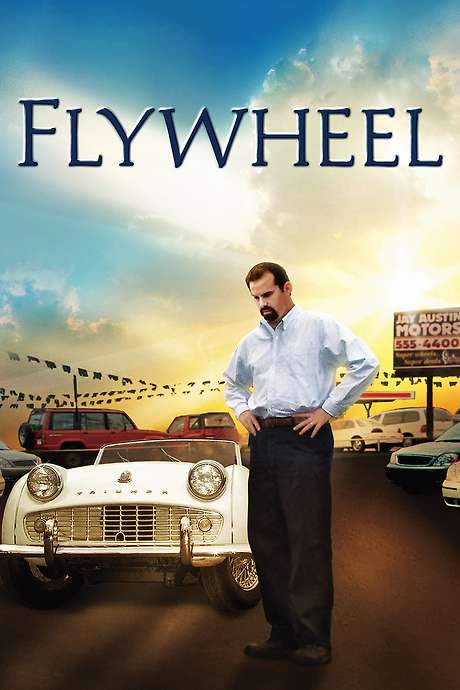
What Is Flywheel About?
The premise of Flywheel in 269 words, with nothing given away. The full story follows below.
In a modest town where the hum of engines mixes with the rhythm of Sunday services, a bustling car lot serves as both marketplace and stage for everyday ambition. At its center is Jay Austin, a smooth‑talking used‑car salesman whose effortless charm masks a habit of cutting corners. His world revolves around high‑pressure deals, glossy brochures, and the constant pressure to keep the lot afloat, all while the surrounding community watches from the pews and the parking lot alike.
Behind the polished veneer, Judy Austin navigates the challenges of a growing family, her steady faith offering a counterpoint to her husband’s restless hustle. Their son, Todd, watches with a growing sense of unease, sensing the strain between ambition and integrity. The dealership’s crew—Bernie Meyers and Vince Berkeley—inject a steady stream of comic relief, their larger‑than‑life personalities highlighting the fine line between bravado and folly. As financial clouds gather and whispers of ethical shortcuts drift through the showroom, the atmosphere cracks open just enough to let doubt seep in.
Enter Kevin Cantrell, a curious newcomer whose probing questions stir the air, and Hillary Vale, a local reporter whose presence adds a subtle, watchful pulse to the town’s daily life. Even the gleam of a freshly repaired Triumph, tended by Max Kendall, hints at the possibility of renewal hidden beneath layers of grease and grit. The film balances humor with earnest reflection, painting a portrait of a man caught between the allure of quick profit and the quiet call of conscience, inviting the audience to wonder how far a single choice can ripple through a family, a business, and a community.
What Happens in Flywheel?
The complete story of Flywheel, from the first scene to the last, in 985 words (about 4 minutes). Spoilers throughout.
Spoilers ahead
Jay [Alex Kendrick] Austin is a car salesman who consistently cheats his customers, even to the point of overcharging his own pastor. He trains his rotund salesmen, Bernie Meyers [Tracy Goode] and Vince Berkeley [Treavor Lokey], to do likewise. Jay attends church only because his wife Judy Austin [Janet Lee Dapper] wants him to go, and he even fakes giving a tithe donation. His relationships with Judy, who is pregnant, and his son Todd Austin [Richie Hunnewell], who disapproves of his dishonesty, begin to strain as foreclosure looms over his lot.
When conscience finally gnaws at him, Jay stumbles upon a broadcast of a pastor declaring that “you’re in the shape you’re in today because of the choices you’ve made.” The moment is spoken aloud on screen, and the message sticks. > you’re in the shape you’re in today because of the choices you’ve made. The simple, piercing line becomes a turning point: Jay is suddenly pulled toward a born-again Christian awakening and a dramatic shift in how he runs his business.
From that point on, Jay apologizes to Judy and to Todd and resolves to sell cars honestly from then on. He confronts his bank’s looming threat of foreclosure with a new resolve, choosing integrity over easy profit even as debt piles up and the threat of losing the dealership hangs over him. The family’s faith and hope become intertwined with his business decisions, and the change in strategy is blunt: honest sales, fair pricing, and a vow to treat customers with respect.
Yet the challenge intensifies when a fresh, seemingly innocent newcomer arrives: Kevin Cantrell [Daniel Titus] shows up to work for six weeks and asks pointed questions about the new, ethical approach. When pressed about not squeezing every last dime from a sale, Jay explains that they must “live with how [they] run the business,” and that if you treat people right, it’ll come back to you. The encounter leaves Kevin unimpressed at first, but it also foreshadows a deeper test of Jay’s faith and his resolve.
Even as the honest approach starts to draw customers, Kevin’s undercover presence reveals itself to be part of a larger investigative report. Jay’s dealership is portrayed as the only one that operates with integrity among the others caught in the broadcast probe. The public verdict has real consequences on the lot: suddenly, thirty people show up to buy cars in a single day, and Judy steps in to help close deals under the bright glare of local television scrutiny. The bank’s demands continue to hover, yet the surplus from these sales helps cover the bills and keep the finances afloat, at least for the moment.
As the truth about the prior dishonest practices emerges on TV, the story expands from the showroom into the home. Hillary Vale [Lisa Arnold], a WALB-TV reporter, covers the evolving situation, and her on-air updates capture the community’s shifting perception. On a follow-up broadcast, those who were overcharged begin to come forward with restitution, and Hillary’s audience hears more of the real impact behind the numbers. The reflection prompts Judy and Jay to lean further into their faith, reinforcing the film’s central message about mercy, restitution, and the power of choosing a better path.
Back at home, the emotional stakes rise: Judy’s contractions signal the arrival of a baby, and Jay rushes to the hospital with his wife. The couple welcomes a daughter named Faith, a living reminder of Jay’s renewed faith and the spiritual journey that redirected his life. This new chapter culminates in a quiet, symbolic moment: Jay drives away with his son in their beloved 1958 Triumph TR3, repaired by Max Kendall [Walter Burnett] with a newly installed flywheel, a small triumph that mirrors the larger transformation of Jay’s character and his business.
Throughout the arc, the film maintains a balancing act between humor and earnest moral reflection. Bernie Meyers and Vince Berkeley provide recurring comic relief that lightens the heavier moments, even as their presence underscores the moral shift taking place in the dealership. The tempo of the story ebbs and flows with moments of tension—foreclosure threats, undercover policework, and the pressure of live television—and moments of quiet conviction, prayer, and family devotion.
In the end, the narrative threads weave together into a portrait of redemption that remains grounded in everyday choices. Jay’s decision to treat customers with honesty does not erase his past mistakes, but it does redefine his future. The film invites viewers to consider how a single, heartfelt commitment to integrity can influence a business, a family, and a community. It is a story about accountability, second chances, and the unexpected ways grace can enter a life when someone chooses to change.
- Jay Austin [Alex Kendrick] remains the center of the story, a man whose conscience awakens and whose actions increasingly align with his evolving beliefs.
- Judy Austin [Janet Lee Dapper] stands as a steady partner whose faith and support help guide the family through financial and emotional trials.
- Bernie Meyers [Tracy Goode] and Vince Berkeley [Treavor Lokey] anchor much of the film’s humor while illustrating how attitudes about integrity ripple through a business.
- Kevin Cantrell [Daniel Titus] represents the external test of the new ethic, challenging Jay to justify the shift in strategy and the patience required for genuine change.
- Hillary Vale [Lisa Arnold] helps frame the public dimension of Jay’s transformation through journalism and community response.
- Max Kendall [Walter Burnett] and the Triumph TR3 provide a tangible symbol of repair and renewal, echoing the broader message of rebuilding trust and livelihoods.
This is a story about choosing honesty when it costs you something, about making restitution when you can, and about finding a new sense of purpose in the wake of past missteps. It invites viewers to reflect on their own choices and the faith that can sustain a family and a business through difficult times.
Flywheel Timeline: Every Key Event in Order
15 key events in the order they happen, from “Dishonest beginnings at the dealership” to “Ending: a hopeful ride and a repaired engine”. 15 events name a place, across 11 locations.
- 1
Dishonest beginnings at the dealership
Jay Austin Motors is shown as a place where Jay cheats customers and even overcharges his own pastor. He mentors his rotund salesmen, Bernie and Vince, to push for higher profits through deception. The dealership thrives financially on deceit, creating tension with his wife and son.
Where:Jay Austin Motors dealership
- 2
Church attendance and fake tithe
He attends church but mainly to appease Judy. He fakes giving a tithe donation to the church to maintain appearances. The deception blends with his business lies, setting up a later moral reckoning.
Where:Church
- 3
Foreclosure dread
The bank pressures him as foreclose threats loom over the dealership lot. He faces potential loss of his business and livelihood because of unpaid debts. The financial squeeze intensifies the conflict between his deceit and his family.
Where:Jay Austin Motors lot
- 4
Conviction via a televised sermon
While flipping channels, a pastor proclaims that people are where they are because of the choices they've made. The message strikes Jay personally and he begins to feel a growing conscience. This moment triggers the decision to change.
Where:Home
- 5
Born-again and plan to change
Jay becomes a born-again Christian and vows to reform his business practices. He apologizes to Judy and his son for the hurt he's caused. He resolves to sell cars honestly from that point on, regardless of the personal cost.
Where:Jay Austin Motors, Home
- 6
Honest but cautious sales start
With new principles, Jay runs the dealership honestly but the profits are only modest. He acknowledges he's thousands of dollars in debt and fears losing the lot if the bank's demands aren't met. Despite the risk, he trusts that doing right will eventually pay off.
Where:Jay Austin Motors
- 7
Kevin Cantrell's six-week undercover
A newcomer named Kevin Cantrell arrives to work for six weeks, probing Jay's methods with pointed questions about overpricing and customer pressure. Jay answers honestly, insisting he believes treating people right will pay off. Kevin's undercover role ends without fanfare, but his questions spark lingering doubt and scrutiny.
Where:Jay Austin Motors
- 8
Undercover ends; Jay appears on news investigation
Jay later sees himself featured in a television investigation on car dealers. The report highlights cheaters but lists Jay's dealership as the only honest one, creating a paradox that humbles him. The public revelation begins to rebuild trust in the business.
Where:TV studio
- 9
A crowd responds: 30 buyers arrive
The next day, thirty people show up to buy cars, drawn by the news result and word of mouth. Jay even calls Judy to help sell all the cars on the lot. The sudden demand tests the integrity of the new practices while easing the bank's pressure for payments.
Where:Jay Austin Motors lot
- 10
Bank demands met by sales
The total sales exceed the cost of the cars, enough to cover the banker's demands for payment. The financial hurdle is cleared because honest business translates into real results. Jay feels a wave of relief mixed with renewed responsibility.
Where:Jay Austin Motors lot
Show the other 5 events of Flywheel Hide the last 5 events
- 11
Restitution decision
Encouraged by Judy, Jay decides to restitution all the customers he overcharged. He discovers the restitution amount matches the profit he earned, turning compensation into a moral victory. The gesture reinforces his faith and commitment to his reform.
Where:Dealership, then home
- 12
Hillary Vale interview and Bernie's accusation
A live interview with WALB-TV features Jay as he addresses the fallout from his past. Bernie is shown saying that Jay is a cheater, prompting Hillary Vale to suggest viewers decide for themselves. The segment ignites new interest and debate about the true character of the dealership.
Where:WALB-TV studio
- 13
Viewer reactions and a mid-broadcast update
Several former customers appear at the lot to testify that there is more to the story. Hillary broadcasts an update 30 minutes after the initial report, reflecting the unexpected visitations. The coverage broadens the conversation about community trust and integrity.
Where:Jay Austin Motors lot
- 14
Birth of Faith
At home, Judy experiences contractions as they watch the news together. Jay rushes to bring her to the hospital, where their baby girl is born and named Faith. Faith becomes a living reminder of Jay's newfound faith and transformed life.
Where:Home and hospital
- 15
Ending: a hopeful ride and a repaired engine
The film closes with Jay driving away from the lot with his son in their restored 1958 Triumph TR3, a car fixed by Max with a rebuilt flywheel. The moment signals a fresh start built on integrity and faith. The flywheel title ties together the personal transformation and the mechanical repair that helped launch the new chapter.
Where:Road/Dealership
Who Are the Main Characters in Flywheel?
9 characters, among them Jay Austin (Alex Kendrick), Judy Austin (Janet Lee Dapper) and Bernie Meyers (Tracy Goode): who each one is and the part they play in the story. Every profile links to the actor’s page.
-
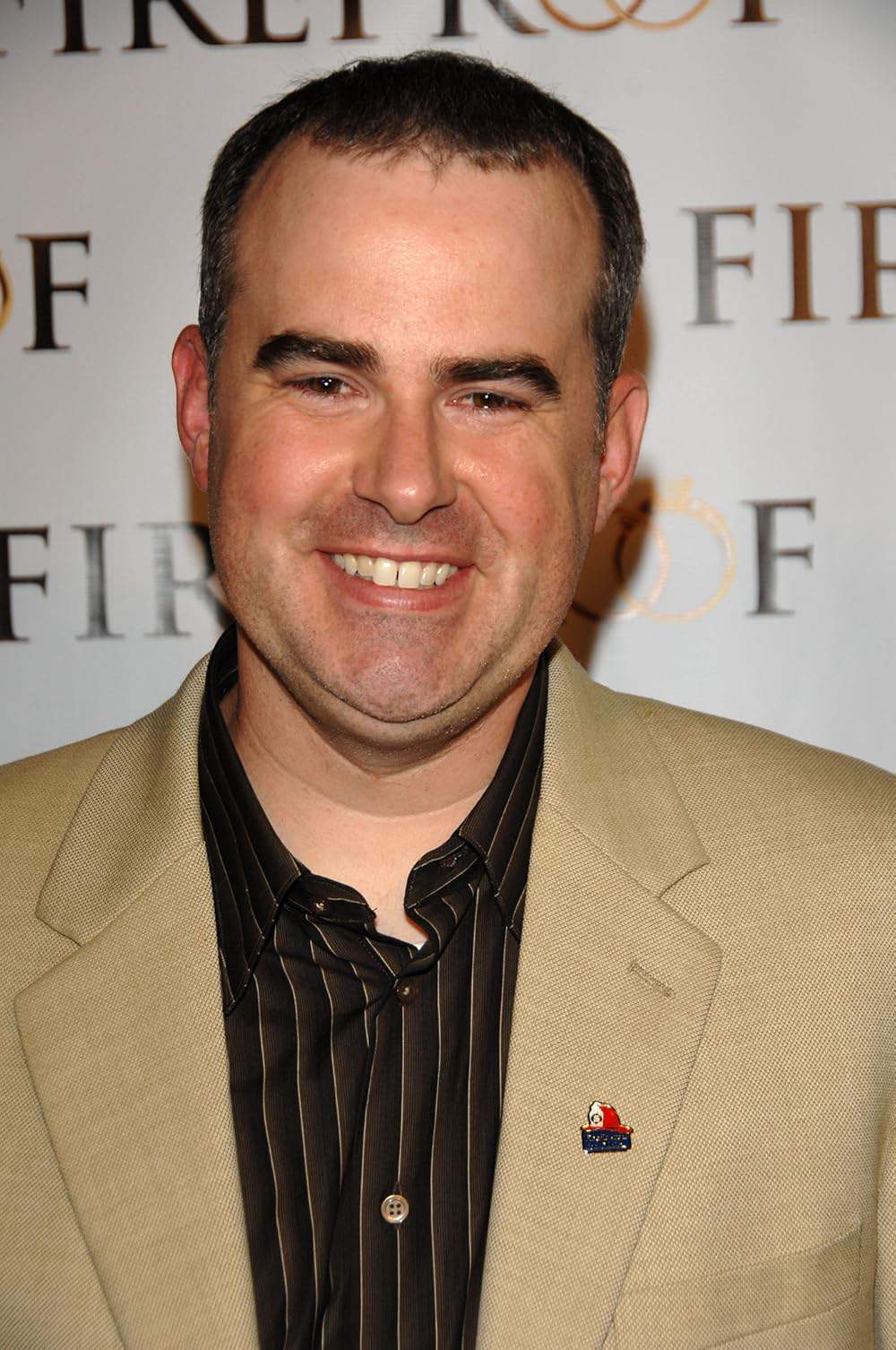
Jay Austin (Alex Kendrick)
Played by Alex Kendrick
A sharp-tongued car salesman who cheats customers to boost profits, he faces consequences when a televised sermon prompts a conscience awakening. After a born-again experience, he reforms his methods, choosing honesty over quick profits. His arc centers on balancing restitution with the risk of losing his dealership and livelihood.
- 💼 Integrity
- 🚗 Car Dealer
- 🔄 Redemption
- JA
Judy Austin (Janet Lee Dapper)
Played by Janet Lee Dapper
Jay's wife, pregnant and morally concerned about her husband’s dishonesty. She prays for him and supports his transformation, anchoring the family through financial and emotional turmoil. Her faith and patience help sustain the change in the household.
- 👪 Family
- 🙏 Faith
- 🕊️ Support
- BM
Bernie Meyers (Tracy Goode)
Played by Tracy Goode
One of Jay's rotund salesmen who blends humor with questionable ethics. His push for higher profits contrasts with Jay's honesty, and his departure marks a turning point in the dealership's culture.
- 🤣 Comedy
- 🧭 Integrity
- 💰 Greed
- VB
Vince Berkeley (Treavor Lokey)
Played by Treavor Lokey
A fellow salesman who embodies the dynamic resistance to changing practices. He adds to the tension around deceit but adapts as the new, honest culture takes root, highlighting the challenges of shifting a sales floor’s mindset.
- 👔 Sales
- 🛠️ Workplace
- 🏁 Change
- MK
Max Kendall (Walter Burnett)
Played by Walter Burnett
The dealership's mechanic who keeps the cars in working order and serves as a practical touchstone for the film’s turning point. His work on the flywheel symbolizes the pivot from deceit to diligent, honest craftsmanship.
- 🛠️ Technician
- 🧭 Reliability
- 🧰 Repair
- KC
Kevin Cantrell (Daniel Titus)
Played by Daniel Titus
An undercover agent working for six weeks to observe whether the dealership cheats customers. His presence triggers the revelation of the honest operation and the ensuing media attention, culminating in a twist of investigative transparency.
- 🕵️♂️ Investigation
- 🏷️ Truth
- 🔎 Discovery
- HV
Hillary Vale (Lisa Arnold)
Played by Lisa Arnold
A WALB-TV reporter who covers the dealership story, anchoring the evolving narrative and updating viewers as restitution unfolds. Her coverage frames the external perception of Jay’s transformation and its impact on the community.
- 📰 News
- 📺 Media
- 🎯 Accountability
- FA
Faith Austin (Ashlynn Dapper)
Played by Ashlynn Dapper
The couple's newborn daughter, whose name symbolizes the new start in Jay's life. Her birth occurs amid restitution and faith, making the family’s renewal a central emotional anchor of the ending.
- 👶 Family
- 🕊️ Renewal
- 💖 Love
- P(
Pastor (Michael Catt)
Played by Michael Catt
A local pastor whose sermon catalyzes Jay’s turning point, reinforcing the film’s message of redemption and accountability. He represents spiritual guidance shaping the narrative arc.
- ⛪ Faith
- 🗣️ Guidance
- 🌟 Inspiration
Where and When Is Flywheel Set?
Flywheel is set in Jay Austin Motors dealership, Jay's home, WALB-TV studio, hospital and bank (Early 2000s). Here is why the time and place matter to the story.
When
Early 2000s
The story unfolds in contemporary times, with modern advertising, banking, and media infrastructure shaping the plot. It follows a short, tense period where deceit and restitution play out in real time, reflecting the immediacy of financial pressures and moral choices. The timeframe emphasizes typical working-week rhythms—sales, church, and news broadcasts—driving the narrative forward.
Where
Jay Austin Motors dealership, Jay's home, WALB-TV studio, hospital, bank
The primary setting centers on Jay Austin's car dealership, a family business under pressure from the bank and public scrutiny. The action moves between the showroom floor, the home where Jay's family prays for him, and the bank threatening foreclosure, with interludes in a TV studio where the story goes public. The dealership, family home, and local media landscape anchor the film's realistic, small-town atmosphere.
- 🚗 Car dealership
- 🏥 Hospital
- 📺 TV studio
- 🏦 Bank
What Are the Themes of Flywheel?
3 ideas the story keeps returning to, among them Redemption, Integrity and Faith.
-
01
Redemption
A former deceitful salesman undergoes a conscience-driven transformation after a pivotal moment of spiritual awakening. The film traces his path from dishonest practices to making restitution with customers and rethinking his business ethics. Redemption is portrayed as a practical, transformative process affecting relationships, work, and community trust.
-
02
Integrity
Honesty is presented as a viable, long-term business strategy rather than a moral luxury. Jay’s initial reform brings lower profits and stress, testing his resolve. The story argues that ethical conduct builds trust, sustains the business, and ultimately reverses the threat of foreclosure.
-
03
Faith
Faith serves as a catalyst for personal and social renewal, guiding choices and accountability. Jay’s conversion is both spiritual and practical, influencing restitution and workplace culture. The faith-driven transformation extends to his family and customers, reinforcing a communal sense of forgiveness.
What Kind of Film Is Flywheel?
Hopeful in tone, with steady pacing and a straightforward story, going by the plot summary.
- Tone
- Hopeful
- Pacing
- Steady
- Story
- Straightforward
- Intensity
- Medium
- Ending
- Happy
An earnest and uplifting drama that follows a man's journey from dishonesty to integrity, balancing real-life tension with a reassuringly hopeful and faith-affirming tone.
- uplifting
- moral
- reflective
- earnest
- reassuring
- faith-based
- redemption
- faith and religion
- business ethics
- personal transformation
Quiz
How well do you remember Flywheel? Test yourself on the story.
Where to Watch Flywheel
Rent or buy it from Amazon Video and Apple TV Store. US availability and prices from JustWatch.





Streaming availability in the US, powered by