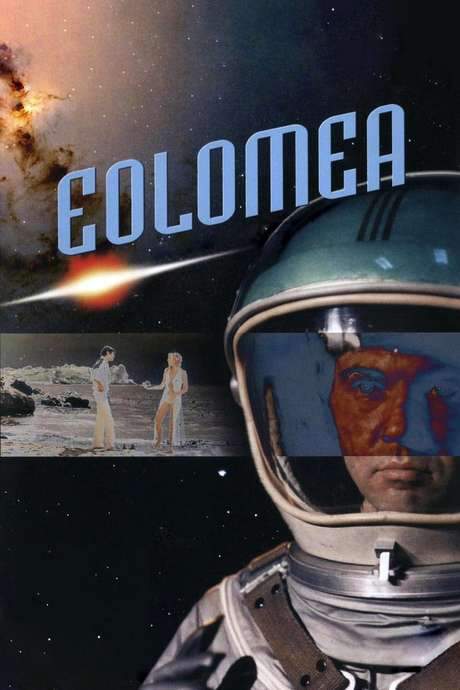
What Is Eolomea About?
The premise of Eolomea in 349 words, with nothing given away. The full story follows below.
In a near‑future where humanity’s foothold in orbit has become a fragile lattice of stations and cargo routes, a string of inexplicable disappearances throws the entire system into alarm. Over the course of three days eight supply ships vanish without a trace, and the once‑busy orbital outpost Margot falls eerily silent. The space council, charged with safeguarding Earth’s fledgling spaceflight program, calls an emergency session, and the Institute of Space Research issues an immediate, sweeping flight ban until the mystery can be unraveled. The atmosphere hangs heavy with a mix of scientific rigor and cold, institutional dread, as every monitor flickers with the possibility of an unseen threat.
At the heart of the response is Maria Scholl, the institute’s decisive lead scientist, whose reputation for unflinching logic makes her the natural choice to steer the investigation. Acting swiftly, she orders all missions to the affected sector to be grounded, a move that both steadies the nervous bureaucracy and fuels an undercurrent of frustration among those eager to understand the phenomenon. Her attention soon turns to her colleague Prof. Tal, whose oddly prescient comments and a secret file hint at a deeper, unsanctioned involvement with a project called Eolomea. Their professional rapport, once collegial, becomes a tense dance of inquiry and guarded distrust, suggesting that the line between sanctioned research and personal obsession may be thinner than the vacuum outside the stations.
The film’s tone balances cold procedural precision with the intoxicating allure of the unknown. References to a 19th‑century anomaly—an intermittent light in Cygnus that some have imagined as an artificial beacon—loom over the narrative, inviting speculation about a twin world, a “Eternal Spring,” that could exist beyond the reach of current technology. This tantalizing prospect fuels a quiet rebellion among the younger generation of scientists, whose restless curiosity clashes with the cautious directives of their elders. The story therefore unfolds as a meditation on humanity’s boundless drive to seek answers, set against the stark realities of limited resources, bureaucratic oversight, and the ever‑present possibility that the cosmos may be whispering a message that is just out of reach.
What Happens in Eolomea?
The complete story of Eolomea, from the first scene to the last, in 356 words (about 2 minutes). Spoilers throughout. Names in the text link to 1 cast member page.
Spoilers ahead
Authorities responsible for Earth’s spaceflight safety grow increasingly concerned over unexplained incidents at the Margo space base, where several ships and their crews have disappeared over three days. After a special session, the Institute of Space Research issues a temporary flight ban until the cause is identified. Professor Maria Scholl Cox Habbema suspects that fellow scientist Olo Tal [Rolf Hoppe] is withholding key information. She arranges a private meeting and learns about an unusual phenomenon observed in the late 19th century by British astronomers: a mysterious light in the Cygnus constellation that appears every 24 years. Soviet astronomers, after the first space flights, hypothesized that the light could be an artificial signal, potentially a powerful laser probing the Solar System for signs of life.
Pierre Brodsky, a senior researcher at the Mount Ararat observatory, conducts calculations and concludes that the signal might originate from a symmetrical twin of Earth, devoid of poles and tropics, which he names Eternal Spring or Eolomea after decoding its Morse signal. He lays out a startling possibility that such a world could exist and be reachable in theory, igniting a debate among scientists about humanity’s place in the cosmos.
Eager to reach Eolomea, Tal proposes a mission, but the council deems it unfeasible given the current limitations of rocket speed. The gap between ambition and capability widens, as bureaucratic caution clashes with the irresistible pull of discovery.
Undeterred, a group of 146 young scientists, unwilling to passively wait for alien contact, takes drastic action. They seize rockets necessary for the mission, embarking without formal approval in hopes of realizing humanity’s dream of encountering extraterrestrial intelligence. Their bold move challenges established protocols and raises profound questions about risk, responsibility, and the drive to push the boundaries of exploration.
As the story unfolds, the tension between safeguarding space endeavors and pursuing a potential life-bearing signal underscores a central theme: humanity’s relentless curiosity vs. the limits of present technology and governance. The path these scientists choose could redefine what is possible for humankind, and it invites the audience to weigh the costs and rewards of daring scientific initiative against the prudence of institutional oversight.
Eolomea Timeline: Every Key Event in Order
12 key events in the order they happen, from “Unexplained incidents at Margo space base trigger alarm” to “Curiosity vs governance becomes central theme”. 12 events name a place, across 11 locations.
- 1
Unexplained incidents at Margo space base trigger alarm
Over three days, ships and crews vanish at the Margo space base, leaving investigators baffled and authorities on edge. An urgent special session is convened to address the crisis. The Institute of Space Research responds by issuing a temporary flight ban until the cause is identified.
When:three days Where:Margo space base
- 2
Institute imposes a temporary flight ban
In the wake of the disappearances, the Institute of Space Research announces a temporary ban on flights until investigators can determine the cause. The decision halts new missions and puts pressure on researchers and pilots. The ban underscores the fragility of ongoing space exploration.
When:immediately after special session Where:Institute of Space Research
- 3
Maria Scholl probes possible withholding of information
Professor Maria Scholl suspects a fellow scientist is withholding critical data about the incidents. She arranges a private meeting to uncover what is being hidden. Her inquiry reveals discussion of a long-vanished astronomical signal observed in Cygnus.
When:early investigation phase Where:Institute of Space Research
- 4
Historical observation hints at Cygnus light
The private briefing reveals that British astronomers in the late 19th century recorded a mysterious light in Cygnus that appears every 24 years. The event is interpreted as a potential signal or beacon from deep space. This historical thread connects present events to a recurring pattern.
When:late 19th century Where:Cygnus region (historical observations)
- 5
Soviet astronomers propose an artificial signal hypothesis
Following the era of early spaceflight, Soviet astronomers hypothesize that the Cygnus light could be an artificial signal probing the Solar System for life. The idea raises the possibility of deliberate contact or reconnaissance from beyond Earth. The hypothesis fuels debate about how humanity should respond to such signals.
When:post-first space flights Where:Global observatories
- 6
Pierre Brodsky theorizes a twin Earth
Pierre Brodsky at Mount Ararat observatory calculates that the signal could originate from a symmetrical twin of Earth without poles or tropics. He coins the terms Eternal Spring and Eolomea after decoding Morse signals. His theory expands the scope of what might exist beyond known planets.
When:present-day Where:Mount Ararat observatory
- 7
Eolomea concept provokes debate on reachability
The possibility of an alien world that could be reachable in theory sparks a fierce debate among scientists. Proponents argue that discovery is within humanity’s reach, while skeptics point to overwhelming technological barriers. The discussion highlights tensions between ambition and practicality.
When:present-day Where:Scientific conferences
- 8
Tal proposes a mission despite feasibility concerns
Olo Tal suggests a mission to reach Eolomea, arguing that curiosity should drive exploration regardless of present speed limits. The proposal clashes with the cautious council that deems the effort unfeasible. The debate sets the stage for a dramatic decision.
When:before launch window Where:Space exploration council
- 9
146 young scientists take matters into their own hands
A bold, unsanctioned action unfolds as 146 young scientists seize rockets needed for the mission. They depart without formal approval in a bid to realize humanity’s dream of intelligent contact. Their defiant move tests institutional authority and raises questions about responsibility.
When:immediate Where:Margo space base launch facilities
- 10
The flight ban collides with the rogue mission
The unauthorized launch collides with the flight ban, triggering a crisis in space governance and safety protocols. Investigations begin into how the group managed to secure rockets. The event forces authorities to confront whether extraordinary risk can ever be justified by curiosity.
When:immediate after launch Where:Earth space facilities
- 11
Public and scientific reaction to the rogue mission
News of the seizure provokes a polarized reaction among scientists and the public. Some see it as courageous, others as reckless action that endangers lives. Debates rage over responsibility, risk, and the ethics of bypassing regulatory structures.
When:immediate Where:Global media
- 12
Curiosity vs governance becomes central theme
The story centers on the tension between humanity’s relentless curiosity and the limits imposed by technology and governance. The rogue mission becomes a test case for how far scientific initiative should go. The outcome could redefine what is possible in space exploration and safety.
When:ongoing Where:Earth governance bodies
Who Are the Main Characters in Eolomea?
5 characters, among them Professor Maria Scholl (Cox Habbema), Olo Tal (Rolf Hoppe) and Daniel Lagny (Ivan Andonov): who each one is and the part they play in the story. Every profile links to the actor’s page.
- PM
Professor Maria Scholl (Cox Habbema)
Played by Cox Habbema
A leading scientist at the Institute of Space Research, Scholl is meticulous, evidence-driven, and unafraid to question colleagues. She suspects Olo Tal is withholding key information and pursues the truth through careful analysis and private inquiry. Her leadership anchors the effort to understand the mysterious signal while balancing safety concerns and institutional protocol.
- 🔬 Science
- 🕵️ Mystery
- ⛑️ Safety
- OT
Olo Tal (Rolf Hoppe)
Played by Rolf Hoppe
An ambitious fellow scientist who advocates for an exploratory mission to Eolomea. Tal embodies risk-taking and a relentless drive to push beyond current capabilities, which puts him at odds with cautious authorities. His persistence fuels the plot as he challenges the bureaucratic limits of the council.
- 🚀 Ambition
- 🧩 Strategy
- 🧭 Risk
- DL
Daniel Lagny (Ivan Andonov)
Played by Ivan Andonov
A senior researcher at the Mount Ararat Observatory, Lagny is analytical and methodical. He works on calculations that support or challenge the idea of a symmetrical twin world and the source of the mysterious signal. His rational approach provides a counterpoint to more speculative impulses in the story.
- 🧠 Analysis
- 🧭 Astronomy
- 🛰️ Research
- K(
Kun (Vsevolod Sanayev)
Played by Vsevolod Sanayev
A prominent figure within the scientific community, Kun participates in the broader debate surrounding the signal and the implications of reaching out. His involvement underscores the collective nature of the inquiry and the diverse viewpoints within the research network.
- 👥 Academia
- 🧭 Debate
- 🌐 Networks
- SK
Sima Kun (Benjamin Besson)
Played by Benjamin Besson
A fellow scientist linked to the Kun faction, Sima Kun is part of the collaborative effort to interpret the Cygnus signal. He contributes to the ongoing discussion about feasibility, ethics, and the potential consequences of a manned mission without broad consensus.
- 🧬 Collaboration
- 🧭 Feasibility
- 🛡️ Ethics
Where and When Is Eolomea Set?
Eolomea is set in Margo Space Base, Mount Ararat Observatory and Institute of Space Research. Here is why the place matters to the story.
When
The events unfold in a modern era of space exploration where scientific ambition competes with bureaucratic oversight. Historical references to late 19th-century astronomical observations and early post-spaceflight debates frame the context, highlighting a continuum from curiosity-driven discovery to technologically complex missions.
Where
Margo Space Base, Mount Ararat Observatory, Institute of Space Research
Margo Space Base is the central hub for Earth’s spaceflight operations, currently under scrutiny after ships and crews vanish. The Mount Ararat Observatory serves as a key research outpost where scientists crunch data and calculate improbable signals. The Institute of Space Research acts as the governing body, issuing safety measures like flight bans to manage risk and maintain control over expeditions.
- 🔭 Space
- 🧭 Exploration
- 🏛️ Institutions
What Are the Themes of Eolomea?
3 ideas the story keeps returning to, among them Curiosity vs Caution, Ethics of Initiative and Search for Life.
-
01
Curiosity vs Caution
The film centers on humanity’s impulse to seek alien signals and understand the cosmos, clashing with institutional caution. Researchers push the boundaries of what is technically feasible, while safety boards enforce restrictions to prevent reckless expeditions. This tension drives the plot and tests the balance between daring inquiry and responsible governance.
-
02
Ethics of Initiative
A group of young scientists takes bold action, seizing rockets to pursue a dream of contact. Their choice raises questions about responsibility, risk, and the potential consequences of bypassing established protocols. The narrative weighs the moral costs of revolutionary science against the potential rewards of discovery.
-
03
Search for Life
The central mystery — whether the light in Cygnus is an artificial signal — drives the exploration of life beyond Earth. The pursuit compels characters to confront existential questions about humanity’s place in the universe. The theme juxtaposes scientific hypothesis with the possibility of a wider, intelligent cosmos.
What Kind of Film Is Eolomea?
Tense in tone, with steady pacing and a moderate story, going by the plot summary.
- Tone
- Tense
- Pacing
- Steady
- Story
- Moderate
- Intensity
- Medium
- Ending
- Ambiguous
A methodical and tense sci-fi procedural that builds suspense around a cosmic mystery, driven by scientific curiosity and a rebellious hope for interstellar contact.
- tense
- suspenseful
- speculative
- methodical
- determined
- hopeful
- space mystery
- scientific investigation
- first contact
- unauthorized mission
Quiz
How well do you remember Eolomea? Test yourself on the story.