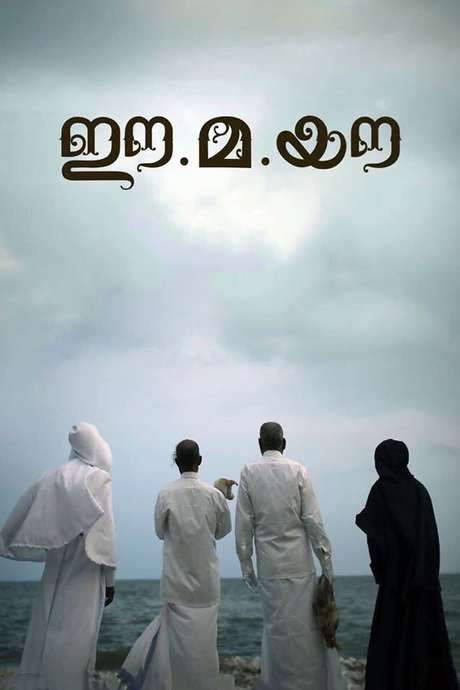
Ee.Ma.Yau. 2018

Directed by

Lijo Jose Pellissery
Made by

RGK Cinema
Ee.Ma.Yau. Plot Summary
Read the complete plot summary and ending explained for Ee.Ma.Yau. (2018). From turning points to emotional moments, uncover what really happened and why it matters.
Set in the serene coastal village of Chellanam, renowned for its vibrant fishing community, What’s After the Movie narrates a quietly powerful story centered around the passing of Vavachan [dileesh-pothan]. The film begins with Vavachan returning home after a long absence, only to find himself embroiled in disputes with his son [Eeshi] [chemban-vinod-jose] and his wife [Pennamma] [pauly-valsan], who urges him to settle down and stop wandering.
The film delves into the aftermath of Vavachan’s sudden death, which unfolds amidst a series of minor yet intense conflicts. On the evening of his demise, Vavachan gets into an altercation with [Chowro] [kainakary-thankaraj], following a distressing revelation about his daughter [Nisa] [krishna-padmakumar], who is involved in a premarital relationship. This argument, set on the beach in a humble shack where two local men are quietly playing cards, hints at the underlying tension and impending tragedy.
As the story progresses, What’s After the Movie portrays the somber reactions of Vavachan’s family. His wife [Pennamma], worried and weary, pleads for him to stop his wandering ways and settle down, echoing the village’s collective desire for stability. When [Eeshi] returns home, he shares a humorous yet poignant memory of his father’s funeral, claiming it was the most splendid in Chellanam. However, tragedy strikes when Vavachan collapses while drinking, ultimately succumbing to his injuries.
News of the death spreads quickly through the community. [Sabeth], Eeshi’s wife, eacherly informs neighbors, while [Ayyappan], the local ward member and [Eeshi]‘s friend, arrives to manage the situation. They seek out a doctor, [Dr. Gervasius], but due to the latter’s drunken state, they are forced to rely on a nearby nurse to confirm the death. Meanwhile, [Fr. Zacharia] [kainakary-thankaraj], the somewhat rude and eccentric parish vicar with a penchant for crime novels, overhears the incident and insists on involving the police.
The church and local families rapidly become embroiled in a dispute when a second family, claiming rights to Vavachan’s body, arrives. Tensions escalate as accusations fly, with some alleging foul play. [Fr. Zacharia], obsessed with uncovering a mystery, demands a thorough autopsy and investigation before Vavachan can be buried—a demand that fuels anger in [Eeshi], who responds violently by slapping the vicar. Outraged and humiliated, Fr. Zacharia refuses to conduct the burial in the church cemetery. The situation takes a dark turn when the gravedigger, digging Vavachan’s grave, unexpectedly dies, forcing the burial to take place in his own clandestine grave.
Meanwhile, two men, the same who were playing cards earlier, continue their game and reflect on how the situation has become increasingly complicated. [Ayyappan] seeks police intervention, and a circle inspector [inspector], after examining the scene, confirms that there is no criminal element involved. Nonetheless, the community mourns and criticizes Fr. Zacharia’s insensitivity, highlighting the importance of compassion over rigid doctrine.
As tensions reach their peak, [Eeshi], feeling deeply distressed and unable to wait for official permissions, takes the matter into his own hands. He digs a private grave in his courtyard, fully aware of the familial and social repercussions. With a heavy heart, he asks for his father’s forgiveness for not fulfilling his last wishes and proceeds to bury him himself. In a poignant scene, the community witnesses this act of love and desperation, standing in the rain with mixed feelings of remorse and reverence for the departed.
In the film’s quiet, reflective conclusion, viewers are treated to a surreal mid-credits sequence. The body of Vavachan’s faithful dog appears, a silent companion to the grave, while in the distant horizon of the sea, two boats adorned with lanterns approach the beach. It is gradually revealed that the two men playing cards are in fact angels, summoned to guide Vavachan, his dog, and the gravedigger’s soul to their respective afterlives—heaven and hell. This poetic ending offers a profound meditation on life, death, and the unseen journeys that follow, leaving viewers with a lingering sense of calm and introspection.
Ee.Ma.Yau. Timeline
Follow the complete movie timeline of Ee.Ma.Yau. (2018) with every major event in chronological order. Great for understanding complex plots and story progression.
Vavachan's Return and Confrontation
Vavachan mestri arrives home after a long journey. He gets into a heated fight with Chowro, who shames him about his daughter's premarital relationship with Sivanapan. This confrontation sparks tension among the villagers and starts the core conflict of the story.
Family Concerns and Vavachan's Death
Vavachan's wife Pennamma urges him to settle down and stop wandering. Vavachan drinks and boasts about his father's grand funeral, promising the same for himself. Ultimately, Vavachan falls to the ground and dies unexpectedly.
Notification of Vavachan's Death
Eeshi's wife Sabeth informs the neighbors about Vavachan's death. Pachayath ward member Ayappan arrives, takes charge, and seeks to confirm the death with local medical personnel, highlighting the community's response to the event.
Seeking Medical Confirmation
Neighbors attempt to find a doctor to confirm Vavachan's death. They are told the doctor is drunk and asleep, directing them to a nearby head nurse. The nurse, seeing the head injury, states only a doctor can officially confirm the death.
Fr. Zacharia's Intervention
Fr. Zacharia, the parish vicar, learns about the head injury and calls the police. His rude attitude and obsession with investigation hinder the ordinary procedures, reflecting his controversial personality.
Conflict Over the Body
A second wife of Vavachan arrives claiming rights to the body, leading to a dispute. Her family accuses Eeshi's family of murder and demands justice, intensifying the community tensions.
Vicar's Refusal to Allow Burial
Fr. Zacharia refuses to permit Vavachan's burial without proper investigation and autopsy. Eeshi, frustrated by the vicar's attitude, slaps him, prompting Zacharia to declare he will not conduct or allow burial in the church cemetery.
Unconventional Burial
The gravedigger, who earlier was preparing the grave, dies suddenly. Vavachan is buried in the same grave he had dug, as Eeshi takes matters into his own hands and buries his father in his courtyard amidst protests and rain.
Aftermath and Community Reflection
Neighbors and family members observe Vavachan's burial with remorse and reverence in the rain. The scene emphasizes the somber mood and the community's struggle with the events surrounding Vavachan’s death.
Supernatural Farewell Scene
In the mid-credits scene, the dog’s corpse is shown, symbolizing companionship after death. Two boats with lanterns approach the beach, revealing that the two card players are actually Angels escorting Vavachan, the gravedigger, and the dog’s souls to their respective afterlives.
Ee.Ma.Yau. Characters
Explore all characters from Ee.Ma.Yau. (2018). Get detailed profiles with their roles, arcs, and key relationships explained.
Vavachan
Vavachan is an elderly man whose death sparks a series of community conflicts. His character embodies traditional values and the physical toll of a rural life, serving as a catalyst for exploring societal reactions to mortality.
Eeshi
Eeshi is Vavachan's son who struggles to honor his father's last wishes amidst societal and religious obstacles. His character shows resilience and a desire to uphold family dignity despite external pressures.
Pennamma
Pennamma is Vavachan's wife, representing traditional maternal care and concern. Her reactions reflect the societal emphasis on respectability and family unity.
Fr. Zacharia Parapurath
A stern parish priest obsessed with religious protocol, he embodies rigid authority. His attitude fuels conflict, critiquing religious dogmatism and compassion.
Ayyappan
Ayyappan is a local Panchayath ward member who acts as a mediator during community disputes. His pragmatic approach highlights local governance and social cohesion.
Ee.Ma.Yau. Settings
Learn where and when Ee.Ma.Yau. (2018) takes place. Explore the film’s settings, era, and how they shape the narrative.
Time period
Contemporary period (late 20th or early 21st century)
The movie reflects a present-day setting with elements of traditional Kerala village life. It depicts ongoing social and cultural practices related to death, family status, and community interactions, indicating a contemporary era with adherence to local customs and beliefs.
Location
Chellanam, Ernakulam, Kerala, India
Chellanam is a coastal village in Ernakulam district, Kerala, known for its vibrant fishing community and scenic beaches. The village's lifestyle revolves around fishing and local customs, embodying the typical charm of a Kerala coastal hamlet. Its social fabric and seaside environment significantly influence the film's atmosphere.
Ee.Ma.Yau. Themes
Discover the main themes in Ee.Ma.Yau. (2018). Analyze the deeper meanings, emotional layers, and social commentary behind the film.
⚰️
Mortality
The film explores themes of death and mortality, emphasizing societal and familial reactions to the passing of Vavachan. It examines how death is processed within the community, highlighting rituals, beliefs, and the emotional responses of those left behind.
🤝
Justice and Authority
The narrative scrutinizes societal authority figures like the church vicar and the police, showcasing their influence on life and death matters. It questions the nature of justice, authority, and human compassion in a traditional community setting.
🌧️
Tradition vs. Modernity
The film contrasts traditional beliefs and customs with modern notions of law, morality, and human rights. This conflict is central to the characters' struggles, especially in handling Vavachan’s death and funeral arrangements amidst societal expectations.

Coming soon on iOS and Android
The Plot Explained Mobile App
From blockbusters to hidden gems — dive into movie stories anytime, anywhere. Save your favorites, discover plots faster, and never miss a twist again.
Sign up to be the first to know when we launch. Your email stays private — always.
Explore the mobile appEe.Ma.Yau. Spoiler-Free Summary
Discover the spoiler-free summary of Ee.Ma.Yau. (2018). Get a concise overview without any spoilers.
In the quiet fishing hamlet of Chellanam, the sea’s rhythm frames everyday life, turning simple routines into a tapestry of ritual and reverence. The village’s salt‑kissed streets, modest homes, and bustling shoreline markets create a world where community bonds are as sturdy as the boats that leave at dawn. A gentle, almost lyrical tone pervades the setting, inviting viewers to feel the weight of tradition against the relentless tide of change.
When the sudden loss of Vavachan Mesthiri reverberates through the close‑knit community, the film opens its lens on the way grief settles over a place that lives so openly with the ocean’s cycles. The narrative rests on the quiet aftermath of his passing, using the coastal backdrop to explore how a single death can ripple through families and neighbors, prompting reflection on mortality, duty, and the unseen threads that hold people together.
At the heart of this contemplation stand several distinct voices. Eeshi, Vavachan’s son, returns home bearing his own mix of humor and unresolved tension, while Pennamma, his steadfast wife, embodies the yearning for stability amid uncertainty. Their daughter Nisa carries a quiet defiance that hints at generational shifts, and friends such as Ayyappan, a local ward member, and Sabeth, Eeshi’s wife, weave their own perspectives into the communal fabric. Even figures like Fr. Zacharia, the parish vicar, and Dr. Gervasius, the village’s reluctant physician, add layers of subtle conflict between faith, bureaucracy, and human compassion.
The film’s style is understated yet powerful, allowing moments of stillness to speak louder than dialogue. Through natural lighting, the soft glow of lanterns, and a soundtrack that echoes the sea’s hush, the story invites contemplation rather than spectacle. As the villagers gather, share stories, and navigate the emotional currents stirred by loss, the audience is drawn into a meditation on how a small community confronts the universal truths of life, death, and the bonds that bind us all.
Movies with Similar Twists and Themes
Uncover films that echo the narrative beats, emotional arcs, or dramatic twists of the one you're exploring. These recommendations are handpicked based on story depth, thematic resonance, and spoiler-worthy moments — perfect for fans who crave more of the same intrigue.



Featured on this page

What's After the Movie?
Not sure whether to stay after the credits? Find out!
Check out our other apps:

SAT Sphere
Build confidence for the Digital SAT.

Mori Atlas
Discover wild places worth protecting.

Luntero
Search smarter for a home in Amsterdam.

Plot Explained
Unravel movie endings and hidden clues.

Pokechamp
Dive into Pokémon data and battle logic.

Driving Theory
Get ready for your European theory test.

Movie Dust
Plan your next cinema trip with ease.

Musemap
Find art and culture as you travel.

Selkobase
Compare credentials before committing.

Local Manual
Turn an unfamiliar country into practical next steps.

Lernavi
Compare school systems before your next move.

GymRoam
Find a workout stop wherever your plans take you.
Explore Our Movie Platform
New Movie Releases (2026)
Famous Movie Actors
Top Film Production Studios
Movie Plot Summaries & Endings
Major Movie Awards & Winners
Best Concert Films & Music Documentaries
Movie Collections and Curated Lists
© 2026 What's After the Movie. All rights reserved.
Privacy Policy