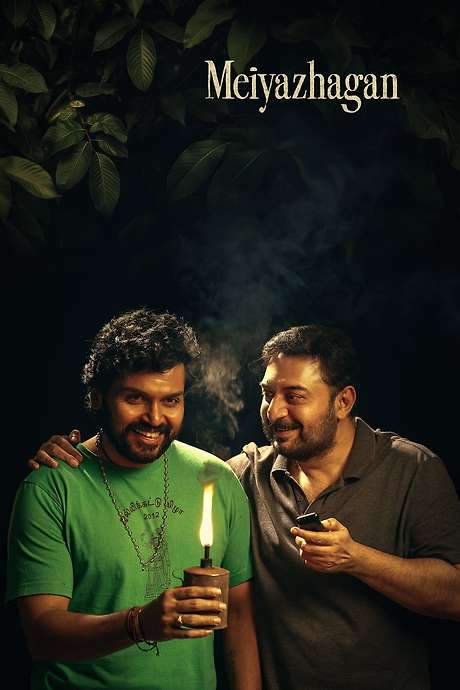
What Is Meiyazhagan About?
The premise of Meiyazhagan in 321 words, with nothing given away. The full story and the ending follow below.
In the sun‑washed plains of Thanjavur, a town where ancestral homes line winding lanes and memories linger in the scent of jasmine, a quiet celebration is about to stir the past. The community hums with the rhythms of a traditional wedding, a gathering that promises laughter, song, and the familiar warmth of family reunions. Yet beneath the festive surface lies a lingering ache—a home once divided, a lineage scattered, and the lingering question of where belonging truly resides.
Arulmozhi Varman, known simply as Arul, returns to this familiar landscape after twenty‑two years away. Once a boy who watched his family pack up their cherished house and set out for the bustling streets of Madras, he now carries the quiet resolve of a man who has built a life elsewhere. The invitation to his younger cousin Bhuvaneshwari’s wedding draws him back, offering a chance to step through the doors of his childhood and confront the shadows that have followed him across decades. The tone is one of gentle nostalgia, tinged with the bittersweet anticipation of reconciling present realities with long‑forgotten roots.
Among the faces he encounters, a cheerful, elusive figure surfaces—someone he once called “Potato” during a fleeting summer years ago. This familiar yet mysterious relative appears as a catalyst, evoking fragments of Arul’s past and hinting at stories left untold. Their brief exchanges suggest a deeper connection, inviting Arul to peel back layers of memory and consider the ties that have quietly endured despite distance and time.
The film unfolds as a tender meditation on heritage, forgiveness, and the quiet power of kinship. Its mood balances wistful reflection with quiet humor, painting a portrait of a man standing at the crossroads of who he was, who he has become, and who he might yet discover. In the gentle cadence of village life and the echo of shared laughter, the story promises a journey toward rediscovery that feels both intimate and universal.
What Happens in Meiyazhagan?
The complete story of Meiyazhagan, from the first scene to the last, in 758 words (about 3 minutes). Spoilers throughout. Names in the text link to 6 cast member pages.
Spoilers ahead
In 1996, Karthi portrays Arulmozhi Varman, known as Arul, a man who, along with his family, leaves the town of Thanjavur after their ancestral home is divided among relatives. His family, including his father Jayaprakash as Arivudai Nambi, a dedicated school teacher, his mother Valliyammal “Valli” and his older brother, migrate to Madras with heavy hearts, carrying memories of their past life. Over twenty-two years, the story unfolds through Arul’s journey back to his roots during a family wedding invitation from his younger cousin, Bhuvaneshwari “Bhuvana”.
Arul’s plan is simple — attend the wedding reception in Needamangalam and leave promptly afterwards. He travels by train back to Thanjavur, where nostalgic feelings overwhelm him as he visits his ancestral house, prompting reflections on his childhood and the life he left behind. As he walks through familiar surroundings, memories flood his mind, stirring feelings of longing and loss. He shares these feelings with his wife, Sri Divya as he discusses his hope to buy back their family home in Chennai, hinting at unresolved emotional bonds tied to his past.
During his bus journey to the wedding venue, Arul meets an unassuming bus conductor called Jagadeesan “Jaggu”, played by Karunakaran, who is a former student of Arul’s father. Jaggu drops Arul near the railway gate of Needamangalam, from where the wedding hall is within walking distance. Inside the hall, Arul reunites with Sokku Mama (played by M. S. Bhaskar), who is visibly emotionally moved—his joy tinged with sadness because his parents have not come to the celebration. The wedding scenes reveal hints of personal struggles, as Arul listens to stories of marriage troubles from Latha, a relative, which deepen his understanding of the complexities in family relationships.
One of the pivotal elements of the story is Arul’s encounter with a cheerful, unfamiliar relative who calls him “Athaan” (meaning “cousin” or “elder sister’s husband”) affectionately. Although initially annoyed by this persistent figure, Arul eventually engages with him, sharing a conversation over the phone with his wife. This relative, full of infectious enthusiasm, introduces himself and his family, including Nandhini, the relative’s pregnant wife. The relative also displays a deep affection for his Kangeyam bull named Dhoni, referring to him as his “son” in a touching display of love, which surprises Arul, revealing his own capacity for affection and attachment.
As the visit progresses, Arul discovers an old bicycle left behind in Thanjavur, which belonged to his family’s history—used by his father Santhanam to sell saris and cherished as a household symbol of perseverance. Seeing it well-maintained sparks a wave of nostalgia and emotional warmth. They walk together to the nearby Vennaaru dam, where Nandhini’s husband shares his joy about expecting their first child, whom they plan to name after Arul himself—adding a layer of emotional connection and a sense of continuity for Arul.
The following morning, Arul is approached by Nandhini’s husband, who asks for forgiveness for the wrongful grabbing of their ancestral property and urges Arul to recognize him by his real name. Although overwhelmed with remorse and affection for this selfless relative, Arul slips away before dawn, feeling conflicted yet deeply moved. His journey takes him back to Kovilvenni for a quiet moment of reflection, pondering the meaningful encounters he has experienced and the importance of acknowledging his roots.
Throughout his trip, Arul shares with Ilavarasu the profound emotional impact of reconnecting with his family and the man he once knew only by the nickname “Potato,” given affectionately during a summer vacation in 1994. Memories pour back as he seeks to uncover the identity of this special person. His daughter Jhanvi also plays a role in his emotional voyage, discovering the relative’s phone number and passing the call to her father, which leads him closer to understanding the deep bonds that transcend time and distance.
Ultimately, Arul’s curiosity and love bring him to the humble home of “Potato”; he calls out “Meiyazhaga”, the real name of his long-lost relative, and when the door finally opens, he is overwhelmed with joy as he recognizes the person who has shown him unconditional love despite years of separation. This reunion signifies a moment of rediscovery, healing, and the affirmation of family ties that had remained unbroken beneath the surface of everyday life.
Throughout this beautifully told story, themes of nostalgia, kinship, forgiveness, and the enduring strength of familial bonds are explored with sincerity and care. The film delicately balances emotional depth with subtle humor, crafting a narrative that celebrates the importance of remembering one’s roots while embracing the future with hope and compassion.
Meiyazhagan Timeline: Every Key Event in Order
12 key events in the order they happen, from “Arul bids farewell to Thanjavur” to “Revelation of the relative’s true name”. 12 events name a place, across 8 locations.
- 1
Arul bids farewell to Thanjavur
In 1996, Arulmozhi Varman 'Arul' leaves his hometown of Thanjavur with his family after their ancestral house is partitioned. This marks the end of his childhood and a significant shift in his life, as they relocate to Madras, carrying emotional baggage and nostalgia. This departure sets the stage for his journey of self-discovery and reunion later in life.
When:1996 Where:Thanjavur
- 2
Reunion invitation and train to Needamangalam
Twenty-two years later, Arul is invited by his cousin Bhuvaneshwari 'Bhuvana' to her wedding in Needamangalam. He plans to attend the reception and immediately departs for Thanjavur by train. This marks the beginning of his return to his roots and rekindling old memories.
When:Day of the wedding Where:Needamangalam
- 3
Visiting ancestral home and nostalgic memories
Arul visits his ancestral house in Thanjavur, experiencing a wave of nostalgia as he reflects on his childhood. He also discusses the idea of buying a house in Chennai with his wife Hema, showing his desire to reconnect with his past and settle down anew.
When:During his visit Where:Thanjavur
- 4
Arrival at the wedding reception
At the wedding reception, Arul reunites with his old acquaintances like Sokku Mama and hears about Bhuvana’s troubled marriage. He also meets an enthusiastic but mysterious relative who calls him 'Athaan', hinting at a deeper connection. Arul's interactions reveal both joy and a sense of distance from his past.
When:During the reception Where:Wedding hall, Needamangalam
- 5
Clandestine departure and invitation to stay overnight
Despite Bhuvana's pleas, Arul initially plans to leave after the wedding, but the relative persuades him to stay overnight. Arul then visits the relative’s home, where he meets Nandhini, the pregnant wife, and shares beers with the men, deepening his emotional tie with his estranged family.
When:Following the wedding Where:Relative’s home
- 6
Meeting the relative's family and discovering the bull and bicycle
At the relative's house, Arul meets Nandhini and admires the Kangeyam bull Dhoni, which the relative affectionately calls his 'son'. He also finds his childhood bicycle, a cherished family relic used by his father, sparking a profound sense of nostalgia and emotional connection.
When:During his overnight stay Where:Relative’s house backyard
- 7
Revelation of impending parenthood and family bonds
Nandhini’s husband shares the news of their upcoming child, planning to name the boy Arulmozhi, reaffirming the family's enduring bonds. Arul feels overwhelmed by these emotional revelations, realizing the depth of his forgotten relatives' love and sacrifice.
When:During his visit Where:Relative’s house
- 8
Leaving early and reflecting at Kovilvenni
Moved by his experiences, Arul leaves the relative’s house before dawn, feeling guilty for not recognizing him. During his journey to Thanjavur, he visits Kovilvenni, reflecting on his past and the emotional journey he has undertaken.
When:Next morning Where:Kovilvenni
- 9
Reconnecting with the past in Chennai
Back in Chennai, Arul faces challenges in buying a house and seeks help from his boss. His family, especially his daughter Jhanvi, helps him reconnect by discovering the relative’s phone number, reigniting memories buried for years.
When:Post-visit Where:Chennai
- 10
Memory flashback and clues about the relative’s identity
Arul recalls a childhood nickname 'Potato' given to the relative during summer vacation, which triggers a flood of memories. Clues from Nandhini’s family help him piece together the true identity of the relative he deeply loved and lost.
When:During reflection Where:Chennai
- 11
Journey to find the relative’s house
Arul rushes to Needamangalam, stopping at the temple to make an offering. He then arrives at the relative’s home, calling out for him but receiving no response. His persistence shows his desire for emotional closure.
When:Later that day Where:Needamangalam
- 12
Revelation of the relative’s true name
Finally, Arul calls out 'Meiyazhaga(n)' at the door, and the relative, overwhelmed with happiness, opens the door. This marks the emotional climax of their reunion and the rediscovery of their bond after many years.
When:That evening Where:Relative’s house
Who Are the Main Characters in Meiyazhagan?
4 characters, among them Meiyazhagan (Arul) (Karthi), Nandhini (Sri Divya) and The Relative (Potato / Meiyazhaga) (Arulmozhi Varman, Arvind Swamy): who each one is and the part they play in the story. Every profile links to the actor’s page.
- M(
Meiyazhagan (Arul) (Karthi)
Played by Karthi
A man who embarks on a nostalgic journey to visit his ancestral homeland, carrying emotional baggage and memories. He is introspective, loving, and torn between the past and present. His character illustrates the search for identity and belonging.
- 🎬 Protagonist
- 💖 Empathetic
- 🔎 Seeker
- N(
Nandhini (Sri Divya)
Played by Sri Divya
The pregnant wife of Arul's relative, she embodies warmth and compassion. She supports her husband's selfless nature and shares a gentle, nurturing demeanor that adds emotional depth to the story.
- 👩🦰 Wife
- 🤱 Nurturer
- 💕 Supportive
- TR
The Relative (Potato / Meiyazhaga) (Arulmozhi Varman, Arvind Swamy)
Played by Arvind Swamy
A kind-hearted, selfless person who symbolizes pure love and devotion. Despite lacking recognition for his sacrifices, he exemplifies humility and genuine affection, deeply impacting Arul's journey to understand his roots.
- 🤝 Benevolent
- 🌱 Innocent
- 💛 Selfless
- H(
Hema (Devadarshini)
Played by Devadarshini
Arul’s supportive wife who shares his emotional experiences. She shows understanding and patience, anchoring Arul’s reflections and decisions.
- 🧡 Supportive
- 🎭 Partner
- 🤝 Loyal
Where and When Is Meiyazhagan Set?
Meiyazhagan is set in Thanjavur, Madras, Needamangalam and Vennaaru dam (1996, Twenty-two years later (2018)). Here is why the time and place matter to the story.
When
1996, Twenty-two years later (2018)
The movie's timeline begins in 1996, reflecting a period of traditional values and rural life in Tamil Nadu, then shifts to 2018, exploring themes of nostalgia, family bonds, and reconciliation across two decades of change. The 1990s were marked by social shifts and modernization, which contextualize the characters' personal journeys.
Where
Thanjavur, Madras, Needamangalam, Vennaaru dam
The movie spans multiple locations in Tamil Nadu, including the culturally rich city of Thanjavur, known for its temples and heritage; Madras (Chennai), a bustling metropolitan hub; the rural town of Needamangalam, with its traditional wedding settings; and the serene Vennaaru dam, indicative of the region's natural beauty and significance.
- 🎭 Cultural hub
- 🕌 Historical city
- 🚆 Railway town
- 🌾 Countryside
What Are the Themes of Meiyazhagan?
2 ideas the story keeps returning to, among them Memory & Recognition and Family & Relationships.
-
01
Memory & Recognition
The film explores the importance of memories and recognition in reconnecting with one's roots. Arul's journey to rediscover his past highlights how memories shape identity and love. The emotional quest emphasizes that true recognition comes from understanding one's true roots and relationships.
-
02
Family & Relationships
Family bonds, love, and reconciliation are central themes. The movie portrays how familial ties and heartfelt connections influence characters’ lives, especially through Arul's journey of rediscovering his family roots and bonds lost over time.
How Does Meiyazhagan End?
The last act of Meiyazhagan and what it means, in 393 words. The ending lands as bittersweet. Big spoilers: read the plot summary first if you have not seen it.
The final act, in full
Arul’s life had been split by the loss of his ancestral home in Thanjavur. When his family was forced to abandon the house, the memory of that place and the people who drove them away became a wound he carried into middle age. Years later, he travels back to the town only to attend his cousin Bhuvana’s wedding, hoping to keep a polite distance from the relatives who had once taken everything from him.
At the pre‑wedding gathering Arul is greeted not by cold shoulders but by a younger cousin who treats him like an elder brother. The two men spend the evening swapping stories—about a rescued bull, a hard‑won legal battle over a house, and even the old bicycle Arul once gave away. The cousin’s generosity surprises Arul, and as the night drifts on they share tea, ride the bicycle in the moonlight, and talk until they are both drunk. The cousin even mentions that he intends to name his future child after Arul, a silent tribute to the respect he feels. Despite this growing bond, Arul leaves the house in the early hours, ashamed that he never learned the man’s name and burdened by guilt for abandoning his hospitality.
Back in Chennai Arul’s daughter discovers the mysterious phone number his father scribbled and pushes him to call. When Arul finally dials, the cousin answers, delighted but confused by the wrong number Arul had given. The conversation forces Arul to confront the fact that he had blocked much of his past, even the simple fact of his cousin’s name. After an awkward confession, the cousin tells Arul that when they first met, Arul used to call him “Potato.” That revelation unlocks a flood of recollection, and Arul realizes the man he has been talking to all night is the same relative he once knew as a mischievous youth.
Empowered by this new clarity, Arul returns to Thanjavur, stops at the temple, and offers a prayer in his cousin’s honor. He finally speaks the name that has been hidden for so long—Meiyazhagan—the very title of the film. The door swings open, and the two cousins embrace, their long‑lost connection finally restored. In that moment the past’s bitterness gives way to a hopeful future, as Arul discovers that the man who changed his perspective on home and family was waiting for him all along.
What Kind of Film Is Meiyazhagan?
Bittersweet in tone, with slow pacing and a straightforward story, going by the plot summary.
- Tone
- Bittersweet
- Pacing
- Slow
- Story
- Straightforward
- Intensity
- Medium
- Ending
- Bittersweet
A slow-paced, deeply nostalgic drama that follows a man's emotional return to his roots, blending melancholic reflection with heartwarming rediscovery and the healing power of familial bonds.
- nostalgic
- reflective
- bittersweet
- warm
- melancholic
- healing
- returning home
- family history
- nostalgia and memory
- forgiveness
Quiz
How well do you remember Meiyazhagan? Test yourself on the story.