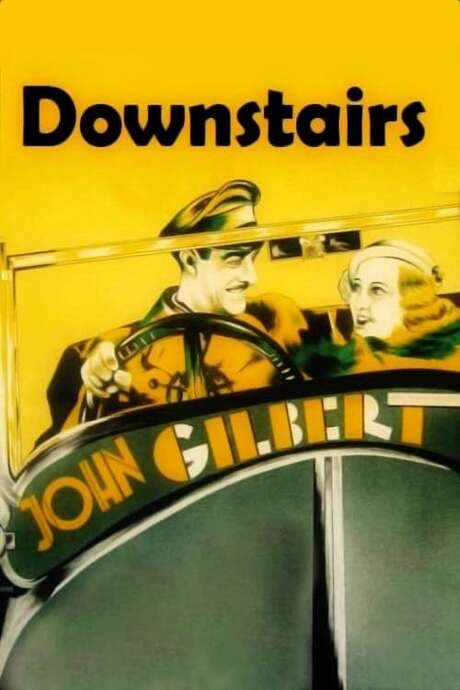


Downstairs Plot Summary
Read the complete plot summary and ending explained for Downstairs (1932). From turning points to emotional moments, uncover what really happened and why it matters.
On the Baron’s Austrian estate, Baron ‘Nicky’ von Burgen’s trusted head butler Albert presides over a wedding that ties the lives of everyone there to a delicate lattice of desire and status as Karl Schneider, the new chauffeur, arrives and quietly re-enters the orbit of his old confidante, Countess De Marnac, who is clearly not fond of Karl mingling with her elite circle.
That evening, when François, one of the butlers, drinks too much and cannot work, Albert steps in to fill the shift. Anna, the young housemaid, finds herself alone with Karl, who wins her sympathy by recounting a troubled childhood and presenting himself as someone who understands hardship. The two share a moment of connection that Karl soon tries to turn to his advantage, testing the boundaries between master’s world and servant’s longing.
A day later, Karl drives Baroness Eloise von Burgen to Vienna for shopping and escorts her back to a town apartment she keeps for visits with her lover. Eloise later claims they were in an accident, but Albert remains skeptical and cautions Karl to stay loyal to their employers, reminding him of his place in the social order. Despite this warning, Karl’s interest in Anna intensifies, even as he hides his own scheming behind a veneer of charm.
Karl’s fascination with Anna leads him down a dangerous path. He begins to pursue her despite her initial resistance, while Sophie, the cook, becomes entangled as a secondary casualty of Karl’s manipulations. After a flirtatious encounter, Sophie spends the night with him, only to be later insulted by Karl and the pair’s uneasy alliance collapses into a calculative game. Karl also finds a way to leverage Eloise’s jewelry—a clever ploy that involves a jewel he has swiped from Eloise—to win Anna’s sympathy, even as Eloise recognizes the item as her own and accuses Anna of theft. Karl claims the jewel as his own, a gambit that buys him time and rekindles Anna’s trust, though the underlying motive remains exploitation.
The plot thickens as Eloise realizes Karl’s true intent and uses the escalating scandal to test the boundaries of loyalty within the household. Eloise, who is drawn to the rhapsody of danger in Karl’s presence, schemes for a private moment between Karl and Anna on a fishing trip, but a late intervention by the Baron forces Albert to accompany them. This confrontation leaves Karl and Anna in a precarious position, with Albert warning Karl to keep his distance.
Karl’s deception becomes more brazen as he persuades Eloise to reinstate him as chauffeur through the backdoor of blackmail, while Albert contemplates resigning in response to the humiliation and the pressure to protect Eloise from scandal. Eloise, unable to publicly admit her affair, leans on Albert’s sense of justice and sympathy, revealing a vulnerability that complicates the power dynamics at the estate. Sophie, disillusioned by Karl’s predatory behavior and longing for a better life, offers him all her savings to help him realize his dream of opening a shop—an act that underscores the moral costs of Karl’s ambitions.
The next morning, Karl attempts to slip away to Paris with Sophie’s savings and begs Anna to join him. Anna, torn by love for Albert, refuses to abandon him, and when Sophie’s money is found, a chaotic chase ensues that ends with a dramatic clash of loyalties. The Baron, misunderstanding the conflict as a quarrel over wine, orders the two to apologize, while Albert himself orchestrates a fragile reconciliation with Karl—one built on a grim acknowledgment of Karl’s cleverness and Albert’s own resolve to protect the household’s integrity. A final confrontation makes it clear that Karl’s deceit cannot endure, and Albert’s steady loyalty ultimately prevails over Karl’s schemes. With Anna choosing fidelity to Albert and the family’s stability restored, Karl exits the scene, already plotting his next maneuver to insinuate himself into another aristocratic life.
In the end, the film presents a stark study of social ambition, manipulation, and the fragile line between affection and manipulation within a tightly knit upper-class environment. The characters spiral through a web of entanglements that test trust, loyalty, and the cost of desire, leaving a lasting impression of how power and affection can distort judgment and reshape lives on a grand Austrian estate.
Downstairs Timeline
Follow the complete movie timeline of Downstairs (1932) with every major event in chronological order. Great for understanding complex plots and story progression.
Wedding and Karl's arrival at the estate
The film opens with Baron Von Burgen's head butler Albert marrying the young housemaid Anna at the Baron's Austrian estate. Karl Schneider, a newly hired chauffeur, arrives and soon finds Countess De Marnac, an old flame who disapproves of his social circle. This ceremony sets up the cross-class tension that drives the drama.
Karl infiltrates the household after François's shift loss
That night, François, one of the butlers, gets too drunk to work, and Albert covers his shift. Anna, now unaccompanied, is visited by Karl, who wins her sympathy by recounting his difficult childhood. The encounter marks the start of Karl's manipulative pursuit of Anna.
Eloise's Vienna trip and the accident claim
Karl drives Baroness Eloise to Vienna for shopping and drops her at a town apartment she keeps for visits from her boyfriend. When they return, Eloise claims they were in an accident, but Albert does not believe her. He questions Karl, who is evasive, and reminds him to stay loyal to their employers.
Karl's seduction attempt on Anna
Although Albert warned him to stay in his lane, Karl presses his advantage and tries to kiss Anna. She slaps him and makes it clear she resents his manipulation. Karl retreats to his room, where Sophie is waiting; they flirt and spend the night together.
Karl's extortion and the jewel incident
The next day Karl insults Sophie and lies about being the illegitimate son of royalty to extort money from her. He then uses a jewel found in Eloise's possession the day before to ingratiate himself with Anna and to pretend it belongs to him. Eloise immediately recognizes the jewel as hers and accuses Anna of stealing.
Conspiracy revealed and fishing trip plan
Eloise discusses the matter with the Baron, and Albert overhears her saying Karl and Anna are involved in an affair. Eloise arranges for Karl and Anna to have some privacy on a fishing trip, but the Baron insists that Albert accompany them. Albert confronts Karl, warning him to stay away from Anna.
Privacy, pub, and growing closeness
Karl and Anna seize the privacy on the fishing trip, then go to a pub where they grow closer. Anna discovers Karl has arranged a private room for them and leaves in disgust. Karl follows, declares his love, and they end up spending the night together.
Karl is fired and Anna blamed; Eloise's leverage
Returning from the trip, Albert fires Karl for deception and for trying to undermine Anna. Anna, distraught, blames Albert for pushing her toward another man. Karl retaliates by blackmailing Eloise into reinstating him as chauffeur.
Eloise's blackmail and Albert's resolve
Eloise admits she is being blackmailed and cannot go to the police. Albert, moved by her predicament, vows to stay and help bring Karl down. They outline a plan to outmaneuver Karl while protecting Eloise's affair.
Sophie funds a new escape
That night Sophie offers Karl all her savings to realize her dream of running away and opening their own shop. Karl accepts, planning to leave with the money for Paris. This move deepens his already dangerous opportunism.
The attempted escape and wine-rack incident
The next morning Karl packs his bags with Sophie's savings and begs Anna to join him. Anna refuses, insisting she still loves Albert. They attempt to escape with the money but knock over a rack of wine bottles, drawing the Baron's attention and suspicion.
Final confrontation and Karl’s exit
The Baron, alerted by the commotion, orders apologies as he weighs the relationships in his household. As soon as the Baron leaves, Albert pretends to reconcile with Karl, offers him wine, then quietly tells Karl to get out of their lives. The Baron praises Albert's courage, and Karl leaves to resume his scheming elsewhere.
Downstairs Characters
Explore all characters from Downstairs (1932). Get detailed profiles with their roles, arcs, and key relationships explained.
Karl Schneider (John Gilbert)
A charming yet unscrupulous chauffeur who uses manipulation and sham romance to climb the social ladder. He preys on naive Anna and exploits others, weaving a web of lies to secure his place in the estate's hierarchy.
Anna (Virginia Bruce)
A young, naive housemaid who becomes the object of Karl's schemes. Torn between affection and prudence, she is vulnerable to deception but capable of recognizing moral boundaries.
Albert (Paul Lukas)
The Baron’s head butler, loyal and authoritative. He enforces protocol, confronts Karl, and struggles with personal and professional pride as the social fabric of the estate unravels.
Baron 'Nicky' von Burgen (Reginald Owen)
The aristocratic patriarch who embodies social rank and control. He oversees the household's order and privileges, while his wife's affair and Karl's scheming threaten his authority.
Baroness Eloise von Burgen ( Olga Baclanova )
A glamorous but morally compromised figure whose affair is blackmailed by Karl. She represents the dangerous intersection of desire and social reputation within the estate.
Countess De Marnac ( Hedda Hopper )
A former lover of Karl who resents his mingling with her social circle. Her presence heightens the tension between Karl's ambitions and the upper-class etiquette.
Sophie ( Bodil Rosing )
The cook who faces Karl's cruelty and ultimately offers her savings in a bid for escape. She embodies the mistreatment and desperation within the servant class.
Downstairs Settings
Learn where and when Downstairs (1932) takes place. Explore the film’s settings, era, and how they shape the narrative.
Time period
Early 20th century
The story unfolds within a European aristocratic milieu, where formal manners and class rules govern behavior. Servants and elites share spaces defined by status, and secrets have the power to topple reputations. The atmosphere relies on social rituals, wealth, and the consequences of deceit within a privileged circle.
Location
Baron von Burgen's Austrian estate, Eloise's Vienna town apartment
The action centers on the Baron's grand Austrian estate and the aristocratic circles that orbit it, with a contrasting setting of Eloise's private Vienna town apartment. The estate functions as a stage for servants and masters navigating rigid hierarchies, while the apartment hints at clandestine trysts away from public scrutiny. These locations establish a world of luxury, propriety, and hidden affairs that drive the plot.
Downstairs Themes
Discover the main themes in Downstairs (1932). Analyze the deeper meanings, emotional layers, and social commentary behind the film.
👑
Power & Class
The film probes how social rank dictates action, with Karl leveraging his chauffeur position to manipulate Anna and maneuver within the upper class. Deception and ambition collide as hidden motives threaten the household's order. The aristocratic world rewards obedience while punishing breaches of hierarchy.
💔
Love & Betrayal
Romantic entanglements fuel the plot as Karl preys on affection to gain advantages. Anna's trust is tested by manipulation, while Eloise's affair complicates loyalties. The drama reveals how love can become a weapon within a rigid social system.
🛡️
Loyalty & Duty
Albert embodies duty to the Baron's household, balancing personal ethics with professional duty as deception threatens the family. He confronts Karl and strives to protect the estate's reputation, illustrating the tension between loyalty and betrayal. The resolutions hinge on whether loyalty can endure deceit.
🧹
Servant-Employer Dynamics
The relationships among Karl, Anna, Sophie and other staff reveal the power structure inside the mansion. Servants gain influence through information and access while employers enforce norms to preserve appearances. The dynamic emphasizes how service and status intersect in private life and public image.

Coming soon on iOS and Android
The Plot Explained Mobile App
From blockbusters to hidden gems — dive into movie stories anytime, anywhere. Save your favorites, discover plots faster, and never miss a twist again.
Sign up to be the first to know when we launch. Your email stays private — always.
Explore the mobile appDownstairs Spoiler-Free Summary
Discover the spoiler-free summary of Downstairs (1932). Get a concise overview without any spoilers.
In the rolling hills of Austria, the von Burgen estate stands as a picture of timeless elegance, where marble corridors and manicured gardens echo the centuries‑old rituals of the aristocracy. Yet within these polished walls, the world of the upstairs family and the downstairs staff has settled into an unexpected rhythm of mutual respect, a delicate choreography that lets servants move with a quiet dignity and the noble family glide with a lingering sense of nostalgia. The manor itself feels like a character, its hushed halls and candlelit salons lending a languid, almost theatrical quality to everyday life.
At the heart of this equilibrium is Albert, the seasoned head butler whose steady hand keeps the household’s pulse in sync, and Anna, a young maid whose bright curiosity brightens the service wing. Their budding affection, nurtured in stolen glances and whispered conversations behind pantry doors, offers a rare glimpse of intimacy that bridges the social divide. Their connection adds a tender undercurrent to the otherwise formal atmosphere, suggesting that love can bloom even in the most regimented of settings.
The arrival of Karl Schneider, the new chauffeur, subtly shifts the balance. With his confident swagger and outsider’s perspective, he carries an air of restless energy that both intrigues and unsettles the established order. His presence promises fresh possibilities and hints at unspoken desires that begin to stir beneath the manor’s composed surface, nudging long‑held loyalties into question.
As the seasons turn over the estate, the film drapes a moody, atmospheric palette across an exploration of class, ambition, and the fragile ties that bind a community together. The polished façade of the von Burgen household masks a simmering tension, inviting the viewer to wonder how far the delicate lattice of desire and duty can stretch before it begins to fray.
Movies with Similar Twists and Themes
Uncover films that echo the narrative beats, emotional arcs, or dramatic twists of the one you're exploring. These recommendations are handpicked based on story depth, thematic resonance, and spoiler-worthy moments — perfect for fans who crave more of the same intrigue.





Featured on this page

What's After the Movie?
Not sure whether to stay after the credits? Find out!
Check out our other apps:

SAT Sphere
Build confidence for the Digital SAT.

Mori Atlas
Discover wild places worth protecting.

Luntero
Search smarter for a home in Amsterdam.

Plot Explained
Unravel movie endings and hidden clues.

Pokechamp
Dive into Pokémon data and battle logic.

Driving Theory
Get ready for your European theory test.

Movie Dust
Plan your next cinema trip with ease.

Musemap
Find art and culture as you travel.

Selkobase
Compare credentials before committing.

Local Manual
Turn an unfamiliar country into practical next steps.

Lernavi
Compare school systems before your next move.

GymRoam
Find a workout stop wherever your plans take you.
Explore Our Movie Platform
New Movie Releases (2026)
Famous Movie Actors
Top Film Production Studios
Movie Plot Summaries & Endings
Major Movie Awards & Winners
Best Concert Films & Music Documentaries
Movie Collections and Curated Lists
© 2026 What's After the Movie. All rights reserved.
Privacy Policy