

What Is Don’t Bet on Blondes About?
The premise of Don’t Bet on Blondes in 287 words, with nothing given away. The full story follows below.
On the bustling streets of Broadway, a city that thrives on chance, Owen has built his reputation as a sharp‑witted bookie who can read a racecard better than anyone else. After a costly misstep that leaves him with a heavy loss, he begins to wonder whether the world of gambling could be traded for something a little more genteel—yet still hinged on probability. The idea takes shape when he discovers the business model of Lloyd’s of London, inspiring him to launch an unconventional insurance office that specializes in covering the most unlikely of perils.
The first client to walk through his new doors is the affable yet eccentric Colonel Youngblood, who arrives with a singular request: a policy that guarantees his daughter, Marilyn Youngblood, will never be forced into marriage. The notion of insuring a person’s future happiness—or lack thereof—sets the tone for a comedy built on the clash between cold calculations and the messier business of the heart. Marilyn, charming and vivacious, quickly becomes the focal point of a series of wagers that blend family expectations with the whimsical logic of odds‑making.
Adding to the mix is Dwight Boardman, a wealthy suitor whose nervous disposition makes him both a prize and a pawn in the unfolding scheme, and the dashing newcomer David Van Dusen, whose arrival promises yet another layer of romantic intrigue. As Owen navigates these personalities, he discovers that turning human foibles into marketable policies is far more complex than any horse race he ever bet on. The film glides between rapid‑fire dialogue and slap‑stick set‑pieces, painting a portrait of a world where every flirtation, promise, and promise of protection can be quantified—yet still manages to leave room for genuine connection and unexpected laughter.
What Happens in Don’t Bet on Blondes?
The complete story of Don’t Bet on Blondes, from the first scene to the last, in 707 words (about 3 minutes). Spoilers throughout.
Spoilers ahead
On Broadway, top bookmaker Oscar ‘Odds’ Owen, [Warren William], loses a hefty $50,000 when a racehorse owned by Everett Markham turns out to be doped. After uncovering the ruse, Owen confronts Everett and makes it clear that the implicated horses will be sold and the debt paid back. The sting of that setback nudges Owen to dream bigger, and the spark comes from a stock idea he admires after hearing about Lloyd’s of London: a world where unusual perils are insured with calculated wit and risk.
Owen’s misadventure with Markham plants the seed for a new business plan: he will underwrite unusual insurance policies that others wouldn’t dare touch. This is where the film pivots from racing to a brisk, cagey game of propositions, counterclaims, and sly incentives, all powered by Owen’s keen eye for human folly and fortune. The idea isn’t just about money; it’s about manipulating probabilities in people’s lives the way a bookie handles odds.
Marilyn Youngblood, [Claire Dodd], is the charming focal point around which much of the comedy centers. She supports her father, Col. Youngblood, [Guy Kibbee], and she carries a complicated love life—dating the wealthy, hypochondriac Dwight Boardman, [Walter Byron]. Everett Markham, a friend to Marilyn, convinces her father to take out a three-year insurance policy on Marilyn herself, promising a payout of 50,000 if she marries within that window. Owen, ever the opportunist, agrees to insure this curious arrangement, setting the stage for a collision between affection and avarice.
To weaken Dwight’s hold and push the plan forward, Owen’s men craft a sly ruse: they persuade Dwight that marriage could be dangerous for a man with a weak heart. It’s a calculated, almost carnival-like manipulation designed to push Marilyn toward other options while keeping Owen’s own hands clean of any direct interference.
Marilyn soon encounters a new partner, David Van Dusen, played by [Errol Flynn], and the romance quickly engages the audience’s sympathy and suspicion in equal measure. Owen’s crew shadows the couple and crashes a restaurant scene where Marilyn and Van Dusen dine. They pose as shady figures who “know” Van Dusen, and the plot thickens: one man hands Van Dusen an envelope containing money, while another slides a gun wrapped in a handkerchief into the scene. Unable to shake the odd impression, Marilyn interprets Van Dusen’s behavior as gangster-like, and she ends the relationship on the spot.
Owen, though, is not a passive observer. He notices Marilyn’s disapproval and, despite himself, becomes drawn to her. He starts dating Marilyn, ostensibly to keep her from other suitors, even as his heart grows more entangled with her in ways that money and policy constraints cannot easily explain.
The insurance scheme moves toward its next dramatic turn when Marilyn’s father explains the policy in detail. Marilyn resolves to dramatize Owen’s feelings by making him fall for her, and, to her surprise, Owen does fall—in love, that is, even as he remains professionally tethered to the policy’s cold logic. Marilyn, seeking her own revenge, agrees to marry Everett Markham in order to deprive Owen of both his wealth and the woman he seems to be learning to love. Everett, in turn, believes he can win Marilyn back and outmaneuver Owen, but Owen’s feelings complicate his own calculations.
As the wedding day approaches, the tension between heart and wallet intensifies. Marilyn’s father pleads with Owen to pull back, to save the arrangement from collapsing under its own contradictions. Marilyn, too, quietly hopes the wedding won’t happen. When Everett never appears at the church, the moment of truth arrives: Owen steps in as the groom, and Marilyn walks down the aisle to meet him with a sense of relief and triumph. In a final, comic flourish, Owen’s men grease the wheels of civic life by paying off cab drivers to create a traffic jam, ensuring Everett cannot reach the church in time.
What follows is a rippling, lighthearted exploration of how risk, romance, and reputation intersect in a world where every bet and every vow can be insured or undermined. The film balances fast dialogue, caper-like set pieces, and a surprisingly tender core as two people discover that what starts as a purely financial calculation can, in the right moments, grow into genuine affection.
Don’t Bet on Blondes Timeline: Every Key Event in Order
13 key events in the order they happen, from “Owen loses $50,000 on a doped horse and investigates” to “Cabbies paid to clear the path to the church”. 3 events name a place, across 3 locations.
- 1
Owen loses $50,000 on a doped horse and investigates
Owen loses $50,000 on a horse owned by Everett Markham and investigates the loss. He discovers the horse was doped. This revelation drives him to pressure Everett to sell his horses and repay the debt.
- 2
Owen confronts Everett about selling horses and repaying the debt
Owen visits Everett and informs him that he will be selling his horses and must pay back the $50,000 loss. The confrontation establishes the leverage Owen now holds over Everett and foreshadows the financial game that will unfold.
- 3
Owen takes inspiration from Lloyd's of London and starts underwriting unusual policies
Owen is inspired by the reputation of Lloyd's of London and decides to enter the business of underwriting unusual insurance policies. He envisions schemes that blend risk with personal lives, turning private decisions into profitable bets. This ambition launches the central premise of the story.
- 4
Colonel Youngblood is convinced to insure Marilyn's marriage risk
Everett persuades Marilyn's father, Colonel Youngblood, to take out a three-year policy against Marilyn getting married. Owen agrees to insure the policy, tying Marilyn's personal life to the insurance scheme. The policy's potential payout links love, money, and revenge.
- 5
Dwight Boardman targeted to discourage marriage
Owen's men plot to dissuade Dwight Boardman by suggesting that marriage could harm someone with a weak heart. They orchestrate a plan to remove Dwight from Marilyn's circle and complicate the love triangle. The maneuver demonstrates how the underwriting operation weaponizes romance.
- 6
Marilyn begins seeing David Van Dusen
Marilyn begins seeing David Van Dusen, a development that unsettles Owen's plans. His operation monitors her relationships as part of the larger scheme. The romantic rival increases the stakes for everyone involved.
- 7
Owen's men confront Van Dusen at a restaurant
Owen's men go to the restaurant where Marilyn and Van Dusen are dining and pose as shady figures who know Van Dusen. One hands Van Dusen an envelope with money, another places a gun wrapped in a handkerchief. The intimidation makes Marilyn suspect Van Dusen and pushes her to break off the relationship.
When:Evening Where:Restaurant
- 8
Marilyn breaks up with Van Dusen after the scare
Marilyn, convinced Van Dusen is a gangster after the frightening encounter, ends the relationship. She also notices Owen nearby, which deepens the tension between love and manipulation. The incident sharpens the collision between Marilyn's feelings and Owen's agenda.
When:Evening
- 9
Marilyn falls for Owen while dating Everett as revenge
Marilyn decides to make Owen fall for her and he does. She also becomes engaged to Everett as part of her plan to get back at Owen. The overlapping romances thrust Owen further into a moral and financial bind.
- 10
Everett's engagement advances and Owen wrestles with his feelings
Marilyn's engagement to Everett proceeds, threatening Owen's $50,000 bet and highlighting his growing love for Marilyn. He tells Everett that he will not welch on the deal, even as he doubts Everett will marry Marilyn. The conflict pits heart against wallet as the plot tightens.
Show the other 3 events of Don’t Bet on Blondes Hide the last 3 events
- 11
Colonel Youngblood pleads with Owen to stop the wedding
Marilyn's father begs Owen to halt the wedding and spare his daughter from harm. The plea adds pressure on Owen as he confronts the consequences of mixing love with insurance fraud. The moment heightens the emotional stakes of the scheme.
- 12
The church ceremony unfolds with a last-minute switch
On the day of the church wedding, Everett does not show up. Owen steps in as the groom and Marilyn marries him in place of Everett. The switch completes the romantic reversal that the plan sought to engineer.
When:Wedding day Where:Church
- 13
Cabbies paid to clear the path to the church
Owen's men pay off cabbies who had caused a traffic jam, clearing the way for the wedding to proceed. The last-minute hustle demonstrates how the financial scheme manipulates ordinary life to secure a desired outcome. The film closes on a wedding that literalizes the clash between money and romance.
Where:Church area
Who Are the Main Characters in Don’t Bet on Blondes?
6 characters, among them David Van Dusen (Errol Flynn), Marilyn Youngblood (Claire Dodd) and Odds Owen (Warren William): who each one is and the part they play in the story. Every profile links to the actor’s page.
-
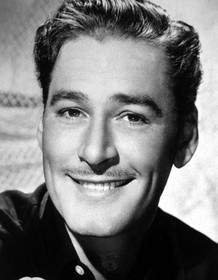
David Van Dusen (Errol Flynn)
Played by Errol Flynn
A charming romantic lead drawn into Marilyn's world of high-stakes bets. He becomes entangled in Owen's deception and is framed as a possible gangster, testing his trust in love and loyalty.
- 🧭 Smart
- 💬 Witty
- ❤️ Romantic lead
- MY
Marilyn Youngblood (Claire Dodd)
Played by Claire Dodd
A socialite daughter torn between a glamorous, scheming father and a genuine romance. She orchestrates the matchmaking play to outmaneuver Owen, blurring flirtation with revenge.
- 💃 Socialite
- 💘 Romantic catalyst
- 🧠 Canny schemer
- OO
Odds Owen (Warren William)
Played by Warren William
A sharp Broadway bookmaker who expands into unusual insurance policies. He is calculating and bold, yet his heart becomes entangled with Marilyn, complicating his financial schemes.
- 💼 Businessman
- 💵 Schemer
- ❤️ Romantic lead
- EM
Everett Markham (Clay Clement)
Played by Clay Clement
A wealthy but reckless ally of Marilyn's father who engineers the anti-marriage trap. His plan to mock the wedding backfires when love intrudes on his revenge.
- 💰 Rich rival
- 🧭 Calculated
- 🏛 Aristocrat
- DB
Dwight Boardman (Walter Byron)
Played by Walter Byron
A hypochondriac playboy and Marilyn's initial fiancé. His fragility and vanity make him a liability in Owen's schemes and a foil for the lovers.
- 🤵 Rich bachelor
- 💉 Hypochondriac
- 🌀 Romantic foil
-
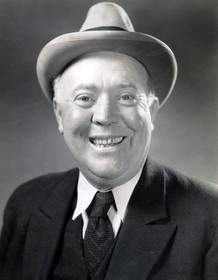
Colonel Youngblood (Guy Kibbee)
Played by Guy Kibbee
Marilyn's father, a storied ex-officer whose fear of losing his daughter to marriage drives him to sign risky policies. He embodies the tension between duty and desire.
- 👨✈️ Father figure
- 🏛 Status
- 🧭 Decisive
Where and When Is Don’t Bet on Blondes Set?
Don’t Bet on Blondes is set in New York City (1930s). Here is why the time and place matter to the story.
When
1930s
The action unfolds in the 1930s, a period of economic recovery and showbiz flash. Money and risk dominate daily life, from bookmaking halls to socialite engagements. The era's urban nightlife provides a lively setting for a comedic insurance caper.
Where
New York City
Set in a bustling American city, the story unfolds across offices, restaurants, and a church where schemes and love collide. The urban backdrop—Broadway, cabbies, and high-stakes wagers—drives the film's caper energy. The city appears as a playground for risk-takers who mix romance with money-minded schemes.
- 🗽 New York City
- 💼 Insurance
- 🎭 Comedy
- 💵 Gambling
What Are the Themes of Don’t Bet on Blondes?
3 ideas the story keeps returning to, among them Love vs Money, Deception and Risk & Insurance.
-
01
Love vs Money
Marilyn negotiates affection and profit as Owen's policy schemes threaten genuine romance. The characters must decide whether love is stronger than financial gain.
-
02
Deception
Characters craft disguises and manipulate perceptions to protect interests or pursue revenge. The film leans on mistaken impressions and strategic misdirection.
-
03
Risk & Insurance
Unusual policies, gambits, and underwriting form the film's core joke about risk. The line between love and risk blurs as schemes backfire or pay off.
What Kind of Film Is Don’t Bet on Blondes?
Light in tone, with fast pacing and a moderate story, going by the plot summary.
- Tone
- Light
- Pacing
- Fast
- Story
- Moderate
- Intensity
- Low
- Ending
- Happy
A witty and fast-paced 1930s comedy that feels like a clever caper, balancing romantic entanglements with a plot about improbable insurance policies, resulting in a playful and satisfying viewing experience.
- comedic
- playful
- romantic
- clever
- witty
- satisfying
- insurance scheme
- romantic deception
- business risk
- calculated gambles
Quiz
How well do you remember Don’t Bet on Blondes? Test yourself on the story.


