
Donald and the Wheel 1961

Directed by
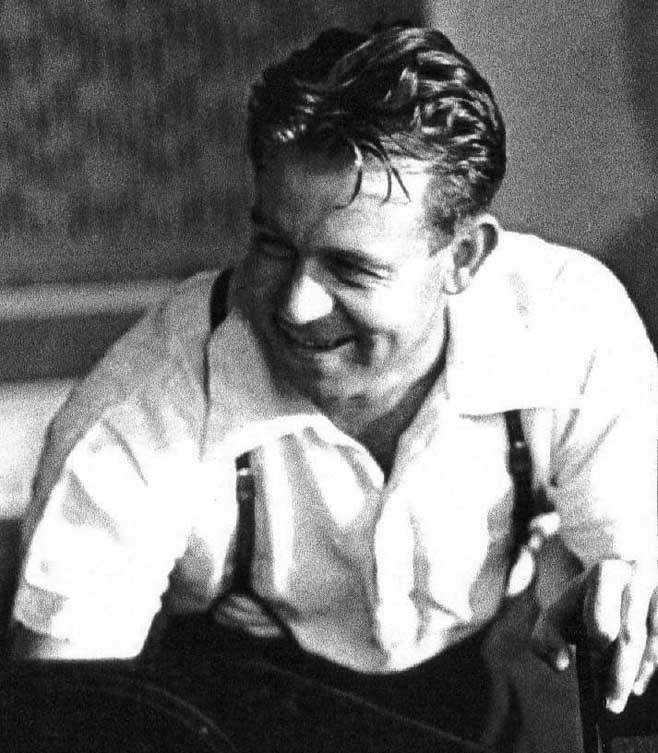
Hamilton Luske
Made by

Walt Disney Productions
Donald and the Wheel Plot Summary
Read the complete plot summary and ending explained for Donald and the Wheel (1961). From turning points to emotional moments, uncover what really happened and why it matters.
Two spirits of progress drift through history, watching the potential inventor of the wheel. The elder, Senior Spirit of Progress, moves with a calm authority, while his beatnik-talking son, Junior Spirit of Progress, rides the air with a light, carefree pace. They are visible only as shimmering auras, yet their presence shapes what they witness. Their quiet lesson begins with a caveman, Donald Duck, who struggles to haul his supply sled up a steep hill toward a cave. A looming Saber-Tooth Tiger interrupts his effort, chasing him out, though the tiger tumbles down a slope wrapped around a rock. The elder spirit sees in that perilous moment a spark of practicality and potential, a moment that should nudge Donald toward the wheel’s invention.
From there, the film unfolds an expansive tour of history, tracing how a simple round object becomes a driving force across civilizations. The wheel finds early, essential uses in Ancient Egypt, Ancient Greece, and Ancient Rome, laying groundwork for transport, trade, and engineering. The story then moves through the Middle Ages, where horse-drawn vehicles and sturdy carriages reshape travel, before leaping to the 19th century and the swift rise of mechanical progress. The invention that begins as a primitive idea ripples outward, powering engines, factories, and cities, and culminating with the steam locomotive that pushes the world into the Industrial Revolution.
The journey also pauses to spotlight the clever devices built around wheel-based parts. Gears turn inside a music box, a gramophone, and a jukebox, each machine illustrating how motion translates into sound and rhythm. Inside the jukebox, a tiny, graceful dancer glides across the records, performing in styles ranging from contemporary jazz to hoedown and classical ballet, while the narrative glides alongside with Donald’s own playful participation.
As the tour sweeps into the 20th century, the film paints a picture of factories, mass production, and the automobile reshaping daily life. The momentum continues into the present day, and the story even rockets outward to satellites circling Earth, hinting at a larger cosmic wheel. The narrators close by proposing a broader view: the world itself is a wheel, with the Sun, Moon, Earth, and planet orbits all moving in cycles that echo the same fundamental idea.
Yet Donald, overwhelmed by the enormity of this continuum, contemplates stepping back from invention. He speaks of the burden and responsibility that come with such a breakthrough, ultimately declaring it’s too much trouble to bear. The Spirits of Progress acknowledge that Donald may not be the sole inventor, but they leave a lingering sense that someone did, in fact, turn the wheel for the world.
Donald and the Wheel Timeline
Follow the complete movie timeline of Donald and the Wheel (1961) with every major event in chronological order. Great for understanding complex plots and story progression.
Spirits of Progress observe an inventor-to-be
Two Spirits of Progress observe the potential inventor of the wheel, appearing only as luminous auras. They discuss the wheel's significance and set the stage for a broader journey through time.
Caveman Donald struggles with a sled
Donald the caveman attempts to haul a supply sled up a hill toward a cave. The effort is grueling, highlighting the primitive beginnings of tools that could transform transport.
Saber-toothed tiger chase and the inspiration for the wheel
Donald is chased out of the cave by a saber-toothed tiger. The tiger tumbles down a hill after getting tangled around a rock, and the Spirits frame this moment as the spark that would become the wheel.
Inspiration seeds the wheel's invention
From these near-misses, the Spirits declare that this moment will seed the invention of the wheel. They frame the scene as a spark that future generations will turn into a tool of progress.
Spread of the wheel in ancient civilizations
The film traces the wheel's evolution across Ancient Egypt, Greece, and Rome, showing chariots and wheeled transport. These civilizations demonstrate the wheel's early versatility in daily life and warfare.
Medieval wheel-powered travel
In the Middle Ages, horse-drawn vehicles proliferate, expanding trade, travel, and exchanging goods across landscapes. The wheel's role in mobility becomes central to economic and social life.
Industrial shift: carriages, steam, and revolution
Carriages give way to mechanized transport, and the steam locomotive marks a turning point in industry. This shift accelerates urban growth and reshapes daily life.
Gears, music boxes, gramophones, and the jukebox
The film explains how gears and wheel-based parts power devices like the music box, gramophone, and jukebox. Inside a jukebox, a tiny dancer on the records performs, while Donald joins in the rhythm.
20th century progress and the automobile
Factories expand and mass production accelerates, making the automobile a dominant form of transport. The wheel remains central to modern mobility and industry.
Present day and satellites
The story moves into the present, wrapping up with satellites and the ongoing influence of wheeled technology on daily life. It links motion, communication, and exploration through wheel-based systems.
The world as a wheel: cosmic wheels
The narrators reveal that the world itself is a wheel, with the Sun, Moon, Earth and planetary orbits functioning like wheels. This cosmic perspective expands the idea of wheels beyond transportation to the fabric of the cosmos.
Donald's future glimpse and the truth of invention
After glimpsing the future, Donald feels overwhelmed and declines to become the wheel's inventor, fearing the enormous responsibility. The Spirits acknowledge that while he may not be the inventor, somebody did invent the wheel.
Donald and the Wheel Characters
Explore all characters from Donald and the Wheel (1961). Get detailed profiles with their roles, arcs, and key relationships explained.
Donald Duck (Clarence Nash)
A prehistoric caveman who tries to haul a supply sled into a cave, only to be chased out by a Saber-Tooth Tiger. His curiosity about the wheel's potential sparks a line of thought about invention, but he recoils at the heavy responsibility it would entail. The sequence presents Donald with comedic energy and a stubborn, skeptical streak as he grapples with a cosmic idea.
Senior Spirit of Progress (Thurl Ravenscroft)
An elder, adult Spirit of Progress who observes Donald's potential as an inventor. He guides the narrative, explains the wheel's universal importance, and embodies the gravity of human advancement. His aura signals a wise, overarching force driving history forward, while his dynamic with the Junior Spirit adds depth to the journey.
Junior Spirit of Progress (Max Smith)
The beatnik-talking son of the Senior Spirit, a playful foil to the elder's gravity. He approaches progress with a lighter, breezy attitude and provides comedic commentary on invention. While skeptical at times, he participates in the exploration of wheel-based devices and contributes to the film's lighter moments.
Donald and the Wheel Settings
Learn where and when Donald and the Wheel (1961) takes place. Explore the film’s settings, era, and how they shape the narrative.
Time period
Prehistory to Space Age
The film spans a sweeping timeline from prehistoric times through ancient civilizations and the Industrial Revolution to the modern era and beyond. It traces how wheel-based devices evolve—from simple sleds to gears, carriages, and locomotives—before leaping to satellites and space exploration. Across this arc, the idea of motion is framed as a universal wheel guiding human progress.
Location
Cave, Ancient Egypt, Ancient Greece, Ancient Rome, Medieval Europe, Industrial Revolution, 19th-20th centuries, Space Age
The narrative begins in a prehistoric cave where a caveman tries to haul a sled into a cave, setting the stage for the wheel's origin. It then traces the wheel's impact through Ancient Egypt, Greece, and Rome, and continues into Medieval Europe with horse-drawn carriages, the 19th–century transition to mechanized transport, and the Industrial Revolution. The montage culminates in the modern era and space-age concepts, presenting the Earth and its orbit as wheels in a cosmic sense.
Donald and the Wheel Themes
Discover the main themes in Donald and the Wheel (1961). Analyze the deeper meanings, emotional layers, and social commentary behind the film.
⚙️
Progress
The film centers on invention and the force of progress shaping civilizations. The Spirits of Progress frame the wheel as a breakthrough that ripples from antiquity to the modern era. It shows how wheel-based devices—gears in a music box, early vehicles, and industrial machinery—drive culture and industry. The narrative also hints that progress comes with weighty responsibilities that can overwhelm the inventor.
🧭
Invention vs Responsibility
The elder Spirit of Progress explains the wheel's transformative potential and its societal significance. The story uses humor and awe to convey the burden of invention and the ethical questions it raises. Donald's hesitation at bearing the wheel's consequences embodies the tension between curiosity and accountability. The spirits acknowledge that ownership of invention may be shared, yet progress persists.
⏳
Time & History
A sweeping montage links disparate eras, illustrating how a single idea can connect civilizations across millennia. It frames the world itself as a wheel, with the Sun, Moon, and planetary orbits echoing circular motion. The narrative invites viewers to reflect on how small sparks of insight echo through time and reshape societies. The scope emphasizes both continuity and change in human development.

Coming soon on iOS and Android
The Plot Explained Mobile App
From blockbusters to hidden gems — dive into movie stories anytime, anywhere. Save your favorites, discover plots faster, and never miss a twist again.
Sign up to be the first to know when we launch. Your email stays private — always.
Explore the mobile appDonald and the Wheel Spoiler-Free Summary
Discover the spoiler-free summary of Donald and the Wheel (1961). Get a concise overview without any spoilers.
In a world where imagination rolls alongside history, a devoted father leans over a campfire and tells his eager son that the wheel is humanity’s greatest gift. Their conversation summons two unlikely companions—hip‑styled wanderers who drift through ages like shimmering auras. Together they set out on a whimsical quest that leads them back to a prehistoric valley, where they hope to catch a glimpse of the very mind that might first shape the round marvel. Here they meet Donald Duck, a primitive inventor struggling with a simple sled, and the scene crackles with the promise of discovery.
The film’s canvas blends the raw textures of ancient stone with the sleek, off‑beat flair of modern subculture. The elder guide, calm and authoritative, contrasts with his beatnik‑talking offspring, whose light‑hearted banter adds a playful rhythm to the journey. Their presence is felt more than seen, turning every glance at the past into a gentle nudge toward possibility. The tone is bright and inquisitive, inviting the audience to view history as a living, turning circle rather than a static record.
Visually, the short becomes a kaleidoscope of motion: gears whisper within music boxes, gramophones spin and echo, and a tiny dancer twirls inside a towering jukebox, her pirouettes echoing the pulse of invention. Wheels become the connective tissue of the universe, hinting at everything from ancient chariots to the silent spin of satellites. The mood balances scholarly wonder with a lighthearted swagger, making each mechanical marvel feel both familiar and freshly magical.
At its heart, the story is a conversation between generations—parent and child, mentor and fledgling—and a meeting of minds across epochs. Senior Spirit of Progress offers measured wisdom, while Junior Spirit of Progress injects curious humor, creating a dynamic that both grounds and lifts the narrative. Their interaction with the earnest yet overwhelmed Donald Duck sets up an atmosphere of hopeful exploration, leaving viewers poised on the brink of an adventure that celebrates curiosity more than any single invention.
Featured on this page

What's After the Movie?
Not sure whether to stay after the credits? Find out!
Check out our other apps:

SAT Sphere
Build confidence for the Digital SAT.

Mori Atlas
Discover wild places worth protecting.

Luntero
Search smarter for a home in Amsterdam.

Plot Explained
Unravel movie endings and hidden clues.

Pokechamp
Dive into Pokémon data and battle logic.

Driving Theory
Get ready for your European theory test.

Movie Dust
Plan your next cinema trip with ease.

Musemap
Find art and culture as you travel.

Selkobase
Compare credentials before committing.

Local Manual
Turn an unfamiliar country into practical next steps.

Lernavi
Compare school systems before your next move.

GymRoam
Find a workout stop wherever your plans take you.
Explore Our Movie Platform
New Movie Releases (2026)
Famous Movie Actors
Top Film Production Studios
Movie Plot Summaries & Endings
Major Movie Awards & Winners
Best Concert Films & Music Documentaries
Movie Collections and Curated Lists
© 2026 What's After the Movie. All rights reserved.
Privacy Policy