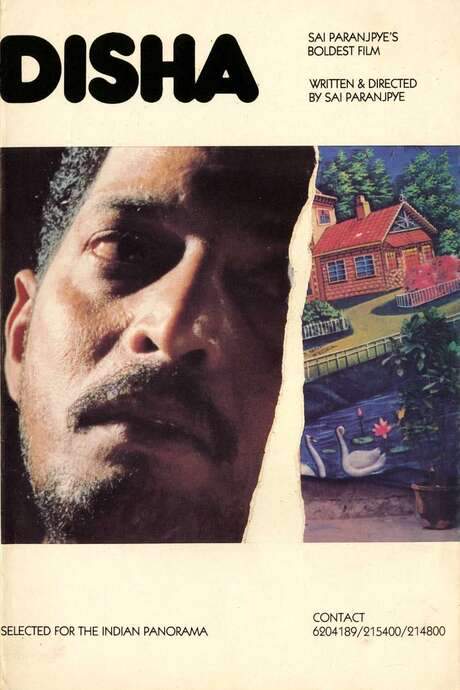
Disha 1990

Directed by

Sai Paranjape

Disha Plot Summary
Read the complete plot summary and ending explained for Disha (1990). From turning points to emotional moments, uncover what really happened and why it matters.
In the village of Bakuri, a stark water shortage sets the stage for a quiet, unyielding struggle. The man named Parshuram Sarpat earns the nickname “The pagal parsha” as he relentlessly digs for water, a daily task that becomes his defining ordeal and a sign of the village’s stubborn scarcity.
In parallel, Vasanta enters marriage with Phulwanti (Phoolwanti) under his father’s urging, a union that carries both obligation and hope. Soma, another resident with eyes on a better future, sees Mumbai as a lifeline for his own unemployment and sets his sights on new possibilities beyond the village.
The story then traces a sequence of choices and consequences that ripple through both village and city. Vasanta’s father finances the marriage with a loan, a decision that tests the newlyweds but surprisingly gives them a strong start in married life. Soma, seeking work from the local landlord, finds no steady path and eventually travels to Mumbai to join a bustling cotton mill, living among about forty others, trapped in long shifts and mounting debt, cut off from his family yet driven by the hope of supporting them from afar.
Back in the village, Vasanta struggles to sustain himself after the wedding and also gravitates toward Mumbai as a potential anchor for the family’s future. Hansa and Phulwanti begin work in a nearby bidi factory, 5 kilometers from Bakuri. The factory’s manager, Munshi, harbors troubling intentions toward Phulwanti, complicating the couple’s fragile plans and adding another layer of risk to their decisions.
From his new life in Mumbai, Vasanta witnesses the harsh realities of urban labor. He works hard, saving in the hopes of returning to the village with a plan to launch a cooperative scheme that could uplift his homeland. He even arranges to bring his wife to Mumbai for a brief period, hoping to settle them in a shared space apart from their families. Yet violence and displacement intrude: one night, the relatives of the Kholi family barge into their temporary shelter and force them out. With the support of Soma and other men, Vasanta and Phulwanti survive the night in a limited, precarious space, but the next day Phulwanti returns to the village.
The plot thickens as Vasanta pushes himself to multiple jobs in a bid to earn more, while Soma urges him not to abandon the Mumbai dream. Ultimately, Vasanta complies with a change of heart, choosing to remain in the village rather than chase a future he cannot secure. Phulwanti, meanwhile, keeps working in the bidi factory, caring for her father-in-law while navigating a troubling entanglement with Munshi that tests loyalties and resilience.
Back in Bakuri, news arrives that Parshuram has found water from a well, earning public praise and the promise that the resource will be shared for everyone’s benefit. This moment of communal progress stands in sharp relief to the personal journeys of Vasanta and Soma, who each wrestle with the implications of leaving, staying, and redefining what “home” truly means.
As the tale unfolds, the two worlds—migrant life in Mumbai and rural life in Bakuri—are laid bare: the precarious employment, the strain of family obligations, and the harsh realities faced by those who seek opportunity in a system that often favors distance over roots. The narrative paints a vivid picture of old Mumbai and rural hardship alike, inviting reflection on what it takes to pursue dignity, support loved ones, and find a place where water—literally and figuratively—can sustain a community.
Disha Timeline
Follow the complete movie timeline of Disha (1990) with every major event in chronological order. Great for understanding complex plots and story progression.
Water scarcity fuels Parshuram's notoriety
In Bakuri, chronic water scarcity pushes Parshuram Sarpat to dig relentlessly for a solution. His stubborn efforts earn him the nickname The pagal parsha as the village watches and waits. The labor highlights the harsh realities that frame the story from the outset.
Loan funds Vasanta's marriage
Vasanta's father takes a loan to arrange his son's marriage to Phulwanti, despite his own wishes. The debt binds the family and foreshadows the economic pressures that shape future decisions. The arrangement marks the beginning of the characters' intertwined destinies.
Vasanta and Phulwanti marry, hopeful start
Vasanta and Phulwanti begin a married life in Bakuri, carrying fragile hopes for a better future. The beginnings are quiet but strained by scarcity and social expectations. Their bond is tested as money and opportunity remain scarce.
Soma seeks work in Mumbai
Soma, unable to find work locally, travels to Mumbai to seek employment in a cotton mill. He shares crowded lodging with dozens of other workers and endures long shifts and mounting debt. His departure signals a widening gap between rural hardship and urban demand.
Vasanta follows to Mumbai
Vasanta leaves Bakuri for Mumbai in search of better wages after their marriage. He encounters the same grueling conditions as Soma and begins a migrant's hard life. The move deepens the strain on his family and sets the stage for his choices ahead.
Hansa and Phulwanti join the bidi factory
Hansa and Phulwanti begin work in a bidi factory about five kilometers from Bakuri. The hazardous, low-wage work exposes them to exploitation and vulnerability. The distance from home compounds their precarious position.
Munshi's predatory intentions
Munshi, the bidi factory manager, harbors predatory intentions toward Phulwanti. The power imbalance between employer and worker becomes a recurring danger for migrant women. The threat colors Phulwanti's decisions in the coming events.
Plan to save for a village cooperative
In Mumbai, Vasanta witnesses the harsh conditions and resolves to save for 2-3 years to establish a cooperative scheme in Bakuri. He asks Phulwanti to join him briefly in Mumbai after arranging shelter for them to live separately. The plan reflects a dream of rural development born from migrant hardship.
Eviction and a night of displacement
One night, relatives of the Kohli owner barge in and oust Vasanta and Phulwanti from their flat. With Soma and other men, they manage to spend the night in the cramped space of another place. The eviction underscores the volatility of urban housing for migrants.
Phulwanti returns and resumes bidi work
Phulwanti returns to the bidi factory life near Bakuri and begins caring for her father-in-law. She also forms an unsettling relationship with Munshi, hinting at the moral compromises migrant women endure in tough times. The family dynamics remain strained and complex.
Vasanta is called back to the village
Vasanta's father posts him to return to Bakuri, pulling him away from the city and its promised opportunities. The family obligations pull him back toward the village and its uncertain future. This move marks a turning point in his personal journey.
Parshuram's water wins praise
Parshuram achieves success in drawing water from a well and is praised for providing water for all. The community celebrates a moment of shared relief, highlighting the village's collective reliance on scarce resources. The scene marks a tangible turn toward communal benefit.
Vasanta leaves Bakuri forever
Vasanta decides to leave Bakuri forever, realizing the truth behind his father's unspoken words. He seeks life beyond the village, driven by unresolved ambitions and the lure of larger opportunities. The exit ends his direct involvement in Bakuri's fate.
Soma returns to rural roots
Soma decides to leave Mumbai after learning about his brother's farming schemes in the village. He chooses to return and contribute to rural development from the village side. The migrant tale closes with a nod to both urban struggle and rural renewal.
Disha Characters
Explore all characters from Disha (1990). Get detailed profiles with their roles, arcs, and key relationships explained.
Vasanta
A young man who marries into the village life and seeks sustaining work in Mumbai. He dreams of saving enough to start a cooperative project in Bakuri but must navigate the lure of city life and family duty.
Phulwanti
Vasanta's wife who joins the bidi factory workforce. She faces the pressures of factory life and the moral complexities surrounding Munshi, including an extramarital affair, while caring for her in-laws.
Soma
A migrant worker who views Mumbai as the solution to unemployment back home. He becomes a resourceful ally in the village but eventually weighs leaving the city to support farming schemes.
Parshuram Sarpat
Known as 'The pagal parsha', Parshuram earns recognition for finally obtaining water for the village. His effort embodies community leadership and the fight for shared resources.
Munshi
Manager of the bidi factory who harbors predatory intentions toward Phulwanti and wields his position to exert control, highlighting exploitation within industrial settings.
Hansa
A local woman who works alongside Phulwanti in the bidi factory and stands as part of the village's labor force, representing resilience in the face of hardship.
Disha Settings
Learn where and when Disha (1990) takes place. Explore the film’s settings, era, and how they shape the narrative.
Time period
Mid-20th century
The film is set in an era of early industrialization, when Mumbai's cotton mills and bidi factories drew rural workers in search of steady income. Life is marked by hard labor, long shifts, and debt that ties workers to their employers. The old city and its outskirts are depicted as a world apart from rural Bakuri.
Location
Bakuri village, Mumbai
Bakuri is a small village where water scarcity shapes daily life and the struggle for a shared water source. The story shows the village as arid and tightly knit, with people depending on local wells and communal resources. As migrants leave for Mumbai, the balance between village life and urban opportunity becomes a central tension.
Disha Themes
Discover the main themes in Disha (1990). Analyze the deeper meanings, emotional layers, and social commentary behind the film.
💧
Water Scarcity
Water becomes the lifeblood of the village, driving Parshuram's determination and bringing the community together. The struggle to secure a reliable water supply exposes social tensions but also offers a path to universal access when Parshuram succeeds. The theme ties daily survival to communal solidarity and reform.
🏭
Migration & Labor
Men like Soma and Vasanta chase urban work in Mumbai's mills, lured by the promise of better wages. The film portrays brutal working conditions, long hours, and the loneliness of being away from family. Debts and housing constraints deepen the hardship, shaping choices between the city and village.
⚖️
Exploitation & Morality
Munshi's predatory behavior toward Phulwanti exposes power imbalances in factory life. The narrative follows moral compromises, including Phulwanti's relationships and the strain on marriage, under the pressure of economic desperation. The theme questions justice, vulnerability, and the cost of ambition.

Coming soon on iOS and Android
The Plot Explained Mobile App
From blockbusters to hidden gems — dive into movie stories anytime, anywhere. Save your favorites, discover plots faster, and never miss a twist again.
Sign up to be the first to know when we launch. Your email stays private — always.
Explore the mobile appDisha Spoiler-Free Summary
Discover the spoiler-free summary of Disha (1990). Get a concise overview without any spoilers.
In a parched corner of rural India, a tiny village called Bakuri battles relentless water scarcity, a struggle embodied by Parshuram Sarpat, whose endless digging earns him a notorious nickname. The film opens on the stark contrast between this arid, close‑knit community and the sprawling, noisy promise of Mumbai, where the city’s old factories and cramped chawls loom as both salvation and trap for those daring enough to leave their hearths behind.
Vasanta arrives in the city clutching the weight of a recent marriage, while his wife Phoolwanti joins him, each hoping the metropolis will provide the stability their agrarian life denied. Alongside them, Soma—a restless youth haunted by unemployment—shares the same fevered longing for a break from the endless cycles of village labor. Their stories intersect in a world of cotton mills, shared rooms barely bigger than a single cot, and the perpetual hum of a city that never seems to pause for breath.
The atmosphere of Bombay is rendered with a gritty, almost tactile realism: the clatter of looms, the hiss of steam, the oppressive heat that leaks through thin walls, and the relentless rhythm of eight‑hour shifts followed by fleeting moments of sleep. Within this relentless pace, the newcomers discover a fragile camaraderie forged by shared hardship, while also feeling the invisible pull of their roots, the village’s rhythms echoing in their thoughts even as the city presses forward.
Through these intertwined lives, the film paints a vivid portrait of migration’s bittersweet promise—hope tinged with loss, ambition shadowed by alienation. It invites the viewer to linger on the quiet yearning that drives each character, to feel the tension between the familiar soil of home and the unforgiving concrete of a city that promises both opportunity and an aching sense of dislocation.
Featured on this page

What's After the Movie?
Not sure whether to stay after the credits? Find out!
Check out our other apps:

SAT Sphere
Build confidence for the Digital SAT.

Mori Atlas
Discover wild places worth protecting.

Luntero
Search smarter for a home in Amsterdam.

Plot Explained
Unravel movie endings and hidden clues.

Pokechamp
Dive into Pokémon data and battle logic.

Driving Theory
Get ready for your European theory test.

Movie Dust
Plan your next cinema trip with ease.

Musemap
Find art and culture as you travel.

Selkobase
Compare credentials before committing.

Local Manual
Turn an unfamiliar country into practical next steps.

Lernavi
Compare school systems before your next move.

GymRoam
Find a workout stop wherever your plans take you.
Explore Our Movie Platform
New Movie Releases (2026)
Famous Movie Actors
Top Film Production Studios
Movie Plot Summaries & Endings
Major Movie Awards & Winners
Best Concert Films & Music Documentaries
Movie Collections and Curated Lists
© 2026 What's After the Movie. All rights reserved.
Privacy Policy