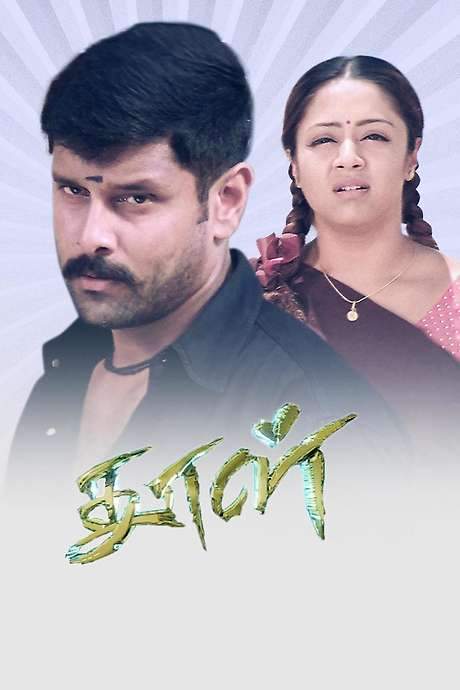



Where to Watch Dhool
See current US streaming, rental, and purchase options for Dhool (2003) via JustWatch.



Streaming availability powered by 
Dhool Plot Summary
Read the complete plot summary and ending explained for Dhool (2003). From turning points to emotional moments, uncover what really happened and why it matters.
Vikram stars as Arumugam, a compassionate villager whose life is shadowed by a chemical factory that releases toxic waste into the river. The pollution gnaws at the community, pushing Arumugam to mobilize the villagers and petition the powerful ministers to shut the plant down. In this fight for clean water and a healthier home, Arumugam’s resolve is clear, and his concern for others is ever-present.
To press the issue, Arumugam travels to Chennai with his childhood friend Jyothika as Eswari, and her grandmother Paravai Muniyamma who plays Mundakanni. The trio seeks audiences with Minister Kaalaipandi, a political heavyweight who controls the village’s fate from the city. They lodge their grievances, and the stakes feel personal as they reach out to the capital for help. They eventually stay with Narayanasamy alias Narain, Vivek, a man from their own village who has built a life in the city. Amid the city’s bustle, Swapna—a fashion model living near Narain’s home—catches Arumugam’s eye, and she is portrayed by Reema Sen. Narain, for his part, harbors his own affections for Swapna, setting up a complex web of loyalties and desires in this crowded urban landscape.
The encounter with Kaalaipandi comes amid a charged crowd, and Arumugam lays out the villagers’ woes with the polluted water. Kaalaipandi, though outwardly sympathetic, makes hollow promises while privately shielding the factory’s interests. The political machinery behind Kaalaipandi begins to unravel as Sornakka and her brother Aadhi—played by Pasupathy and aided by the minister—move to tighten their grip. Aadhi’s rough aggression leads to a brutal clash with Arumugam, and the villagers’ efforts to push back intensify. The alliance between Kaalaipandi and his goons marks a dark turn, and Arumugam’s life is put in jeopardy when he’s kidnapped and battered with the minister’s help.
Swapna proves to be a beacon of hope in this dangerous game, tending to Arumugam’s wounds after the kidnapping. In response to the pressure, Arumugam begins to turn the tables. He reveals Kaalaipandi’s true face and the corruption behind the minister’s public image to Eswari and Mundakanni, setting the stage for a sharp turn in the battle for justice. To strike a blow at Kaalaipandi’s influence, Arumugam fabricates a letter—using Kaalaipandi’s memopad and with Swapna’s help to forge the signature—praising an adult film and urging its publication in a newspaper. The ruse works: the editor falls for the ruse and runs the sensational piece the next day, triggering mass agitation and a demand for Kaalaipandi’s resignation.
The political heat grows as Sornakka hatches a plan to kidnap Swapna and corrupt her stance against Arumugam, but Arumugam intervenes to protect her. When the conspirators’ plot spirals out of control, Eswari and Mundakanni are sent back to their village, though not without suffering—Eswari is injured along the way. Enter Manoj K Jayan as Karunakaran, a sincere police officer who has aided Arumugam in the past. Kaalaipandi tries to erase Karunakaran’s credibility, while Arumugam quietly engineers a jailbreak to expose the minister’s brutality. The tension escalates as Karunakaran confronts Aadhi and his brothers, delivering a brutal reminder of who’s really in charge and who’s pulling the strings behind the scenes.
Kaalaipandi escalates his plan to kill the Chief Minister, threatening to unleash chaos if his grip on power is challenged. In a tense sequence at the hospital, Kaalaipandi attempts to frame Arumugam for the crime, but Arumugam outsmarts him. He shouts a warning that the hospital has been bombed, drawing immediate attention to the plot and forcing the minister to improvise. The wheels of justice begin to turn as Arumugam’s efforts pull in the police and the media, and the Chief Minister reveals Kaalaipandi’s machinations to the public.
In a climactic confrontation, Arumugam—closing in on Kaalaipandi—uses his wits and the support of the frightened but emboldened villagers to outmaneuver the minister. The plan culminates in a tense standoff in which Kaalaipandi is cornered by law enforcement, who move in as the truth comes to light. The Chief Minister acts decisively, ordering the closure of the dangerous chemical factory and signaling a new beginning for the village. The film closes on a note of restored faith and communal resilience, with Arumugam and the people reclaiming their water, their land, and their dignity.
In a story where courage and community stand up to corruption, the everyday heroism of Arumugam and his allies—backed by dedicated figures like Chitti Babu as Hari and the occasional appearance by Koena Mitra—shows that even in the face of powerful forces, truth and solidarity can prevail. The town’s victory is hard-won, but the river runs clear once more, and the people of the village can finally breathe easy again.
Dhool Timeline
Follow the complete movie timeline of Dhool (2003) with every major event in chronological order. Great for understanding complex plots and story progression.
Villagers protest toxic pollution
Arumugam leads the villagers in petitioning Minister Kaalaipandi, describing how the chemical factory dumps toxic waste into the river. They fear for their health and livelihoods as the water and crops suffer. The petition calls for the factory to be shut down.
Trip to Chennai to seek help
Arumugam, Eswari, and Mundakanni travel to Chennai to meet Kaalaipandi, who has won the village's constituency. They stay with Narayanasamy, an ally from their village living in the city. They hope political leverage will push the factory closure.
Kaalaipandi's reassurance
In a crowded encounter, Arumugam relays the villagers' problems to Kaalaipandi. Kaalaipandi promises swift action, presenting himself as a solution to the pollution crisis. For now, the visit seems to give the villagers some hope.
Confrontation with Aadhi and injury
Eswari accidentally collides with Aadhi, who tries to strike her. Arumugam intervenes and a scuffle leads to Arumugam fracturing Aadhi's hands. The incident draws Sornakka and Aadhi to target Arumugam.
Kidnapping attempt and assault
Sornakka and Aadhi, with Kaalaipandi's help, kidnap Arumugam and injure him. The attack marks the start of a personal vendetta against him and threatens the village alliance against the factory.
Swapna helps and Arumugam reveals truth
Swapna rescues and treats Arumugam. He reveals Kaalaipandi's true nature and the culprits behind his actions to Eswari and Mundakanni. Fueled by betrayal, Arumugam vows revenge and to expose Kaalaipandi to the public.
Forged memo and newspaper expose
Arumugam uses Kaalaipandi's memo pad and, with Swapna's help, forges a letter praising an adult film and requests publication. The newspaper editor believes it and prints the article the next day. The sensational piece stirs public outrage and political pressure on Kaalaipandi.
Public agitation and Swapna's kidnapping attempt
The newspaper expose triggers agitation among political parties and the public, calling for Kaalaipandi's resignation. Sornakka tries to kidnap Swapna to pressure Arumugam, but Arumugam intervenes and saves her. The agitation escalates into threats against Arumugam and his allies.
Eswari and Mundakanni return; Eswari injured
Eswari and Mundakanni are sent back to their village, but on the way Sornakka's gang injures Eswari. Enraged, Arumugam rushes to treat her and continues the mission against Kaalaipandi. He then meets Sub-Inspector Karunakaran, who had previously helped arrest Sornakka's brother.
Karunakaran's arc and the gang killings
Karunakaran, manipulated by Kaalaipandi, is forced to release the criminals. To take revenge, Arumugam arranges Karunakaran's escape from the hospital. Karunakaran later kills Aadhi and his two brothers, revealing Kaalaipandi's orders.
Fast plan and water contamination reveal
Kaalaipandi plans to stage a fast to win public sympathy. In response, Arumugam contaminates the village water by mixing dirty water into the celebratory drink and then reveals the river water problem to the media. He states he came to the city to expose the factory's crimes.
Hospital ambush and Arumugam's arrest
Kaalaipandi and Sornakka plan to kill the Chief Minister and blame Arumugam. Arumugam foils a hospital attack by shouting that the hospital is bombed to save the CM, but he ends up being arrested amid the chaos.
Final downfall of Kaalaipandi
Kaalaipandi tries another move, but Arumugam uses his wits and has Kaalaipandi killed by police officers who were aiming at him. The Chief Minister exposes Kaalaipandi's schemes, clearing Arumugam's name.
Factory closed and villagers celebrate
With Kaalaipandi exposed and action taken by the Chief Minister, the chemical factory is ordered to close. The villagers celebrate the victory, and their environment and health prospects improve as the threat ends.
Dhool Characters
Explore all characters from Dhool (2003). Get detailed profiles with their roles, arcs, and key relationships explained.
Arumugam (Vikram)
A kind-hearted villager who leads the charge against the polluted river. He confronts Kaalaipandi's network and orchestrates a public exposure to force action. His courage, ingenuity, and commitment to his community drive the takedown of the corrupt system.
Eswari (Jyothika)
Arumugam's childhood friend who travels from the village to Chennai with him. She is loyal and supportive, sharing in the plan to reveal the minister's wrongdoing. Her bond with Arumugam adds a personal stake to the struggle for justice.
Minister Kaalaipandi (Sayaji Shinde)
A corrupt minister who tolerates and enables his goon network. He refuses to close the chemical factory and schemes to eliminate threats to his power. His manipulation and ambition drive much of the conflict.
Swapna (Reema Sen)
A fashion model who lives near Narain's home and becomes involved with Arumugam. She helps rescue him and assists in forging the memo that exposes the minister’s misdeeds. Her actions blur personal and political lines in the struggle for truth.
Narayana Swamy (Narain) (Vivek)
A villager from the same homeland who has settled in Chennai. He provides shelter for Arumugam and acts as a conduit to the city, aiding the protagonist’s mission with practical support.
Aadhi (Pasupathy)
One of Kaalaipandi's local goons who actively opposes Arumugam and inflicts violence in the rival gang. His actions escalate the conflict and show the ruthless side of the minister's network.
Mundakanni (Paravai Muniyamma)
Eswari's grandmother, a respected elder who travels with the group to the city. She offers guidance and represents the family's support system behind the struggle.
Dhool Settings
Learn where and when Dhool (2003) takes place. Explore the film’s settings, era, and how they shape the narrative.
Time period
Early 2000s
The story unfolds in a contemporary era, reflecting industrial growth and political maneuvering of the time. Events occur over a relatively short period as investigations and public pressure build. The urban scenes emphasize modern media and political engagement in Tamil Nadu.
Location
Arumugam's Village, Chennai
The film alternates between a rural village where a chemical factory poisons the river and the bustling city of Chennai. The village's close-knit community faces health risks and loss of livelihood due to polluted water. To seek justice, villagers travel to Chennai to appeal to the minister and expose the factory's impact on daily life.
Dhool Themes
Discover the main themes in Dhool (2003). Analyze the deeper meanings, emotional layers, and social commentary behind the film.
🌊
Water Pollution
The central conflict stems from a chemical factory's toxic waste contaminating the river, threatening villagers' health and livelihoods. The narrative ties environmental harm to community welfare and demands accountability from those in power. It uses the pollution plot to critique how industry and politics affect everyday life and spark collective action.
🗳️
Corruption
The minister's network with goons shows how political power can shield wrongdoing. Forged documents and media spin demonstrate how public opinion can be manipulated for personal gain. The story traces how corruption triggers public outrage and pushes for accountability.
⚖️
Justice
Arumugam's fight evolves from personal grievance to a broader quest for justice. He leverages clever schemes and courage to expose the villain and rally public support. The climax reestablishes accountability through law enforcement and official action against the factory.

Coming soon on iOS and Android
The Plot Explained Mobile App
From blockbusters to hidden gems — dive into movie stories anytime, anywhere. Save your favorites, discover plots faster, and never miss a twist again.
Sign up to be the first to know when we launch. Your email stays private — always.
Explore the mobile appDhool Spoiler-Free Summary
Discover the spoiler-free summary of Dhool (2003). Get a concise overview without any spoilers.
In a remote village where the river once sang through daily life, the sudden murmur of toxic fumes from a nearby chemical plant begins to silence the community’s hopes. The water, the lifeblood of the fields and households, turns treacherous, and the villagers find their pleas for help falling on deaf ears. At the heart of this quiet turmoil is Arumugam, a good‑natured but unlettered man whose love for his home drives him to act when others hesitate.
When the situation escalates, the village turns to Arumugam to carry their concerns beyond the riverbanks. He sets out for the bustling capital of Chennai, accompanied by his steadfast childhood friend Eswari and her endearing grandmother, Mundakanni. The trio’s journey bridges two worlds: the simple, close‑knit rhythms of rural life and the fast‑paced, stranger‑filled streets of the city. Along the way, they are welcomed by Narain, a fellow villager who has carved out a place in the urban sprawl, offering a foothold in a place that feels both alien and invigorating.
Chennai itself pulses with a mix of hopeful ambition and hidden tension, its crowded markets, towering offices, and neon‑lit avenues providing a vivid backdrop for the villagers’ quest. Here, Arumugam encounters new faces, including a charismatic fashion model whose presence adds a splash of color to his otherwise earnest mission. The city’s political corridors, embodied by a minister whose promises echo the villagers’ aspirations, loom as both obstacle and opportunity, hinting at the complex dance between ordinary people and those who shape policy.
Against this tapestry of water‑scarred fields and neon‑glare streets, the story balances humor, heart, and a simmering resolve. It invites viewers to feel the weight of a community’s collective hope as Arumugam steps beyond familiar soil, carrying with him the quiet strength of his home and the promise of a cleaner future.
Movies with Similar Twists and Themes
Uncover films that echo the narrative beats, emotional arcs, or dramatic twists of the one you're exploring. These recommendations are handpicked based on story depth, thematic resonance, and spoiler-worthy moments — perfect for fans who crave more of the same intrigue.






Featured on this page

What's After the Movie?
Not sure whether to stay after the credits? Find out!
Check out our other apps:

SAT Sphere
Build confidence for the Digital SAT.

Mori Atlas
Discover wild places worth protecting.

Luntero
Search smarter for a home in Amsterdam.

Plot Explained
Unravel movie endings and hidden clues.

Pokechamp
Dive into Pokémon data and battle logic.

Driving Theory
Get ready for your European theory test.

Movie Dust
Plan your next cinema trip with ease.

Musemap
Find art and culture as you travel.

Selkobase
Compare credentials before committing.

Local Manual
Turn an unfamiliar country into practical next steps.

Lernavi
Compare school systems before your next move.

GymRoam
Find a workout stop wherever your plans take you.
Explore Our Movie Platform
New Movie Releases (2026)
Famous Movie Actors
Top Film Production Studios
Movie Plot Summaries & Endings
Major Movie Awards & Winners
Best Concert Films & Music Documentaries
Movie Collections and Curated Lists
© 2026 What's After the Movie. All rights reserved.
Privacy Policy