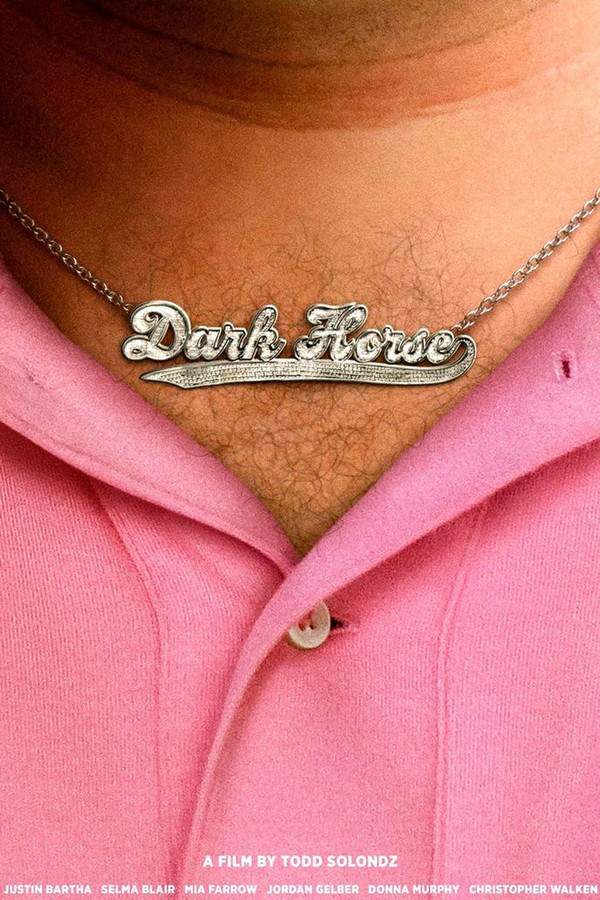
Dark Horse 2012


Directed by

Todd Solondz
Made by
Vitagraph Films
Where to Watch Dark Horse
See current US streaming, rental, and purchase options for Dark Horse (2012) via JustWatch.

Amazon Prime Video
HD
Amazon Prime Video with Ads
HD
Cineverse Amazon Channel
HD
fuboTV
HD
Philo
HD
Fawesome
HD
Hoopla
SD
Amazon Prime Video Free with Ads
HD
Cineverse
HD
Fandango at Home Free
HD
Fandor
HD
Plex
HD
Plex Channel
HD
Pluto TV
SD
Tubi TV
SD
Xumo Play
HD
Amazon Video
SD
Apple TV Store
HD Fandango At Home
SD
Google Play Movies
SD
YouTube
SD Streaming availability powered by 
Dark Horse Plot Summary
Read the complete plot summary and ending explained for Dark Horse (2012). From turning points to emotional moments, uncover what really happened and why it matters.
Abe, Jordan Gelber, a man in his thirties who still lives at home with his parents, becomes entangled with Miranda, Selma Blair, who has just moved back home after a failed literary/academic career and a divorce. While waiting outside Miranda’s house for their first date, Marie, Mia Farrow, his secretary, runs up and tells him to give up on pursuing the girl as he has no shot, but then he wakes with a start revealing it was a dream.
Throughout the film, Marie keeps popping up in unexpected places, almost like reminders or warnings. She appears in the parking lot outside a bar where he has just hit Mahmoud, Christopher Walken; in Abe’s bedroom as he parades through a quick study of his health and hepatitis; and on a street corner after an argument with his mother and brother, each appearance pulling him away from or toward Miranda. These encounters blur the line between reality and fantasy, turning Abe’s quest for connection into a toxic, dreamlike pursuit that colors everything he does.
As the relationship unfolds, Miranda discloses she has hepatitis B, raising concerns that Abe may have already put himself at risk (since he used her toothbrush). He and Miranda eventually reconnect and Clara-faced moments occur at a bar where she is still connected to Mahmoud, who is on friendly terms with her. A growing suspicion takes root in Abe that Mahmoud is the source of the infection, and a confrontation escalates into violence when Abe beats Mahmoud, breaking his jaw. He fears he has ruined his chances with Miranda, yet she reaches out, calling him back into her life. Their fragile bond endures even as Abe faces familial rejection: his father fires him and replaces him with his cousin Justin, and his mother reveals they had long ago decided Abe was a failure.
The film shifts toward a desperate, almost cyclical motion. Abe races through the rain to the toy store where, at the start of the film, he had tried to return a damaged toy but was told the toy was open and the manager was out to lunch. This time the clerk refuses again, and the store manager arrives—revealed to be Mahmoud, now with a severe jaw injury and neck brace. Mahmoud delivers a pointed speech about Abe’s self-perceived status as a loser and about Miranda’s true feelings, ending with a sobering metaphor: life gives everyone a receipt that can be cut off mid-sentence.
The story cuts to Abe in the hospital, surrounded by family. He wakes to learn he has been in a coma for two months after being hit by a car in the office parking lot. Miranda is by his side and confesses that she did not know him and wasn’t initially attracted to him, but she says she cares—without clarifying what that care means. She denies being pregnant, despite Abe’s mother’s belief, and Abe flatlines again. He recovers only to develop hepatitis and jaundice. He shares a forceful, kiss with Marie, thereby contaminating her, and once more flatlines.
Returning to his parents’ house, Abe discovers the hollowed wall behind which lies his childhood height chart, labeled with his name as “Abe, Dad’s ‘Dark Horse.’” The moment of revelation culminates in a scene at a headstone where his family gathers with Marie, a young workmate, and Miranda, who is seen holding a baby and standing with Richard’s arm around her. Richard notes the death date is wrong, but Abe’s father asks him not to tell Richard’s mother. Marie then shares a quiet, candlelit dance with Abe to a saxophone rendition of “When I Fall in Love,” and the scene abruptly shifts to a final image of Marie at work, her face lost in a daydream as the narrative’s source remains uncertain and open to interpretation.
Dark Horse Timeline
Follow the complete movie timeline of Dark Horse (2012) with every major event in chronological order. Great for understanding complex plots and story progression.
Abe awaits his first date outside Miranda's house
Abe stands outside Miranda's house, hoping for a hopeful first date. Marie, his skeptical secretary, runs up and tells him to give up on pursuing the girl because he has no shot. Abe clings to a fragile optimism despite the warning.
The dream twist reveals it was all a dream
After waking, it becomes clear that the whole waiting-for-a-date moment was just a dream. The revelation reframes the opening sequence as Abe's anxious fantasy. The real emotional stakes begin to unfold from that moment.
Marie confronts Abe in the parking lot after the bar incident
In the parking lot outside the bar, Abe has just hit Mahmoud, and Marie appears to discourage him from pursuing Miranda. She tells him to walk away from the obsession, undermining his confidence. The encounter underscores the film's theme of self-delusion.
Marie visits Abe in his bedroom, urging him to bail
In Abe's bedroom, Marie again appears to steer him away from Miranda. She frames his pursuit as a futile gamble and a distraction from reality. Abe remains entangled in his dreams, though the night provides clues about what is to come.
Street corner after argument with mother and brother
Following a heated argument in his car with his mother and brother, Abe ends up on a street corner, trying to gather his thoughts. The confrontation exposes family tensions and sets the emotional tone for his fragile self-image. The moment underscores Abe's sense of isolation.
Miranda initially declines the date
Miranda refuses to go on the planned date, resisting Abe's advances. The rejection fuels Abe's lingering belief that he may have a chance, but it also signals underlying ambivalence. The scene marks a turning point in their fragile connection.
A few days later, Miranda changes her mind about marriage
After talking with her ex, Mahmoud, Miranda unexpectedly changes course and tells Abe she does want to marry him. This reversal pushes Abe into a hopeful, though precarious, dream of a future together. The moment hints at the volatility of their relationship.
Abe confronts Mahmoud at a bar and suspects hepatitis
Abe meets Miranda and Mahmoud at a bar and grows suspicious that Mahmoud is the one who infected Miranda with hepatitis. In a fit of rage, he attacks Mahmoud, breaking his jaw. The confrontation deepens the film's conflict and deepens Abe's alienation.
Abe is fired; family reveals past judgments
Back at home, Abe is fired by his father and eyed by his cousin Justin as a replacement. His mother coldly reveals they had long ago decided Abe was a failure. The shift intensifies Abe's sense of failure and displacement.
Rain-soaked trip to the toy store; Mahmoud as manager and the receipt speech
In the rain, Abe rushes to the same toy store where he had failed before, insisting he is there to pick up his fiancée. Mahmoud now works the counter with a severe jaw injury and delivers a speech about how Abe is a loser and how Miranda would have been better off with his brother. The speech expands into a larger metaphor about life and receipts that are abruptly cut off.
Hospital coma following a car accident; Miranda's visit
The scene cuts to Abe in the hospital, in a two-month coma after being hit in the office parking lot. Miranda visits him and says she did not know him and was never attracted to him, but that she cares; she declines to specify what. She also adds that she is not pregnant, defying Abe's mother's belief.
Recovery, hepatitis, and a contaminating kiss
Abe recovers from the coma but develops hepatitis and jaundice. He talks with Marie and forcefully kisses her, thereby contaminating her, and then flatlines again. The sequence underscores the consequences of his obsessive pursuit and fragility of life.
Back at the parents' house, an empty home and a childhood truth
He walks into his parents' house, now empty of people. He tears off a small section of wallpaper to reveal his childhood height recorded on the wall by his father with the label Abe, Dad's 'Dark Horse'. The reveal hints at decades of parental expectations shaping his self-image.
The headstone unveiling and a final candlelit dance
At the uncovering of Abe's headstone, his family is gathered with Marie, a young workmate, and Miranda holding a baby. Richard points out the death date is wrong, but Abe's father silences him. Marie slow-dances with Abe by candlelight to a saxophone version of 'When I Fall in Love' as the moment lingers
Final cut: Marie's daydream at work
The scene abruptly cuts to Marie sitting at work with a faraway, daydream look on her face, casting doubt on whether the entire story was real. The closing image hints that the memory of Abe may live on in her imagination and in what she chooses to remember.
Dark Horse Characters
Explore all characters from Dark Horse (2012). Get detailed profiles with their roles, arcs, and key relationships explained.
Abe (Jordan Gelber)
Abe is a thirty-something man living at home with his parents, desperate to prove he is not a failure. He narrates with a mix of vulnerability and stubborn optimism, calling himself a dark horse and clinging to a romantic ideal. His fixation on Miranda drives him to reckless acts and dreamlike detours, blurring fantasy and reality. The story follows his attempts to turn fantasy into a tangible relationship, with consequences he must face.
Miranda (Selma Blair)
Miranda is a writer who returns home after a failed academic career and a divorce, wary of Abe at first but drawn to him over time. She reveals a hepatitis B risk and carries the baggage of an ex, Mahmoud, who complicates her feelings. Her choices swing between guarded independence and sudden vulnerability, culminating in a hopeful but uncertain shift in her stance toward Abe. She remains emotionally conflicted, leaving the true depth of her feelings open to interpretation.
Marie (Mia Farrow)
Marie, Abe's secretary, keeps appearing in unexpected places to discourage him or pull him away from Miranda. She hints at tragedy in her own past and serves as a spectral, grounding counterpoint to Abe's fantasies. Her interruptions underscore the tension between professional distance and personal longing, while her twin-children story adds an eerie weight to the narrative. Her presence blurs lines between reality and imagination.
Mahmoud (Christopher Walken)
Mahmoud is Miranda's ex and the unpredictable antagonist-figure who complicates Abe's pursuit. He embodies a dangerous confidence and becomes the catalyst for confrontations, including a brutal bar altercation. His severed jaw and the shopkeeper-like reveal tie the film's violence to themes of fate and perception. He delivers a chilling, reflective speech that reframes Abe's sense of worth and possibility.
Dark Horse Settings
Learn where and when Dark Horse (2012) takes place. Explore the film’s settings, era, and how they shape the narrative.
Time period
Contemporary
Set in a contemporary present, the film follows Abe's attempts to win Miranda while navigating familial expectations and personal illness. The narrative shifts through moments of confrontation, dreamlike interruptions, and a coma that blur what is real. The time frame underscores the immediacy of his emotional stakes and the fragility of relationships.
Location
Bar, Parking lot outside a bar, Toy store, Hospital, Abe's family home
Dark Horse unfolds across an urban landscape anchored by bars, a crowded parking lot, a toy store visit, a hospital, and Abe's family home. The settings emphasize Abe's claustrophobic world and the interplay between ordinary spaces and his obsessive fantasies. These locations act as mirror stages for his pursuit of love, conflict with family, and slips between dream and reality.
Dark Horse Themes
Discover the main themes in Dark Horse (2012). Analyze the deeper meanings, emotional layers, and social commentary behind the film.
💔
Love and Obsession
Abe's fixation on Miranda grows into an all-consuming pursuit that blinds him to reality. Rejection becomes fuel for him to push boundaries, misread signals, and lash out when challenged. The story traces how desire can morph into control, with dangerous consequences for both lovers and bystanders. It ultimately questions whether love can survive when it is fed by fantasy rather than mutual trust.
🎭
Reality vs Illusion
The film frames Abe's world as a series of dreamlike interruptions and confrontations that blur what is real and what is desired. Marie often appears as a spectral presence that challenges Abe's grip on reality. A coma and a sequence of strange coincidences keep the audience guessing about the nature of the events. The narrative invites reflection on how easily perception can masquerade as truth.
🏠
Family Pressure
Abe lives under intense parental scrutiny, with his father planning to replace him and his mother revealing long-held beliefs about his worth. The motif of the father's note and the family home underscores the burden of expectations and the fear of failure. The title’s motif, a dark horse, mirrors the pressure to prove oneself despite overwhelming odds. Domestic scenes become the battleground where self-worth is negotiated.
🩺
Illness and Mortality
Hepatitis, jaundice, and a prolonged coma anchor the story in the fragility of life. Abe's health crises force reckoning with love, loyalty, and truth, reshaping relationships and priorities. The plot's fatalistic turn culminates in a striking, ambiguous ending that lingers after the physical life is in question. Illness becomes a metaphor for the costs of pursuing an illusion at the expense of others.

Coming soon on iOS and Android
The Plot Explained Mobile App
From blockbusters to hidden gems — dive into movie stories anytime, anywhere. Save your favorites, discover plots faster, and never miss a twist again.
Sign up to be the first to know when we launch. Your email stays private — always.
Explore the mobile appDark Horse Spoiler-Free Summary
Discover the spoiler-free summary of Dark Horse (2012). Get a concise overview without any spoilers.
In the quiet suburbs where routine masks deeper anxieties, a man in his thirties still living under his parents’ roof wrestles with the shadows of his past. Abe is a figure caught between the comfort of familiarity and the restless urge to break free, his days colored by a muted sense of failure that clings to every interaction. The world around him hums with ordinary sounds—traffic, kitchen clatter, the soft murmur of family life—yet there is an undercurrent of dream‑like unreality that hints at something just beyond the edge of perception.
Enter a wandering spirit who carries a carefree demeanor like a second skin. Miranda has just returned home after a series of personal setbacks, and her presence is both disarming and unsettling. Their unexpected bond forms like a fragile thread, pulling each of them out of their habitual patterns and into a shared space where laughter and tension coexist. The connection they forge feels simultaneously intimate and precarious, offering both characters a chance to glimpse a different kind of future while confronting the inner demons they have long kept at bay.
Around them, peripheral figures drift in and out, most notably a diligent secretary whose timely appearances seem to act as quiet signals or gentle warnings. The tone of the story balances melancholy with off‑beat humor, weaving moments of surreal perception into the fabric of everyday life. As Abe and Miranda navigate the delicate dance of their relationship, the film offers a contemplative portrait of two people seeking redemption and meaning amid the ordinary, inviting viewers to wonder how far a fragile connection can carry them when the world feels both familiar and oddly askew.
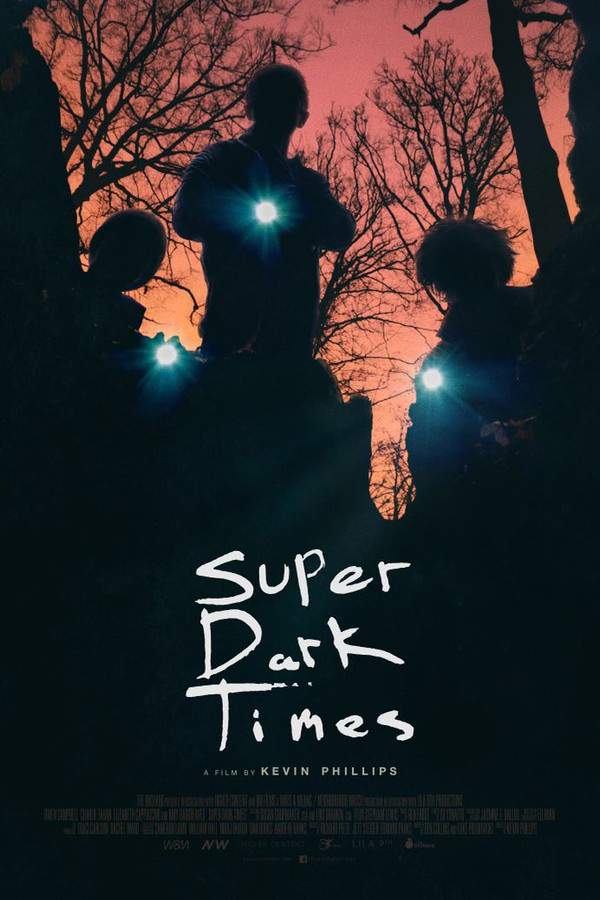
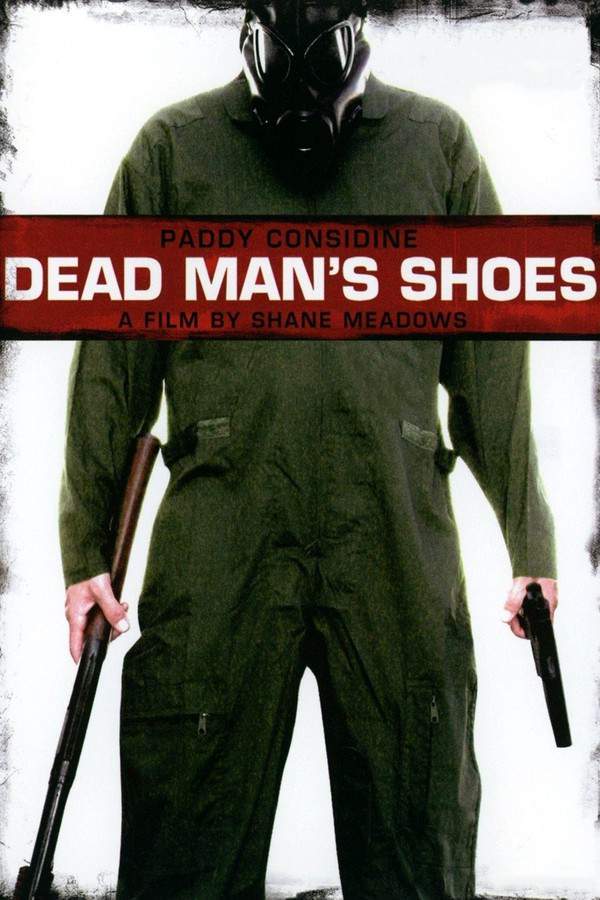
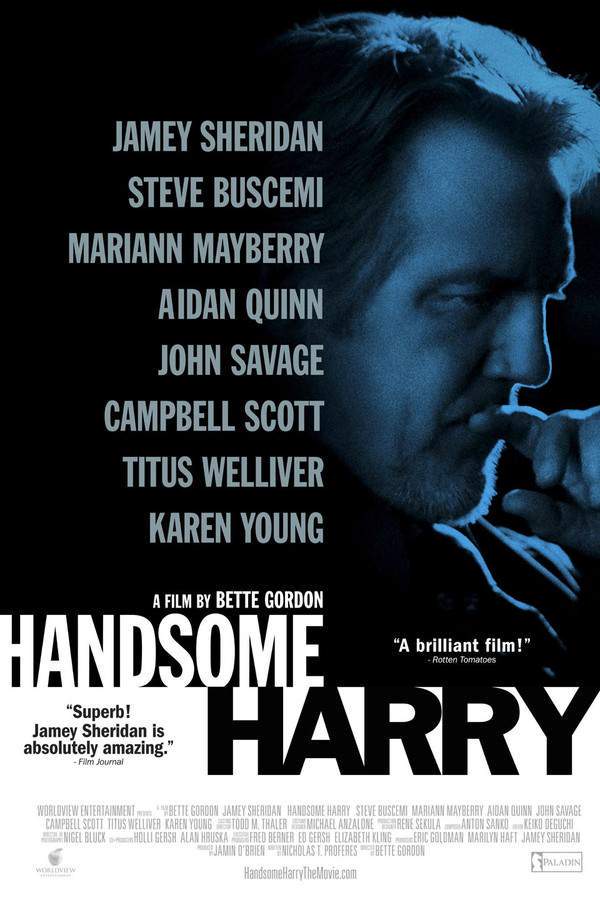
Movies with Similar Twists and Themes
Uncover films that echo the narrative beats, emotional arcs, or dramatic twists of the one you're exploring. These recommendations are handpicked based on story depth, thematic resonance, and spoiler-worthy moments — perfect for fans who crave more of the same intrigue.


Featured on this page

What's After the Movie?
Not sure whether to stay after the credits? Find out!
Check out our other apps:

SAT Sphere
Build confidence for the Digital SAT.

Mori Atlas
Discover wild places worth protecting.

Luntero
Search smarter for a home in Amsterdam.

Plot Explained
Unravel movie endings and hidden clues.

Pokechamp
Dive into Pokémon data and battle logic.

Driving Theory
Get ready for your European theory test.

Movie Dust
Plan your next cinema trip with ease.

Musemap
Find art and culture as you travel.

Selkobase
Compare credentials before committing.

Local Manual
Turn an unfamiliar country into practical next steps.

Lernavi
Compare school systems before your next move.

GymRoam
Find a workout stop wherever your plans take you.
Explore Our Movie Platform
New Movie Releases (2026)
Famous Movie Actors
Top Film Production Studios
Movie Plot Summaries & Endings
Major Movie Awards & Winners
Best Concert Films & Music Documentaries
Movie Collections and Curated Lists
© 2026 What's After the Movie. All rights reserved.
Privacy Policy