
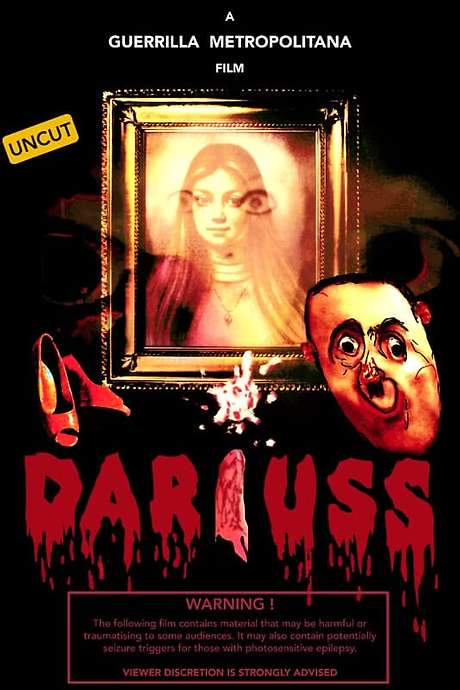
What Is Dariuss About?
The premise of Dariuss in 307 words, with nothing given away. The full story follows below.
In the gentle rolling fields of Essex, a modest middle‑class home becomes a quiet stage for an unthinkable loss. The sudden disappearance of a young daughter cracks the rhythm of daily life, turning ordinary rooms into echo chambers of unanswered questions. The film settles into this landscape, letting the countryside’s calm contrast with the storm growing inside the family’s walls, while a deliberately raw visual style makes every glance feel intimate and unsettling.
The Husband carries the weight of a man who once believed stability could be measured in garden fences and weekend barbecues. Across the kitchen table, The Mother wrestles with a grief that tightens around her reflection, a mirror that seems to amplify every hidden fracture. In the attic, The Grandmother clings to ritual, her actions a quiet counterpoint to the chaos below. A pregnant figure known only as The Woman drifts through the house, her presence a reminder of life’s continuation amid loss. Each character processes the tragedy in a distinct, often uncomfortable manner, creating a tapestry of private mourning that never quite aligns.
The film adopts a meta‑cinematic approach, blurring the line between observer and participant. Handheld cameras linger on mundane details—a half‑filled milk bottle, a child’s sketch on the fridge—while the grainy texture of guerrilla‑style shooting heightens the sense that the audience is intruding on something deeply personal. Shadows linger longer than they should, and ordinary objects take on an almost oppressive symbolism, turning the home into a living, breathing organism that reflects the family’s unraveling psyche.
Through this unsettling blend of realism and artifice, the story invites viewers to sit beside a family whose grief is both universal and profoundly disorienting. The tone remains persistently tense, a quiet dread that pulses beneath every scene, leaving us to wonder how far the ordinary can stretch before it begins to fracture beyond recognition.
What Happens in Dariuss?
The complete story of Dariuss, from the first scene to the last, in 465 words (about 2 minutes). Spoilers throughout. Names in the text link to 3 cast member pages.
Spoilers ahead
From Dariuss, the film unfolds a brutal, unsettling tale centered on a family shattered by the disappearance of their daughter after she is filmed in a park without her knowledge. Archibald Kane as The Husband anchors the emotional core, while the rest of the family grapples with their grief in starkly different, sometimes disturbing ways. The presence of a sinister figure, Guerrilla Metropolitana as The Maniac, alongside a pregnant woman known as The Woman, portrayed by Ila Argent, casts a shadow over a night that grows increasingly uncanny and threatening.
The narrative never shows the girl’s fate directly, but it hints at murder and possibly rape. The story then widens to track a nightmarish constellation of perspectives on the family’s pain, set against a London night where reality shifts into troubling visions: a child’s strange sexual drawings, a figure in a torchlit forest manipulating two rag dolls, a pair of child’s underwear, and an empty milk bottle left in an abandoned house. These fragments mingle with the father’s private torment—drinking chocolate in his car and crying—and the grandmother’s bizarre ritual of filling bottles with breast milk, while the mother torments herself in front of a mirror, crying and taking barbiturates.
As the film pushes deeper into its disturbing psychology, the mother and grandmother engage in incestuous acts, a sequence underscored by a painting of the dead girl that appears repeatedly throughout the story. Each family member processes grief in a starkly different, increasingly aberrant way, blurring the line between sorrow and harm in a room already charged with dread.
The intrusion of a mysterious, disturbing figure—carrying a baby-like voice, a handheld camera, and the severed scalp glimpsed at the film’s start—shatters the family’s fragile sense of safety. The home becomes a scene of unimaginable violence and madness: the sleeping mother is attacked, decapitated, and then violated in a brutal turn; the grandmother is raped and her innards are devoured, while the father, who has contemplated suicide, drains the elderly woman’s breast milk, masturbates before his daughter’s painting, and is then attacked by the young maniac and devoured as the attacker films the carnage. The discovery that the daughter’s father also possessed a camera tripod raises haunting questions about who bears responsibility for the disappearance.
Amid the massacre, the dead girl reappears as a ghost at the scene, assuming the look of the girl in the painting. The family cat is killed, and the maniac, having completed his grim harvest, leaves to seek another house to invade, continuing the cycle of fear as he moves toward a new victim. The film lingers on the collision of grief, violence, and the uncanny, resisting simple answers while presenting a relentless, panoramic portrait of a family unraveling under the weight of a nightmarish +truths+ that refuses to stay buried.
Dariuss Timeline: Every Key Event in Order
12 key events in the order they happen, from “Girl disappears after being filmed in park” to “Killer leaves to find a new victim”. 12 events name a place, across 6 locations.
- 1
Girl disappears after being filmed in park
A young girl is playing alone in a park when she is filmed without her knowledge. Shortly after, she vanishes, leaving her family and the community stunned. The disappearance becomes the driving mystery and a catalyst for the family's unraveling.
When:Afternoon Where:Park
- 2
Family grieves in divergent ways
News of the girl's disappearance ripples through the family, who grieve in strikingly different ways. The father sits in his car, crying and eating chocolate, while the grandmother prepares breast milk for feeding bottles and the mother retreats into barbiturate-fueled private moments. Their coping diverges, highlighting a fractured household under stress.
When:Days after Where:Home
- 3
Pregnant woman attacked on a London street at night
The film briefly shifts to a pregnant woman walking at night, alarmed by the sound of a crying baby. She is murdered in a brutal act that suggests violence and violation. The event expands the sense of danger across London’s nocturnal streets.
When:Night Where:London street
- 4
Incest and a recurring painting of loss
The film shows the mother and grandmother engaging in incest as part of the family’s dysfunctional coping. A painting of the dead girl recurs throughout the story, becoming a disturbing touchstone for grief. The combination deepens the sense of moral decay surrounding the missing child.
Where:Home
- 5
Strange relics and fragmented reality
Across the narrative, unsettling fragments from various perspectives appear: a series of strange sexual drawings from a child, two rag dolls in a torchlit forest, and mundane items like underwear and an empty milk bottle left in an abandoned house. These artifacts hint at disturbed psyches and a reality that feels unstable. They contribute to a sense that truth is fractured and nights hold hidden horrors.
When:Night Where:London, various locations
- 6
A disturbing intruder breaks into the home
A mysterious intruder with a baby-like voice arrives, carrying a handheld camera and the severed scalp seen earlier. He breaks into the family home, marking the start of a nightmare of violence and domination. The sense of safety dissolves as he asserts control over the space.
When:Night Where:Family home
- 7
Mother attacked in the night
The intruder attacks the sleeping mother, a violent violation that shatters the household’s last sense of security. The assault signals a rapid descent into total chaos and horror. The family’s nightmare becomes visually brutal and emotionally devastating.
When:Night Where:Family home
- 8
Grandmother raped and murdered
The intruder moves on to the grandmother, subjecting her to a brutal assault and murder. The violence is interwoven with the family’s pre-existing dysfunction and moral transgressions shown earlier. The act deepens the film’s examination of trauma and depravity.
When:Night Where:Family home
- 9
Father copes with despair in extreme ways
The father contemplates suicide, while simultaneously engaging in disturbing private rituals, including drinking breast milk and self-pleasure in front of his daughter’s painting. His actions reveal how guilt and madness drive extreme responses to grief. This moment foreshadows a violent turn in the father’s arc.
When:Night Where:Home
- 10
Father is attacked and killed; killer records it
The intruder attacks the father and kills him, filming the act as evidence. The discovery that the father possessed a camera tripod adds to questions about who is responsible for the girl’s disappearance. The family’s collapse is now complete, and the killer’s presence dominates the narrative.
When:Night Where:Family home
- 11
The girl appears as a ghost at the massacre
After the massacre, the dead girl appears as a ghost at the scene, taking on her painting’s look. The apparition reinforces themes of memory, art, and haunting trauma. Her presence lingers as the violence fades but the fear remains.
When:Night Where:Family home
- 12
Killer leaves to find a new victim
The intruder walks into the night in search of another house to break into. The cycle of violence continues as a new victim awaits elsewhere. The film ends on an unsettled, ominous note.
When:Night Where:London streets
Who Are the Main Characters in Dariuss?
6 characters, among them The Husband, The Maniac and The Woman: who each one is and the part they play in the story. 3 of them link to the actor’s page.
- TH
The Husband
Played by Archibald Kane
The dead girl's father, overwhelmed by grief. He is shown in moments of despair—drinking in his car, crying, and engaging in troubling behavior—before becoming entangled in the intruder's rampage.
- 💔 Grieving father
- Alcohol use
- Guilt
- TM
The Maniac
Played by Guerrilla Metropolitana
A mysterious intruder with a baby-like voice who breaks into the family home, carrying a handheld camera and the severed scalp seen earlier. His violence drives the house into a nightmare of rape, murder, and chaos.
- ⚠️ Violent intruder
- Predator
- Voyeur
- TW
The Woman
Played by Ila Argent
A pregnant woman walking alone at night who becomes a victim; the film depicts the brutal act of severing her umbilical cord as a turning point in the nightmare.
- 👶 Pregnant
- 🌃 Night
- ⚠️ Victim
- TG
The Grandmother
The grandmother uses her breast milk to fill empty bottles, and becomes a figure of both nurture and victim in the escalating violence.
- 👵 Grandmother
- 🥛 Milk
- ⚠️ Violence
- TM
The Mother
The children's mother is depicted contending with grief in disturbing ways, including self-reflection and acts of desperation that blur moral boundaries.
- 👩 Mother
- 🪞 Mirror
- 😢 Grief
- TG
The Girl
The deceased girl who appears as a ghost across the massacre scene, her painting haunting the family home.
- 🧒 Girl
- 👻 Ghost
- 🖼️ Painting
Where and When Is Dariuss Set?
Dariuss is set in Park, London, Forest and Abandoned house. Here is why the place matters to the story.
Where
Park, London, Forest, Abandoned house
The film unfolds across a city park and a nocturnal London backdrop, moving through a torchlit forest and into an abandoned house. The park scene is where the girl plays and is filmed without her knowledge. The night-time urban spaces and secluded forest settings emphasize vulnerability and fear, with the abandoned house serving as a focal point for violence.
- 🌳 Park
- 🏙️ London
- 🌲 Forest
- 🏚️ Abandoned house
What Are the Themes of Dariuss?
4 ideas the story keeps returning to, among them Grief, Violence and Family Dynamics.
-
01
Grief
A family is shattered by the disappearance of their daughter, and each member processes the loss through highly personal, often disturbing behaviors. The film portrays a spectrum of coping mechanisms—from self-destructive acts to intimate rituals—that reveal the depth of their distress. The recurring image of the dead child’s painting anchors the family’s emotional turmoil and sense of unresolved tragedy.
-
02
Violence
The arrival of a mysterious intruder unleashes a nightmare of brutality, including rape, decapitation, and cannibalistic violence. The violence unfolds through multiple perspectives, intensifying the sense of threat and the characters’ fragility. The narrative uses these acts to explore how grief can distort reality and trigger extreme reactions.
-
03
Family Dynamics
The story exposes a fractured family grappling with trauma through highly dysfunctional behavior and taboo acts. Incestuous tension between the mother and grandmother surfaces amid pervasive grief, challenging traditional notions of kinship and care. The characters’ erratic actions underscore the corrosive impact of unresolved loss on family bonds.
-
04
Voyeurism
The plot centers on being filmed without consent and on the intruder’s camera-wielding presence, raising questions about observation and truth. Perspective shifts invite the audience to witness violence from unsettling angles, highlighting how surveillance shapes memory and fear. The handheld camera motifs create a pervasive sense of intrusion and complicity.
What Kind of Film Is Dariuss?
Dark in tone, with variable pacing and a moderate story, going by the plot summary.
- Tone
- Dark
- Pacing
- Variable
- Story
- Moderate
- Intensity
- High
- Ending
- Bleak
An intensely disturbing and grim journey into the depths of grief and psychological disintegration, which uses a raw, guerrilla-film style to create a deeply unsettling and nightmarish experience.
- disturbing
- unsettling
- grief-stricken
- oppressive
- nightmarish
- violent
- grief and loss
- psychological trauma
- family breakdown
- metacinema
Content notes: child murder, sexual assault, graphic violence, incest, suicide contemplation, animal death.
Quiz
How well do you remember Dariuss? Test yourself on the story.
