
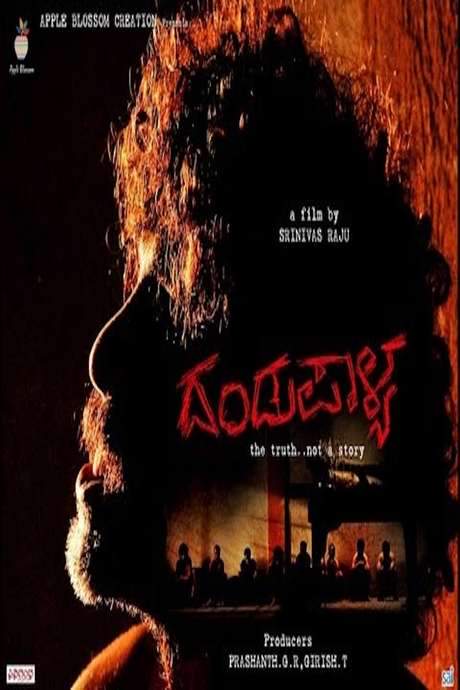
What Is Dandupalya About?
The premise of Dandupalya in 270 words, with nothing given away. The full story follows below.
In the remote stretches of an Indian countryside, a palpable sense of unease hangs over the quiet villages and winding dirt roads. The landscape, with its stark fields and dense thickets, becomes a silent witness to a growing shadow that threatens to upend the fragile peace of the region. The film’s tone is gritty and unflinching, blending a stark realism with an undercurrent of relentless tension that keeps the audience on edge, never quite sure where danger might emerge from the next rustling brush or dimly lit alley.
At the heart of this turbulence stands Chalapathy, a seasoned police officer whose resolve is as hardened as the terrain he patrols. Driven by a personal code of duty and an unyielding belief in justice, he is portrayed as both methodical and resourceful, navigating bureaucratic obstacles and limited resources while confronting an ominous presence that seems to evade capture. His determination to restore order is matched only by his willingness to push the boundaries of conventional policing, creating a compelling portrait of a lawman caught between relentless pursuit and the moral weight of his responsibilities.
Intersecting his path is Abhivyakti, a tenacious journalist whose curiosity and sense of moral clarity compel her to investigate the murky circumstances surrounding the unrest. Her probing inquiries and willingness to challenge official narratives introduce a parallel thread of inquiry, highlighting the tension between law enforcement and independent scrutiny. Together, the officer’s dogged pursuit and the reporter’s investigative drive set the stage for a suspense‑laden exploration of power, truth, and the fragile line between order and chaos in a world where every shadow could conceal a threat.
What Happens in Dandupalya?
The complete story of Dandupalya, from the first scene to the last, in 565 words (about 2 minutes). Spoilers throughout.
Spoilers ahead
Opening with tension, the film opens as a gang is led to the prison for execution, and the vigilant Inspector Chalapathi [p-ravi-shankar] warns the warden to stay on high alert. The atmosphere is tense, and the weight of impending justice hangs heavy as the law closes in. In the midst of this, Indian Express investigative journalist Abhivyakti “Abhi” begins a painstaking reinvestigation, challenging the official narrative and insisting that there was little to no circumstantial evidence, no fingerprints, and no semen tests to confirm the alleged rape and murders. Her relentless pursuit of the truth sends her through a web of secrets that the case seems to conceal.
Her inquiries begin with a local jeweler, who reveals a troubling truth: the stolen ornaments were remade and passed off as evidence in court, and even a witness from Singapore appears to be a fabrication. Abhi uncovers a cascade of anomalies, including the absence of a formal FIR and the troubling claim that the gang was hauled away for 40 days under coercive methods in the name of interrogation. As she digs deeper, she meets the grieving parents of the victims, who recount how no neighbor ever saw the victims in the locality and how they were led to believe the accused were guilty—only because the police allegedly presented the victims to them and explained how the crimes were supposedly committed. The parents question the fairness of the process, noting that the poor are easy targets for a rushed, opaque system.
Despite an initial setback, Abhi gains an opportunity to speak with the accused, who are later moved to another prison designated for execution. There, they share their side of the story, challenging the narrative and accusing the police of using torture to force confessions. The gang recounts a brutal chain of hardship: migrating to an unfamiliar land, surviving on scant food, living in slums, facing rejection for domestic work, and occasionally surviving by eating stray animals. They describe finding work as construction laborers, only to be ensnared in a climate of fear and coercion as the Dandupalya crimes—killings, thefts, and gang-rapes—put enormous pressure on the local police to deliver results.
A pivotal moment occurs after a late-night movie outing, when the Inspector notices two of the gang members and uses force to discipline them for not showing their tickets, shoving them back to their slum. The following night brings a new tragedy: another murder and theft, and the inspector’s quick intervention leads to the squint-eyed member stealing a gold ring to mend his wife’s leg, only to be stopped as the inspector arrives and strikes again. Soon after, the police pull the rest of the gang away to a secluded site and subject them to brutal torture, including the sexual assault of a female gang member. After forty days of sustained abuse, the gang capitulates, confessing to crimes they maintain they did not commit.
Abhi responds to the coercive truth with a published exposé, accusing the police of violence and false evidence. The inspector confronts her, and the narrative shifts toward the aftermath—the repercussions of power, the fragility of justice, and the ongoing struggle to separate truth from enforced fate. The tale unfolds as a stark meditation on how desperation, poverty, and institutional pressure can distort justice, and it leaves viewers pondering who is truly guilty and who pays the price for a system under siege.
Dandupalya Timeline: Every Key Event in Order
12 key events in the order they happen, from “Gang arrives for execution; inspector's warning” to “Confrontation and promise of a sequel”. 12 events name a place, across 12 locations.
- 1
Gang arrives for execution; inspector's warning
The film opens with the gang being brought to the prison for execution, establishing a tense mood. Inspector Chalapathi warns the prison warden to handle them carefully, signaling deep mistrust and foreboding. The scene sets up the stakes of the impending judgment.
When:Opening scene Where:Prison
- 2
Investigation begins: Abhi digs into the case
Indian Express journalist Abhivyakti 'Abhi' reopens the case, contending there is no solid circumstantial evidence. She starts with the local jewellery maker, who reveals that stolen ornaments were remade and used as fake evidence, and that a witness from Singapore was fabricated. She questions why no FIR was lodged, and why the evidence was manipulated.
When:Early investigation Where:Investigation site / Local jewellery workshop
- 3
Families of the victims voice doubts
Abhi meets the parents of the victims and learns neighbours had not seen the gang in the locality. The parents explain how police claimed the gang's guilt, claiming the victims were handed over to them and brutally blamed the poor. The encounter deepens the sense of injustice and possible manipulation.
When:Following days Where:Victims' residence
- 4
First failed attempt and relocation
After an initial failed attempt to access the gang, Abhi eventually gets a chance to meet them. The gang is moved to another prison designated for execution, signaling intensified stakes. There they encounter Umesh Reddy, who appears innocent but is part of the web.
When:A later day Where:New prison; transfer location
- 5
The gang tells their side: torture as frame
In a candid session, the gang narrates their version of events to Abhi, condemning the police for using torture to force confessions. They insist they are victims of coercion, not criminals by choice. The confession they give is shaped by the brutal treatment they endured.
When:During interview Where:Meeting room, new prison
- 6
Past hardships of the gang
The gang explains their hardships—migrating to an unknown land, starving in the slums, begging for food, and occasionally taking odd jobs. They describe elevated desperation that led them toward menial, sometimes criminal activities for survival. Their backstory adds context to their perceived culpability.
When:Flashbacks Where:Slums / migratory route
- 7
Police pressure mounts; crackdown escalates
The Dandupalya serial killings heighten public and police pressure, pushing officials to crack down. The inspector faces scrutiny for failures to curb crimes, while forces are reinforced. This climate foreshadows harsher actions against the gang.
When:During crackdown Where:City / police precinct
- 8
Late-night incident: spotting the squint-eyed member
One night, after a late movie, the inspector spots two gang members and strikes them when they fail to produce tickets. He drags them back to the slum and unsettlingly asserts control. The scene highlights the vigilante-like approach of the police.
When:Late night Where:Slum / near cinema
- 9
The theft, the ring, and the inspector's intervention
The squint-eyed member steals a gold ring to treat his wife's injured leg and tries to sell it to a jewellery shop. The inspector arrives, administers another beating, and confiscates the ring. This event reinforces the cycle of violence and coercion used to manipulate the gang.
When:Next night Where:Jewellery shop / crime site
- 10
40 days of coercion: forced confessions
That night, the police abduct the rest of the gang to a secluded spot and torture them, including a female member subjected to sexual assault. The sustained abuse continues for 40 days, pressuring them to admit crimes they did not commit. The investigation is derailed by brutal extrajudicial methods.
When:Over the next 40 days Where:Secluded torture location
- 11
Abhi's exposé: police force and false evidence
Abhi publishes an article accusing the police of using force and false evidence to frame the gang. The public and authorities react to the allegations, challenging the legitimacy of the case. The journalist's work catalyzes scrutiny of law enforcement practices.
When:Publication day Where:Newspaper office
- 12
Confrontation and promise of a sequel
The inspector confronts Abhi, signaling ongoing tensions between the police and the journalist. The rest follow the sequel, implying more revelations or a continuation of the case. The film closes on an unsettled note, hinting at further consequences.
When:Post-exposé Where:Meeting between inspector and journalist
Who Are the Main Characters in Dandupalya?
10 characters, among them Krishna (Makrand Deshpande), Chalapathi (P. Ravi Shankar) and Hanuma (Ravi Kale): who each one is and the part they play in the story. Every profile links to the actor’s page.
- K(
Krishna (Makrand Deshpande)
Played by Makrand Deshpande
A member of the Dandupalya gang who endures hardship and participates in the group’s crimes. His perspective reflects the harsh choices forced by poverty and survival, as the story frames the gang’s actions through their own recounting.
- 💀 Gang Member
- 🧭 Survivor
- C(
Chalapathi (P. Ravi Shankar)
Played by P. Ravi Shankar
A police inspector who leads the crackdown on the gang, using force and intimidation to extract confessions. His aggressive methods become a central source of controversy as the journalist investigates the case.
- ⚖️ Police
- 🗣️ Authority
- H(
Hanuma (Ravi Kale)
Played by Ravi Kale
A member of the gang who shares in the group's struggles and crimes. His experiences illustrate the desperation and camaraderie among the inmates as they navigate fear and coercion.
- 💀 Gang Member
- 🧭 Desperation
- L(
Lakshmi (Pooja Gandhi)
Played by Pooja Gandhi
A female gang member whose life is entangled with the group's violence and the risks of poverty. Her presence highlights both resilience and vulnerability within the gang’s dynamics.
- 👩 Female Member
- 💔 Victim of hardship
- RS
Raghu's Sister (bhavya)
Played by bhavya
Family ties tether characters to the cycle of poverty and social stigma. She symbolizes how poverty affects those connected to the gang, even if not directly involved in the crimes.
- 👩 Family Member
- 🪧 Social Stigma
- RW
Raghu's Wife (Priyanka Kothari)
Played by Priyanka Kothari
Wife of Raghu, her life is shaped by the gang's turmoil and the consequences of the crimes. She embodies the collateral damage of a life built around necessity and danger.
- 👩 Partner
- 💔 Family Impact
- CW
Chalapathi's Wife (Sudharani)
Played by Sudharani
Wife of the police inspector, providing a personal angle on the costs of policing. Her character hints at the domestic side of a man whose career is defined by enforcement.
- 👩 Spouse
- 🏠 Domestic Life
- R(
Raghu (Raghu Mukherjee)
Played by Raghu Mukherjee
A gang member whose life centers on survival in the Dandupalya group. He represents the collective experience of those cornered by poverty and a harsh justice system.
- 💀 Gang Member
- 🧭 Survivor
- KT
Koti Thimma (Jayadev Mohan)
Played by Jayadev Mohan
Another member of the gang whose actions reflect the cycle of crime born from marginalization. He shares in the group's attempts to endure and resist exploitation.
- 💀 Gang Member
- 🧭 Marginalization
- KS
Kari Subbu
Played by Kari Subbu
Gang member included in the ensemble who embodies the collective desperation and the social pressures that pull people into crime.
- 💀 Gang Member
- 🧭 Desperation
Where and When Is Dandupalya Set?
Dandupalya is set in India, Prison and Slums. Here is why the place matters to the story.
Where
India, Prison, Slums
The narrative moves through India's urban landscape, centering on a harsh prison environment where inmates await execution and the poverty-stricken slums from which the gang emerges. It contrasts the claustrophobic prison routine with the sprawling, impoverished outskirts where hunger and limitation push characters toward crime. The setting underscores a cycle of crime, punishment, and fragile justice that the journalist seeks to expose.
- 🏙️ Indian setting
- 🔒 Prison system
- 🏚️ Urban slums
What Are the Themes of Dandupalya?
3 ideas the story keeps returning to, among them Police Brutality, Poverty and Truth & Accountability.
-
01
Police Brutality
The film critiques how coercive policing and forced confessions can distort justice, highlighting the use of torture and false evidence to convict the poor. It shows the moral conflict within authorities and questions the legitimacy of the case against the gang.
-
02
Poverty
Poverty drives the gang's survival, from migrating and living in slums to begging for food and taking arduous construction work. The story portrays how economic desperation funnels people into criminal activities and makes them easy targets for manipulation.
-
03
Truth & Accountability
An investigative journalist relentlessly questions the official narrative, uncovering fake witnesses and forged evidence. Her reporting exposes systemic failures and pressures of a flawed justice system, pushing for accountability.
What Kind of Film Is Dandupalya?
Dark in tone, with steady pacing and a moderate story, going by the plot summary.
- Tone
- Dark
- Pacing
- Steady
- Story
- Moderate
- Intensity
- High
- Ending
- Ambiguous
A grim and tense crime drama that methodically exposes a corrupt investigation, creating a heavy, oppressive atmosphere where the line between victim and criminal is disturbingly blurred.
- tense
- gritty
- oppressive
- unsettling
- desperate
- anxious
- crime investigation
- police brutality
- injustice
- poverty
Content notes: torture, sexual assault, murder, police brutality, false confession.
Quiz
How well do you remember Dandupalya? Test yourself on the story.
