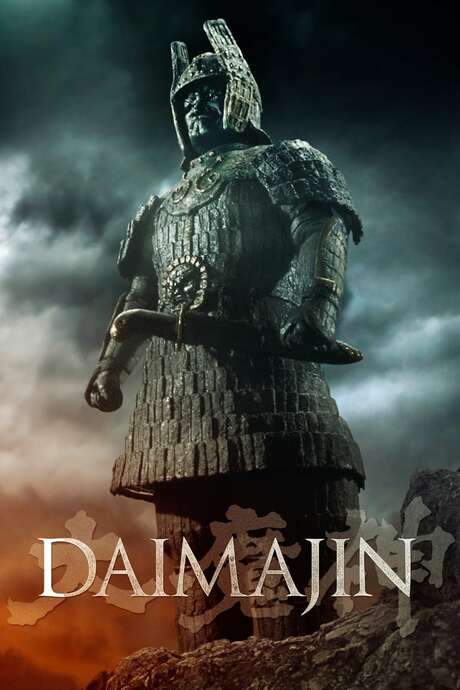
Daimajin 1966

Directed by

Akira Amemiya
Made by

Daiei Film
Where to Watch Daimajin
See current US streaming, rental, and purchase options for Daimajin (1966) via JustWatch.

ARROW
HD
Cineverse Amazon Channel
HD
Midnight Pulp
HD
Midnight Pulp Amazon Channel
HD
Cineverse
HD
Amazon Video
HD
Apple TV Store
HD
Google Play Movies
SD
YouTube
SD Streaming availability powered by 
Daimajin Plot Summary
Read the complete plot summary and ending explained for Daimajin (1966). From turning points to emotional moments, uncover what really happened and why it matters.
In a remote village in the Tanba region, peasants tremble as a string of earth tremors is interpreted as the escape attempts of Arakatsuma (also known as Daimajin), a violent divine spirit said to be trapped within the nearby mountain. The locals live in a constant mix of fear and reverence, believing the god must be appeased to keep catastrophe at bay. During a rite at the village shrine meant to pacify Daimajin, Samanosuke [Ryūtarō Gomi] stages a brutal coup, slaughtering Hanabusa Tadakiyo [Ryūzō Shimada] and his wife, while their children flee for safety with the help of the fearless Kogenta [Jun Fujimaki]. The moment marks a turning point: the power structure of the village collapses, and Samanosuke’s men break up the sacred gathering, forbidding such rituals from ever happening again. Shinobu, the elderly priestess [Otome Tsukimiya], warns of a dire curse, but her counsel goes unheeded as fear and hunger push the villagers toward darker deeds.
Kogenta helps the two children, Kozasa Hanabusa and Take-bō, escape to his aunt Shinobu’s home, and she guides them up into forbidden territory toward a towering, half-buried stone idol of the mountain god. The idol sits beside an ancient temple — a sanctuary kept safe by Shinobu’s knowledge. As the years pass, the children grow into adults in a village that has become more troubled and divided. The son, Tadafumi Hanabusa [Yoshihiko Aoyama], reaches his eighteenth birthday amid mounting hardship, as Samanosuke’s brutal rule imposes slavery on the villagers and threatens any sign of rebellion. Retainers loyal to the Hanabusa line begin to trickle back, hinting at the possibility of resistance, even as the mountain itself seems to resist the tyrant’s will.
Kogenta returns to rally the old retainers but is captured in the process. A boy named Take-bō [Shizuhiro Izoguchi] manages to send word to Tadafumi and Kozasa [Miwa Takada] that their friend is in danger, setting in motion a plan that tests all loyalties. Tadafumi’s attempt to rescue his ally becomes a trap, and Shinobu tries once more to intervene with calm warnings, but her pleas fall on deaf ears. Samanosuke retaliates with a cruel act, killing Shinobu and ordering the idol’s demolition. With her dying breath, Shinobu curses the tyrant and warns that destroying the idol will unleash the reawakened wrath of Arakatsuma within it.
An expedition up the mountain to smash the idol accidentally encounters Kozasa and Take-bō, forcing them to lead the soldiers to the statue. The men hammer at the idol’s head with a colossal chisel, but their triumph is brief: blood begins to drip from the stone, the earth cracks open, and the men are swallowed by the advancing fissures. Kozasa pleads with the god and begs it to spare her brother and Kogenta while punishing the wicked Samanosuke. At the fortress, Tadafumi and Kogenta are strapped to enormous crosses, awaiting their fates. Kozasa offers her life and tries to throw herself over the nearby waterfall, but the rock and earth exposing the idol’s lower half crumble away, and the stone figure stirs to life. The colossal Daimajin Arakatsuma, awakened by her tears, strides into the clearing and moves toward Samanosuke’s stronghold.
Daimajin rescues both Tadafumi and Kogenta and proceeds to utterly destroy the fortress. It impales Samanosuke with the chisel on its forehead, then turns its fury on the enemies surrounding them. Take-bō pleads for mercy, but Kozasa steps in to shield him, tears streaming down her face. She begs Daimajin to end the carnage, and when her tears fall on its stone feet, the god’s anger begins to lift. The Daimajin’s spirit withdraws from the statue, restoring its calm appearance just before it collapses into a heap of rubble. The village is left to witness the cost of tyranny and the power of a long-sealed force finally answering the call of a desperate plea, with new hope dawning as the mountain’s god returns to its quiet slumber.
Daimajin Timeline
Follow the complete movie timeline of Daimajin (1966) with every major event in chronological order. Great for understanding complex plots and story progression.
Samanosuke's coup and massacre
In Hanabusa Tadakiyo's domain, Ōdate Samanosuke stages a coup and seizes control. He and his henchmen slaughter Hanabusa and his wife, leaving the village terrified and leaderless. The act begins a brutal reign that reshapes life in the hills.
Escape of the children with Kogenta
The son and daughter escape the massacre with the help of the loyal samurai Kogenta. They flee toward safety, aided by Kogenta’s intervention and the protection of his aunt Shinobu.
Shrine ceremony interrupted
At the village shrine, the ancient ritual to pacify Daimajin is interrupted by Samanosuke's men. Elderly priestess Shinobu warns of a terrible curse if the idol is harmed. Her warning goes unheeded as fear and hunger drive people to despair.
The journey to the mountain temple
Kogenta escorts the children to Shinobu's house, and she leads them up the mountain toward the forbidden temple. They reach the half-buried stone idol of the mountain god near a waterfall, behind an ancient sanctuary known only to Shinobu. The trek marks the crossing from safety into sacred danger.
Endurance of years under tyranny
The children grow to adulthood while the village endures Samanosuke's brutal rule. He uses the villagers as slaves and starves them into submission. Retainers begin to return, hinting at a looming rebellion.
Kogenta's capture
Kogenta travels back to gather the old retainers but is captured by Samanosuke's forces. The village's resistance falters as fear tightens its grip.
Rescue plan and trap
Take-bō informs Tadafumi and Kozasa of Kogenta's capture, prompting a rescue attempt that turns into a trap. Tadafumi and Kozasa are captured and scheduled for execution.
Shinobu's death and curse
Shinobu confronts the tyrant and is slain by Samanosuke. With her final breath, she curses him to die a merciless death and warns that destroying the idol will unleash Daimajin's wrath. Her sacrifice deepens the myth surrounding the mountain guardian.
Hammering the idol and the fall
The crew traveling up the mountain to smash the idol accidentally discovers Kozasa and Take-bō and is forced to take them to the statue. They hammer the idol's head with a colossal chisel, and blood begins to drip as the earth cracks open. The workers are swallowed by the riven ground.
Kozasa's plea and the awakening of Daimajin
Kozasa begs the god of the mountain to save her brother and Kogenta and punish the wicked Samanosuke. With her pleas, the idol's bloodstained stone begins to glow as Daimajin Arakatsuma awakens. The statue strides into the clearing, alive at last.
Daimajin frees the prisoners and attacks the fortress
Daimajin rescues Kogenta and Tadafumi from their crosses and destroys Samanosuke's fortress with its immense power. It impales Samanosuke on the chisel driven into its forehead. The tyrant's downfall signals the guardian's dramatic turning of the tide.
Take-bō's plea and Kozasa's mercy
Take-bō begs Daimajin to stop as the rampage nears its end, and Kozasa steps forward to plead for mercy. Her tears fall on the statue's stone feet, and Daimajin's rage begins to fade. The guardian's presence seems to soften, if only briefly.
Daimajin's calm and the statue's collapse
Daimajin's anger subsides as its spirit leaves the idol, restoring it to its former shape. It collapses into rubble, sealing the guardian back within the mountain and ending the village's nightmare. The mountain falls quiet again as the villagers reckon with the guardian's return to stone.
Daimajin Characters
Explore all characters from Daimajin (1966). Get detailed profiles with their roles, arcs, and key relationships explained.
Kogenta (Jun Fujimaki)
A skilled samurai who aids the children in escaping Samanosuke’s tyranny. He shows loyalty, courage, and determination as he moves to protect the Hanabusa heirs and later fights to break the hold of the few who seek to keep the village enslaved.
Kozasa Hanabusa (Miwa Takada)
The sister of Tadafumi and a compassionate figure who navigates danger with quiet resolve. She believes in the village’s legacy and ultimately offers herself to reach out to the mountain god, pleading for mercy.
Tadafumi Hanabusa (Yoshihiko Aoyama)
The Hanabusa heir who endures a brutal regime from Samanosuke and grows into a figure of hope for the villagers. His captivity and near-execution become catalysts for the climactic confrontation with Daimajin.
Samanosuke (Ryūtarō Gomi)
The ruthless chamberlain who stages a coup and enforces slave labor in the village. His cruelty culminates in the temple destruction and a defiant confrontation with the awakened Daimajin.
Shinobu (Otome Tsukimiya)
An elderly shrine priestess who warns of the god's curse and ultimately sacrifices herself to defend the villagers. Her death intensifies the demand for justice and reverence in the community.
Take-bō (Shizuhiro Izoguchi)
A boy who carries the message to Tadafumi and Kozasa that their friend has been taken; his presence represents the younger generation and the hope of the village.
Daimajin
The colossal mountain god sealed within the statue, awakened to unleash a vengeful, protective force when the idol is defiled. It ultimately walks from the statue and destroys the fortress before relenting.
Daimajin Settings
Learn where and when Daimajin (1966) takes place. Explore the film’s settings, era, and how they shape the narrative.
Location
Tanba Province, Japan
A remote village in Tanba Province sits under seismic tremors believed to be the escape attempts of the mountain god Daimajin. The community gathers at an ancient shrine to perform a ritual to pacify the divine spirit. The surrounding mountains and a half-buried stone idol dominate the landscape, shaping fear and reverence in the villagers.
Daimajin Themes
Discover the main themes in Daimajin (1966). Analyze the deeper meanings, emotional layers, and social commentary behind the film.
⚖️
Power & Tyranny
A coup reveals how authority corrupts and silences dissent. The brutal ruler Samanosuke uses slave labor and fear to bend the village to his will. The ritual and the idol's presence frame tyranny as a moral and communal threat. The story questions whether political power can coexist with justice when it provokes divine wrath.
🔥
Divine Wrath
The awakening of Daimajin occurs when human greed defiles the sacred statue, turning stone into a weapon of retribution. The god's rampage against the fortress is a dramatic counterbalance to mortal tyranny. Compassion and defiance, especially Kozasa's plea, temper the destruction and highlight the limits of divine fury.
💧
Sacrifice & Mercy
Kozasa offers herself and begs for mercy to save her brother and the oppressed villagers. The tearful plea touches the stone feet and helps quell Daimajin's anger, illustrating mercy as a counterweight to vengeance. The ending restores the idol and leaves a lingering sense of balance between the sacred and the mortal world.

Coming soon on iOS and Android
The Plot Explained Mobile App
From blockbusters to hidden gems — dive into movie stories anytime, anywhere. Save your favorites, discover plots faster, and never miss a twist again.
Sign up to be the first to know when we launch. Your email stays private — always.
Explore the mobile appDaimajin Spoiler-Free Summary
Discover the spoiler-free summary of Daimajin (1966). Get a concise overview without any spoilers.
In a secluded valley of the Tanba region, the rhythm of daily life is intertwined with the restless whisper of the mountains. A massive stone idol—half‑buried and veiled in legend—loomed over the village, its silent presence a reminder of an ancient divine spirit said to slumber beneath the rock. The villagers move through their routines with a mixture of reverence and unease, aware that the stone’s power could one day awaken, but uncertain what form that awakening might take.
The community now lives under the shadow of a stern warlord who has imposed his authority with an iron will. His presence reshapes the once‑peaceful customs, and the people learn to navigate a fragile balance between obedience and the lingering hope of old traditions. Within this tense atmosphere, Samanosuke commands the village’s fate, while the respected Hanabusa family carries the memory of a more harmonious past. Kogenta, a steadfast and courageous figure, stands as a quiet guardian, offering protection to those who cling to the fading customs.
Amid the looming stone, an elderly priestess named Shinobu guards the secrets of the mountain’s sacred shrine, guiding the younger generation toward a destiny that feels both inevitable and mysterious. Her children, Tadafumi and Kozasa, along with their spirited friend Take-bō, grow up hearing tales of the dormant god and feeling the weight of the village’s anxieties. Their bond with the idol, their respect for the old ways, and the subtle tension between the oppressive rule and the promise of divine intervention create an undercurrent of anticipation, setting the stage for a story where faith, fear, and the yearning for salvation intertwine.
Movies with Similar Twists and Themes
Uncover films that echo the narrative beats, emotional arcs, or dramatic twists of the one you're exploring. These recommendations are handpicked based on story depth, thematic resonance, and spoiler-worthy moments — perfect for fans who crave more of the same intrigue.





Featured on this page

What's After the Movie?
Not sure whether to stay after the credits? Find out!
Check out our other apps:

SAT Sphere
Build confidence for the Digital SAT.

Mori Atlas
Discover wild places worth protecting.

Luntero
Search smarter for a home in Amsterdam.

Plot Explained
Unravel movie endings and hidden clues.

Pokechamp
Dive into Pokémon data and battle logic.

Driving Theory
Get ready for your European theory test.

Movie Dust
Plan your next cinema trip with ease.

Musemap
Find art and culture as you travel.

Selkobase
Compare credentials before committing.

Local Manual
Turn an unfamiliar country into practical next steps.

Lernavi
Compare school systems before your next move.

GymRoam
Find a workout stop wherever your plans take you.
Explore Our Movie Platform
New Movie Releases (2026)
Famous Movie Actors
Top Film Production Studios
Movie Plot Summaries & Endings
Major Movie Awards & Winners
Best Concert Films & Music Documentaries
Movie Collections and Curated Lists
© 2026 What's After the Movie. All rights reserved.
Privacy Policy