What Is Cure About?
The premise of Cure in 285 words, with nothing given away. The full story follows below.
In the bustling heart of Tokyo, an unseen current of dread ripples through the city’s neon-lit streets. A series of inexplicable killings has left the public on edge, their pattern marked by an eerie sense of ritual that defies ordinary motive. The atmosphere is thick with paranoia, and the ordinary rhythm of urban life feels suddenly precarious, as if the city itself is being watched by an invisible hand that thrives on suggestion and control.
Kenichi Takabe, a veteran detective, finds his professional resolve tested by the relentless tide of the case. At home, his marriage to Fumie Takabe is strained by her fragile mental health, turning the domestic sphere into a quiet battleground of anxiety and compassion. Across the investigative team, Kunio Mamiya hovers at the center of the mystery—a man whose own memories are unreliable yet whose presence seems to stir something dangerous in others. Partnering with them is Makoto Sakuma, a forensic psychologist whose analytical mind seeks patterns in the chaos, while Dr. Akiko Miyajima provides a clinical lens that anchors the inquiry in the realities of mental health and perception.
Together they navigate a world where reality blurs with illusion, and every lead feels both a promise and a trap. The film balances a cold, methodical noir aesthetic with moments of unsettling intimacy, letting the audience feel the weight of each character’s personal demons as they grapple with a case that threatens to erode the boundaries between duty and inner turmoil. The relentless pursuit of truth becomes a psychological maze, hinting at deeper forces at play while keeping the true nature of the threat just out of reach, leaving viewers to wonder how thin the line is between order and madness.
What Happens in Cure?
The complete story of Cure, from the first scene to the last, in 896 words (about 4 minutes). Spoilers throughout. Names in the text link to 5 cast member pages.
Spoilers ahead
Kunio Mamiya, Masato Hagiwara, sits at the center of a baffling wave of violent killings unfolding across Tokyo. The pattern is unnerving: each murder is committed by a seemingly random assailant who is somehow caught near the crime scene, and the victim is left with a brutal X carved into the neck or chest. The killers themselves confess with unnerving calm, yet their motives feel hollow and elusive, leaving detective work and a wary public asking how and why such acts recur. As the body count rises, the case begins to press into Takabe’s private life, where his wife’s struggle with schizophrenia creates a fragile home front that bleeds into his professional judgment.
Kenichi Takabe, Koji Yakusho, a seasoned detective, finds his resolve tested as the investigations grow more tangled. His personal life frays under the weight of Fumie Takabe’s increasingly erratic behavior, a strain that deepens his sense of isolation while the clock ticks on each fresh murder. Despite his experience, Takabe feels his instincts slipping, and the pressure begins to corrupt the steadiness he depends on in the field. He must balance the relentless grind of the case with a mounting sense of helplessness at home, where every new development threatens to shatter the already fragile equilibrium between duty and family.
Fumie Takabe, Anna Nakagawa, becomes a central figure in this psychological maelstrom not just as Takabe’s wife, but as someone whose mental health struggles intensify the emotional stakes of the investigation. Her episodes of confusion and disorientation cast a new light on the entire crime spree, suggesting that the killer may be more deeply connected to the detective’s inner circle than anyone realizes. The pressure of the unsolved crimes, coupled with Fumie’s fragile state, pushes Takabe toward a breaking point, blurring the line between professional duty and personal fear.
Makoto Sakuma, Tsuyoshi Ujiki, a forensic psychologist and close ally, helps to peel back the surface of the crimes. He identifies a troubling common thread: each killer had recent contact with Kunio Mamiya, a man whose memory seems to fail him yet who may wield a darker, more controlling influence. Where others see coincidence, Sakuma sees a pattern that points toward hypnotic manipulation and psychological suggestibility. His partnership with Takabe becomes a fragile lifeline as the case spirals toward a possibility that the violence is not random at all, but a carefully crafted chain of influence.
Dr. Akiko Miyajima, Yoriko Doguchi, appears as a voice of clinical insight amid the escalating tension. Her perspectives on mental health, perception, and the boundaries of control provide a counterpoint to the increasingly blurred morality of the investigators’ pursuit. Her involvement underscores the film’s core tension: upholding ethical boundaries while wrestling with a mystery that seems to rewrite the rules of memory, motivation, and suggestion. As the investigation deepens, her expertise helps ground the more speculative elements of the case.
The investigation intensifies as Sakuma reveals a provocative lead: a videotape featuring a mysterious figure who may be Suejiro Bakuro, a legendary progenitor of mesmerism in the literature that Mamiya studied. In the footage, a hypnotized woman follows the man’s gesture, and soon after, she kills her own son in a way that mirrors the current killings. This revelation casts Mamiya not merely as a victim of memory loss but as a possible catalyst or “missionary” figure—someone who could incite others to carry out ceremonial murders through hypnotic cues and resonant symbolism. The sense of an unseen handbook guiding the violence grows heavier, and Takabe and Sakuma begin to fear they are chasing a memory-triggered force rather than a single criminal.
As psychological pressure mounts, Sakuma’s own psyche begins to fracture. He unconsciously draws an X on the wall and experiences chilling hallucinations of Takabe cornering him, a visual echo of the case’s central motif. The mind-teasing complexity culminates in a grim turn: Sakuma is found dead, handcuffed to a pipe in his own home, and the authorities rule it a suicide. The line between investigation and projection has blurred beyond repair, and the team must confront the possibility that the case has already compromised them in ways they cannot simply undo.
When Mamiya escapes custody, the pursuit becomes personal and deadly. He incites violence once more, killing a policeman as Takabe closes in on him in a deserted building. In a final, fatal confrontation, Takabe shoots Mamiya, who dies with the X still hovering in the air—a chilling symbol of the case’s haunted cyclicality. In the aftermath, Takabe discovers an old phonograph cylinder containing a male voice—believed to be Bakuro—repeating hypnotic instructions that seem to precede the murders. The horror deepens as Fumie’s body is found, decomposed, with the same savage X carved into her throat, suggesting a direct link between memory, manipulation, and the ultimate act of violence.
The narrative closes on a haunting, almost ritual note. In a quiet restaurant, a waitress serves Takabe and walks away, only to be whispered to by the staff and then silently draw a knife—an intimate, unsettling echo of the trilogy’s core motif: control, suggestion, and the peril that lies just beneath the surface of ordinary life. The story lingers on the edge of understanding, inviting the audience to ponder how easily minds can be directed, how fragile identity can become under pressure, and how a detective’s pursuit of truth can collide with the darkest corners of human psychology.
Cure Timeline: Every Key Event in Order
13 key events in the order they happen, from “Begin investigation into the X murders” to “Restaurant scene hints at continuing threat”. 13 events name a place, across 11 locations.
- 1
Begin investigation into the X murders
Detective Kenichi Takabe leads the inquiry into a string of brutal killings where each perpetrator confesses yet offers no clear motive. Every victim bears a large X carved on the neck or chest, and the killers are arrested near the crime scenes, suggesting a disturbing pattern. The case defies easy explanation as the body count rises.
When:early in the investigation Where:Tokyo
- 2
Takabe teams with Sakuma to find a thread
Takabe partners with forensic psychologist Shin Sakuma to search for a connecting pattern behind the murders. The two identify a common link: each killer had contact with Kunio Mamiya shortly before the crime. The investigation also strains Takabe's private life as his wife Fumie slips deeper into schizophrenia.
When:as the case deepens Where:Tokyo police precinct
- 3
Mamiya is identified as the potential mastermind
Mamiya is found to have extreme short-term memory loss, claiming he cannot recall his past. In custody, he deliberately evades Takabe's questions by turning the interview back on the detective. Takabe and Sakuma begin to suspect Mamiya could be a hypnotist capable of planting murderous suggestions.
When:shortly after connection is made Where:custody, prison care ward
- 4
Hypnosis hypothesis takes shape
Takabe analyzes Mamiya's background in psychology, mesmerism, and hypnosis, bolstering his suspicion that Mamiya is orchestrating the killings rather than merely recalling them. He and Sakuma agree to treat Mamiya as a potential hypnotic instigator and pursue incitement to murder charges. The theory links the crimes to deeper manipulation rather than random chance.
When:following custody Where:police interview room
- 5
Vision of Fumie's suicide forces action
Takabe experiences a vision of Fumie's suicide, which devastates him and prompts him to act. He has Fumie committed to a mental hospital, hoping to protect her and manage the mounting pressure of the case. The personal stakes of the investigation become as intense as the professional ones.
When:soon after vision Where:mental hospital
- 6
Bakuro hypothesis and hypnotic link
Sakuma presents a videotape showing a mysterious man believed to be Suejiro Bakuro, the progenitor of Japanese mesmerism. In the video, a female subject is hypnotized as the man dabs an X in midair, a gesture that echoes the ritualistic killings. Sakuma argues the crimes are connected to a past influence and that Mamiya acts as a missionary inciting others to murder.
When:mid investigation Where:police briefing room
- 7
Taunts and haunting visions
Sakuma unconsciously draws an X in black paint on his wall and begins hallucinating Takabe cornering him. The mounting pressure of the case fuels paranoia and suggests a wider hypnotic influence at work behind the murders. The episode deepens the sense that something unseen is guiding the violence.
When:not specified Where:Sakuma's home
- 8
Sakuma's death is ruled a suicide
Days later, Sakuma's body is found handcuffed to a pipe in his home, with the police concluding he took his own life. The loss removes a crucial ally in interpreting the murders and heightens Takabe's urgency. The case takes a darker turn as the strategist behind the theory disappears.
When:days after hallucination events Where:Sakuma's home
- 9
Mamiya escapes and a policeman falls
Mamiya breaks out of prison and kills a policeman during the escape. Takabe pursues him, understanding that the threat may be escalating. The chase culminates in a confrontation that tests Takabe's resolve and investigative theories.
When:immediately after escape Where:prison, then chase
- 10
Deserted building confrontation and cult cues
Takabe corners Mamiya in a deserted building and shoots him. As Mamiya dies, he draws an X in the air, a final symbolic echo of the murders. Exploring the building, Takabe discovers a phonograph cylinder containing a recording of a male voice repeating hypnotic instructions believed to be Bakuro's.
When:at confrontation Where:deserted building
Show the other 3 events of Cure Hide the last 3 events
- 11
Hypnotic recording linked to tracer voice
Takabe uncovers an old phonograph cylinder with a recording that repeats hypnotic instructions, plausibly connected to Bakuro's hypnotism. The find ties the earlier visions and the Mamiya connection to a broader manipulation scheme. The murder ritual appears to be guided by echoes of past mesmerism.
When:shortly after shooting Where:deserted building
- 12
Fumie's remains link to the X motif
Fumie's decomposed corpse is found by a nurse, with a savage X carved into her throat. The discovery confirms the killer's graphic signature and suggests the ritualistic scope of the crimes persists beyond any one suspect. Takabe's personal tragedy collapses into the case's grim evidence.
When:shortly after Mamiya's death Where:hospital/near the case scene
- 13
Restaurant scene hints at continuing threat
In a restaurant, a waitress serves Takabe, then, as staff whisper among themselves, quietly draws a knife. The scene underscores the pervasive reach of the hypnotic influence and the sense that danger remains close at hand. It leaves the audience with a chilling image of threat still present.
When:final scene Where:restaurant
Who Are the Main Characters in Cure?
4 characters, among them Kunio Mamiya (Masato Hagiwara), Kenichi Takabe (Koji Yakusho) and Makoto Sakuma (Tsuyoshi Ujiki): who each one is and the part they play in the story. Every profile links to the actor’s page.
-
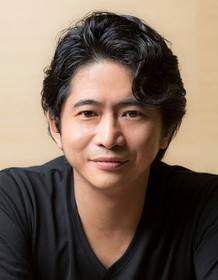
Kunio Mamiya (Masato Hagiwara)
Played by Masato Hagiwara
Kunio Mamiya appears to suffer extreme short-term memory loss, claiming to recall nothing of his past. The summary presents him as a possible master of hypnosis, capable of planting homicidal suggestions in strangers by exposing them to repetitive cues. He becomes the shared thread linking the murderers, suggesting a larger manipulative scheme. In custody, he evades direct questions and uses ambiguity to unsettle investigators, until his eventual confrontation with Takabe.
- 🧠 Amnesia
- 🌀 Hypnosis
- 🗝️ Identity
- KT
Kenichi Takabe (Koji Yakusho)
Played by Koji Yakusho
A Tokyo Metropolitan Police detective whose private life deteriorates under the strain of the murders. He relentlessly pursues the link to Mamiya and becomes increasingly unmoored, even expressing resentment toward his wife in front of the suspect. He embodies rational investigation pushed to the edge by fear and memory manipulation. He shoots Mamiya in the final confrontation when the clues converge.
- 🕵️ Investigation
- 🔎 Pressure
- 💔 Strain
- MS
Makoto Sakuma (Tsuyoshi Ujiki)
Played by Tsuyoshi Ujiki
Makoto Sakuma is a forensic psychologist who helps identify the common thread and test the theory of hypnotic influence. He projects calm rationality but becomes entangled in the case as he uncovers unsettling links. He experiences psychological pressure, draws mental Xs, and ultimately suffers a breakdown that culminates in his death by suicide as police discover him in his home.
- 🧠 Psychology
- 🔎 Investigation
- 💥 Breakdown
- FT
Fumie Takabe (Anna Nakagawa)
Played by Anna Nakagawa
Fumie Takabe is Takabe's wife, whose schizophrenia and volatile episodes complicate the investigation and strain the detective's personal life. Her condition leads to episodes where she can become distant or lost within the city. Her decomposed body is later found with an X carved into her throat, linking her fate to the ritualistic killings.
- 💔 Marriage
- 🧠 Mental Health
- 🗝️ Tragedy
Where and When Is Cure Set?
Cure is set in Tokyo and Japan (1990s). Here is why the time and place matter to the story.
When
1990s
The events transpire in the late 1990s Tokyo, a period when media and technology intersect with public fear. The era provides clues through artifacts like videotapes and phonograph cylinders that tie the killings to hypnotic suggestion. The time period underscores a societal unease about memory, control, and the boundaries of science.
Where
Tokyo, Japan
Set in Tokyo, Japan, Cure unfolds across police precincts, dimly lit streets, and private apartments, with the city serving as a claustrophobic backdrop for a brutal mind-control mystery. The urban landscape amplifies the tension between rational police work and inexplicable crimes. The setting emphasizes the sense of a modern city concealing ancient manipulations and psychological undercurrents.
- 🏙️ Urban setting
- 🗼 Tokyo
- 🔍 Crime investigation backdrop
What Are the Themes of Cure?
3 ideas the story keeps returning to, among them Mind Control, Memory & Identity and Investigation & Tension.
-
01
Mind Control
Hypnosis and mesmerism are central to the murders, suggesting that commands can be planted in a target's mind. The film toys with the idea that motive may be less important than the ability to influence others through suggestion. A 'master of hypnosis' figure appears to orchestrate the killings, blurring the line between perpetrator and puppeteer. The visual motifs of repeated cues hint at how easily people can be steered toward violence.
-
02
Memory & Identity
The plot centers on memory as both a weapon and a vulnerability. Kunio Mamiya's claimed amnesia raises questions about who he really is and what he has done. Investigators must contend with manipulated or unreliable recollections as they connect the murders. The theme probes how memory shapes guilt and accountability in a world where truth is pliable.
-
03
Investigation & Tension
The pursuit of truth drives investigators to confront a mystery that defies straightforward logic. Takabe and Sakuma push their professional boundaries, risking psychological collapse under mounting pressure. The case spirals into a psychological labyrinth with visions, paranoia, and a crisis of perception. The ending leaves ambiguity about what is real and what is the product of manipulation.
What Kind of Film Is Cure?
Dark in tone, with slow pacing and a complex story, going by the plot summary.
- Tone
- Dark
- Pacing
- Slow
- Story
- Complex
- Intensity
- High
- Ending
- Bleak
A slow-burning, deeply unsettling psychological thriller that creates an atmosphere of oppressive dread and existential horror as a detective's investigation into a series of hypnotically induced murders unravels his own sanity.
- unsettling
- anxious
- oppressive
- claustrophobic
- paranoid
- melancholic
- hypnotic manipulation
- crime investigation
- psychological horror
- mental illness
Content notes: gruesome murder, psychological torture, suicide, mental illness.
Quiz
How well do you remember Cure? Test yourself on the story.