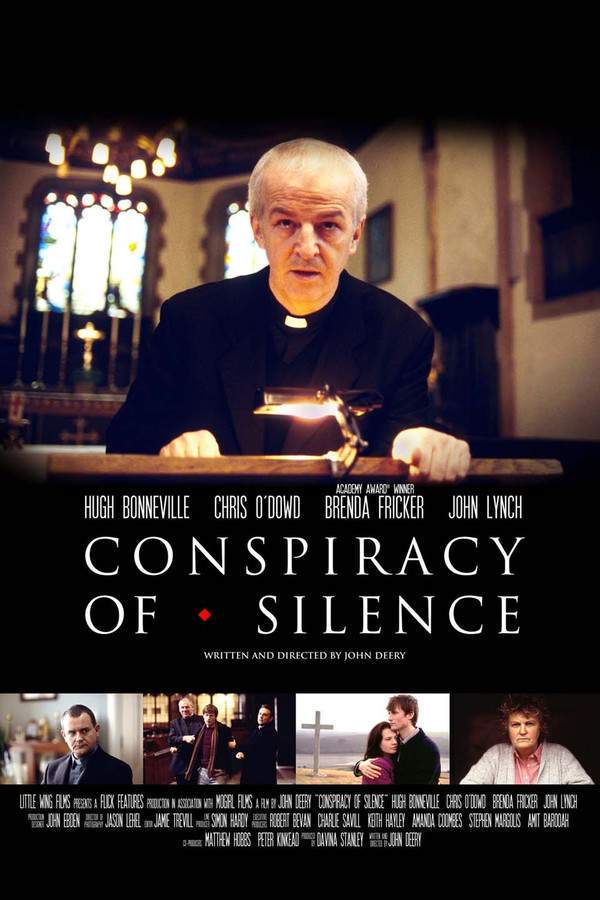
Conspiracy of Silence 2004

Directed by

John Deery
Made by

Watch Entertainment
Where to Watch Conspiracy of Silence
See current US streaming, rental, and purchase options for Conspiracy of Silence (2004) via JustWatch.

Amazon Prime Video
HD
Amazon Prime Video with Ads
HD
Amazon Video
HD
Apple TV Store
HD Streaming availability powered by 
Conspiracy of Silence Plot Summary
Read the complete plot summary and ending explained for Conspiracy of Silence (2004). From turning points to emotional moments, uncover what really happened and why it matters.
Father Sweeney, Patrick Casey, a gay Catholic priest living with HIV, commits suicide. His death motivates local investigative journalist David Foley, Jason Barry, to write a story that publicly identifies Sweeney as HIV-positive.
At the local seminary, two near-ordainments students are expelled because one, Daniel, Jonathon Forbes, was seen leaving the room of the other, Niall, Paudge Behan. Niall is gay and Daniel is straight, and they engaged in no sexual activity, but were expelled for appearances. Daniel returns home, torn between his calling to the priesthood and his love for his ex-girlfriend Sinead, Catherine Walker.
Daniel meets with Foley, who writes a follow-up article exposing a covered-up AIDS protest that Sweeney had staged at the Vatican three years earlier and Daniel’s dismissal. He also alleges that cardinals close to the Pope are engaged in sexual relationships and calls on the Church to re-examine its celibacy requirement for priests. The local bishop, Michael Quinn, Jim Norton, pressures the editor of the local paper not to run the second story. The editor acquiesces but after reading the story sends it to the Irish Times, which prints it.
The next day the bishop, his aide, Foley and Daniel appear together in a live television debate. Before the broadcast, agents of the Church threaten to harm Foley’s family unless he retracts his story on the air. Bishop Quinn offers to reinstate Daniel if Daniel is willing to admit he has been wrong. On-air Foley capitulates but Daniel does not, asking the bishop if he himself practices celibacy. When the bishop refuses to answer, Father Sweeney’s partner, former priest Matthew Francis, John Lynch, confronts Quinn with Sweeney’s suicide note in which Sweeney discloses that Quinn and he had had an affair.
At film’s end, Daniel is back at home with Sinead.
Conspiracy of Silence Timeline
Follow the complete movie timeline of Conspiracy of Silence (2004) with every major event in chronological order. Great for understanding complex plots and story progression.
Sweeney's suicide and its immediate consequences
Father Sweeney, a gay Catholic priest living with HIV, commits suicide, shocking his community. His death prompts local investigative journalist David Foley to pursue a story about Sweeney's illness and possible church concealment. Foley's piece publicly identifies Sweeney as HIV-positive, triggering controversy and scrutiny of church leaders.
Foley begins a story linking Sweeney to HIV status
Foley writes a report that publicly reveals Sweeney's HIV status, challenging the church's image and handling of the priest's life. The article sets in motion a broader inquiry into celibacy, sexuality, and clerical oversight.
Seminary expels two near-ordaination students for appearances
At the local seminary, two students who are near ordination are expelled after one is seen leaving the room of the other. Niall is gay and Daniel straight; they did not engage in sexual activity, but they are expelled to preserve appearances. The decision tests Daniel's path toward priesthood.
Daniel returns home; torn between calling and Sinead
Daniel returns home, torn between his calling to the priesthood and his love for his ex-girlfriend Sinead. He grapples with the consequences of his expulsion while considering his future. The personal turmoil foreshadows the broader public conflict to come.
Foley's follow-up article targets Vatican AIDS protest and celibacy
Daniel meets with Foley, who writes a follow-up article exposing a covered-up AIDS protest staged at the Vatican three years earlier and Daniel's dismissal. The piece also alleges that cardinals close to the Pope are involved in sexual relationships and calls on the Church to re-examine its celibacy requirement.
Bishop Quinn pressures editor not to run the second story
Bishop Michael Quinn pressures the editor of the local paper to suppress the second story. He aims to shield the church from further scandal and control the narrative surrounding Sweeney's death and Daniel's fate.
Editor reluctantly relents; forwards story to Irish Times
The local editor, initially reluctant, relents after reading the story and forwards it to the Irish Times. This shift moves the controversy from a local issue to a national stage, increasing pressure on church authorities.
Irish Times publishes the story
The Irish Times prints the story, bringing wider attention to Sweeney's case and the Vatican-related allegations. The publication intensifies scrutiny of church leadership and celibacy practices.
Live TV debate features the bishop, Foley and Daniel
The next day, the bishop, his aide, Foley and Daniel appear together in a live television debate. The confrontation centers on accountability, celibacy, and the church's handling of Sweeney's death and the subsequent revelations.
Church threats Foley before the broadcast
Before the broadcast, agents of the Church threaten to harm Foley's family unless he retracts his story. The intimidation underscores the high-stakes pressure faced by reporters and the institutional power at stake.
Bishop offers to reinstate Daniel if he admits wrong
During the broadcast, the bishop offers to reinstate Daniel if he admits he has been wrong. The offer tests Daniel's resolve and probes the boundaries between faith, truth, and institutional authority.
Foley capitulates; Daniel refuses to admit fault
On-air Foley capitulates and retracts, but Daniel refuses to concede. The moment highlights a clash between journalistic truth and ecclesiastical power, and until-then quiet dissent comes to the fore.
Confrontation: suicide note reveals affair
When the bishop refuses to answer, Father Sweeney's partner, former priest Matthew Francis, confronts Quinn with Sweeney's suicide note revealing an affair between Quinn and Sweeney. The revelation deepens the scandal and intensifies public pressure on church leaders.
Ending: Daniel returns home with Sinead
In the film's ending, Daniel is back at home with his former girlfriend Sinead. The conclusion leaves him to weigh his future and the church's role in his life, without a clean resolution to the wider scandal.
Conspiracy of Silence Characters
Explore all characters from Conspiracy of Silence (2004). Get detailed profiles with their roles, arcs, and key relationships explained.
Father Sweeney (Patrick Casey)
A gay Catholic priest living with HIV whose secret life and suicide precipitate the uncovering of a wider church scandal. His relationship with Bishop Quinn reveals flirtations with power and betrayal. His suicide note later exposes a covert affair that implicates church hierarchy.
David Foley (Jason Barry)
An investigative journalist who links Sweeney’s HIV status and a Vatican protest to broader church cover-ups. His pursuit of truth drives the series of revelations, even as he faces threats and pressure to retract. He embodies the tension between media duty and personal risk.
Daniel (Jonathon Forbes)
A seminarian expelled to maintain appearances, torn between his calling and love for his ex-girlfriend Sinead. He pushes back against clerical censorship, challenging the bishop on-air when the second story is published. His journey centers on integrity over conformity.
Niall (Paudge Behan)
A gay student expelled for the appearance of impropriety, underscoring how institutions enforce conformity over individual truth. His experience highlights the cost of navigating sexuality within religious education. He remains a quiet counterpoint to the central conflict.
Sinead (Catherine Walker)
Daniel’s ex-girlfriend whose past relationship anchors the emotional stakes. She represents the human consequences of religious pressure and personal longing. Her presence helps expose how love and faith collide in a cloistered world.
Bishop Michael Quinn (Jim Norton)
A powerful church figure who uses influence to suppress dissent and silence the press. His reluctance to answer questions about celibacy and his connection to Sweeney’s letter drive the moral tension. He embodies institutional defense and moral compromise.
Matthew Francis (John Lynch)
A former priest and Sweeney’s partner who reveals the affair through Sweeney’s suicide note. He challenges the bishop and acts as a catalyst for exposing painful truths. His stance complicates loyalties and faith.
Conspiracy of Silence Settings
Learn where and when Conspiracy of Silence (2004) takes place. Explore the film’s settings, era, and how they shape the narrative.
Location
Ireland, Vatican City
The story unfolds in a small Irish town centered on a local seminary and its surrounding press culture. It reaches from parish rooms to the Vatican through a protest and rumors of church politics. The setting captures the tension between intimate religious life and the broader power of the Catholic hierarchy.
Conspiracy of Silence Themes
Discover the main themes in Conspiracy of Silence (2004). Analyze the deeper meanings, emotional layers, and social commentary behind the film.
🎯
Accountability
The film questions who bears responsibility when institutions hide the truth. A journalist’s pursuit of a public record collides with threats and pressure from church authorities. It shows how whistleblowing can trigger reform or retaliation, depending on power dynamics.
💔
Sexuality & Celibacy
Daniel’s conflicted path between priestly vows and personal longing mirrors the wider debate over celibacy and sexuality in the church. Sweeney’s secret life and the prohibition on open sexuality undercuts trust within the clerical system. The story uses intimate relationships to reveal how ideals clash with human needs.
⚖️
Power & Pressure
Church authorities exert leverage to control narratives, while journalists and activists resist intimidation. The threat to Foley’s family shows how influence extends beyond the pulpit to personal safety. The confrontation on-air frames a battle between institutional authority and moral courage.
🗞️
Media Ethics
The newsroom becomes a battleground where information is weighed against consequences for individuals. Editors face choices about retractions, public interest, and responsibility to publish. The Vatican protest story and subsequent revelations test the line between journalism and vengeance.

Coming soon on iOS and Android
The Plot Explained Mobile App
From blockbusters to hidden gems — dive into movie stories anytime, anywhere. Save your favorites, discover plots faster, and never miss a twist again.
Sign up to be the first to know when we launch. Your email stays private — always.
Explore the mobile appConspiracy of Silence Spoiler-Free Summary
Discover the spoiler-free summary of Conspiracy of Silence (2004). Get a concise overview without any spoilers.
In a tightly‑knit Irish town where the rhythm of daily life is governed by the rituals of the local parish, the weight of tradition hangs heavy over stone‑cobbled streets and quiet cafés. The community’s cohesion depends on a fragile pact of silence, especially when unsettling rumors begin to surface about a recent tragedy that the clergy have been eager to keep hidden. The atmosphere is simultaneously reverent and tense, a place where whispers can ripple through the congregation like hidden currents beneath calm waters.
The story pivots on Daniel, a seminarian whose promising path toward the priesthood is abruptly derailed by a controversial expulsion that forces him to confront both his spiritual calling and lingering ties to his former lover, Sinead. Across town, David Foley, an incisive journalist with a tenacious nose for truth, becomes drawn into the mystery surrounding the priest’s death, sensing that the official narrative masks deeper, uncomfortable realities. Their investigations intersect with Father Sweeney, whose untimely passing has left a lingering cloud of unanswered questions, and Bishop Michael Quinn, the steadfast overseer whose leadership embodies the institution’s insistence on preserving order at any cost.
As these characters navigate the intersecting layers of faith, loyalty, and personal desire, the film unfolds as a brooding meditation on the price of secrecy. The tone is somber yet charged, blending the austere solemnity of ecclesiastical life with the urgent pulse of investigative journalism. Through careful, lingering shots of cloistered corridors and bustling newsroom desks, the narrative invites viewers to linger on the uneasy balance between devotion to a higher cause and the human yearning for transparency, hinting that the path to redemption may require confronting long‑buried truths.
Movies with Similar Twists and Themes
Uncover films that echo the narrative beats, emotional arcs, or dramatic twists of the one you're exploring. These recommendations are handpicked based on story depth, thematic resonance, and spoiler-worthy moments — perfect for fans who crave more of the same intrigue.
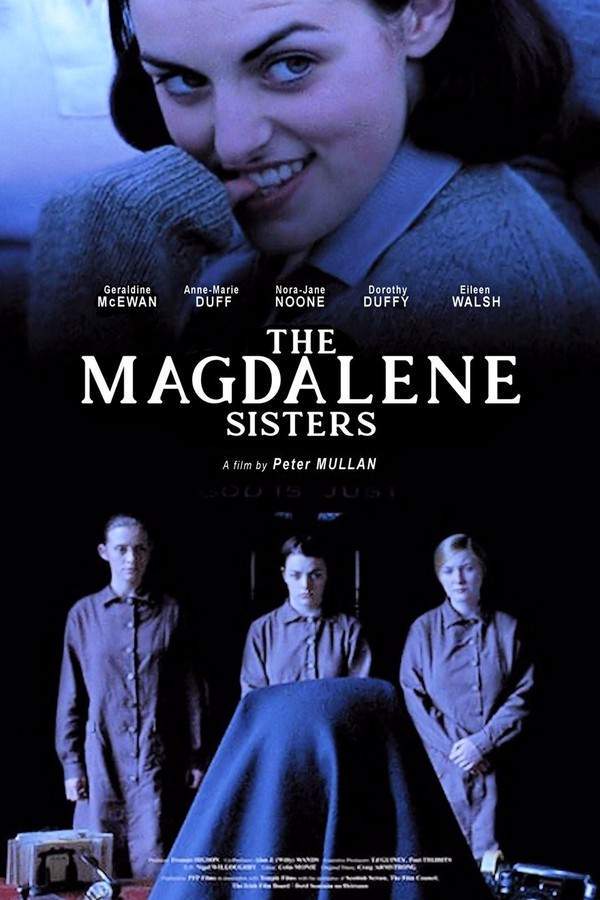
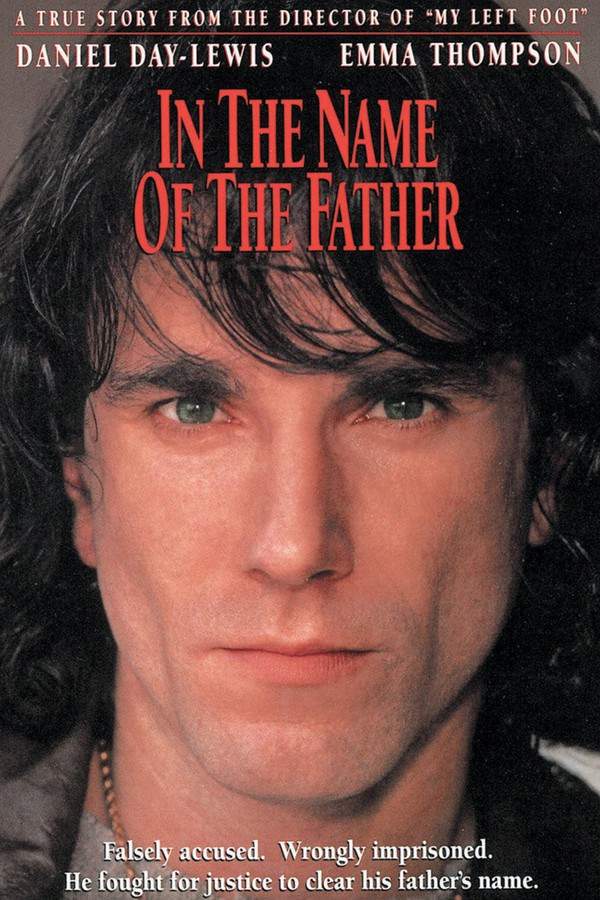
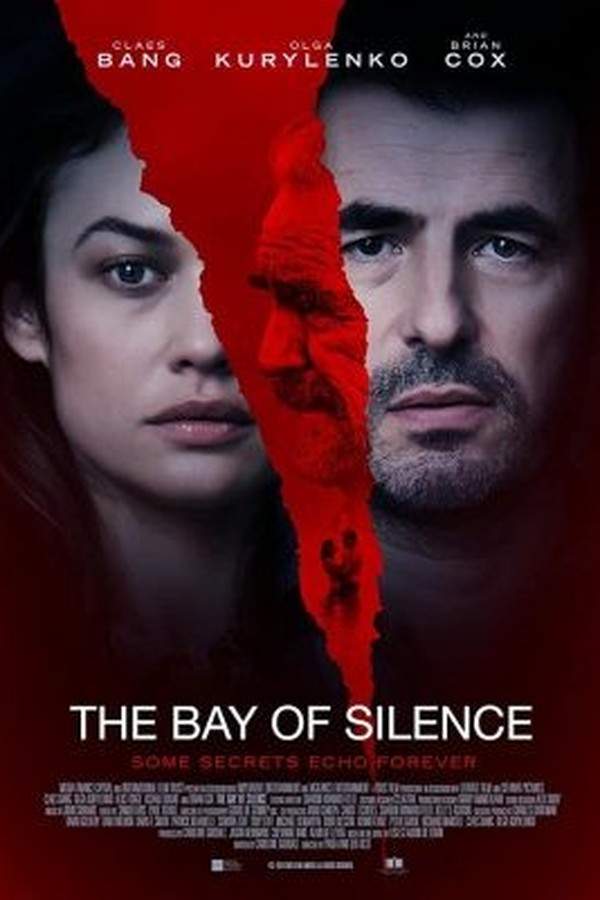


Featured on this page

What's After the Movie?
Not sure whether to stay after the credits? Find out!
Check out our other apps:

SAT Sphere
Build confidence for the Digital SAT.

Mori Atlas
Discover wild places worth protecting.

Luntero
Search smarter for a home in Amsterdam.

Plot Explained
Unravel movie endings and hidden clues.

Pokechamp
Dive into Pokémon data and battle logic.

Driving Theory
Get ready for your European theory test.

Movie Dust
Plan your next cinema trip with ease.

Musemap
Find art and culture as you travel.

Selkobase
Compare credentials before committing.

Local Manual
Turn an unfamiliar country into practical next steps.

Lernavi
Compare school systems before your next move.

GymRoam
Find a workout stop wherever your plans take you.
Explore Our Movie Platform
New Movie Releases (2026)
Famous Movie Actors
Top Film Production Studios
Movie Plot Summaries & Endings
Major Movie Awards & Winners
Best Concert Films & Music Documentaries
Movie Collections and Curated Lists
© 2026 What's After the Movie. All rights reserved.
Privacy Policy