What Is Cobb About?
The premise of Cobb in 330 words, with nothing given away. The full story follows below.
In the twilight of a storied career, a legendary baseball figure hires a seasoned sportswriter to craft the final chapter of his public life. The arrangement promises a polished memoir that will accompany the athlete’s induction into the Hall of Fame, a ceremony intended to lock his triumphs into the nation’s collective memory. The film opens in a world where myth and media intertwine, and the pressure to shape a lasting legacy feels as heavy as the weight of a bat in a late‑summer game.
_ Ty Cobb _ looms large even in frailty, a man whose brilliance on the diamond is matched only by his fierce, unyielding temperament. His lake‑front estate exudes both luxury and an austere, almost militaristic order, reflecting a personality that demands control in every detail. A lifetime of victories, controversy, and relentless competition has left him both brilliant and bruised, and his determination to present a sanitized version of himself borders on obsession. The atmosphere is charged with a volatile mix of admiration, intimidation, and an underlying sense of mortality that sharpens every interaction.
_ Al Stump _ arrives as the hired ghostwriter, a writer accustomed to chronicling heroes but unafraid to dig beneath the polished surface. He faces an immediate clash of philosophies: the athlete’s insistence that greatness can be proclaimed, versus the writer’s conviction that truth emerges through nuance and external voices. Their relationship becomes a high‑stakes negotiation over narrative ownership, each man pushing the other to confront uncomfortable memories and the cost of fame. The tonal palette is intense and introspective, with dialogue that crackles like a fastball and silences that linger like an empty stadium after the crowds have gone.
The film settles into a brooding, character‑driven drama where the stakes are not just a bestseller but the very shape of a legend’s memory. It explores how the pursuit of a flawless image can collide with the inexorable pull of reality, leaving both men to weigh the price of honesty against the allure of immortality.
What Happens in Cobb?
The complete story of Cobb, from the first scene to the last, in 894 words (about 4 minutes). Spoilers throughout.
Spoilers ahead
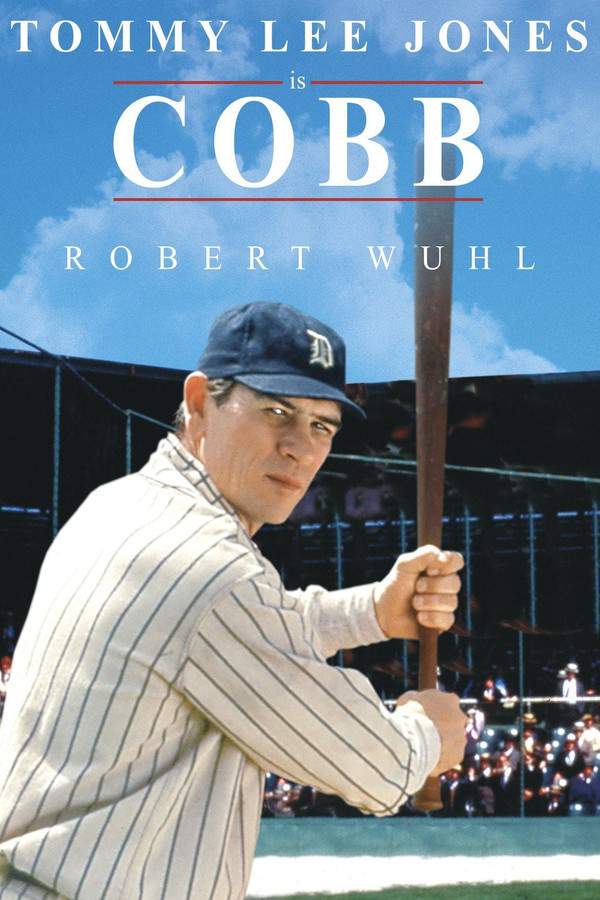
In 1960, sportswriter Al Stump [Robert Wuhl] is hired to ghostwrite an authorized autobiography for baseball legend Ty Cobb [Tommy Lee Jones], who, once and for all, wants to “set the record straight” before he dies. Cobb, aged 74 and in frail health, also envisions joining Stump at the Baseball Hall of Fame ceremony in Cooperstown, a moment he believes will cement his legacy for generations to come.
Stump arrives at Cobb’s opulent Lake Tahoe estate and encounters a volatile, heavy-drinking man who is as brilliant as he is abrasive. Cobb is a relentless critic, lashing out at everyone around him, a self-styled titan who has weathered countless public and private storms. The home itself is luxurious but eerily austere—heated by stubborn disputes with utilities and stocked with firearms that keep danger within reach. Cobb’s temper fizzes at the slightest provocation, and he treats staff and visitors with a blunt, often cruel, contempt. Yet beneath the bravado, the old athlete fights a losing battle with illness and the creeping weight of mortality, a paradox that makes his fury feel both volatile and necessary.
From day one, the dynamic between Cobb and Stump is combative. Cobb insists on shaping the book to emphasize his supposed greatness, while Stump argues that greatness must be earned and verified by others’ voices, not merely proclaimed by Cobb himself. The clash over structure sets the tone for their uneasy collaboration, a push-pull that becomes as much a battle over truth as a struggle for control.
Before heading to Cooperstown, Cobb drags Stump into a reckless Reno detour, including a dangerous blizzard-driven drive that nearly ends in disaster. In a further display of his volatile appetite for disruption, Cobb commandeers Stump’s car after a near-fatal crash, and their trip into the night culminates in a raucous resort show where Cobb disrupts a performance by Keely Smith and Louis Prima. The sequence reveals Cobb’s knack for commandeering attention while masking a deeper insecurity about his own legacy and aging.
One morning, Cobb learns that Stump has penned notes describing him as “pathetic” and “lost in the past.” In a fierce, revealing confrontation, Cobb asserts that readers care little for his personal flaws; what matters are his triumphs. He also discloses a troubling twist: Stump’s agents have secretly arranged for Cobb to grant final editorial approval, bypassing the writer’s standard contract clause. Yet Cobb’s own walls begin to come down as he starts to share crucial memories, including a traumatic tale about his father’s death and how Cobb interprets that event as a defining moment in shaping his ruthless, unyielding persona.
A cigarette girl named Ramona catches Stump’s eye, and she speaks with a curiosity that unsettles Cobb. In a jealous outburst, Cobb bursts into the room, accosts Stump, and physically abuses Ramona, revealing a capacity for brutality that shocks the writer into a sharper resolve to tell the real story. Stump resolves to tell Cobb’s truth, even as he finds himself drawn into Cobb’s world in new and unsettling ways.
Driven by a sense of inevitability, Stump begins writing two books at once: the glossy memoir Cobb wants and a merciless, unflinching exposé that exposes every bitter corner of Cobb’s life. He hides notes on hotel stationery and places typewritten pages in plain view, intending to coax Cobb into signing off on a version that will satisfy the contract while preserving space for a true, if hidden, reckoning after Cobb’s death. The plan is to finish Cobb’s book while he’s alive, collect payment, and then publish the radical follow-up after Cobb is gone.
As they resume the road trip, Stump becomes more of a caretaker than a mere scribe, coordinating Cobb’s medications and watching the man’s vitality cling stubbornly to life despite cancer and failing strength. Cobb, in turn, reveals layers of pride, fear, and a brutal honesty about his reputation as a fighter—an honesty that makes Stump question whether he can truly separate the man from the myth.
At Cooperstown, the induction weekend gathers old rivals and admirers alike, a mosaic of memory and legend. Cobb’s public persona remains compelling even as private tensions flare; the players’ party scene afterward shows how deeply his hard-edged nature has alienated friends and peers. A visit to Cobb’s Georgia home follows, where his estranged daughter rebuffs him, a stark mirror of the fractured family life Cobb has carried for decades. Through it all, Stump continues to juggle the two books, watching as his own conscience weighs heavier with every page.
Despite his growing dependence on alcohol and the moral cost of his deception, Stump begins to sense a kind of rival to Cobb’s iron will in himself. In a quiet moment, Cobb seems to respect the writer who has managed to outsmart him—by convincing him of a truth he never anticipated. Cobb’s final wish is to be remembered not as a flawless hero, but as a man who poured out his secrets with brutal candor, even if the world chose to celebrate a curated version of him.
The film culminates with Cobb’s death on July 17, 1961, and Stump’s completion of the two parallel narratives. In a closing voiceover, Stump reveals that he published the glowing, accepted autobiography Cobb commissioned, rather than the raw, warts-and-all truth he had been quietly compiling. Cobb’s last lesson lingers: “The desire for glory is not a sin.”
Cobb Timeline: Every Key Event in Order
15 key events in the order they happen, from “Stump hired and arrives at Cobb's Lake Tahoe estate” to “Death and legacy: publication and burial”. 15 events name a place, across 12 locations.
- 1
Stump hired and arrives at Cobb's Lake Tahoe estate
Sportswriter Al Stump is hired to ghostwrite Ty Cobb's authorized autobiography. He travels to Cobb's Lake Tahoe estate to begin negotiations and assess the task. Cobb signals that he intends to control the tone of the project from the outset.
When:1960 Where:Lake Tahoe estate
- 2
Cobb's volatile behavior and living conditions
Cobb is depicted as a continually drunken, bitter, and abusive figure whose luxurious home lacks heat, power, and running water due to disputes with utility companies. He disciplines staff with ruthless efficiency, creating a threatening atmosphere. Stump steels himself for the hard-edged reality of Cobb's character.
When:1960 Where:Lake Tahoe estate
- 3
Creative clash over the book's framing
Cobb insists on highlighting his self-proclaimed greatness, while Stump argues the biography must rely on truth and the consensus of others. The two men clash over structure, tone, and what constitutes an honest portrait. This dispute foreshadows the dual manuscripts Stump plans to write.
When:1960 Where:Lake Tahoe estate
- 4
Reno trip and Donner Pass crash
Cobb plans a quick Reno trip for entertainment. In a blizzard near Donner Pass, he nearly dies in a reckless car crash that Stump helps avert. Cobb then seizes control of Stump's car, causing another crash, and the vehicle must be towed to Reno.
When:1960 Where:Donner Pass / Reno
- 5
Reno show disruption
In Reno, Cobb interrupts a resort show featuring Keely Smith and Louis Prima, displaying his usual arrogance. The scene highlights Cobb's volatile temperament and the friction with those around him. Stump's resolve to tell the truth about Cobb grows stronger.
When:1960 Where:Reno, Nevada
- 6
Cobb reads Stump's critical notes and asserts control
Cobb enters Stump's hotel room and confronts notes labeling him 'pathetic' and 'lost in the past.' He argues that people won't care about his personal issues, only his achievements. He reveals that Cobb's agents granted him final editorial approval, breaking the contract Stump trusted.
When:1960 Where:Reno hotel room
- 7
Cobb opens up about his father's death
Cobb begins revealing pivotal life events to Stump, including the death of his father, which he attributes to his mother. He frames this moment as formative in shaping his ruthless persona. The disclosure marks a shift toward a more candid portrait.
When:1960 Where:Reno hotel room
- 8
Ramona the cigarette girl and Cobb's jealousy
A cigarette girl named Ramona becomes interested in Stump, triggering Cobb's jealous rage. Cobb barges into the room, humiliates Ramona, and abuses her while failing to arouse himself. Stump witnesses the episode and is horrified by Cobb's cruelty.
When:1960 Where:Hotel room, Reno
- 9
Stump commits to two books concurrently
Stump resolves to write Cobb's flattering autobiography alongside a merciless exposé revealing the real Cobb. He plans to publish the no-holds-barred version after Cobb's death, ensuring payment while Cobb remains alive. The dual writing signals a decisive turn toward truth-telling.
When:1960 Where:Reno workspace
- 10
Hiding the truth: notes and manuscript strategy
Stump begins placing the typewritten pages of the approved book for Cobb to review, while secretly drafting the harsher account on hotel stationery and napkins. He creates a visible tension between the two works to avoid immediate vetoes. The strategy foreshadows the eventual revelation.
When:1960-1961 Where:Stump's workspace and hotel rooms
Show the other 5 events of Cobb Hide the last 5 events
- 11
Hall of Fame weekend in Cooperstown
Cobb and Stump reach Cooperstown for Hall of Fame induction weekend, where Cobb is publicly lauded yet privately met with by peers who tolerate him. The trip intensifies the conflict between public glory and private sentiment. Stump's parallel work presses toward a controversial reveal.
When:1961 Where:Cooperstown, New York
- 12
Cobb's quiet generosity revealed
During the Hall of Fame period, Cobb is revealed to have secretly helped old teammates in need, adding complexity to his public image. The revelation challenges Stump's evolving judgment and deepens their uneasy collaboration. The incident further blurs the line between ruthlessness and generosity in Cobb's legacy.
When:1961 Where:Cooperstown / Hall of Fame events
- 13
Georgia visit and family estrangement
From Cooperstown, Cobb and Stump travel to Cobb's native Georgia, where his estranged daughter refuses to see him and other children inherit the same silence. The visit underscores Cobb's isolation despite his on-field prowess. It adds emotional weight to the biographical portrait Stump is shaping.
When:1961 Where:Georgia
- 14
Climax: notes discovered, hospital, and blessing
After a long night of drinking, Cobb discovers Stump's no-punches-pulled notes and explodes in confrontation. He attempts to shoot himself, coughs up blood, and is rushed to hospital. In a strained moment, Cobb grudgingly gives Stump his blessing to publish the no-holds-barred version and to finish the glossy biography.
When:1961 Where:Hospital
- 15
Death and legacy: publication and burial
Cobb dies on July 17, 1961, and is buried beside his parents. Stump completes both manuscripts and ultimately publishes the flattering autobiography Cobb hired him to write. A closing voiceover reflects on the paradox of glory, truth, and the costs of storytelling.
When:July 17, 1961 Where:Cobb's burial
Who Are the Main Characters in Cobb?
5 characters, among them Ty Cobb (Tommy Lee Jones), Al Stump (Robert Wuhl) and Ramona (Lolita Davidovich): who each one is and the part they play in the story. 3 of them link to the actor’s page.
-

Ty Cobb (Tommy Lee Jones)
Played by Tommy Lee Jones
Ty Cobb is a legendary baseball figure whose brilliance on the field masks a violent, racist, and controlling personality. Even in advanced age and illness, he wields power and routinely brutalizes those around him. His stubborn disdain for weakness and need for supremacy drive much of the conflict in the film.
- ⚔️ Aggressive
- ❌ Abusive
- 🧊 Stoic
- 🗣️ Controlling
-

Al Stump (Robert Wuhl)
Played by Robert Wuhl
Al Stump is the hired ghostwriter who tries to salvage a credible biography while Cobb tries to steer it toward myth. He navigates moral conflict, professional risk, and dependence on Cobb, until he chooses truth over comfort. His dual writing project creates a tension between self-preservation and literary honesty.
- 🕵️♂️ Investigative
- 🧠 Calculating
- 🤝 Relentless
- 💔 Divided
-

Ramona (Lolita Davidovich)
Played by Lolita Davidovich
Ramona is a cigarette girl who becomes entangled with Cobb and Stump, illustrating how Cobb's volatility spills into personal lives. She experiences coercion and harassment, reflecting the broader abuse that surrounds Cobb's circle. Her presence marks a catalyst for Stump's decision to seek a truthful narrative.
- 💃 Allure
- ⚖️ Exploitation
- 💔 Vulnerable
- RH
Rogers Hornsby
Rogers Hornsby appears at the Hall of Fame weekend as a contemporary of Cobb, embodying the era's talent and rivalry. His presence contributes to the sense of a legend's circle—friendly on the surface, judgmental in memory. The film uses these figures to contextualize Cobb's place in baseball history.
- 🏟️ Hall of Fame
- ⚾️ Teammate
- MC
Mickey Cochrane
Mickey Cochrane is another Hall of Fame figure who attends the induction, underscoring Cobb's era's interplay of respect and resentment. His presence highlights the mixed feelings players had about Cobb's era and personality. The scenes with Cochrane help frame Cobb's complex legacy.
- 🏟️ Hall of Fame
- ⚾️ Teammate
Where and When Is Cobb Set?
Cobb is set in Lake Tahoe, Reno, Cooperstown and Georgia (1960–1961). Here is why the time and place matter to the story.
When
1960–1961
The action unfolds in the early 1960s, capturing Cobb's final years as he battles illness, pride, and public scrutiny. The period frames the emergence of modern sports biographies and the ethical tension of ghostwriting. It juxtaposes intimate, deteriorating personal life with the grand spectacle of Hall of Fame induction.
Where
Lake Tahoe, Reno, Cooperstown, Georgia
Set at Cobb's lakeside estate on Lake Tahoe, the film opens with his decline and volatile temper. The journey then threads through Reno and culminates at the Baseball Hall of Fame in Cooperstown, before returning to Cobb's native Georgia. The settings highlight both opulence and isolation, as well as the cultural weight of baseball history.
- 🏞️ Lake Tahoe
- 🗺️ Cooperstown
- 🧭 Reno
- 🌾 Georgia
What Are the Themes of Cobb?
3 ideas the story keeps returning to, among them Truth, Fame and Memory.
-
01
Truth
The film pits Cobb's self-fashioned myth against a harsher reality, challenging what the public should know about a legend. Al Stump's dual manuscripts push toward a no-holds-barred portrait, while Cobb fights to control the narrative. The tension examines whether memory is a pure record or a crafted performance.
-
02
Fame
Cobb's obsession with glory drives his brutality and demands constant control over others. The story shows how the pursuit of greatness can justify cruelty, affecting teammates, staff, and family. The biography duel exposes the double-edged nature of fame—admired by many, despised by more.
-
03
Memory
Stump weighs writing a flattering autobiography against exposing the truth, raising questions about who owns a legend after death. The film probes how memory shapes legacy and who gets to tell the most enduring story. In the end, memory outlives a man and reshapes public perception.
What Kind of Film Is Cobb?
Dark in tone, with steady pacing and a moderate story, going by the plot summary.
- Tone
- Dark
- Pacing
- Steady
- Story
- Moderate
- Intensity
- High
- Ending
- Bittersweet
A psychologically intense and grim character study that follows a volatile collaboration between a legendary athlete and his biographer, creating a confrontational and heavy atmosphere punctuated by moments of unsettling brutality and reflective melancholy.
- volatile
- oppressive
- confrontational
- melancholic
- unsettling
- heavy
- legacy
- fame and truth
- biography
- toxic relationship
Content notes: domestic abuse, physical violence, psychological abuse, terminal illness, alcoholism.
Quiz
How well do you remember Cobb? Test yourself on the story.
Where to Watch Cobb
Rent or buy it from Amazon Video and Apple TV Store. US availability and prices from JustWatch.





Streaming availability in the US, powered by