
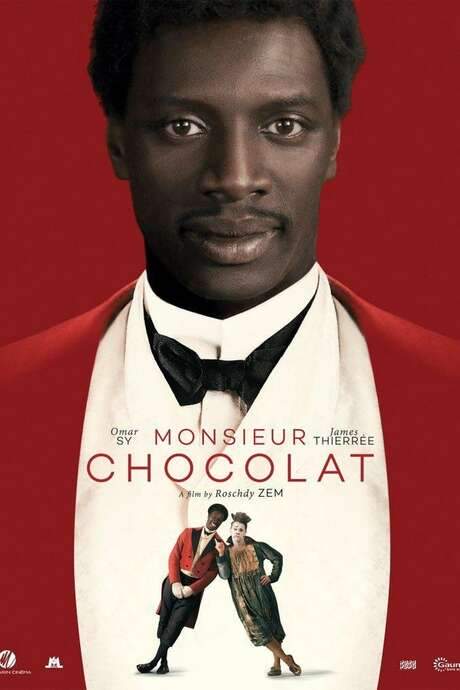
What Is Chocolat About?
The premise of Chocolat in 306 words, with nothing given away. The full story follows below.
In the glittering swirl of Belle Époque Paris, the world of circus and theater teems with exuberant spectacle and restless ambition. The city’s grand sidewalks pulse with music, bright lanterns, and the promise of fame for those daring enough to step into the limelight. Within this vibrant arena, the stage becomes a mirror for society’s hopes and contradictions, where performance can be both celebration and commentary.
Chocolat arrives from a modest background, the son of a former Cuban slave, carrying a talent that shines brighter than the lanterns above the tents. His skill with movement and humor catches the eye of audiences eager for novelty, and his presence on the boards hints at a new chapter for performers of his color. The film follows his ascent from the shadows of obscurity into the dazzling glare of applause, exploring how a single performer can become a symbol of possibility in an era hungry for wonder.
Footit, a white clown with a penchant for control and precision, sees in Chocolat a partner who can complete his act, turning the duo into a captivating contrast of authority and mischief. Their chemistry onstage weaves comedy with a subtle undercurrent of tension, each feeding off the other’s energy while navigating the unspoken rules of their craft. The partnership, rooted in mutual ambition, becomes a focal point for the spectacle’s success and the audience’s fascination.
As their fame spreads beyond the circus tent to the grand venues of Paris, the brightness of the spotlight begins to cast shadows. The duo finds themselves caught between adulation and the lingering doubts of a society still wrestling with prejudice. Wealth and popular acclaim arrive hand‑in‑hand with expectations, temptations, and the fragile balance of friendship. The tone remains lively and lyrical, yet tinged with a quiet awareness of the barriers that persist beneath the glittering façade.
What Happens in Chocolat?
The complete story of Chocolat, from the first scene to the last, in 272 words (about 1 minute). Spoilers throughout. Names in the text link to 2 cast member pages.
Spoilers ahead
In 1897, Rafael Padilla, a Black artist and the son of a former Cuban slave, Omar Sy steps into a small but pivotal role as Kananga, a cannibal, in the modest circus Delvaux. George Foottit, a white clown, is asked by the director to elevate his routine. He seizes on a bold idea: pairing Kananga with a new foil, a white authoritarian clown and a Black scapegoat named Chocolat.
The duo’s act spreads quickly through France, reaching Joseph Oller, the director of the Nouveau Cirque, who invites them to perform in his Parisian venue. The immediate success makes Chocolat the first famous Black clown in the country, a phenomenon that stirs envy in his former employer’s wife, who denounces him for being in France illegally.
The façade of humor masks a harsher reality: the racism Chocolat encounters in France grinds him down, even as he remains celebrated and caricatured. A poster for the show depicts Chocolat as a black stereotype, highlighting the hypocrisy of the society that schools him on stage yet judges him off it.
A negro always remains a negro, the police commander tells Chocolat when he releases him.
Chocolat is both adored as a star and reduced to a racial caricature, and the contradictions of French society become increasingly hard to bear. Faced with the pressure to evolve beyond the clown act, he experiments with a Shakespearean turn in Othello, but the premiere is booed by part of the audience.
In the end, Chocolat slips into obscurity and dies of consumption, a stark tragedy behind a groundbreaking but painful path for a performer who helped shape the era’s stage.
Chocolat Timeline: Every Key Event in Order
12 key events in the order they happen, from “Foottit's assignment: Kananga act” to “Legacy as a pioneer of Black clowning”. 12 events name a place, across 5 locations.
- 1
Foottit's assignment: Kananga act
In 1897, Delvaux's modest circus asks Foottit to develop a new routine around the captive Black performer Kananga. Foottit and Chocolat create a duo: a white, authoritarian clown and a black scapegoat. The idea is provocative, blending circus spectacle with social caricature and sparking curiosity among audiences.
When:1897 Where:Delvaux Circus, France
- 2
The Kananga act debuts and travels through France
The Kananga-inspired act debuts at Delvaux's circuit and is well received by audiences. News of the performance travels across France, drawing bigger crowds and wider attention. The controversial dynamic begins to challenge prevailing racial norms in the circus world.
When:late 1890s Where:Delvaux Circus, France
- 3
Invitation to Nouveau Cirque
Fame grows as word reaches Joseph Oller, director of Nouveau Cirque, who invites Foottit and Chocolat to Paris. The invitation promises a grander stage and a broader audience. The move marks a turning point from small circuses to a premier Parisian venue.
When:late 1890s Where:Nouveau Cirque, Paris
- 4
Chocolat becomes a famous Black clown
Chocolat becomes the first famous Black clown on the Nouveau Cirque stage. Audiences respond with fascination and support, boosting Chocolat's public profile. The Foottit-Chocolat partnership becomes a defining image of the French circus.
When:late 1890s Where:Nouveau Cirque, Paris
- 5
Envy and denunciation by employer's wife
Chocolat's rising fame stirs envy in his former employer's wife, who denounces him for being in France illegally. The accusation underscores the precarious legal and social status of Black performers in a cosmopolitan city. Police scrutiny and public suspicion threaten the act.
When:late 1890s Where:Paris, France
- 6
Arrest and torture by police
Chocolat is arrested and tortured by the police, dramatizing the brutality of the era. The encounter makes him realize the policing system treats him as a perpetual outsider. Despite release, the experience stains his career and morale.
When:late 1890s Where:Paris
- 7
Racism reflected in the show posters
The posters for the show cast Chocolat as a Black stereotype, revealing the hypocrisy of French society. On stage he is celebrated, but the imagery reduces him to a caricature. This tension between adulation and denigration fuels his inner conflict.
When:late 1890s Where:Paris
- 8
Descent into gambling, drugs, and women
Growing personal strain leads Chocolat toward self-destructive coping: gambling, drugs, and women. The social racism and the pressures of fame erode his private life. The act's earlier success contrasts with his deteriorating personal life.
When:late 1890s to early 1900s Where:France
- 9
Attempt to branch into Othello ends badly
An attempt to pivot the act toward Shakespeare's Othello ends poorly, with part of the audience booing the premiere. The rejection emphasizes the limits of mainstream acceptance for a Black clown in this era. The failed venture accelerates the decline of Chocolat's public standing.
When:early 1900s Where:France
- 10
Loss of relevance and fall into obscurity
As years pass, Chocolat slips into obscurity, his once-groundbreaking work fading from memory. He struggles to adapt as tastes change and prejudice remains. The circus world continues to remember him for the barriers he broke, even as his fame wanes.
When:early 1900s Where:France
- 11
Death by consumption
Chocolat dies of consumption, bringing an end to a turbulent life. His death epitomizes the personal cost of pursuing fame in a prejudiced society. Historians and fans look back on him as a pioneer who opened doors for future Black performers.
When:early 20th century Where:France
- 12
Legacy as a pioneer of Black clowning
Chocolat leaves a lasting legacy as the first famous Black clown in France. His courage in the face of systemic racism inspires future generations of performers. His story remains a cautionary tale about glamour, racism, and resilience in the world of circus.
When:early 20th century Where:France
Who Are the Main Characters in Chocolat?
3 characters, among them Chocolat (Rafael Padilla), Joseph Oller and George Foottit: who each one is and the part they play in the story. Every profile links to the actor’s page.
-

Chocolat (Rafael Padilla)
Played by Omar Sy
Rafael Padilla, known as Chocolat, is the Black clown whose talent makes him a sensation, even as he endures systemic racism. He becomes the centerpiece of the act but is weighed down by humiliation, stereotypes and a culture that prizes his performance while denying his humanity. His life spirals toward gambling, drugs and personal decline, culminating in a death from consumption.
- 🖤 Racism
- 🎭 Performer
- 🌍 Identity
-

Joseph Oller
Played by Olivier Gourmet
Joseph Oller, director of the Nouveau Cirque, discovers Chocolat and Foottit and brings them to Paris, turning their act into a national phenomenon. He leverages their success to expand his circus's prestige, while posters depict Chocolat as a racial caricature and expose the hypocrisy of public sentiment. His role embodies the commodification of Black artistry within the era’s entertainment industry.
- 🎭 Showbiz
- 🏛️ Institutions
- 💥 Fame vs Racism
- GF
George Foottit
Played by James Thierrée
George Foottit is the white clown who teams with Chocolat to create the act, driving its appeal and popularity. He navigates the power dynamics of their partnership, benefiting from the audience’s appetite for spectacle while contributing to the exploitation at the heart of the act. His collaboration with Chocolat exposes the racial and artistic tensions behind the scenes.
- 🎭 Performer
- 🤝 Power dynamics
- 🌍 Cultural tension
Where and When Is Chocolat Set?
Chocolat is set in France and Paris (1897). Here is why the time and place matter to the story.
When
1897
The events take place in 1897, during the French Third Republic, a period of imperial expansion and mass entertainment. Parisian theatres and circuses are rapidly expanding, turning sensational performances into mainstream culture. It is also a time when racial stereotypes are publicly displayed and enforced, shaping the fate of performers like Chocolat.
Where
France, Paris
Set in late 19th-century France, the story unfolds within Paris's vibrant show venues and the circus world. The Nouveau Cirque and other circuses serve as stages where acts blend comedy, acrobatics and spectacle. The social climate mixes urban modernity with racial prejudice, and the treatment of Black performers becomes a central source of tension.
- 🏛️ Paris
- 🇫🇷 France
What Are the Themes of Chocolat?
3 ideas the story keeps returning to, among them Racism, Showbiz and Legacy.
-
01
Racism
The film exposes how Chocolat is celebrated on stage yet demeaned offstage, revealing the pervasive racism of the era. Posters reduce him to a racial caricature, while police and society treat him as a mere symbol rather than a person. The clash between fame and bigotry drives the tragedy of his life and career.
-
02
Showbiz
The duo’s rise demonstrates the pull of mass spectacle and the commercial logic of show business. Joseph Oller exploits the act to draw in crowds, turning Chocolat into a star while masking underlying prejudice. The posters and public reception reveal the tension between entertainment and moral responsibility.
-
03
Legacy
As Chocolat’s story ends in obscurity and death, the film questions what remains of a performer after the lights fade. The tragedy lingers in memory, complicating the legacy of Black artistry within European entertainment. The arc highlights how society remembers or forgets those who were both celebrated and demeaned.
What Kind of Film Is Chocolat?
Bittersweet in tone, with steady pacing and a straightforward story, going by the plot summary.
- Tone
- Bittersweet
- Pacing
- Steady
- Story
- Straightforward
- Intensity
- Medium
- Ending
- Sad
A bittersweet and melancholic historical drama that follows the soaring success and heartbreaking downfall of a pioneering performer, set against the backdrop of pervasive societal racism.
- melancholic
- oppressive
- reflective
- historical
- triumphant yet tragic
- struggling
- racial discrimination
- friendship
- rise and fall
- performing arts
Content notes: torture, racial discrimination, substance abuse, death from illness.
Quiz
How well do you remember Chocolat? Test yourself on the story.
