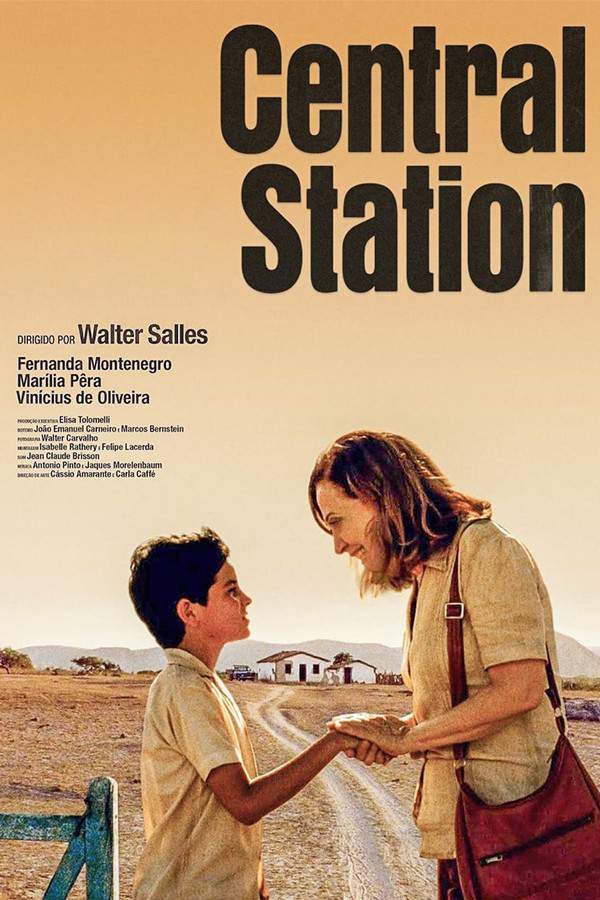
What Is Central Station About?
The premise of Central Station in 293 words, with nothing given away. The full story follows below.
In the bustling heart of Rio de Janeiro, the Central Station serves as a crossroads of countless lives, a place where hope and desperation are exchanged in the form of handwritten letters. Here works Dora, a retired schoolteacher whose steady hands give voice to those who cannot read or write. Her quiet routine is tinged with a weary cynicism born of years watching dreams dissolve amidst the city’s relentless rhythm, yet the very act of crafting messages hints at a lingering desire to connect people across the sprawling urban tapestry.
Among the strangers who leave their words at her desk is a small, wide‑eyed boy named Josué. At nine years old, his world has been upended by a sudden loss that leaves him adrift in a city that feels both intimate and vast. When his mother’s death renders him homeless, the fragile bond that forms between the solitary woman and the grieving child becomes the story’s quiet catalyst, an unlikely partnership forged in the shadows of the station’s echoing corridors.
Together they contemplate a journey far beyond the familiar streets of Rio, heading toward Brazil’s expansive Northeast in search of the father Josué has never known. The prospect of traversing the country’s varied landscapes—from the restless coastline to the arid sertão—offers a backdrop for both physical travel and an inner pilgrimage. Their quest promises encounters with diverse cultures and environments, each step a chance to redefine identity and purpose.
The film balances melancholy with gentle optimism, presenting a road‑movie that is as much about the terrain of the soul as it is about geography. Through the evolving dynamic between Dora and Josué, it explores themes of loss, responsibility, and the quiet resilience that arises when strangers become companions on the road to redemption.
What Happens in Central Station?
The complete story of Central Station, from the first scene to the last, in 504 words (about 2 minutes). Spoilers throughout.
Spoilers ahead
Dora is a retired schoolteacher who makes her living at Rio de Janeiro’s Central Station by writing letters for those unable to read or write. Life has left her feeling bitter and impatient, so much so that she sometimes stashes away or even destroys the letters she composes. Among her clientele is the mother of Josué, a needy 9-year-old boy with dreams of meeting his estranged father. Tragedy strikes when his mother dies in a bus accident, leaving Josué homeless, which ignites a sense of responsibility in Dora. She initially traffics him to a corrupt couple but is soon overwhelmed by guilt and reclaims him.
Despite her hesitations about taking on this new responsibility, Dora ultimately decides to accompany Josué on a journey to northeastern Brazil in search of his father. In an attempt to distance herself from him, she tries to abandon Josué on a bus, but he follows her, leaving behind his backpack containing her money. Facing poverty, they encounter a generous, evangelical truck driver, who soon abandons them after Dora encourages him to drink beer and becomes overly friendly. In dire circumstances, she trades her watch for a ride to a place called “Bom Jesus do Norte,” a fictional representation of Cruzeiro do Nordeste in the Sertânia district of Pernambuco.
Upon reaching Bom Jesus, they discover Josué’s father is missing; the current inhabitants reveal that he won a lottery for a house and left. Out of options, Josué suggests that Dora write letters for the many visitors arriving for a significant pilgrimage, which provides them a lifeline. They venture to where the settlements are located, but upon arrival, they learn that Josué’s father has vanished without a trace. Josué promises to wait for him, but tired of the uncertainty, Dora offers him a more stable life with her. She reaches out to her friend Irene back in Rio, asking her to sell off her appliances and furniture, reassuring her that she’ll call once they’re settled.
After hanging up, Dora realizes they cannot leave until the morning. Near the bus stop, she meets Isaías, one of Josué’s half-brothers, who invites them to dinner. They encounter Moisés, another half-brother, and learn about their father Jesus and the family’s tumultuous history. Isaías shares a poignant letter from their father stating he intends to find Josué and Ana, his mother, who has long since moved to Rio. In the letter, he expresses his desire to reunite their family. As she reads, Dora reflects on Josué, saying, > “and Josué, whom I can’t wait to meet.” While Isaías and Josué cling to the hope their father will return, Moisés harbors skepticism.
The following morning, while they are deep in sleep, Dora slips away to catch a bus back to Rio, forgetting the letter from Jesus and the one she never mailed from Ana, which expressed a longing to unite the family. Josué awakens too late to stop her, and both Dora and Josué are left with nothing but the photographs taken to remind them of one another.
Central Station Timeline: Every Key Event in Order
14 key events in the order they happen, from “Dora's Work at Central Station” to “Reflections on Family”. 8 events name a place, across 4 locations.
- 1
Dora's Work at Central Station
Dora, a retired schoolteacher, spends her days working at Central Station in Rio de Janeiro, providing letter-writing services to those who are illiterate. Her life has become dull and bitter, leading her to sometimes ignore or destroy the letters she writes.
Where:Rio de Janeiro
- 2
Josué's Mother's Tragedy
Among her clients is Josué's mother, who desperately wishes to connect her son with his estranged father. Tragedy strikes when she dies in a bus accident, leaving the young boy homeless and alone in the vast city.
Where:Rio de Janeiro
- 3
Dora Takes Responsibility
After Josué's mother passes away, Dora feels an unexpected sense of responsibility towards the boy. While her initial reaction is to hand him over to a corrupt couple, guilt soon overwhelms her, prompting her to reclaim Josué.
- 4
Journey to Find Josué's Father
Determined to help Josué, Dora decides to embark on a journey to northeastern Brazil in search of his father. Despite her misgivings about the responsibility, she is compelled to ensure the boy's safety and hope.
Where:Northeastern Brazil
- 5
The Attempt to Abandon Josué
During their travels, Dora tries to distance herself from Josué by abandoning him on a bus. However, the resourceful boy follows her, inadvertently leaving behind his backpack, which contains her money.
Where:Bus Station
- 6
Help from a Truck Driver
In their desperate situation, they are aided by a friendly truck driver who offers them a ride. Unfortunately, after Dora encourages him to drink beer, he becomes too friendly and ultimately deserts them.
- 7
Trading for a Ride
Faced with poverty and the need to travel further, Dora makes the difficult decision to trade her watch for a ride. This sacrifice highlights the dire circumstances they find themselves in and their determination to forge ahead.
Where:Bom Jesus do Norte
- 8
Arrival at Bom Jesus
Upon reaching Bom Jesus, Dora and Josué discover that his father is missing, having reportedly won a lottery and left. This revelation leaves them feeling lost and hopeless at a time when they desperately need guidance.
Where:Bom Jesus do Norte
- 9
Writing Letters for Pilgrims
With no clear options left, Josué suggests that Dora write letters for the many pilgrims visiting the area. This clever idea provides them with a lifeline as they begin to earn some money and gain a sense of purpose.
Where:Bom Jesus do Norte
- 10
Meeting Josué's Half-Brothers
Later, they meet Isaías, one of Josué’s half-brothers, who invites them to dinner. During this familial gathering, they also meet another brother, Moisés, and learn about their father's intentions to reunite the family.
Show the other 4 events of Central Station Hide the last 4 events
- 11
The Letter from Jesus
Isaías shares a poignant letter written by their father, expressing his wish to find Josué and reconnect after years of separation. As Dora reads the letter, she reflects on her bond with Josué and his yearning for family.
- 12
Dora's Decision to Leave
The following morning, while they sleep, Dora quietly decides to return to Rio, forgetting the important letters she was meant to send. This choice, driven by her overwhelming need for familiarity, leads to unexpected consequences.
Where:Bus Station
- 13
Josué's Late Realization
Josué wakes up too late to stop Dora from leaving, realizing they are now separated once again. In his helplessness, he is left with only memories and photographs, symbolizing the connections they built during their journey.
- 14
Reflections on Family
As both Dora and Josué face the consequences of their choices, they are left to confront the reality of their family dynamics and the bonds that tie them together. Dora's journey highlights the struggles of searching for belonging amid chaos.
Who Are the Main Characters in Central Station?
2 characters, among them Dora (Fernanda Montenegro) and Josué (Vinícius de Oliveira): who each one is and the part they play in the story. 1 of them link to the actor’s page.
-

Dora (Fernanda Montenegro)
Played by Fernanda Montenegro
Dora is a complex character marked by bitterness and disillusionment, stemming from her past. As a retired schoolteacher turned letter writer, she initially approaches life with cynicism but gradually undergoes a significant transformation. Her struggles with responsibility and emotional connections reveal her inner vulnerabilities and capacity for love.
- 👩🏫 Teacher
- 💔 Transformation
- 🤔 Cynicism
- J(
Josué (Vinícius de Oliveira)
Josué is a hopeful and resilient 9-year-old boy navigating the trauma of losing his mother. His dreams of finding his father propel the storyline, showcasing innocence amidst despair. His unwavering optimism and attachment to family serve as a catalyst for Dora's change, portraying the power of childlike hope.
- 👦 Child
- 🌟 Hope
- 💖 Family
Where and When Is Central Station Set?
Central Station is set in Rio de Janeiro, Bom Jesus do Norte, Sertânia and Pernambuco. Here is why the place matters to the story.
When
The film is set in a contemporary period where social issues, such as literacy and family separation, are prevalent. It portrays the struggles of everyday life in Brazil, resonating with themes of poverty, responsibility, and the search for familial ties. The narrative emphasizes timeless human emotions and challenges faced in dire circumstances.
Where
Rio de Janeiro, Bom Jesus do Norte, Sertânia, Pernambuco
Rio de Janeiro serves as the backdrop for much of the film, known for its vibrant culture and rich history, particularly its central station where many lives intersect. Bom Jesus do Norte is depicted as a fictional representation in the Sertânia district of Pernambuco, which symbolizes hope and spiritual journey during a significant pilgrimage. These locations reflect the characters' struggles and dreams as they seek connection and belonging.
- 🏙️ City
- 🌄 Pilgrimage
What Are the Themes of Central Station?
3 ideas the story keeps returning to, among them Family, Communication and Journey.
-
01
Family
The movie explores the complexities of family relationships, particularly the bond between a child and a parent. Josué's longing to reunite with his estranged father reflects a deep desire for connection and belonging, while Dora’s evolving sense of responsibility illustrates the possibilities of chosen family. Ultimately, it showcases the beauty and heartache inherent in familial love.
-
02
Communication
Letters play a vital role in this narrative, symbolizing connection and emotional expression, especially for those who cannot communicate verbally. Dora’s profession as a letter writer highlights the importance of storytelling and the relationships that can be formed through words. The emotional weight of the letters also underlines themes of unfulfilled promises and the desire to bridge gaps between loved ones.
-
03
Journey
The film revolves around the physical and emotional journey taken by Dora and Josué. Their travels across Brazil represent the search for identity, has the potential for redemption, and the hope for a better future. This theme emphasizes the transformation that occurs when facing challenges and ultimately finding one's path.
What Kind of Film Is Central Station?
Bittersweet in tone, with steady pacing and a straightforward story, going by the plot summary.
- Tone
- Bittersweet
- Pacing
- Steady
- Story
- Straightforward
- Intensity
- Medium
- Ending
- Bittersweet
A poignant and steady-paced road movie that balances the heaviness of loss and regret with the warming glow of an unlikely, redemptive bond formed across the vast Brazilian landscape.
- lonely
- hopeful
- melancholic
- reflective
- heartfelt
- redemptive
- found family
- journey
- grief and loss
- surrogate parent
Content notes: child trafficking, child endangerment, death of a parent.
Quiz
How well do you remember Central Station? Test yourself on the story.