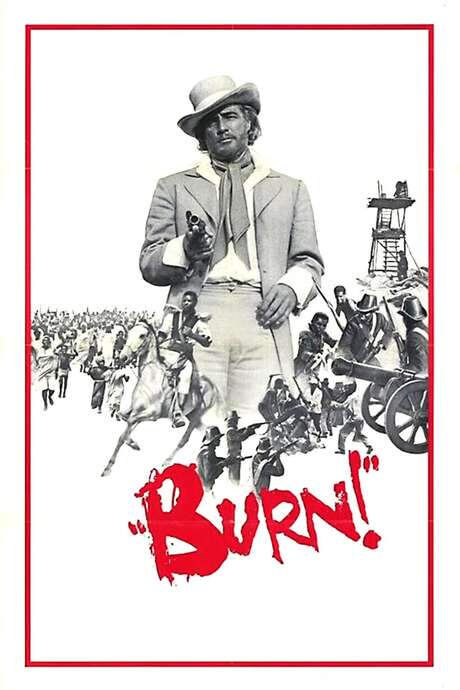
Burn! 1969

Directed by
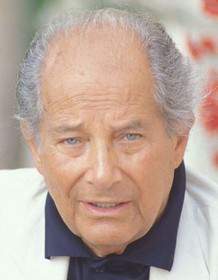
Gillo Pontecorvo
Made by

PEA
Where to Watch Burn!
See current US streaming, rental, and purchase options for Burn! (1969) via JustWatch.











Burn! Plot Summary
Read the complete plot summary and ending explained for Burn! (1969). From turning points to emotional moments, uncover what really happened and why it matters.
Sir William Walker, an agent provocateur, is dispatched by the British Admiralty in 1844 to the island of Queimada—a Portuguese colony in the Lesser Antilles—where the empire hopes to unlock the island for the Antilles Royal Sugar Company. His mission is to ignite an uprising of enslaved Africans against the Portuguese regime, paving the way for a government that would be friendly to white planters and British economic interests.
Upon his arrival, he forges a bond with the charismatic José Dolores, and subtly steers him to lead the slave rebellion. Walker also influences prominent landowners to withdraw their loyalty from the Portuguese crown. Dolores’s leadership proves powerful and effective, culminating in a nighttime coup that eliminates the Portuguese governor. In the aftermath, Walker sets up a puppet regime, headed by the idealistic yet ultimately ineffectual revolutionary Teddy Sanchez, and ensures that the new government remains indebted to the Antilles Company. Dolores is persuaded to recognize this regime and, in exchange, to surrender his arms as a symbolic step toward the abolition of slavery. Having achieved his objective, Walker moves on to a new assignment in Indochina, leaving Queimada momentarily stabilized under foreign interests.
The story then moves forward to 1848, when Dolores—now disillusioned by the regime’s collaboration with the Antilles Company—rises again to challenge the lingering British influence. He aims to erase foreign control from Queimada, and his second uprising lasts six long years, shaping the island’s ongoing struggle for autonomy. In 1854, the Company returns Walker to Queimada, having located him in Plymouth, England, and collaborates with the Admiralty to suppress the renewed revolt and pacify the island. The regime led by Sanchez is toppled in a coup engineered by Walker, who installs a government that is wholly subservient to the company. British forces descend on the island, guided by Walker, and they quickly quash the rebellion and capture Dolores.
Walker, moved by a sense of guilt and the weight of his actions, seeks to spare Dolores’s life because of their shared past. Dolores, however, rejects any saving grace, declaring that freedom must be earned rather than granted. The regime condemns Dolores to hang, delivering a stark statement about autonomy and power. As Walker prepares to depart Queimada, a haunting moment returns: a man greets him in the same way Dolores once did, and then stabs him to death. In his final breath, Walker looks out over the port and is met with the accusing or resigned stares of the island’s impoverished people, a stark image of the cost of conquest and the hollow victory of control.
Burn! Timeline
Follow the complete movie timeline of Burn! (1969) with every major event in chronological order. Great for understanding complex plots and story progression.
Arrival and mission to Queimada
In 1844, the British Admiralty sends Sir William Walker to the island of Queimada. His mission is to organize an uprising of enslaved Africans that will destabilize the Portuguese regime and pave the way for a company-friendly government. He begins covertly winning allies among landowners and key figures to seed a rebellion. The overarching plan is to replace the old rule with one controlled by pliable white planters.
Walker befriends Dolores and recruits him
On arrival, Walker befriends the charismatic José Dolores and entices him to lead the rebellion. He also persuades leading landowners to reject Portuguese authority, widening support for the uprising. The scheme is designed to create a favorable base for British economic interests.
Dolores's rebellion succeeds and governor is assassinated
Dolores's rebellion succeeds in toppling the old regime, and Walker orchestrates a nighttime coup to assassinate the Portuguese governor. He then installs a puppet government headed by the idealistic yet ineffectual Teddy Sanchez. The regime promises reform while remaining dependent on the Antilles Company.
Abolition of slavery traded for recognition of the regime
Walker convinces Dolores to recognize the new regime and surrender his arms in exchange for the abolition of slavery. The puppet government is shaped to serve the interests of the Antilles Company and its white planter allies.
Walker departs Queimada for Indochina
Having accomplished his mission, Walker moves on to his next assignment in Indochina. His departure signals a temporary stabilization of Queimada under company control.
Dolores launches a second uprising (1848)
In 1848, Dolores grows disgusted with the regime's collaboration with the Antilles Company and leads a second uprising to expel British influence. He seeks to restore Queimada's independence and end outside meddling.
Six years of uprising threaten the regime (leading to 1854)
Six years into the uprising, the struggle persists against the puppet regime and the interests of the Antilles Company. The rebellion tests the island's governance and threatens to redraw the regional balance of power.
Company recalls Walker from Plymouth to Queimada
The Company locates Walker in Plymouth, England and returns him to Queimada with the Admiralty's consent to suppress the revolt and pacify the island. His return signals the beginning of a renewed phase of intervention.
Sanchez ousted and executed; regime pro-company solidified
Walker engineers a coup, ousting and executing President Sanchez and installing a regime wholly beholden to the Company. The new government tightens its grip on Queimada and aligns fully with corporate interests.
British forces quell the revolt and capture Dolores
British forces are invited to the island and, guided by Walker, quickly quell the rebellion and capture Dolores. The operation demonstrates the continued power of external influence over Queimada's fate.
Dolores is executed by hanging
Dolores is executed by hanging, marking a brutal end to the resistance leadership. His death underscores the regime's capacity to suppress rebellion despite popular support. The scene cements the collapse of the independence movement on the island.
Walker is killed just as he begins to depart
Guilt-ridden, Walker is accosted as he prepares to depart Queimada and is stabbed by a man who greets him as Dolores did years earlier. He dies amid the accusatory or passive looks of the port's poor, a stark end to a manipulative campaign.
Burn! Characters
Explore all characters from Burn! (1969). Get detailed profiles with their roles, arcs, and key relationships explained.
Sir William Walker (Marlon Brando)
A British agent provocateur who infiltrates Queimada and orchestrates the island's political chaos. He entices Dolores to lead the revolt, coerces landowners to reject Portuguese rule, and arranges a nighttime coup to topple the governor. Walker then installs a puppet regime beholden to the Antilles Company and later returns to quell the next uprising, driven by a complex mix of ambition and guilt.
José Dolores (Evaristo Márquez)
A charismatic enslaved leader who becomes Walker's instrument to spark the first rebellion. He leads the uprising with passion, but is later disillusioned by the puppet regime's cooperation with external interests. Dolores reemerges as a central figure in the second revolt, ultimately facing execution.
Teddy Sanchez (Renato Salvatori)
An idealistic yet ineffectual revolutionary who heads the initial regime installed by Walker. He embodies the dream of liberation but struggles to translate ideals into effective governance amid competing interests. Sanchez is sidelined as Walker consolidates power under the company's influence.
Gen. Alonso Prada (Thomas Lyons)
A military figure aligned with the colonial regime, tasked with maintaining order and suppressing revolts. He embodies the persistence of imperial authority in the face of rebellion and economic exploitation. Prada's forces clash with Dolores' followers as the conflict escalates.
Burn! Settings
Learn where and when Burn! (1969) takes place. Explore the film’s settings, era, and how they shape the narrative.
Time period
1844–1854
The action unfolds in the mid-19th century, a period of colonial empires and slave economies in the Caribbean. It traces a decade of uprisings, coups, and counter-revolutions that reshape ruler-ship on the island. The timeline culminates with a brutal suppression and a fatal end for the rebel leader.
Location
Queimada
Queimada is portrayed as a tropical Caribbean island under Portuguese rule. The setting centers on a colonial society built on slavery and land ownership, ripe for manipulation by external interests. The island's economic ambitions are driven by the Antilles Royal Sugar Company, highlighting the extractive nature of colonial economics.
Burn! Themes
Discover the main themes in Burn! (1969). Analyze the deeper meanings, emotional layers, and social commentary behind the film.
🎭
Colonial Power
The film examines how external powers manipulate local populations to secure economic interests. Walker uses deception and political theater to engineer a slave revolt that serves the British and corporate agenda. The puppet regime demonstrates how power can be manufactured to maintain control over resource-rich lands. The narrative questions the morality of engineering freedom when it serves exploitation.
🔥
Rebellion
Rebellion animates both the first and second uprisings led by Dolores, born from the enslaved population's demand for autonomy. The initial success exposes the fragility of revolutionary gains when co-opted by corporate interests. A second, longer rebellion arises from discontent with the regime's collaboration with the Antilles Company. The cycle shows how resistance persists despite countermeasures.
🕯️
Betrayal
Betrayal threads through the relationships between rebels and their would-be liberators. Dolores agrees to surrender arms in exchange for abolition, a pact that betrays the ideals of freedom for pragmatic stabilization. Walker’s actions, though framed as anti-colonial, ultimately align with corporate domination. In the end, the execution of Dolores and the murky moral aftermath reflect the cost of political manipulation.

Coming soon on iOS and Android
The Plot Explained Mobile App
From blockbusters to hidden gems — dive into movie stories anytime, anywhere. Save your favorites, discover plots faster, and never miss a twist again.
Sign up to be the first to know when we launch. Your email stays private — always.
Explore the mobile appBurn! Spoiler-Free Summary
Discover the spoiler-free summary of Burn! (1969). Get a concise overview without any spoilers.
In the heat‑blistered Caribbean of the 1840s, the island of Queimada looms as a coveted prize in the global sugar trade. Colonial powers, sugar magnates, and a restless enslaved population intersect on this tropical stage, creating a volatile mix of ambition, oppression, and the promise of profit. The British Admiralty, ever watchful of opportunity, eyes the island as a gateway to greater influence, setting the scene for a clash between empire and the human yearning for freedom.
Enter Sir William Walker, a polished yet ruthless mercenary whose reputation is built on selling war to the highest bidder. Calm, charismatic, and completely unencumbered by the moral weight of his assignments, Walker is the empire’s chosen agent provocateur. He moves through the cramped ports and sweltering plantations with a colonial aristocrat’s poise, yet his eyes constantly scan the landscape for leverage, profit, and the next contract. His expertise lies in lighting fires—both literal and figurative—that can be shaped to serve distant interests, making him both a catalyst and a conduit for the forces that seek to control Queimada.
Opposite Walker stands José Dolores, a magnetic leader among the island’s enslaved people, whose charisma and resolve hint at a deeper desire for self‑determination. Beside him, the idealistic yet fragile Teddy Sanchez represents a different vision of leadership, one caught between revolutionary fervor and the practicalities of governance. The uneasy alliance and subtle power play between these figures create a tension that crackles like a storm‑laden sky, promising a story where loyalty, ambition, and conscience collide. The film swathes the audience in a brooding, sun‑swept atmosphere, where the lush beauty of the island belies the simmering conflict beneath, inviting viewers to question who truly profits from rebellion and what price is paid when empires intervene.
Movies with Similar Twists and Themes
Uncover films that echo the narrative beats, emotional arcs, or dramatic twists of the one you're exploring. These recommendations are handpicked based on story depth, thematic resonance, and spoiler-worthy moments — perfect for fans who crave more of the same intrigue.

Featured on this page

What's After the Movie?
Not sure whether to stay after the credits? Find out!
Check out our other apps:

SAT Sphere
Build confidence for the Digital SAT.

Mori Atlas
Discover wild places worth protecting.

Luntero
Search smarter for a home in Amsterdam.

Plot Explained
Unravel movie endings and hidden clues.

Pokechamp
Dive into Pokémon data and battle logic.

Driving Theory
Get ready for your European theory test.

Movie Dust
Plan your next cinema trip with ease.

Musemap
Find art and culture as you travel.

Selkobase
Compare credentials before committing.

Local Manual
Turn an unfamiliar country into practical next steps.

Lernavi
Compare school systems before your next move.

GymRoam
Find a workout stop wherever your plans take you.
Explore Our Movie Platform
New Movie Releases (2026)
Famous Movie Actors
Top Film Production Studios
Movie Plot Summaries & Endings
Major Movie Awards & Winners
Best Concert Films & Music Documentaries
Movie Collections and Curated Lists
© 2026 What's After the Movie. All rights reserved.
Privacy Policy