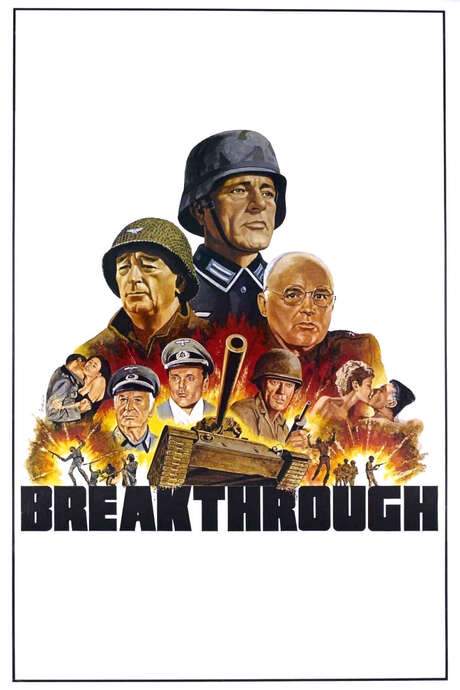
Breakthrough 1979

Directed by
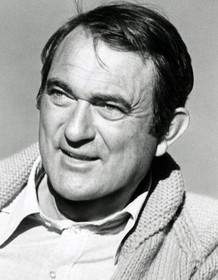
Andrew V. McLaglen
Made by

Rapid Film
Where to Watch Breakthrough
See current US streaming, rental, and purchase options for Breakthrough (1979) via JustWatch.

Streaming availability powered by 
Breakthrough Plot Summary
Read the complete plot summary and ending explained for Breakthrough (1979). From turning points to emotional moments, uncover what really happened and why it matters.
Starting in late May 1944, during the German retreat on the Eastern Front, Captain Stransky, Helmut Griem, orders Sergeant Steiner, Richard Burton, to blow up a railway tunnel to prevent Russian forces from using it. Steiner’s platoon runs into trouble when a Russian tank halts their mission, and after this setback he takes a furlough to Paris just as the Allies launch their invasion of Normandy.
Steiner’s unit is then moved to France, where they occupy the village of St Bologne. General Hofmann, Curd Jürgens, instructs Steiner to cross into nearby enemy territory and confer with American Colonel Rogers, Robert Mitchum, and General Webster, Rod Steiger. They reveal that the High Command of the Wehrmacht is plotting to assassinate Hitler and would welcome a surrender. The plan falters, and American forces proceed to attack German positions in St Bologne, a town that Stransky has targeted with an explosion intended to wipe out both the Americans and the civilian population.
Colonel Rogers and Sergeant Anderson, Michael Parks, take a jeep with a white flag and approach St Bologne. The Germans fire on them, acting on Stransky’s orders. Rogers and Anderson retreat to the tanks, and the Americans advance toward St. Bologne, unaware of the explosives that have been planted in the town.
Steiner urges Stransky not to proceed with the planned explosions. Stransky shoots Steiner and then leaves the scene.
The look-outs on the German side are killed. As the Americans enter the town square, the Germans prepare to trigger the dynamite. Steiner, still alive, disconnects the main switch that would detonate the explosives. He climbs the stairs, defeats the German soldiers, and shoots Stransky, saving Rogers’ life. The Germans then open fire on the tanks. Steiner helps move civilians out of the crossfire. The remaining Germans surrender.
Steiner walks through the burning town. One of the German soldiers shoots Anderson, and Steiner returns fire, killing the assailant and once again saving Rogers.
Throughout these events, Steiner’s actions reveal a clear tilt toward the Americans, showing sympathy that goes beyond duty and into personal restraint and mercy, even when it means standing against his own unit.
Breakthrough Timeline
Follow the complete movie timeline of Breakthrough (1979) with every major event in chronological order. Great for understanding complex plots and story progression.
Orders to destroy the railway tunnel
During the German retreat on the Eastern Front, Captain Stransky orders Steiner to blow up a railway tunnel to slow the advancing Russians. Steiner leads his platoon into a dangerous operation, but the mission meets stiff resistance. The defenders encounter a Russian tank, which jeopardizes the plan.
Tunnel mission fails against a Russian tank
Steiner's platoon comes up against a Russian tank and fails to complete the tunnel demolition. The setback reveals the fragility of German operations on the Eastern Front. Soon after, Steiner takes a furlough to Paris just as the Allies prepare to invade Normandy.
Steiner goes on furlough to Paris as D-Day begins
Steiner travels to Paris on furlough, arriving as the Allied landing opens the path into France. The trip marks a rare quiet moment before the broader war shifts push toward Western Europe. His absence will be noted by his unit.
Unit redeployed to St Bologne
Steiner's unit is transferred to France and occupies the village of St Bologne. The town becomes a tense frontline outpost as German forces consolidate their grip in the area. The transfer marks a shift from Eastern Front fighting to Western Front operations.
Hoffman orders cross-border liaison
General Hoffman orders Steiner to cross into enemy territory to confer with American Colonel Rogers and General Webster. He informs them that the German High Command is plotting to assassinate Hitler and would like to surrender. The crossing sets up a dangerous liaison across enemy lines.
Wehrmacht plots surrender and assassination
News of the assassination plot and surrender talks surfaces amid the town's precarious status. The plan's fragility is exposed as the Allies prepare to attack. Steiner carries sensitive information that could alter the balance of power in the area.
American assault on St Bologne
Following the failed plan, American forces launch an assault on German positions in St Bologne. They move with tanks and infantry, aiming to seize control of the town. The German defenders are determined, and the fighting threatens civilians caught in the crossfire.
Rogers and Anderson approach with white flag
Colonel Rogers and Sgt. Anderson drive a jeep toward St Bologne with a white flag to negotiate. The Germans open fire on them, following Stransky's orders, forcing them back. The escape underscores how tenuous any negotiation is under wartime orders.
Explosives remain planted as the town is approached
Stransky presses ahead with the explosives despite the American advance. The Americans move toward the town unaware of the deadly trap hidden in the square. The imminent blast raises the stakes for both sides and foreshadows a critical intervention.
Steiner confronts Stransky and is shot
Steiner confronts Stransky and urges him not to proceed with the explosions. Stransky shoots Steiner, who survives the attack. The confrontation dramatically alters the dynamics within the town and helps the Americans later on.
Steiner disables the detonators and attacks
Despite being wounded, Steiner disconnects the main switch, preventing the detonators from triggering. He climbs the stairs and eliminates German guards, including Stransky, to save Rogers. The blast is averted, and the town's fate tilts toward the Americans.
Civilians moved to safety and surrender follows
Steiner moves civilians out of the line of fire as the German lookout forces are killed. The remaining German soldiers surrender, ending the immediate threat to the town. Steiner's actions help protect noncombatants and deflate the German resistance.
Anderson is killed; Steiner avenges him
One of the German soldiers shoots Sgt. Anderson, and Steiner returns fire, killing the aggressor and saving Rogers again. This act cements Steiner's loyalty to the Americans. The episode underscores his moral transformation.
Steiner's transformation and continued alliance with the Allies
Throughout the sequence, Steiner's loyalties shift toward the Americans, illustrating how personal bonds influence wartime decisions. He acts decisively to protect Allied forces and civilians, even at cost to his former comrades. The narrative foregrounds his evolving moral stance in the war.
Breakthrough Characters
Explore all characters from Breakthrough (1979). Get detailed profiles with their roles, arcs, and key relationships explained.
Sergeant Steiner (Richard Burton)
A German sergeant who, while initially bound by army doctrine, grows sympathetic to Americans and civilians. He defies orders to detonate the town, disconnects the explosive switch, and fights to save lives, including those of American soldiers. His actions reveal a complex loyalty that transcends national allegiance.
Captain Stransky (Helmut Griem)
A fiercely loyal German captain who orchestrates the plan to explode the town to destroy American forces and civilians. He embodies harsh militarism and relentless determination, and his clash with Steiner culminates in deadly confrontation. His actions escalate the conflict and highlight the brutality of the mission.
Colonel Rogers (Robert Mitchum)
An American colonel who engages with Steiner and leads the approach toward St Bologne under complex circumstances. He represents Allied resolve and strategic maneuvering in a tense, high-stakes encounter. His interactions with Steiner drive key turning points in the narrative.
General Webster (Rod Steiger)
An Allied general involved in coordinating responses to the situation in St Bologne. He embodies the high-level strategic pressure of wartime decisions and the interplay between command and on-the-ground realities. His presence underscores the larger war effort surrounding the town.
General Hofmann (General Hofmann) (Curd Jürgens)
A German general who orders crossing into enemy territory and the explosive plot in St Bologne. His decisions reflect strategic calculus and the hardline approach of Wehrmacht leadership in occupied France. His role anchors the German military objective at the heart of the conflict.
Breakthrough Settings
Learn where and when Breakthrough (1979) takes place. Explore the film’s settings, era, and how they shape the narrative.
Time period
May–June 1944
The story begins in late May 1944 during the German retreat on the Eastern Front and moves toward the Allied invasion of Normandy. The timeline captures the tense prelude to D-Day and the escalating dangers of a town under occupation. It frames a brief window where strategic decisions could alter lives on both sides.
Location
St Bologne, France, Eastern Front
The action shifts from the Eastern Front into Nazi-occupied France, centering on the village of St Bologne. The town becomes the stage for a planned explosion that would devastate American troops and civilians alike. The setting blends ruined streets, tense patrols, and the fear of sudden, catastrophic violence.
Breakthrough Themes
Discover the main themes in Breakthrough (1979). Analyze the deeper meanings, emotional layers, and social commentary behind the film.
🕊️
Moral Dilemma
Sergeant Steiner grapples with the tension between obedience and humanity. His evolving conscience leads him to actively oppose the plan to detonate the explosives, even at personal risk. The narrative uses his choices to question how soldiers should navigate orders versus mercy.
⚖️
Duty vs Mercy
The plot pits strict military duty against acts of mercy that save lives. Steiner’s compassion toward civilians and American soldiers clashes with the Wehrmacht’s objective, challenging simple loyalties. The contrast drives the moral atmosphere of the film.
🔥
Violence and Consequences
A looming explosion and a town under threat heighten the cost of war decisions. The countdown to destruction amplifies the physical and ethical stakes for all characters. The outcome underscores how violence reverberates beyond the battlefield.

Coming soon on iOS and Android
The Plot Explained Mobile App
From blockbusters to hidden gems — dive into movie stories anytime, anywhere. Save your favorites, discover plots faster, and never miss a twist again.
Sign up to be the first to know when we launch. Your email stays private — always.
Explore the mobile appBreakthrough Spoiler-Free Summary
Discover the spoiler-free summary of Breakthrough (1979). Get a concise overview without any spoilers.
In the waning days of May 1944, the Eastern Front reels from a rapid German retreat, and the bleak, snow‑scarred landscape becomes a stage for desperate orders. Captain Stransky commands a weary unit tasked with a risky demolition that could cripple an advancing Soviet force, while his steadfast subordinate Sergeant Steiner bears the weight of the mission and the lives that depend on it. The atmosphere is tense, coloured by the grinding bureaucracy of the Wehrmacht and the stark realities of a war that is already turning against its makers.
When the operation stalls, Steiner is granted a brief furlough that carries him far from the frozen front lines to the luminous streets of Paris, just as the Allied invasion of Normandy erupts. The contrast between the city’s fleeting sense of normalcy and the distant thunder of gunfire heightens the film’s mood, underscoring a world where front‑line duty and civilian life intersect in uneasy proximity. This interlude offers a glimpse of the personal cost of conflict, letting the audience sense the pull between duty and humanity.
Back in occupied France, Steiner’s platoon is repositioned to a small village where the stakes shift from strategic sabotage to the daily grind of occupation. Here, General Hofmann delivers a confidential briefing that introduces the prospect of covert talks with the advancing Americans, represented by the pragmatic Colonel Rogers and the seasoned General Webster. Their presence injects a diplomatic tension that blurs enemy lines, hinting at larger undercurrents within the German command structure.
Through it all, Steiner emerges as a quietly fierce figure caught between orders and conscience. The film’s tone is gritty yet contemplative, with stark winter panoramas giving way to the muted hues of occupied towns. As the war’s larger movements swirl around him, the story teases the complex interplay of loyalty, survival, and the lingering spark of doubt that can reshape a soldier’s path.
Movies with Similar Twists and Themes
Uncover films that echo the narrative beats, emotional arcs, or dramatic twists of the one you're exploring. These recommendations are handpicked based on story depth, thematic resonance, and spoiler-worthy moments — perfect for fans who crave more of the same intrigue.



Featured on this page

What's After the Movie?
Not sure whether to stay after the credits? Find out!
Check out our other apps:

SAT Sphere
Build confidence for the Digital SAT.

Mori Atlas
Discover wild places worth protecting.

Luntero
Search smarter for a home in Amsterdam.

Plot Explained
Unravel movie endings and hidden clues.

Pokechamp
Dive into Pokémon data and battle logic.

Driving Theory
Get ready for your European theory test.

Movie Dust
Plan your next cinema trip with ease.

Musemap
Find art and culture as you travel.

Selkobase
Compare credentials before committing.

Local Manual
Turn an unfamiliar country into practical next steps.

Lernavi
Compare school systems before your next move.

GymRoam
Find a workout stop wherever your plans take you.
Explore Our Movie Platform
New Movie Releases (2026)
Famous Movie Actors
Top Film Production Studios
Movie Plot Summaries & Endings
Major Movie Awards & Winners
Best Concert Films & Music Documentaries
Movie Collections and Curated Lists
© 2026 What's After the Movie. All rights reserved.
Privacy Policy