

Bloodsuckers Plot Summary
Read the complete plot summary and ending explained for Bloodsuckers (1989). From turning points to emotional moments, uncover what really happened and why it matters.
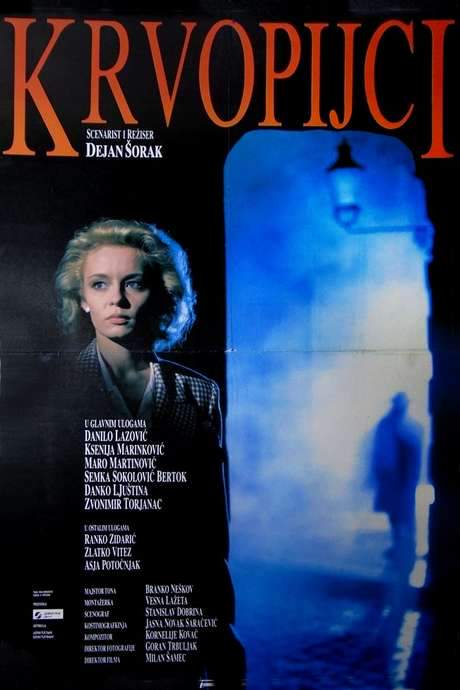
The streets of Zagreb at night are quiet, almost eerie, as a serial predator rumored to be a vampire moves unseen. One evening, Teobold Majer Maro Martinović goes to visit Dr Franz Glogowecz Danilo Lazović in the psychiatrist’s secluded Gornji Grad villa. Teobold claims to be a 16th‑century vampire and says he comes from a bloodline of vampire hunters, a claim that immediately unsettles Franz, who orders him to leave. Yet the allure of the otherworldly is not lost on Barbara Ksenija Marinković, Franz’s young wife, who is drawn to this enigmatic visitor. Barbara follows Teobold and confronts him at the altar near the Stone Gate of Gornji Grad, where he supposedly bites her neck, leaving two small puncture marks that resemble fangs. Even after she participates in a séance and had claimed to be a witch earlier that evening, Barbara finds Teobold oddly fascinating and invites him to visit the villa again once her husband has fallen asleep. On her way back, Barbara imagines she is pursued by the very rapist she fears, only to realize the pursuer is Franz himself.
Meanwhile, the Glogowecz villa is visited by Franz’s estranged uncle Jambrek Glogowecz Zvonimir Torjanac and Jambrek’s somewhat dimwitted son Jurek [Danko Ljuština]. Jambrek’s presence is surprising because Jalža [Semka Sokolović-Bertok], the housemaid who once knew him intimately, is the one who secretly arranges their entry. The night takes a strange turn when Teobold makes an entrance at what he believes to be Barbara’s bedroom window, but ends up clashing with Jurek, who mistakes him for the folkloric Krampus and tears a piece of Teobold’s cloak. Franz discovers the torn material is Teobold’s, and the combination of unexpected relatives, Barbara’s evasive explanation about her neck, and Teobold’s nocturnal visit gradually pushes him toward the belief that vampires might really be at work.
The next day, Barbara escorts Jambrek and Jurek to the Zagreb Zoo, while Franz brings the cloak fragment to his ally, a chemistry professor Branko Bonacci, who identifies the material as extremely old wool. Franz then dives into his family history in the library, uncovering a chilling lineage: seven of his ancestors were staked as vampires in the 16th century, including a woman named Barbara who was burned as a witch. The revelation, attributed to Teobold Majer, makes Franz’s conviction deeper, though Barbara remains skeptical. Jambrek and Jurek pledge to help him prepare to destroy the vampire, turning the hunt into a family mission.
That night, Franz ventures into the Zagreb Botanical Garden to harvest a hawthorn bush for a wooden stake (glogov kolac), narrowly avoiding arrest by a milicioner in the garden Krešimir Zidarić. The following day, Jambrek places an ad in the newspaper offering vampire-killing services, drawing the attention of police inspector Brodski Ranko Zidarić and healer Bjelinski [Zlatko Vitez], who cryptically vow to support him.
A young woman, Asja Jovanović, appears in response to the ad, describing a neck wound like Barbara’s and directing them to the grave of a supposed vampire, Mr Drakulić [Ilija Ivezić], at Mirogoj Cemetery. In exchange for 2000 German marks, the Glogoweczs agree to take on the job. Barbara plays lookout as Jambrek and Jurek dig up Drakulić’s casket, while Teobold roams the cemetery and is spotted by the group just as they are about to break the tomb. The moment of truth arrives when Franz decides to stake the cadaver, only to be interrupted by the young woman and Inspector Brodski, who reveal the sting operation. Frustrated and dispirited, Franz is taken to the Jankomir Psychiatric Hospital for a time.
Franz is eventually released. Back at his villa, Brodski and Bjelinski apologize for the misjudgment and admit there may be truth to his story after all. The film closes with a surprising confrontation: Teobold Majer encounters Drakulić himself, who is still roaming the night streets of Gornji Grad, leaving the audience with the sense that the vampire myth might be more than legend after all.
Bloodsuckers Timeline
Follow the complete movie timeline of Bloodsuckers (1989) with every major event in chronological order. Great for understanding complex plots and story progression.
Teobold Majer seeks aid from Dr. Franz Glogowecz
In a deserted Zagreb night, Teobold Majer arrives at the isolated villa of Dr. Franz Glogowecz to claim he is a 16th-century vampire. Franz dismisses the claim and orders him to leave, treating it as a fancy quirk. Barbara, Franz's wife, is unexpectedly drawn to the enigmatic stranger despite her husband’s skepticism.
Barbara bites the neck of Teobold at Stone Gate
Barbara follows Teobold and confronts him at the Stone Gate altar in Gornji Grad, where he bites her neck and leaves the telltale fangs. The shock of the wound deepens the vampire legend around the couple, while Barbara remains amused by his tale. She invites Teobold to visit the villa after Franz falls asleep, setting the stage for more dangerous curiosity.
Barbara misreads danger; encounters Franz
On her way back, Barbara is followed by a man she maces, thinking he is the rapist, only to realize he is Franz. The misidentification heightens the tension between belief and doubt about Teobold’s story. The encounter also foreshadows how the couple will test each other’s secrecy and loyalty.
Jambrek and Jurek arrive at the villa
Franz's estranged uncle Jambrek Glogowecz and his dimwitted son Jurek arrive at the villa and are admitted with the help of Jalža, a housemaid who once had a romance with the family. The unexpected guests complicate the household and add a layer of family history to the vampire myth. The arrival also introduces a loose, unpredictable thread of old family ties.
Teobold intrudes; cloak is torn
That night Teobold makes an entrance at what he presumes is Barbara’s bedroom window, but ends up in an altercation with Jurek who mistakes him for Krampus. Jurek tears a piece of Teobold’s cloak, making the vampire tale seem more plausible to Franz. Franz discovers the torn fabric and begins to doubt his skepticism about Teobold’s claims.
Franz uncovers vampire lineage
That afternoon, Franz takes the old cloak fragment to a chemistry professor who identifies it as very old wool. He then investigates his family history in the library and learns that seven of his ancestors were staked as vampires in the 16th century, along with a woman named Barbara who was burnt as a witch — all tied to Teobold Majer. The revelation convinces Franz that Teobold may indeed have spoken truth.
Franz seeks a hawthorn stake
That night, Franz breaks into the Zagreb Botanical Garden to procure a hawthorn stake for the legendary 'glogov kolac'. He is nearly arrested by a stubborn policeman, underscoring the peril of his crusade. The scene marks his transition from belief to active preparation.
Vampire-hunting ad goes public
The following day, Jambrek issues a newspaper ad offering vampire-killing services, drawing the attention of Inspector Brodski and healer Bjelinski, who cryptically offer support. The ad makes the hunt more public and drags official eyes into Franz’s personal crusade. Franz’s resolve grows as the case becomes a matter of public interest.
Lead points to Drakulić; the assignment is set
That evening a young woman answers the ad and describes a neck wound similar to Barbara’s, pointing them toward a vampire named Drakulić and giving directions to his grave at Mirogoj Cemetery in exchange for 2000 German marks. Franz agrees to take the assignment, while Barbara plans to pocket the money. Jambrek brandishes a real hawthorn stake, and the group readies for a staking expedition.
The stake operation at Drakulić's grave
At Mirogoj Cemetery, the Glogoweczs dig up Drakulić's grave; Barbara acts as lookout as the others begin to unearth the casket. Teobold roams the cemetery at night, and a group of people heads toward Drakulić's grave just as the coffin is about to be opened. Startled by the living condition of the cadaver, Franz tries to stake it, but the plan is interrupted by an unexpected turn.
The sting is sprung; Franz is detained
Inspector Brodski reveals that the operation is a sting and that Franz cannot stake the living corpse. Franz is restrained and taken to the Jankomir Psychiatric Hospital. Barbara is left unsettled as the plan collapses and the vampire myth remains unresolved.
Franz is released; suspicions linger
Franz is released the next day; back at the villa, Brodski and Bjelinski apologize for the committal and hint that there might be truth to his vampire tale after all. The authorities acknowledge the possibility that Teobold’s claims were not merely delusions.
Ending: Teobold and Drakulić still at large
The film ends with Teobold Majer running into Drakulić on the night streets of Gornji Grad, suggesting the hunt will continue. Both men disappear into the shadows, leaving the vampire mystery unresolved and the city’s nocturnal menace unconcluded.
Bloodsuckers Characters
Explore all characters from Bloodsuckers (1989). Get detailed profiles with their roles, arcs, and key relationships explained.
Barbara (Ksenija Marinković)
The young wife of Franz who is drawn to Teobold’s enigmatic claim. She pursues novelty and flirtation, following Teobold and inviting him to the villa, which unsettles the household and complicates Franz’s investigation. Her actions reveal a mix of curiosity, independence, and willingness to risk danger.
Dr Franz Glogowecz
A psychiatrist who is initially skeptical of Teobold’s vampire tale but becomes increasingly convinced as he uncovers a family history of vampirism. His rational approach clashes with the legend, driving him to act—seeking proof, collecting clues, and planning to stake the vampire. He embodies the tension between science and folklore.
Teobold Majer
A mysterious figure who claims to be a 16th-century vampire, using ancient lore to manipulate those around him. His presence destabilizes the already fragile balance between belief and doubt, and he remains a menacing, unknowable force throughout the night. He is the catalyst that pushes the story toward its supernatural turn.
Jambrek Glogowecz
Franz’s estranged uncle, a loud and opportunistic presence who brings along his dimwitted son. He navigates family secrets with a mix of bravado and shameless pragmatism, inadvertently accelerating the unraveling of the vampire myth within the family.
Jurek Glogowecz
Franz’s nephew, portrayed as somewhat naïve and easily spooked. He misidentifies Teobold as Krampus, adding a chaotic, comic element to the drama while still contributing to the night’s escalating tension.
Jalža
A housemaid with a past connection to Teobold’s story who helps the family navigate the night’s complications. Her loyalties are mixed, and she becomes a key facilitator of the nocturnal intrusions.
Drakulić
The cadaver whose grave becomes the focus of the vampire hunt. The living cadaver’s reappearance during the stake attempt blurs the line between myth and reality, underscoring the film’s themes of resurrection and belief.
Inspector Brodski
A police inspector who becomes entangled in Franz’s vampire investigation, representing official scrutiny and the public face of law in a night of strange events. He challenges the plausibility of the tale while quietly supporting a deeper inquiry.
Bjelinski
A healer who offers cryptic assistance and seems to know more about the local legends than he initially reveals. His involvement adds a layer of medical and folkloric authority to the unfolding mystery.
Nepoznata žena
A young woman who answers the vampire-killing ad, sharing a neck wound and guiding the protagonists toward a vampire’s grave. She is part of the night’s deception and contributes to the sting operation’s tension.
Bloodsuckers Settings
Learn where and when Bloodsuckers (1989) takes place. Explore the film’s settings, era, and how they shape the narrative.
Time period
Late 20th century
Events unfold in contemporary Zagreb, with police, a hospital, and libraries playing pivotal roles. The plot weaves a 16th-century vampire myth into present-day life, creating tension between superstition and rational inquiry. The time frame grounds the story in a recognizable era while letting folklore intrude into daily existence.
Location
Zagreb, Gornji Grad, Zagreb Zoo, Zagreb Botanical Garden, Mirogoj Cemetery, Jankomir Psychiatric Hospital, Glogowecz villa
The story is set in Zagreb’s nocturnal streets and its historic Upper Town (Gornji Grad), moving through a secluded villa, the city zoo, the botanical garden, and the Mirogoj Cemetery. Nighttime locations and ancient landmarks provide a Gothic backdrop for a modern vampire scare. The urban setting blends contemporary city life with echoes of a centuries-old bloodline.
Bloodsuckers Themes
Discover the main themes in Bloodsuckers (1989). Analyze the deeper meanings, emotional layers, and social commentary behind the film.
🧛
Vampire Myth
Teobold Majer presents himself as a 16th-century vampire, using age-old lore to unsettle the living. The film tests the boundary between superstition and science, as Franz searches archives for proof while gathering a hawthorn stake. Barbara's fascination with the legend fuels a dangerous curiosity that can override reason and loyalty. The vampire myth remains a living force in the urban night, never fully resolved.
🕯️
Belief vs Skepticism
Barbara's attraction to Teobold makes her a wildcard whose choices threaten the household's order. Franz starts as a skeptic, but the accumulated clues—old family records, torn fabric, and a planned stake—pull him toward belief. The séance and the discovery of ancestral vampirism push rational thought into uneasy territory. The film uses this tension to explore how belief can drive actions as compelling as any crime.
🧬
Legacy
The Glogowecz family history stretches back to the 16th century, with seven ancestors staked as vampires and a woman burned as a witch named Barbara. Teobold's claim prompts a reexamination of that lineage, linking modern events to a long-buried past. The narrative ties personal identity to historic myth, showing how heritage shapes fear and motive. The past resurfaces in the present as the investigation deepens.
🔎
Investigation
Jambrek and Jurek launch a vampire-killing ad, turning myth into a service and drawing official attention. Inspector Brodski and Dr. Bjelinski embody the rational counterforces, hinting at formal scrutiny of the occult. The cemetery sting operation reveals how deception and legend can blend with crime, forcing the characters to confront what is real. The film maintains a tense, investigative tone as events edge toward a final judgment.

Coming soon on iOS and Android
The Plot Explained Mobile App
From blockbusters to hidden gems — dive into movie stories anytime, anywhere. Save your favorites, discover plots faster, and never miss a twist again.
Sign up to be the first to know when we launch. Your email stays private — always.
Explore the mobile appBloodsuckers Spoiler-Free Summary
Discover the spoiler-free summary of Bloodsuckers (1989). Get a concise overview without any spoilers.
In the hushed twilight of Zagreb, the city’s historic streets sit under a blanket of unease, haunted by whispers of a lone predator that stalks solitary women after dark. The atmosphere is thick with old‑world superstition brushed against the stark, modern backdrop of a capital that rarely sleeps, giving the film a mood that oscillates between gothic dread and a wry, almost bureaucratic absurdity.
The story follows Franjo Glogowetz, a methodical psychiatrist whose life is built on rational explanations and clinical detachment. His orderly world is abruptly unsettled when Teobald Majer arrives at the family villa, insisting he is a 16th‑century vampire and that Franjo’s lineage bears the burden of a long‑forgotten hunting tradition. Franjo meets the claim with skeptical disdain, yet the encounter plants a seed of curiosity that clashes with his professional composure.
Around them, Barbara, Franjo’s young and impressionable wife, becomes a conduit for the uncanny, drawn to the mystery that Teobald embodies. Their tension is amplified when Franjo’s estranged uncle, Jambrek, and the uncle’s well‑meaning but somewhat clueless son, Jurek, drop in for an unexpected reunion. Their arrival adds familial friction and an uneasy camaraderie, as the extended Glogowetz house begins to feel the pull of an inherited myth that none of them can fully dismiss.
Together, these characters inhabit a city where folklore and modernity intersect, creating a subtle blend of dread and dark humor. The film lingers on the texture of Zagreb’s night‑time alleys, the weight of ancestral secrets, and the uneasy balance between belief and skepticism—all hinting that the line between legend and reality may be thinner than anyone is willing to admit.
Featured on this page

What's After the Movie?
Not sure whether to stay after the credits? Find out!
Check out our other apps:

SAT Sphere
Build confidence for the Digital SAT.

Mori Atlas
Discover wild places worth protecting.

Luntero
Search smarter for a home in Amsterdam.

Plot Explained
Unravel movie endings and hidden clues.

Pokechamp
Dive into Pokémon data and battle logic.

Driving Theory
Get ready for your European theory test.

Movie Dust
Plan your next cinema trip with ease.

Musemap
Find art and culture as you travel.

Selkobase
Compare credentials before committing.

Local Manual
Turn an unfamiliar country into practical next steps.

Lernavi
Compare school systems before your next move.

GymRoam
Find a workout stop wherever your plans take you.
Explore Our Movie Platform
New Movie Releases (2026)
Famous Movie Actors
Top Film Production Studios
Movie Plot Summaries & Endings
Major Movie Awards & Winners
Best Concert Films & Music Documentaries
Movie Collections and Curated Lists
© 2026 What's After the Movie. All rights reserved.
Privacy Policy