
Black Cat Mansion 1958

Directed by

Nobuo Nakagawa
Made by

Shintoho Company
Black Cat Mansion Plot Summary
Read the complete plot summary and ending explained for Black Cat Mansion (1958). From turning points to emotional moments, uncover what really happened and why it matters.
In a hospital during a power outage, Dr. Tetsuichiro Kuzumi [Toshio Hosokawa] finds his thoughts drifting to a chain of memories. A memory unfolds in which he and his wife, Yoriko, leave bustling Tokyo behind, moving to a centuries-old house in Kyushu to help cure her tuberculosis. They are not alone; Yoriko is accompanied by her elder brother Kenichi. As the car glides along the road, their driver [Eijir Kawai] notices a black cat cross their path, and a near accident sends them teetering toward a railing and the sea. They eventually reach Spiraea Mansion, a looming, spine-tingling estate, where Yoriko’s first impressions are filled with unease: a cat, a flock of crows, and a bloodstained wall, and a fleeting glimpse of an eerie old woman, Old Woman, who vanishes before others can confirm her presence.
Inside, Tetsuichiro transforms part of the mansion into a clinic, hoping the setting will aid Yoriko’s fragile health. The old woman reappears at the clinic, startling Tetsuichiro’s assistant and triggering the dog Taro to bark. When the assistant departs to fetch the doctor, the old woman vanishes—only to return moments later and choke Yoriko, though she does not kill her. Later, the same figure reappears and tells Tetsuichiro that a family has a sick child, prompting him to ride out on a rickshaw. He arrives and finds that the family did not summon him, and in his absence the old woman murders Taro and copies Tetsuichiro’s voice to gain entry, where she again strangles Yoriko. Yoriko later speaks of dreams in which cats bite her. Curious and unsettled, Tetsuichiro and Kenichi visit a Buddhist temple, where a priest begins to recount the mansion’s history and its dark reputation.
The story then slips back in time to the Sengoku period (c. 1467–1600). The house is revealed to be Spiraea Mansion, governed by the short-tempered lord Ishido Sakon no Shogen [Arata Shibata]. When Kokingo, a samurai, is ordered to teach Shogen how to play Go, Kokingo accuses the lord of cheating, and Shogen murders him with a sword. Miyaji, Kokingo’s blind mother, learns of her son’s death and Shogen’s role in it. In the wake of tragedy, Miyaji urges her cat Tama to avenge Kokingo and Miyaji. The cat licks up Miyaji’s blood as a cursed thread winds through the generations. Shogen’s son Shinnojo longs to marry a servant named Yae [Noriko Kitazawa], but their union faces class barriers. An attempted blessing from Shogen is refused, and Shogen’s abuse continues; Shinnojo confronts his father, and apparitions of Kokingo and Miyaji haunt the dining hall. The shape-shifting bakeneko (a supernatural cat) uses Miyaji’s appearance to strike, killing a servant named Sato, and ultimately both Shogen and Shinnojo perish in a sword fight. The tale—told by a temple priest—links Saheiji to Yoriko, revealing that Saheiji is Yoriko’s ancestor and offering a protective charm to ward off evil spirits.
As a storm rages that night, the wind tears away the charms. Tetsuichiro moves to close the shutters, and the old woman resurfaces to strangle Yoriko once more. The wall of Yoriko’s room crumbles, unveiling the mummified skeleton of Kokingo. Back in the present hospital, it’s explained that Yoriko and Tetsuichiro buried Kokingo’s remains properly, giving him a final rest. Yoriko, now sensing a new sense of peace, discovers a small cat and joyfully adopts it, a quiet and hopeful note after the long night of hauntings.
The film moves with an unhurried, steady rhythm that threads a medical crisis in the present with a tragic lineage from the past. The atmosphere blends clinical immediacy with an almost folkloric dread, as the house’s walls seem to whisper the stories of lovers and warriors, ghosts and go-sleep cat legends, and a family lineage that ties Yoriko to Saheiji and beyond. The performances fuse quiet, restrained emotion with supernatural suggestion, inviting viewers to feel the weight of history pressing down on a single family across centuries. In the end, the bone-deep resolve of Yoriko and Tetsuichiro to acknowledge and honor Kokingo’s memory offers a measure of closure, even as the mansion’s shadows linger in memory.
Black Cat Mansion Timeline
Follow the complete movie timeline of Black Cat Mansion (1958) with every major event in chronological order. Great for understanding complex plots and story progression.
Present-day hospital power outage triggers memory
During a power outage in the hospital, Dr. Tetsuichiro Kuzumi is forced to confront memories from his past. The blackout acts as a catalyst, pulling him into a sequence of events surrounding Yoriko and the haunted mansion. The tension between medicine and superstition begins to blur as old hauntings creep back.
Journey to Kyushu to help Yoriko
Tetsuichiro travels with Yoriko and her elder brother Kenichi from Tokyo toward Kyushu to seek treatment for her tuberculosis. Their driver swerves to avoid a black cat, nearly crashing into the sea. The peril on the road foreshadows the mansion's ominous influence.
Arrival at the Spiraea Mansion
They reach the centuries-old Spiraea Mansion, where Yoriko is unsettled by a cat, a group of crows, and a bloodstained wall. An eerie old woman appears but vanishes before the others can confirm her presence. The house’s atmosphere hints at hidden dangers to come.
Clinic setup and first haunting
Tetsuichiro converts part of the house into a clinic to treat patients. The old woman arrives, startling his assistant and triggering the dog Taro to bark. She vanishes as help arrives, leaving behind a creeping sense of dread.
Old woman chokes Yoriko and manipulated visit
The old woman returns and chokes Yoriko, though she does not kill her. Later, she tells Tetsuichiro that a family has a sick child, prompting him to depart, only to discover the family did not actually send for him. The deception deepens the sense that the haunting interferes with the living.
Taro's death and Yoriko's second choking
In Tetsuichiro's absence, the old woman kills the dog Taro and imitates Tetsuichiro's voice to gain entry. Inside, she chokes Yoriko again, intensifying the danger to her life. The events heighten the sense that the past's violence lingers in the mansion.
Yoriko's dreams of cats biting her
Yoriko shares dreams of cats biting her, echoing the mansion's animal motifs. The dreams deepen the sense of being watched and hint at a link between the hauntings and Yoriko herself. They foreshadow the unraveling history yet to come.
Temple visit reveals mansion's history
Tetsuichiro and Kenichi visit a Buddhist temple, where a priest recounts the mansion's history. The legend ties the present danger to a long history of violence and ghosts. The temple serves as a bridge between eras.
Sengoku backstory: Shogen's murder of Kokingo
In a Sengoku-era flashback, Spiraea Mansion is ruled by Lord Ishido Sakon no Shogen, who murders Kokingo after a Go dispute. Kokingo's body is disposed of in a wall behind a painting. His ghost returns to reveal the truth to Miyaji.
Miyaji's curse and cat Tama's vengeance
Miyaji orders to avenge Kokingo, and Tama the bakeneko takes Kokingo's mother's appearance to kill a servant and mislead the family. Shogen and Shinnojo perish in a sword fight as the curse takes hold. The mansion bears the mark of generations of vengeance.
Revelation at the temple: Saheiji ancestor and warding charm
Back in the 20th century, a temple priest reveals that Saheiji is an ancestor of Yoriko and provides a warding charm to Tetsuichiro. The charm is meant to protect the living from the mansion's spirits. The revelation connects Yoriko to the mansion through bloodlines.
Storm reveals Kokingo's remains
During a storm, the wards blow away and the old woman reappears to choke Yoriko once more. The wall in Yoriko's room crumbles, revealing the mummified skeleton of Kokingo. The discovery confirms the past's hold over the present.
Resolution: skeleton buried and new beginning
Back in the hospital, it is explained that Yoriko and Tetsuichiro buried Kokingo's skeleton properly, laying the haunting to rest. Yoriko finds a small cat and happily adopts it, suggesting a fragile new peace after the ordeals. The film ends on a note of cautious optimism amid lingering shadows.
Black Cat Mansion Characters
Explore all characters from Black Cat Mansion (1958). Get detailed profiles with their roles, arcs, and key relationships explained.
Tetsuichiro Kuzumi (Toshio Hosokawa)
Present-day physician who converts part of the mansion into a clinic. He attempts to treat Yoriko while uncovering memories of the house’s violent past, and gradually confronts the malevolent forces haunting the site.
Yoriko Kuzumi (Yuriko Ejima)
Wife of Tetsuichiro who experiences fear of cats and crows and is repeatedly targeted by the old woman. Her dreams of biting cats and the mansion’s secrets drive the tension until she bonds with a new cat at the end.
Kenichi Kuzumi
Yoriko’s elder brother who accompanies the couple to Kyushu and supports Tetsuichiro’s efforts against the encroaching supernatural threat.
Old Woman
A mysterious, unseen figure who appears to choke Yoriko and vanishes, guiding the creeping danger through the present and past.
Kokingo
A Sengoku-era samurai whose murder anchors the mansion’s curse. His ghost returns to warn Miyaji and others that he was killed, setting a chain of vengeance in motion.
Miyaji
Kokingo’s blind mother who seeks justice against Shogen. Her actions, guided by the spectral knowledge of Kokingo, help unleash tragedy and the cat-based vengeance that follows.
Shinnojo
Shogen’s son who longs to marry a servant named Yae. His presence heightens the tension around social order and provokes visions that foreshadow doom.
Yae
A Sengoku-era servant whose fate intertwines with Shinnojo and Miyaji, becoming part of the tragic cycle within the mansion’s walls.
Saheiji
Shogen’s assistant and a figure connected to Yoriko’s ancestry. He appears as a guiding spectral presence and provides a protective charm at one point.
Hachirota
A Sengoku-era figure who participates in the period drama’s events within the mansion’s history, contributing to its layered tragedy.
Black Cat Mansion Settings
Learn where and when Black Cat Mansion (1958) takes place. Explore the film’s settings, era, and how they shape the narrative.
Time period
Present Day and Sengoku period (c. 1467–1600)
The film alternates between a present-day hospital during a power outage and Sengoku-era flashbacks inside Spiraea Mansion. In the Sengoku period, a samurai’s murder and a mother’s curse unfold within the mansion’s walls. The present-day doctor uncovers clues from the past as the wall reveals a mummified skeleton, binding the fates of both eras.
Location
Tokyo, Kyushu, Spiraea Mansion, Hospital
The story shifts from a modern Tokyo hospital to a centuries‑old mansion in Kyushu that houses a clinic and becomes the center of a waking nightmare. A power outage in the present-day hospital triggers memories of the mansion’s violent past, linking the two eras. The Kyushu mansion, once known as Spiraea Mansion, anchors hauntings, a cursed family history, and a mystery that spans generations.
Black Cat Mansion Themes
Discover the main themes in Black Cat Mansion (1958). Analyze the deeper meanings, emotional layers, and social commentary behind the film.
👻
Haunting
The mansion and its ghosts drive the plot, with spirits materializing in the clinic and the walls revealing hidden histories. Ghostly visitors disrupt the present-day medical setting and force characters to confront the past. The haunting persists across generations, shaping choices and fates.
⏳
Past–Present
The narrative alternates between the Sengoku period and present day, showing how events long ago continue to influence the living. Memories are invoked through dreams, whispers, and the reappearance of familiar faces. The characters' actions in one era set consequences that echo in the other.
🗡️
Curses
A family curse threads through the mansion's history, involving murder, revenge, and a vengeful cat spirit. The curse manifests as deadly acts and spectral interventions in both centuries. The resolution hinges on uncovering truth and performing a proper burial to lay the spirits to rest.

Coming soon on iOS and Android
The Plot Explained Mobile App
From blockbusters to hidden gems — dive into movie stories anytime, anywhere. Save your favorites, discover plots faster, and never miss a twist again.
Sign up to be the first to know when we launch. Your email stays private — always.
Explore the mobile appBlack Cat Mansion Spoiler-Free Summary
Discover the spoiler-free summary of Black Cat Mansion (1958). Get a concise overview without any spoilers.
In a remote corner of Kyushu, a centuries‑old mansion looms over a mist‑shrouded town, its weathered walls humming with stories that have never quite forgotten. The house, once a bustling family home, now sits as a quiet sentinel to the past, its corridors echoed by the distant cries of crows and the occasional flicker of a black cat slipping through shadowed doorways. The atmosphere is deliberately unhurried, letting every creak and sigh settle into a lingering sense of dread that feels both clinical and mythic.
When Yoriko, a descendant of a long‑served household, returns to her birthplace seeking solace for her ailing sister, she is drawn into the mansion’s lingering unease. The town’s folklore whispers of a cursed feline—a bakeneko—said to house the restless spirits of those wronged by a cruel samurai centuries ago. As the cat prowls the periphery of her life, an invisible tension tightens, hinting that history will not stay buried and that the house itself may be a conduit for old retribution.
Dr. Tetsuichiro arrives alongside his wife, bringing a pragmatic, medical mindset to a place where superstition and sorrow intertwine. Their presence is further complicated by Kenichi, Yoriko’s protective elder brother, whose loyalty to family traditions adds another layer to the delicate balance between reason and the uncanny. An enigmatic old woman drifts in and out of the periphery, her fleeting appearances amplifying the mansion’s enigmatic charm. Together, these characters navigate a world where the line between healing and haunting blurs, setting the stage for a story that melds timeless Japanese folklore with intimate human concern, all under the watchful eye of the vengeful cat that may hold the key to the family’s hidden legacy.
Movies with Similar Twists and Themes
Uncover films that echo the narrative beats, emotional arcs, or dramatic twists of the one you're exploring. These recommendations are handpicked based on story depth, thematic resonance, and spoiler-worthy moments — perfect for fans who crave more of the same intrigue.

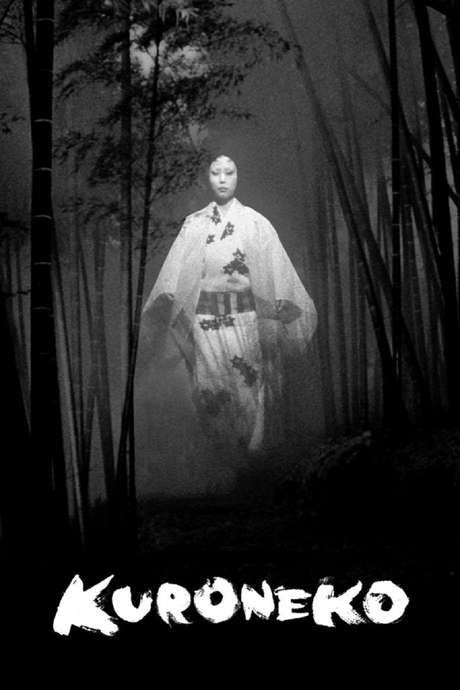


Featured on this page

What's After the Movie?
Not sure whether to stay after the credits? Find out!
Check out our other apps:

SAT Sphere
Build confidence for the Digital SAT.

Mori Atlas
Discover wild places worth protecting.

Luntero
Search smarter for a home in Amsterdam.

Plot Explained
Unravel movie endings and hidden clues.

Pokechamp
Dive into Pokémon data and battle logic.

Driving Theory
Get ready for your European theory test.

Movie Dust
Plan your next cinema trip with ease.

Musemap
Find art and culture as you travel.

Selkobase
Compare credentials before committing.

Local Manual
Turn an unfamiliar country into practical next steps.

Lernavi
Compare school systems before your next move.

GymRoam
Find a workout stop wherever your plans take you.
Explore Our Movie Platform
New Movie Releases (2026)
Famous Movie Actors
Top Film Production Studios
Movie Plot Summaries & Endings
Major Movie Awards & Winners
Best Concert Films & Music Documentaries
Movie Collections and Curated Lists
© 2026 What's After the Movie. All rights reserved.
Privacy Policy