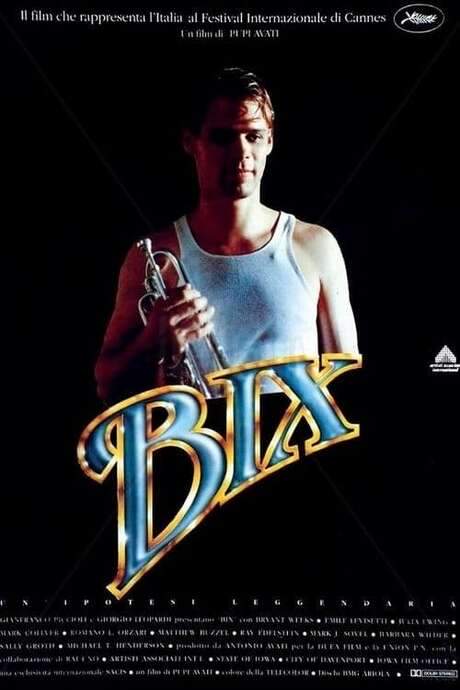



Bix Plot Summary
Read the complete plot summary and ending explained for Bix (1991). From turning points to emotional moments, uncover what really happened and why it matters.
Bryant Weeks plays American jazz cornetist Bix Beiderbecke in a richly detailed portrait of his life, tracing the personal tensions with family and the evolving web of collaborations that defined the 1920s jazz scene. The story threads through relationships with the era’s greats, including Hoagy Carmichael, Joe Venuti, Pee Wee Russell, Don Murray, and Paul Whiteman, with Romano Orzari delivering a memorable portrayal as Hoagy Carmichael, while Emile B. Levisetti brings Joe Venuti to life, Michael T. Henderson embodies Pee Wee Russell, and Matthew Buzzell steps into the role of Don Murray, grounding the narrative in a world of trumpet lines, violin bow strokes, and brass bright with the era’s energy. The film also nods to the legendary Paul Whiteman, sketching a broader musical landscape that shaped Bix’s ascent and the sound of a generation.
The film opens in October 1931 in New York City, two months after Bix Beiderbecke’s death. His brother, Mark Collver as Burnie, arrives in the city with a mission to locate Liza, the proposed fiancée of the deceased man. Burnie’s searches lead him to the Italian-American violinist Joe Venuti, a longtime friend and confidant who holds the key to the truth and the identity of the girl. Venuti, initially hesitant, agrees to help and reaches out to Liza, guiding her toward Bix’s hometown, Davenport, Iowa, in hopes of fulfilling the dying wishes of Bix’s mother, who yearns to meet the girl who meant so much to her son.
On the journey by train, it becomes clear that Liza never actually met Bix. Venuti uses the opportunity to recount not only how Bix came into contact with her, but also the brief, intense life of his friend, whom he had met somewhat by chance while pursuing an engagement with the Jean Goldkette orchestra. The narrative unfolds through a series of flashbacks that illuminate the rhythm and tempo of Bix’s world. It becomes evident that Bix could not read music and instead played by ear, a detail that underscores the immediacy and raw emotion of his playing. His breakthrough comes when he collaborates with the orchestra led by Frank Trumbauer, a figure with his own quirks who nonetheless becomes a protective mentor to Bix, helping him navigate the volatile waters of professional jazz life.
The film then traces how Bix’s talent blossomed in a landscape crowded with legendary names and ambitious ambitions. Through Trumbauer’s guidance and the momentum of the 1920s jazz revolution, Bix makes his mark, recording and performing with a sound that blends precise improvisation with intuitive, ear-driven intuition. The emotional thread of the story remains anchored in family dynamics, personal struggle, and the enduring bonds of friendship within the music community. Venuti’s recounting, and the memories shared by those who knew Bix, offer a portrait of a man whose life, though brilliant, was short, complicated, and deeply felt by those who loved his music.
The film culminates with Bix’s untimely death in 1931 in New York City, a moment that casts a poignant glow over the earlier memories. As the credits roll, photos of Bix and Liza in the Beiderbecke family home appear alongside images of his parents and family, a quiet testament to a life cut tragically short but forever echoing in the brass and melodies that defined an era.
Bix Timeline
Follow the complete movie timeline of Bix (1991) with every major event in chronological order. Great for understanding complex plots and story progression.
Opening in New York City after Bix's death
The film opens in October 1931 in New York City, about two months after Bix Beiderbecke's death. His brother Burnie arrives in the city to meet Liza, whom Bix had planned to marry. Burnie begins to probe Bix's life, trying to reconstruct where he worked and who knew the truth.
Burnie begins his search in the city
Burnie's investigations lead him to the circles that shaped Bix's career, as he talks to people who knew the trumpeter and his work. He pieces together fragments of Bix's life, preparing the ground for the revelation to come. The search sets the film's investigative mood.
Venuti joins the investigation and reaches out to Liza
Joe Venuti agrees to help Burnie uncover the truth and contacts Liza. He persuades her to follow him to Davenport, Iowa, so she can learn the real story behind Bix's life. Venuti's involvement links the contemporary investigation to Bix's musical past.
Liza and Venuti embark on a train journey to Davenport
During the long train journey to Davenport, Liza discovers that Bix and Venuti shared a complicated history in jazz. Venuti uses the trip to recount the short but intense life of his friend, revealing how Bix rose from obscurity to fame. The journey marks the transition from investigation to a series of flashbacks.
Arrival in Davenport and the mother's wish
The group arrives in Davenport, Iowa, where Bix's mother expresses a desire to meet Liza and understand her connection to her son. Venuti's storytelling continues as the truth about Bix's life begins to unfold for the first time. The hometown visit anchors the personal side of Bix's legend.
Bix Beiderbecke's beginnings: reading music vs ear
In flashbacks, we learn that Bix could not read music but played by ear, relying on his instinct and tone. His audacity and natural melodic sense lay the groundwork for his distinctive solo style. These moments explain how his sound captivated audiences despite not reading scores.
Bix joins Frank Trumbauer's orchestra
A major career breakthrough comes when Bix performs with Frank Trumbauer's orchestra and earns recognition within the jazz community. Trumbauer adopts him as a protegé, guiding his career and sheltering him from the rough edges of the music world. This partnership becomes the nurturing foundation of his early success.
Recording and rising fame with Trumbauer
Bix's playing and improvisational skill lead to acclaimed recordings with Trumbauer, cementing his reputation as one of jazz's brightest cornet talents. He climbs the ranks of the 1920s jazz scene, collaborating with leading musicians and bands. The success strengthens the bonds that will shape his brief but influential career.
Chance meeting with Jean Goldkette and the road to gigs
During his pursuit of a gig with the Jean Goldkette orchestra, Bix meets Venuti and forms a pivotal connection that expands his opportunities. This chance encounter ties him into a broader network of top jazz players. It marks a turning point that fuels his rise.
Collaborations with Hoagy Carmichael and fellow jazz greats
The film highlights Bix's collaborations with Hoagy Carmichael, Joe Venuti, Pee Wee Russell, Don Murray, and Paul Whiteman. Each association helps define his sound, showcases his versatility, and widens his influence on American jazz. These partnerships illustrate how Bix connected with some of the era's most important musicians.
Family conflicts with Bix's rise
As he becomes a rising star, Bix contends with conflicts within his family that complicate his life on the road and in the studio. The tensions reveal the personal costs of his intense schedule and dedication to music. The family dynamics mirror the wider pressures that surround his fame.
Bix Beiderbecke's death in New York City
The film culminates with Bix Beiderbecke's untimely death in 1931 in New York City. His passing marks the end of a brilliant but brief career. His loss reverberates throughout the jazz world and among his friends.
Closing credits montage
During the closing credits, photos of Bix and Liza appear in the Beiderbecke family home alongside those of his father and mother. The montage serves as a memorial, underscoring the human story behind the music. It ties together the living memory of Bix with the audience's sense of closure.
Bix Characters
Explore all characters from Bix (1991). Get detailed profiles with their roles, arcs, and key relationships explained.
Bix Beiderbecke (Bryant Weeks)
A gifted American jazz cornetist who cannot read music but plays by ear. His extraordinary talent fuels a rapid rise in the jazz world, even as family tensions complicate his life. The film traces his creative brilliance, personal struggles, and the fragile arc of a legend in the making.
Joe Venuti (Emile B. Levisetti)
Italian-American violinist who becomes a close ally and the keeper of Bix’s story. He helps Burnie uncover truth and shares intimate memories of Bix’s early collaborations. Venuti anchors the narrative in friendship, loyalty, and the power of shared musical history.
Hoagy Carmichael (Romano Orzari)
A prominent jazz musician who crosses paths with Bix, illustrating the era’s collaborative network. His presence reflects the social fabric of the 1920s jazz world and the impact of peer connections on a musician’s career.
Burnie Beiderbecke (Mark Collver)
Bix’s brother who travels to New York to meet Liza and uncover the truth about his sibling’s life. His investigative drive and family loyalty propel the central quest, highlighting the tension between memory and reality.
Liza (Debbon Ayer)
The woman Burnie seeks, who becomes a focal point of the narrative as her interactions provoke reflection on Bix’s life and relationships. Her presence pushes the story toward Davenport and the unveiling of past events.
Pee Wee Russell (Michael T. Henderson)
A fellow jazz musician in Bix’s orbit, representing the interconnected circle of players who contributed to the distinctive sound of the era. He embodies the collaborative spirit of the Jazz Age.
Don Murray (Matthew Buzzell)
Another member of the jazz scene connected to Bix’s career and the broader social world surrounding his music. He helps illustrate the network of musicians who shaped Bix’s era.
Agatha (Julia Ewing)
A supporting character in Bix’s world who contributes to the ensemble of people around his life. Her role adds texture to the social spectrum of the narrative.
Bix Settings
Learn where and when Bix (1991) takes place. Explore the film’s settings, era, and how they shape the narrative.
Time period
1931
The film unfolds primarily in 1931, two months after Bix Beiderbecke’s death, anchoring the narrative in the aftermath of a life cut short. Flashbacks transport viewers to the 1920s, when Bix rises within the Frank Trumbauer circle and forges his reputation as a prodigious cornetist who reads by ear. The period blends the tail end of the Roaring Twenties with the early hardships of the Depression, highlighting the fragility of fame.
Location
New York City, Davenport, Iowa
The story opens in New York City in October 1931, placing it in the final days of the Jazz Age. It then moves to Davenport, Iowa, the trumpeter’s hometown and a key stop for uncovering his life story. A cross-country train journey links these settings, showing how the music world spans both bustling cities and Midwestern roots.
Bix Themes
Discover the main themes in Bix (1991). Analyze the deeper meanings, emotional layers, and social commentary behind the film.
🎷
Jazz Life
The film centers on a genius who cannot read music but feels every note, exploring how talent shapes identity and choice within the Jazz Age. It chronicles the vibrant yet demanding social world of 1920s jazz, including collaborations, performances, and the pressures of rising stardom. Music acts as both a personal compass and a communal bond that ties characters together across time. The narrative frames jazz as a living tradition carried forward by memory and artifact—records, stories, and performances.
🤝
Friendship and Mentorship
Bix’s career is defined by friendships and loyalties within the jazz ecosystem, notably Venuti and Trumbauer who guide and shield him. These bonds illustrate how mentorship can shape artistic voice, opportunities, and resilience in tough times. The relationships provide a human counterpoint to fame, showing care, trust, and the sharing of life stories. Together, they reveal how the music survives through collaborative support and shared history.
🕯️
Legacy and Loss
The film culminates in Bix’s untimely death and the enduring memory of his life. Burnie’s quest to uncover the truth, aided by Venuti’s storytelling, frames memory as a way to honor the fallen and understand personal history. The closing images—family photos and a quiet tribute—emphasize lineage, memory, and the way a life can continue to influence others after death. The story treats loss as both a personal tragedy and a catalyst for artistic legend.

Coming soon on iOS and Android
The Plot Explained Mobile App
From blockbusters to hidden gems — dive into movie stories anytime, anywhere. Save your favorites, discover plots faster, and never miss a twist again.
Sign up to be the first to know when we launch. Your email stays private — always.
Explore the mobile appBix Spoiler-Free Summary
Discover the spoiler-free summary of Bix (1991). Get a concise overview without any spoilers.
In the bustling aftermath of the Roaring Twenties, the film immerses the viewer in a world where the clatter of train wheels and the hiss of brass intersect with the intimacy of a family kitchen. The story is anchored by Bix Beiderbecke, a gifted yet troubled cornetist whose uncanny ability to coax melody from his instrument by ear makes him a magnetic figure in a scene dominated by formal scores. The tone is both reverent and restless, echoing the improvisational spirit of a generation trying to capture fleeting moments of brilliance before they dissolve into silence.
When the narrative opens, Burnie—Bix’s loyal brother—arrives in New York City on a quiet, personal mission: to locate Liza, a young woman once spoken of as Bix’s intended. Their journey begins aboard a cross‑country train, a moving tableau of 1930s America where conversations drift between lingering grief and hopeful curiosity. Along the way, Joe Venuti, an Italian‑American violinist and longtime confidant, becomes the conduit through which memories surface, offering a gentle, reflective perspective that frames the larger portrait of Bix’s life.
Surrounding the central duo is a constellation of iconic collaborators who illuminate the era’s creative ferment. Hoagy Carmichael appears as a charismatic songwriter whose easy charm balances the intensity of the studio, while Frank Trumbauer serves as a protective mentor whose own idiosyncrasies reveal the delicate politics of the jazz world. The presence of Paul Whiten, the era’s bandleader, hints at the broader musical landscape that both nurtured and challenged Bix’s ascent. Their interactions are rendered with a warm, textured elegance, emphasizing the camaraderie and subtle rivalries that defined the scene.
The film’s mood is a blend of nostalgic lyricism and quiet melancholy, underscored by the persistent pulse of a trumpet’s lament and the soft rustle of a violin’s bow. It invites viewers to feel the tension between artistic ambition and personal frailty, suggesting that the true resonance of Bix’s legacy lies not only in the notes he left behind but also in the relationships that shaped his brief, luminous journey.
Movies with Similar Twists and Themes
Uncover films that echo the narrative beats, emotional arcs, or dramatic twists of the one you're exploring. These recommendations are handpicked based on story depth, thematic resonance, and spoiler-worthy moments — perfect for fans who crave more of the same intrigue.




Featured on this page

What's After the Movie?
Not sure whether to stay after the credits? Find out!
Check out our other apps:

SAT Sphere
Build confidence for the Digital SAT.

Mori Atlas
Discover wild places worth protecting.

Luntero
Search smarter for a home in Amsterdam.

Plot Explained
Unravel movie endings and hidden clues.

Pokechamp
Dive into Pokémon data and battle logic.

Driving Theory
Get ready for your European theory test.

Movie Dust
Plan your next cinema trip with ease.

Musemap
Find art and culture as you travel.

Selkobase
Compare credentials before committing.

Local Manual
Turn an unfamiliar country into practical next steps.

Lernavi
Compare school systems before your next move.

GymRoam
Find a workout stop wherever your plans take you.
Explore Our Movie Platform
New Movie Releases (2026)
Famous Movie Actors
Top Film Production Studios
Movie Plot Summaries & Endings
Major Movie Awards & Winners
Best Concert Films & Music Documentaries
Movie Collections and Curated Lists
© 2026 What's After the Movie. All rights reserved.
Privacy Policy