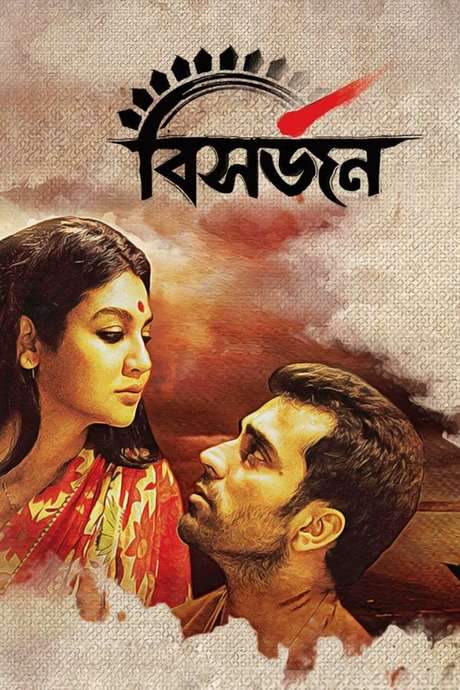
What Is Bishorjan About?
The premise of Bishorjan in 276 words, with nothing given away. The full story follows below.
In the shadow of the Ichamati River, where the waters mark the uneasy line between West Bengal and Bangladesh, the annual Durga Bishorjon erupts in a riot of colour, song, and devotion. Against this backdrop a quiet village swells with the fevered joy of the immersion, yet for Padma, a widowed mother, the festivities stir a deeper, more private reverie. She stands at the river’s edge each year, caught between the collective roar of celebration and the intimate echo of a memory that lingers from a previous Bishorjon, a reminder of both loss and the enduring pulse of tradition.
Life in the border village is marked by the daily interweaving of cultures and histories that were once seamless before the Partition cleaved the land. Naseer, a man from the opposite bank, arrives under uncertain circumstances, his presence a ripple that unsettles the delicate balance of the community. His unexpected encounter with Padma during the immersion ceremony opens a space where questions of identity, belonging, and the lingering weight of divided families surface, hinting at the subtle ways personal stories are still shaped by the river’s divide.
Nearby, Ganesh, a middle‑aged landowner who has long observed Padma and her son, carries his own quiet longing. His watching eyes and unspoken feelings add another layer to the tapestry of connections that the festival weaves. The film breathes with a tone that is at once jubilant and melancholy, using the vivid, kinetic energy of Durga Bishorjon to underscore the softer, more contemplative currents that run beneath—memories of a shared past, the ache of separation, and the fragile hope that love and remembrance might bridge even the widest of rivers.
What Happens in Bishorjan?
The complete story of Bishorjan, from the first scene to the last, in 403 words (about 2 minutes). Spoilers throughout. Names in the text link to 3 cast member pages.
Spoilers ahead
Padma, Jaya Ahsan, a Hindu widow living in a quiet border village on the Bangladeshi side, refuses to witness Durga Bishorjon with her son. The festival, a grand tradition that travels across borders, culminates in the immersion of huge Durga idols into the Ichamati River, a watercourse that literally divides two lands and two communities. As the crowd cheers and colors spill into the current, Padma’s mind drifts back to a Bishorjon from years past, revealing how memory and place shape her choices in the present.
After the partition of India, Bengal is carved into East Pakistan (later Bangladesh) and West Bengal, India. Border tensions sharpen, and neighbors grow distant as lines on a map harden into everyday life. In this fragile atmosphere, Padma saves Nasir Ali, Abir Chatterjee, a West Bengali Muslim man who had nearly drowned in the river during Bishorjon, and shelters him in her home. To conceal his uncertain citizenship, they claim he is her cousin, hoping the truth can stay hidden in the village.
Ganesh, Kaushik Ganguly, a middle-aged jamidar who admires Padma, grows suspicious of Nasir. The two men, bound by different destinies, confront how a river can split people who share a history and a homeland, turning kinship into a question of borders rather than blood.
Padma dreams of sending Nasir back to India. Nasir confides that his drowning story was a lie and reveals ties to the black market that complicate his stay. Padma’s father-in-law dies, and Nasir worries for her safety now that Ganesh keeps a watchful eye over the village. Still, Padma urges him to stay calm, and to ready himself for a possible return to West Bengal.
Ganesh declares his love for Padma and vows to wait. To help, Padma agrees to marry Ganesh in exchange for his assistance in smuggling Nasir across the border.
On Bijoya Doshomi, the night before Nasir’s departure, Padma loosens her restraint, drinks, and bares her pain to Nasir. The moment of passion complicates their vow, and the next day Padma parts from Nasir with a tearful goodbye, sending him away with a gift for Ayesha. Nasir promises to end his black-market business. Ganesh escorts Padma to his home as Nasir departs. Padma marries Ganesh, and she refuses to go to see Bishorjon in Ichamati; her little son leaves with Ganesh. In a final, shattering reveal, the boy carries Nasir’s birthmark, proving that he is Nasir’s son.
Bishorjan Timeline: Every Key Event in Order
12 key events in the order they happen, from “Opening scene: Refusal to join Bishorjon and memory” to “Revealed lineage”. 12 events name a place, across 9 locations.
- 1
Opening scene: Refusal to join Bishorjon and memory
A young Hindu woman refuses to attend Durga Bishorjon with her son, signaling a heavy burden she carries. The festival's joyous rites unfold around her as she grapples with memory from her past. The scene sets up the tension between communal celebration and personal pain.
When:Present during the Bishorjon festival Where:Bengal village
- 2
Bishorjon immersion and border divide
During Durga Bishorjon, idols are immersed in the Ichamati River, a waterway that marks the border between East Bengal and India. The grand celebration sits at odds with the division it underscores. The river becomes a visual metaphor for distance between people who share an ethnicity.
When:Durga Bishorjon immersion Where:Ichamati River, border area
- 3
Partition reshapes Bengal
In the wake of the partition, Bengal is split into East Pakistan (Bangladesh) and West Bengal, and border tensions rise. People drift apart as new national lines harden old friendships. Padma, a Hindu widow, lives in a village on the Bangladeshi side with her aging father-in-law.
When:Post-1947 partition Where:Bangladesh-side Bengal village
- 4
Padma saves Naseer
One day, Padma rescues a West Bengali Muslim man, Naseer, who nearly drowns in the river during Bishorjon and she cares for him. To avoid suspicion, they pretend he is her cousin and keep him hidden. Naseer's illegal status sets the stakes for their fragile alliance.
When:During Bishorjon after partition Where:Village on the Bangladeshi side, near Ichamati
- 5
Ganesh notices Naseer
Ganesh, a middle-aged jamidar and Padma's admirer, grows suspicious of Naseer and begins watching him. His concern is driven by fear of Naseer's true identity and possible illegal residency. The watcher becomes a looming threat to their precarious arrangement.
When:Shortly after Naseer's arrival Where:Padma's village
- 6
Love blooms and a dangerous confession
Padma and Naseer develop a deep, forbidden bond as they navigate their perilous situation. Naseer reveals that he did not drown and hints at his ties to the black market, complicating Padma's loyalty. Padma's empathy clashes with fear for safety.
When:Weeks into their arrangement Where:Padma's village
- 7
The father-in-law dies; Padma's vulnerability
Padma's father-in-law dies, leaving her more exposed in a world where Ganesh and Naseer circle her. Naseer worries about Padma's safety as a young widow in the village. The loss deepens her isolation and dependence on fragile alliances.
When:Shortly after the confession Where:Padma's home
- 8
Padma chooses a path: marriage to Ganesh for Naseer's return
Padma resolves to send Naseer back to India and seeks Ganesh's help. Ganesh confesses his love and offers to wait for her, and Padma agrees to marry him to secure his aid in smuggling Naseer to West Bengal. This alliance marks a strategic turn in their dangerous game.
When:Before Naseer's departure Where:Padma's village
- 9
Night of confession and consummation
The night before Naseer's departure, Padma drinks and vents her pain to Naseer. They give in to their feelings and make love, intensifying the emotional stakes. The moment seals their fateful entanglement.
When:Night before departure Where:Padma's home
- 10
Farewell and transition
The next day, Padma bids a tearful goodbye to Naseer and sends him away with a gift for Ayesha. Ganesh takes Padma to his house as Naseer leaves, signaling a pivot in her loyalties. This marks her entry into a new, complicated marriage.
When:Departure day Where:Border village
- 11
Bijoya Doshomi marriage
Padma marries Ganesh, a marriage cemented on Bijoya Doshomi. She refuses to go to see Bishorjon in Ichamati, signaling a personal distance from the festival and from her past.
When:Bijoya Doshomi night Where:Ganesh's house
- 12
Revealed lineage
Her little son leaves with Ganesh, and the final reveal shows that the child is Naseer's son due to a shared birthmark. The birthmark becomes the crucial hint that ties their fates together. The film closes on the note of a complicated inheritance and unresolved cross-border ties.
When:End of film Where:Village near Ichamati
Who Are the Main Characters in Bishorjan?
4 characters, among them Nasir Ali (Abir Chatterjee), Ganesh (Kaushik Ganguly) and Padma (Jaya Ahsan): who each one is and the part they play in the story. Every profile links to the actor’s page.
- NA
Nasir Ali (Abir Chatterjee)
Played by Abir Chatterjee
A West Bengali man living in Bangladesh with an implied illegal status who becomes entangled in Padma’s life. His charm masks secrets, including ties to the black market. He is capable of deception, yet his feelings for Padma reveal a vulnerable, conflicted side as circumstances push him toward risky choices.
- ⚖️ Illicit border activity
- 💘 Romance
- 🤐 Secretive
- G(
Ganesh (Kaushik Ganguly)
Played by Kaushik Ganguly
A middle-aged jamidar who admires Padma and acts as both protector and obstacle in Naseer’s plan. He declares his love for Padma and agrees to help in exchange for marriage, showing a practical, if conflicted, willingness to bend rules for family and affection.
- 🏡 Landowner
- ❤️ Love
- 🛡️ Protector
- P(
Padma (Jaya Ahsan)
Played by Jaya Ahsan
A Hindu widow living in a Bangladeshi village who displays resilience, compassion, and strategic thinking. She shields Naseer, navigates pressure from her community, and ultimately marries Ganesh to facilitate Naseer’s return, bearing the emotional toll of her decisions. Her arc centers on duty, desire, and survival after loss.
- 💔 Widow
- 💖 Compassionate
- 🧭 Determined
- L(
Lau (Lama Halder)
Played by Lama Halder
Padma's aging father-in-law in the Bangladeshi village, a traditional figure representing family authority and the weight of generational expectations. His presence and eventual death mark turning points in the family dynamics and community pressures.
- 👴 Elderly
- 🏡 Family patriarch
- 🕊️ Traditional
Where and When Is Bishorjan Set?
Bishorjan is set in Ichamati River border region and Padma's Bangladeshi village (Late 1940s, post-partition era). Here is why the time and place matter to the story.
When
Late 1940s, post-partition era
Set in the immediate aftermath of the Partition, Bengal is split between nations and communities wrestle with new borders. The film uses this era to explore how families adapt to political boundaries, shifting loyalties, and the fragility of ordinary life near a contested frontier.
Where
Ichamati River border region, Padma's Bangladeshi village
The story unfolds along the Ichamati River, the natural border that divides East Pakistan (Bangladesh) from West Bengal, India. Padma's Bangladeshi village sits beside the river, a tight-knit community shaped by tradition and tension from partition. The Durga Bishorjon festival and the river’s flow anchor the setting, underscoring how geography tests relationships across a divided land.
- 🌊 River-border region
- 🕌 Bengali culture
What Are the Themes of Bishorjan?
3 ideas the story keeps returning to, among them Forbidden Love, Borders & Identity and Memory & Loss.
-
01
Forbidden Love
Padma and Naseer’s romance crosses a political and social divide, testing loyalty, duty, and personal safety. Their bond demands sacrifices and prompts difficult choices, including Padma’s arrangement with Ganesh to help Naseer. The relationship exposes the costs of pursuing love in a divided land.
-
02
Borders & Identity
The Ichamati River stands as both a physical barrier and a symbol of divided identities among people who share ethnicity and culture. Partition reshapes who belongs to which nation, yet the characters’ memories and roots persist across the water. The film probes how identity endures even when borders redraw lives.
-
03
Memory & Loss
Past Bishorjon memories mingle with present loneliness, and the death of Padma’s father-in-law deepens the sense of loss. The narrative binds memory to future lineage through a final revelation about Padma’s son, linking love, fate, and the shadows of the past.
What Kind of Film Is Bishorjan?
Melancholic in tone, with slow pacing and a moderate story, going by the plot summary.
- Tone
- Melancholic
- Pacing
- Slow
- Story
- Moderate
- Intensity
- Medium
- Ending
- Bittersweet
A slow, melancholic drama steeped in cultural tradition and personal memory, where a poignant love story unfolds against the backdrop of a divided land, culminating in a quiet, bittersweet sacrifice.
- melancholic
- reflective
- yearning
- somber
- poignant
- quiet
- forbidden romance
- cultural divide
- grief and loss
- political borders
Quiz
How well do you remember Bishorjan? Test yourself on the story.