What Is Beyond a Reasonable Doubt About?
The premise of Beyond a Reasonable Doubt in 312 words, with nothing given away. The full story follows below.
In a bustling mid‑century metropolis where headlines shape public conscience, Austin Spencer runs a powerful newspaper with a fierce commitment to justice. His editorials echo an almost philosophical opposition to capital punishment, arguing that the legal system can too easily turn hints into convictions. The city’s atmosphere crackles with political ambition, a hard‑lined district attorney, and a public that hangs on every printed word, creating a backdrop ripe for a daring experiment in truth and perception.
Enter Tom Garrett, a celebrated novelist and the husband‑to‑be of Spencer’s daughter. Though accustomed to weaving fiction, he is drawn into a real‑life performance at Spencer’s urging. The seasoned publisher proposes a calculated hoax: planting deceptive clues that appear to tie Tom to the unsolved murder of a nightclub dancer. The ruse is designed to expose the fragility of circumstantial evidence and to force the district attorney into a public reckoning. Tom’s literary instincts clash with the moral weight of manipulating the law, setting up a tension that flickers between intellectual curiosity and ethical dread.
Susan, poised to inherit the newspaper, watches the scheme unfold with a mixture of devotion to her father’s ideals and worry for her fiancé’s future. Their relationships become a delicate dance of loyalty, ambition, and the fear of being consumed by the very story they are trying to prove. The trio’s interactions are laced with sharp dialogue, understated humor, and an undercurrent of unease that mirrors the city’s own restless pulse.
The film’s tone balances a sleek, noir‑tinged aesthetic with the cerebral rhythm of a courtroom drama. Shadows linger in newspaper offices, rain slicks the neon‑glow of nightclubs, and the hum of typewriters underscores the stakes of every fabricated piece of evidence. As the plan takes shape, the audience is invited to contemplate how easily perception can be forged, and whether a noble intention can survive the messiness of real‑world consequences.
What Happens in Beyond a Reasonable Doubt?
The complete story of Beyond a Reasonable Doubt, from the first scene to the last, in 535 words (about 2 minutes). Spoilers throughout. Names in the text link to 1 cast member page.
Spoilers ahead
Austin Spencer, a wealthy newspaper publisher who openly opposes the death penalty, believes the system can convict and execute innocent men based on circumstantial clues. He enlists his daughter Susan’s fiancé, Tom Garrett, a successful novelist and former employee, to participate in a calculated hoax designed to expose what he sees as an overzealous district attorney and a punitive appetite for capital punishment. The plan is simple in concept but dangerous in execution: Tom will plant misleading clues that point to his own guilt in the murder of a nightclub dancer, Patty Gray, with Spencer ready to reveal the set-up publicly to advance his political agenda once Tom is convicted.
Tom agrees to participate and begins his investigation into Patty’s murder by getting close to one of Patty’s former fellow dancers, all while maintaining the veneer of a genuine investigation. The trap closes when Tom appears to attack the dancer and is arrested, later being convicted and sentenced to death for Patty’s murder. The evidence against him is not entirely accidental; it is the very physical trail that Spencer and Tom crafted together, meticulously designed to look like real proof. As the case unfolds, the city braces for the execution, and the hoax seems poised to achieve its political objective.
But fate intervenes in a dramatic turn: Spencer dies in a car accident while on his way to present exonerating documents. The staged photographs and a paper trail of purchases used to fuel the setup burn beyond recognition in the fiery wreck, leaving Tom with no immediate way to prove his innocence. On death row, Tom fights to convince the district attorney that the entire case was manufactured, a pivotal effort to salvage his life when the truth seems to vanish with the ashes.
With the newspaper now under Susan’s control, she publishes an incisive editorial that attacks the district attorney and supports Tom’s version of events. The editorial stirs public interest and prompts the trial judge to consider reopening the case, though he ultimately resists. As more pressure mounts, a handwritten statement left by Spencer—intended to be read after his death—arrives and validates Tom’s story, forcing the DA to acknowledge a grave mistake and to free Tom. A pardon seems imminent as the governor prepares for a ceremonial press conference signing the clemency.
Yet the final act reveals a chilling twist. While Tom and Susan await the pardon, Tom casually reveals Emma—the murder victim’s real name—had never been disclosed during the trial. This detail confirms that Emma was Tom’s estranged wife, whom he had murdered years earlier when she threatened to derail his rising career and marriage plans with Susan. The revelation places Susan in a terrible dilemma: protect Tom or reveal the truth. She hesitates, unable to make the decisive call, and a critical phone line to the governor becomes tied up in the moment of truth. Just as the governor is about to sign the pardon, he receives Susan’s explosive disclosure. The pardon is canceled, Tom is taken away, and the grim possibility of execution looms once again. The movie closes on a note of moral ambiguity, with the question of guilt, responsibility, and the price of manipulation hanging in the air.
Beyond a Reasonable Doubt Timeline: Every Key Event in Order
13 key events in the order they happen, from “Spencer recruits Tom for a death-penalty hoax” to “Tom is taken away to be executed”. 13 events name a place, across 13 locations.
- 1
Spencer recruits Tom for a death-penalty hoax
Austin Spencer, a wealthy newspaper publisher, uses his influence to push an ambitious plan against the death penalty. He convinces Tom Garrett, his daughter Susan's fiancé, to participate in a staged investigation designed to trap Tom in a murder conviction. The goal is to expose the DA and prove how easily circumstantial evidence can secure a death sentence.
When:early planning phase Where:Spencer's mansion
- 2
Tom starts undercover research and romance
Tom immerses himself in Patty Gray's world, researching the case by romancing one of her former fellow dancers. He collects details and builds a plausible backstory to support the hoax without arousing suspicion. The undercover work marks the transition from planning to active execution of the scheme.
When:early investigation phase Where:Patty Gray's circle and nightclub
- 3
Tom is arrested during the staged confrontation
As part of the pretext, Tom is arrested while seemingly attacking the dancer. The authorities are prompted to investigate Patty Gray's murder, and the staged evidence begins to pull together. The arrest marks the first concrete step toward Tom's conviction under the hoax.
When:shortly after planning Where:city police station
- 4
Tom is convicted and sentenced to death
The physical evidence that Spencer and Tom planted convinces the court of Tom's guilt. He is convicted and condemned to death for Patty Gray's murder, seemingly validating the hoax's premise. Spencer prepares to reveal the setup as a political stand against capital punishment.
When:shortly after conviction Where:courthouse
- 5
Spencer dies in a car accident
On the way to present exonerating evidence, Spencer is killed in a car crash. The staged photos and receipts used to support the setup are burned beyond recognition in the fiery wreck. With his death, the planned reveal loses its primary orchestrator.
When:en route to evidence presentation Where:highway
- 6
Tom on death row; Susan fights in the press
Left without Spencer, Tom remains on death row and presses the DA to admit the evidence was planted. Susan, now running the newspaper, publishes an editorial blasting the DA and backing Tom's story, fueling public support for a case review. The public campaign begins to shift the political climate around the case.
When:days after conviction Where:death row / newsroom
- 7
Judge considers reopening; ultimately refuses
The editorial and growing public pressure prompt the trial judge to consider reopening the case. After reviewing the new public sentiment and arguments, the judge decides against retrial, maintaining the status quo while the truth remains contested. The legal deadlock deepens as new evidence circulates.
When:shortly after editorial Where:courtroom / judge's chambers
- 8
Handwritten statement raises the hoax's credibility
A handwritten note left by Spencer, to be read if he dies, is discovered just hours before Tom's execution. The document confirms the possibility that the murder case could be a carefully constructed hoax and lends credence to Tom's claim of planted evidence. The discovery injects a fragile hope into Tom's remaining appeals.
When:hours before execution Where:Spencer's desk
- 9
DA Thompson frees Tom in light of new facts
With the note in hand and public pressure mounting, DA Thompson admits he was wrong and orders Tom's release. A governor's pardon is announced, signaling an official reversal and the potential for exoneration. The case appears to reach a pivotal turning point.
When:moments after note discovery Where:DA's office
- 10
Tom confesses Emma's identity to Susan
Shortly before the pardon, Tom tells Susan the real name of the victim and reveals that he was the killer who murdered his estranged wife, Emma. Susan realizes Tom's guilt and faces a moral dilemma about whether to expose the truth. The revelation jeopardizes the forthcoming pardon and their relationship.
When:hours before press conference Where:Susan's home
Show the other 3 events of Beyond a Reasonable Doubt Hide the last 3 events
- 11
Susan wrestles with exposing the truth
Tormented, Susan contemplates reporting Tom's confession but struggles to act on it. She attempts to reach the governor by phone to reveal the full truth, yet she cannot bring herself to follow through. The newsroom atmosphere becomes tense as the final decision looms.
When:moments before press conference Where:Susan's newsroom
- 12
Pardon canceled; governor reverses decision
During the scheduled pardon press conference, a call to the governor arrives that reveals Susan's conflict. He cancels the pardon as the truth comes to light, and Tom is led away to face an uncertain fate. The political narrative collapses under the weight of the revealed murder.
When:at the moment of the press conference Where:press conference room
- 13
Tom is taken away to be executed
With the pardon withdrawn, Tom is escorted to the prison and eventually led to execution later that night. The hoax's perverse success is overshadowed by the real tragedy of his crime and the tumultuous revelations that followed. Susan's decision remains unresolved in the public eye as the film closes.
When:that night Where:prison
Who Are the Main Characters in Beyond a Reasonable Doubt?
7 characters, among them Tom Garrett (Dana Andrews), Susan Spencer (Joan Fontaine) and Austin Spencer (Sidney Blackmer): who each one is and the part they play in the story. 6 of them link to the actor’s page.
-
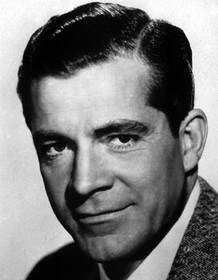
Tom Garrett (Dana Andrews)
Played by Dana Andrews
Successful novelist and former employee who agrees to a staged hoax to expose overzealous prosecution. He is charming and resourceful, able to blend into the role of a suspect while staying one step ahead. His calculations drive the plot, but his own secret past complicates his fate. By the end, Tom's contrived innocence clashes with a real crime he has committed.
- 🧠 Clever
- 🕵️♂️ Calculating
- 💼 Ambitious
-

Susan Spencer (Joan Fontaine)
Played by Joan Fontaine
Editor and the driving force behind the newspaper's response to the case. She shifts from observer to active force, using reporting to challenge the district attorney and mobilize public opinion. Her loyalty to Tom is tested as the truth about his past emerges. She ultimately chooses to reveal the crime even as it threatens her relationship with Tom.
- 📰 Investigative
- 💪 Determined
- 🗣️ Courageous
- AS
Austin Spencer (Sidney Blackmer)
Played by Sidney Blackmer
Wealthy newspaper publisher and reform-minded patron who believes in exposing flaws in the justice system. He orchestrates the hoax to demonstrate how easily a case can be manipulated. His death in a car accident abruptly ends the plan, leaving others to face the consequences.
- 🎭 Visionary
- 💼 Powerful
- 🧭 Calculated
- RT
Roy Thompson (Philip Bourneuf)
Played by Philip Bourneuf
Ambitious district attorney who drives the case with zeal and self-assurance. He becomes a casualty of the hoax when the planted evidence looks convincing. He is forced to confront the limits of prosecutorial power as the truth emerges.
- ⚖️ Prosecution
- 🕵️ Overzealous
- 🧩 Flawed judgment
- PG
Patty Gray
Nightclub dancer whose murder provides the central setup for the hoax. Her death is the catalyst that drives the prosecution and the media's involvement. She represents the real victim that reveals the fragility of fabricated evidence.
- 🎭 Nightlife
- 💔 Victim
- 🕵️♂️ Catalyst
- G(
Governor (Charles Evans)
Played by Charles Evans
Political authority who ultimately decides whether to pardon Tom. His decision is influenced by new information and the newspaper's campaign to reveal the truth.
- 🏛️ Authority
- 🗳️ Politics
- J(
Judge (Rusty Lane)
Played by Rusty Lane
Presiding judge who initially resists reopening the case, embodying the formal limits of the system. His decisions shift under pressure from new evidence and public sentiment.
- ⚖️ Judicial system
- 🕰️ Deliberation
Where and When Is Beyond a Reasonable Doubt Set?
Beyond a Reasonable Doubt is set in Courtroom, Newspaper Office, Prison, Nightclub and City Streets (1950s). Here is why the time and place matter to the story.
When
1950s
Set in the 1950s, the story mirrors postwar debates on capital punishment and media-driven justice. It captures the era's fast-paced news cycle and the sense that headlines can determine outcomes. The setting emphasizes the fragility of due process when public sentiment becomes a player in a case.
Where
Courtroom, Newspaper Office, Prison, Nightclub, City Streets
Set against a bustling urban backdrop, the film moves through a courthouse, a newspaper office, and the streets of a big American city. Key scenes unfold in a nightclub where clues are gathered, a newsroom where public opinion is shaped, and a prison where the protagonist faces execution. The locations together form a web of public power, media influence, and legal procedure.
- 🗽 Urban setting
- 🕰️ 1950s era
- ⚖️ Legal drama
What Are the Themes of Beyond a Reasonable Doubt?
4 ideas the story keeps returning to, among them Justice & Manipulation, Media Power and Guilt & Truth.
-
01
Justice & Manipulation
Justice in the film is shown to be vulnerable to strategy and manipulation. Austin Spencer's plan turns a real murder into a staged lesson about the system, exposing how circumstantial clues can be manufactured. Tom Garrett's conviction demonstrates how quickly truth can be bent when power and publicity are at stake. The twist—Spencer's death and Tom's eventual confession—leaves the audience questioning whether the ends ever justify the means.
-
02
Media Power
The newspaper is a battleground where editors wield influence over public perception. Susan Spencer inherits the paper and uses it to challenge the district attorney and mobilize opinion against wrongful prosecution. The hoax is designed to play to readers and judges alike, showing the media's capacity to shape a case. The climax reveals that press coverage can both reveal truth and push toward questionable shortcuts.
-
03
Guilt & Truth
Several layers of guilt complicate the story beyond a straightforward murder case. Tom's original crime (Emma) is only disclosed through a carefully placed revelation, forcing characters to reconsider what they believed. The plot keeps shifting the line between innocence and responsibility, making the audience question who truly deserves mercy. The film suggests truth is fragile, often built on what gets publicly proven rather than what is secretly true.
-
04
Public Punishment
Capital punishment becomes a central motif, highlighting the performative nature of justice. The forged evidence and hurried executions reveal how fear of crime can drive extreme measures. When a pardon is nearly secured and then canceled, the system's fallibility is exposed. The governor's intervention underscores that punishment is not only legal but deeply political.
What Kind of Film Is Beyond a Reasonable Doubt?
Tense in tone, with steady pacing and a complex story, going by the plot summary.
- Tone
- Tense
- Pacing
- Steady
- Story
- Complex
- Intensity
- High
- Ending
- Bleak
A tense and morally complex crime thriller that builds relentless anxiety around a dangerous hoax gone wrong, culminating in a bleak and cynical twist that leaves the audience questioning justice and truth.
- suspenseful
- anxious
- cynical
- grim
- morally ambiguous
- high stakes
- false conviction
- death penalty
- political manipulation
- media influence
Content notes: capital punishment, false imprisonment, fatal car accident, murder.
Quiz
How well do you remember Beyond a Reasonable Doubt? Test yourself on the story.
Where to Watch Beyond a Reasonable Doubt
Stream it on Plex, or rent or buy it from Amazon Video and Apple TV Store. US availability and prices from JustWatch.
Stream 2
 Plex
Plex  Plex Channel




Streaming availability in the US, powered by