
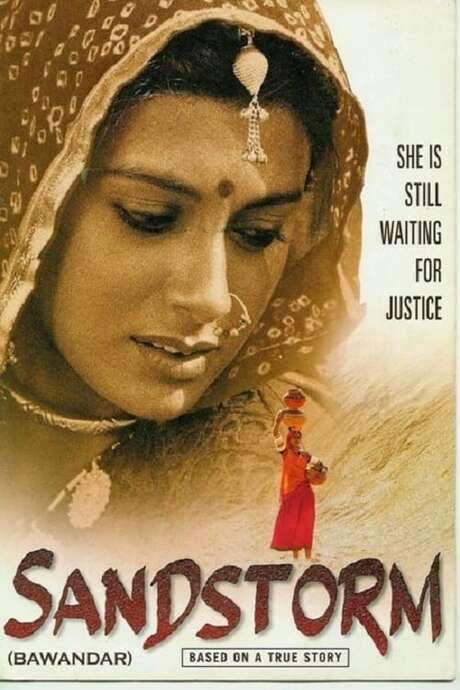
What Is Bawandar About?
The premise of Bawandar in 285 words, with nothing given away. The full story follows below.
In the dust‑kissed landscape of rural Rajasthan, a tight‑knit community lives under the weight of long‑standing customs that shape every facet of daily life. The village of Dhabri pulses with the sounds of potters’ wheels, rickshaw wheels on uneven roads, and the whispered prayers of women whose futures are often bound by tradition. A quiet, sun‑baked world unfolds, where the rhythm of survival is interwoven with the unspoken expectations that govern gender and caste.
Shoba T. Mathur, an earnest government officer, arrives with a mandate to spark awareness about child marriage and the restrictive interpretations of ancient texts that hinder women’s agency. Her mission leads her to Saanvri, a resilient housewife and mother who balances the demands of raising children with the modest trade of pottery. Drawn together by a shared sense of purpose, they form a partnership that aims to illuminate hidden injustices, offering a tentative bridge between institutional intent and grassroots reality.
Across the desert’s edge, Amy, a foreign reporter, arrives with a notebook and a burning curiosity to uncover the deeper stories beneath headlines. Accompanied by her interpreter Ravi, she is guided by Sohan, a rickshaw‑puller whose intimate knowledge of the terrain and its people opens doors to conversations that rarely surface in the open. Their journey weaves together outsider perspectives and local insight, hinting at the complex tapestry of voices that compose Dhabri’s hidden narrative.
The film moves with a measured, contemplative tone, balancing the stark beauty of the Rajasthan setting against the simmering tensions that arise when change challenges entrenched beliefs. It captures the fragile hope that blossoms when ordinary individuals begin to question the status quo, hinting at a larger struggle that reverberates far beyond the village’s modest borders.
What Happens in Bawandar?
The complete story of Bawandar, from the first scene to the last, in 652 words (about 3 minutes). Spoilers throughout. Names in the text link to 8 cast member pages.
Spoilers ahead
Bawandar is based on the true story of Bhanwari Devi’s gang-rape case. The names of characters and places have been changed for legal reasons. For example, Bhanwari’s character is called Sanwari Nandita Das, her husband Mohan’s character is called Sohan Raghubir Yadav, and their village is called Dhabri (Bhateri in real life).
The story unfolds through the eyes of Amy Laila Rouass, a foreign reporter who has read about Sanwari’s case in a newspaper. Five years after the assault, Amy and her friend-cum-interpreter Ravi Rahul Khanna travel to Rajasthan to uncover the truth. Their journey begins with a chance meeting in the desert town, where they encounter Sohan, a rickshaw-puller who becomes their guide and reveals the thread of Sanwari’s life and the community’s response to the crime.
Sanwari lives with Sohan in a small, low-caste Kumhar (potter) family. They are depicted as a hardworking couple who make pots while Sohan drives a rickshaw to support their two children. Sanwari’s courage begins to surface when she stands up for her rights against a corrupt quarry supervisor, challenging systems that exploit women. Her fearless stance catches the attention of Shobha Devi Deepti Naval, a social worker who works with a Government of India program aimed at empowering rural women. Recognizing Sanwari’s potential, Shobha Devi recruits Sanwari as a Saathin, a grassroots worker in the Women’s Development Project, and sends her into the village to educate women about issues like child marriage and gender oppression.
As Sanwari speaks out, she incurs the deep-seated anger of the village elders, who belong to the Gurjar community. A calculated social and economic boycott follows: the villagers stop buying milk from Sanwari’s household and refuse to purchase the pots they make. When Sanwari reports a child marriage in the Gurjar community, the men in the household organize a brutal response. Five of them beat Sohan, and they take turns raping Sanwari, an act that becomes the film’s brutal turning point.
Despite the severity and the stigma surrounding the incident, Sanwari and Sohan summon the courage to file a First Information Report at the police station. However, the corrupt inspector Ravi Jhankal refuses to lodge the FIR without a medical report. The doctor refuses to issue a medical report without a court order, arguing that it cannot be treated as a rape case otherwise. With Shobha’s intervention, a court order is secured, enabling a medical examination in Jaipur and a formal complaint two days after the incident.
The case soon captures nationwide attention as activists and NGOs push for justice. The head of a major women’s NGO in Delhi gets involved, and the Prime Minister himself assigns the investigation to the Central Bureau of Investigation, offering Rs. 1 lakh from the Prime Minister’s Relief Fund to support Sanwari. The pursuit of justice intensifies as the accused are arrested and brought to trial, but they receive backing from the local MLA Dhanraj Meena Govind Namdeo and are defended by a defense team that exerts pressure from within the Gurjar community.
In the courtroom, a Gurjar lawyer Gulshan Grover defends Saanwari, while a political and social climate of legitimacy and influence casts a shadow over the proceedings. The judicial process proves heavy and fraught with multiple transfers of judges, and the final verdict ultimately results in the five accused walking free. The film closes with a voice of resilience, as Deepti Naval’s Shobha Devi speaks to the enduring fight for justice and portrays Bhanwari Devi’s continued work as a rape activist who provides help, counsel, and inspiration to survivors.
The narrative emphasizes themes of resilience, community pressure, and the arduous path to justice within a system challenged by corruption and tradition. Through the intertwined arcs of Sanwari’s courage, Sohan’s loyalty, Amy’s investigative drive, and Shobha Devi’s social work, the film presents a somber but hopeful portrait of a woman who refuses to give up, even in the face of overwhelming odds.
Bawandar Timeline: Every Key Event in Order
15 key events in the order they happen, from “Foreign journalists arrive in Rajasthan to investigate” to “Ending narration and ongoing activism”. 14 events name a place, across 9 locations.
- 1
Foreign journalists arrive in Rajasthan to investigate
Amy and Ravi travel to Rajasthan five years after the gang-rape to investigate Sanwari's case. They learn of the brutal incident from a newspaper and begin to uncover what happened in the village. The encounter sets the frame for the retelling of Sanwari's story through testimony.
When:Five years after the incident Where:Rajasthan (Dhabri)
- 2
Sanwari and Sohan's modest life in Dhabri
Sanwari and Sohan are a married couple from the Kumhar caste living in Dhabri. Sanwari makes pots while Sohan drives a rickshaw to support the family. Their everyday life is fragile under social oppression and economic strain.
When:Before the incident Where:Dhabri
- 3
Shobha Devi recruits Sanwari as Saathin
Shobha Devi, a government social worker, notices Sanwari's courage against oppression. She recruits Sanwari as a Saathin, a grassroots worker for the Women's Development Project. This marks Sanwari's formal entry into anti-violence activism.
When:Early stages of Shobha's program Where:Dhabri
- 4
Sanwari educates women; opposition rises
Sanwari begins educating village women about child marriage and women's oppression, challenging deep-rooted norms. Conservative elders and the Gurjar community push back against her activism. The campaign soon becomes a flashpoint in the village.
When:During activism Where:Dhabri
- 5
Gurjar boycott targets Sanwari and family
Five men from the Gurjar community spearhead a social and economic boycott against Sanwari and her family. Milk purchases stop and customers refuse to buy the pots she makes, crippling their livelihood. The boycott demonstrates the power of collective retaliation against dissenters.
When:During the boycott period Where:Dhabri
- 6
The attack and rape
During a confrontation over a child marriage, the five Gurjar men beat Sohan and gang-rape Sanwari. The crime exposes the brutal consequences of continuing patriarchal and caste-based oppression. The trauma reverberates through the family and the village.
When:Shortly after the boycott Where:Dhabri
- 7
Police refuse FIR without medical report
Sanwari and Sohan attempt to file a First Information Report at the local police station, but the inspector refuses to lodge it without a medical report. The case exposes corruption and procedural obstacles within law enforcement. The family’s path to justice stalls at the outset.
When:Days after the rape Where:Dhabri Police Station
- 8
Doctor requires court order for medical report
The doctor declines to issue a medical report without a court order, explaining that rape cases require legal authorization. This bureaucratic obstruction delays vital evidence. The struggle highlights systemic barriers to accountability.
When:Soon after the FIR attempt Where:Local clinic/hospital
- 9
Court order enables medical examination
With Shobha's help, the couple secures a court order, allowing the medical examination to proceed. The intervention makes it possible to gather official evidence for the case. The legal breakthrough contrasts with ongoing social hostility.
When:After securing the court order Where:Dhabri Court
- 10
Medical tests in Jaipur and formal complaint
A medical test is conducted in Jaipur two days after the incident, and the formal complaint is lodged thereafter. The distance to Jaipur underscores bureaucratic persistence and the need for credible documentation. This step draws national attention to the case.
When:Two days after the incident Where:Jaipur
Show the other 5 events of Bawandar Hide the last 5 events
- 11
National attention and PM's involvement
The case receives national attention when a Delhi-based NGO leader intervenes on Sanwari's behalf. The Prime Minister's Office becomes involved and offers support from the Prime Minister's Relief Fund. The official interest signals a shift in political will toward justice.
When:After NGO intervention Where:Delhi
- 12
Accused arrested and tried; political backing appears
The alleged offenders are arrested and brought to trial, but face protection from the local MLA, Dhanraj Meena. A lawyer is hired to defend them, illustrating political influence in the judicial process. The trial becomes a battleground of power and accountability.
When:During the trial period Where:Rajasthan Court
- 13
Defenses encounter community pressure
A Gurjar lawyer defends Sanwari but faces community pressure to favor the accused. The defense strategy exploits social loyalties, complicating the pursuit of justice. The courtroom becomes a stage for broader social conflict.
When:During the trial Where:Court in Rajasthan
- 14
Judges are transferred; verdict goes against Sanwari
Judges handling the case are transferred multiple times, delaying the proceedings. Ultimately, the five accused walk free, with the verdict against Sanwari's demands for justice. The outcome underscores the perceived failures of the legal system.
When:Final judgment Where:Rajasthan Court
- 15
Ending narration and ongoing activism
The film closes with Deepti Naval's narration affirming Bhanwari Devi's refusal to give up the fight for justice. Sanwari's legacy as a rape activist endures as she helps other women recover and seek aid. The message ties the historical case to ongoing social reform.
When:End of film
Who Are the Main Characters in Bawandar?
8 characters, among them Saanvri (Nandita Das), Sohan (Raghubir Yadav) and Shobha Devi (Deepti Naval): who each one is and the part they play in the story. Every profile links to the actor’s page.
- S(
Saanvri (Nandita Das)
Played by Nandita Das
A Kumhar woman who becomes a Saathin in the Women's Development Project. She educates other women about child marriage, challenges village elders, and endures social backlash after the assault. Her persistence, despite stigma and violence, drives the pursuit of justice in a system stacked against her.
- 👩 Activist
- 🪶 Resilient
- 🧭 Courage
- S(
Sohan (Raghubir Yadav)
Played by Raghubir Yadav
Sanwari’s husband and a rickshaw-puller who shares the couple’s subsistence. He faces economic boycott with his family but remains a steadfast partner, ultimately helping navigate the path to police and legal processes.
- 👨 Husband
- 👪 Family
- 🧭 Loyal
- SD
Shobha Devi (Deepti Naval)
Played by Deepti Naval
A government social worker who recruits Sanwari as a Saathin and spearheads awareness campaigns against social evils. She coordinates with police and courts, representing institutional support for reform.
- 🎗️ Social reform
- 🕊️ Advocacy
- 🧭 Guidance
- A(
Amy (Laila Rouass)
Played by Laila Rouass
An foreign reporter who investigates the case and brings international attention to Sanwari’s story. Her narration frames the events and connects the village to wider media exposure.
- 🗞️ Journalist
- 🧭 Curiosity
- 🤝 Connector
- R(
Ravi (Rahul Khanna)
Played by Rahul Khanna
An interpreter and friend who accompanies Amy to the village and helps narrate Sanwari’s story. He serves as a bridge between the village and outside world.
- 🗣️ Interpreter
- 🤝 Ally
- 🧭 Curious
- DM
Dhanraj Meena (Govind Namdeo)
Played by Govind Namdeo
A local Gurjar MLA who uses political influence to support the accused, illustrating how power can obstruct justice. He funds defense and exerts pressure on the legal process.
- 🏛️ Politics
- 🧭 Influence
- ⚖️ Defense
- PI
Police Inspector
Played by Ravi Jhankal
A corrupt police official who refuses to lodge the FIR without a medical report and obstructs the investigation early on.
- 👮 Corruption
- 🗃️ Bureaucracy
- ⚖️ Law inaction
- GL
Gurjar Lawyer
Played by Gulshan Grover
A lawyer defending the accused who faces community pressure to tilt the case in favor of his own people, highlighting the tension between justice and community loyalty.
- ⚖️ Legal defense
- 🧭 Community pressure
- 🛡️ Advocacy
Where and When Is Bawandar Set?
Bawandar is set in Dhabri, Rajasthan and India. Here is why the place matters to the story.
Where
Dhabri, Rajasthan, India
Dhabri is a rural village in Rajasthan where Sanwari and Sohan belong to the Kumhar (potter) community. The town is steeped in traditional norms and caste hierarchies, shaping social attitudes toward women and dissent. The story moves from the village to Jaipur and beyond as national attention and government bodies get involved.
- 🏡 Rural village
- 🧭 Caste-based society
- 🪵 Pottery community
What Are the Themes of Bawandar?
3 ideas the story keeps returning to, among them Justice and Law, Caste and Oppression and Women Empowerment.
-
01
Justice and Law
The film centers on a brutal rape case and the long, arduous fight to lodge an FIR, obtain a medical report, and secure a court hearing. It exposes corruption in police and judiciary, and how power dynamics influence outcomes. Even with nationwide attention and a CBI involvement, the verdicts reveal systemic bias against the victim from both social and legal institutions.
-
02
Caste and Oppression
Sanwari’s activism triggers a social and economic boycott by the Gurjar community, illustrating how caste hierarchies police access to resources and social respect. The villagers’ reactions show how tradition can suppress voices seeking reform. The case highlights the pressure of community identity on justice and accountability.
-
03
Women Empowerment
Shobha Devi’s NGO work and Sanwari’s rise as a Saathin demonstrate how rural women can organize, educate, and challenge oppressive practices like child marriage. The narrative follows their courage in facing hostile elders, biased police, and a difficult legal system. The story frames feminist resistance as a catalyst for broader social change.
What Kind of Film Is Bawandar?
Dark in tone, with steady pacing and a straightforward story, going by the plot summary.
- Tone
- Dark
- Pacing
- Steady
- Story
- Straightforward
- Intensity
- High
- Ending
- Bittersweet
A harrowing and intense drama that methodically chronicles a woman's brutal trauma and her arduous, ultimately bittersweet fight for justice within a corrupt and oppressive system.
- gritty
- oppressive
- resilient
- somber
- infuriating
- courageous
- social justice
- sexual assault
- courtroom drama
- political corruption
Content notes: gang rape, sexual assault, graphic violence, trauma, systemic injustice.
Quiz
How well do you remember Bawandar? Test yourself on the story.
