
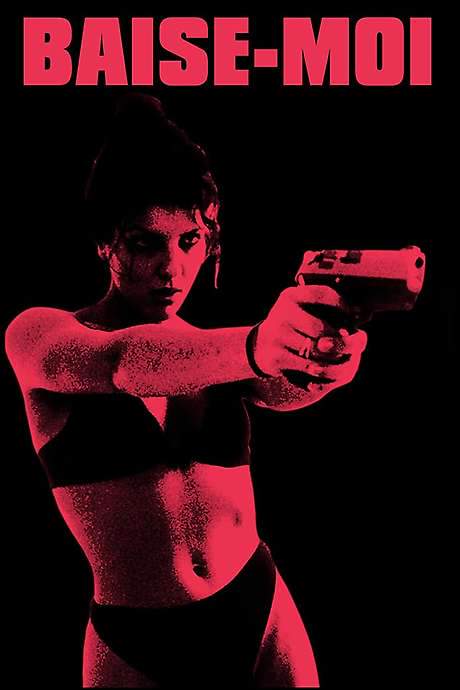
What Is Baise-moi About?
The premise of Baise-moi in 274 words, with nothing given away. The full story follows below.
In a sun‑scorched corner of southern France, a film strips away conventional boundaries, presenting a world where the line between art and pornography is deliberately blurred. The setting feels intimate yet hostile—a small town that both contains and amplifies the restless energy of its inhabitants. Every frame pulses with a raw, unfiltered aesthetic, inviting the audience to feel the same uneasy mix of attraction and repulsion that the characters themselves exude.
- Nadine and Manu emerge as the restless twins of this landscape, two women whose lives orbit around extreme sex, drugs, alcohol and firearms. Though they appear hyper‑organized in their habits, their inner worlds are chaotic, driven by a fierce sense of marginalization and a hunger for something beyond the mundanity that surrounds them. Their bond is immediate, each reflecting the other’s impulses while also sharpening their own resolve to defy the norms that confine them.
The film’s tone is unapologetically gritty, delivering a stark portrait of rebellion that feels both clinical and visceral. Its visual language is starkly realistic, often framing moments with a detached coolness that heightens the emotional charge. This atmosphere underscores a broader meditation on power, desire, and the lengths to which individuals will go when they feel invisible or oppressed by society.
As the narrative unfolds, the duo’s shared anger and frustration become a catalyst for a journey that challenges every social expectation placed upon them. Their search for control and recognition leads them along a path where impulse meets calculation, hinting at a cascade of choices that will test the limits of their partnership and the world they inhabit, all while the film maintains an unflinching, provocative gaze.
What Happens in Baise-moi?
The complete story of Baise-moi, from the first scene to the last, in 786 words (about 3 minutes). Spoilers throughout. Names in the text link to 3 cast member pages.
Spoilers ahead
Baise-moi follows Nadine Karen Lancaume and Manu Raffaëla Anderson, two women living on the edge of a small town in southern France who feel marginalized by the society around them. The film drifts between their personal frustrations and a growing urge to push back in a brutal, unflinching way, weaving a stark story about anger, violence, and the lure of a shared escape from daily constraints.
In a park, a moment of vulnerability becomes a turning point: three men abduct Nadine and Manu, dragging them to a garage where they are gang-raped. The scene is presented with a cold, clinical tone that contrasts with the raw emotion of the act. Manu, displaying a chilling detachment, lies still and quiet while the assault unfolds, prompting one of the rapists to pause and question what he’s witnessing. Manu later explains her reaction with a stark, unsettling line that reveals a psychological shield she uses to cope, and this moment becomes a touchstone for the rest of the story. > “can’t prevent anyone from penetrating her pussy.”
Back home, Nadine returns to confront her own demons. A tense confrontation with her roommate escalates into murder as Nadine strangles her and leaves with the rent money. The violence continues to snowball when Nadine’s close circle is shaken: a drug-dealing best friend is shot in another town while Nadine confronts the fragility of the world she’s built around false fronts and risky schemes. The killings ripple outward, drawing Nadine and Manu into a shared sense that the only control they have over their lives is the rejection of the norms that limit them.
The two women reunite at a railway station after a missed train and quickly realize they share a burning anger that has found a common target. They strike out on a violent, sexually charged road trip that blends robbery, murder, and a dangerous thrill-seeking energy. Money becomes the fuel for their spree: they rob a shop, kill a woman at a cash machine, and steal a car, all while evading pursuit as the body count climbs. A chance encounter with a woman fleeing a police checkpoint adds another layer to their misadventure, and the pair press on with a disjointed, almost ritualistic momentum.
Their path leads them to a house where an architect waits behind a door that seems almost waiting to be entered. The plan unfolds with a cold precision as the women trick their way inside and kill the architect Marc Rioufol, marking a turning point in the scale and audacity of their actions. The spree continues into a swingers’ club, a setting that blurs line between desire and violence. There, a racist remark directed at Manu ignites a brutal reaction, and the night spirals into a high-stakes confrontation in which many of the patrons are killed. The violence is unflinching, and the film does not shy away from shocking specifics as the two women weaponize the moment to assert control over a world that has consistently failed them.
As the country buzzes with news of the duo, public opinion becomes a mirror for their own inner disarray. Some voices praise their audacity, others fear the example they set, and the news cycle fixates on the sensationalism of their actions rather than their underlying grievances. The final chapters of the spree take a brutal toll: Manu is fatally wounded in a roadside tire shop when the shop owner shoots her after witnessing the chaos, and Nadine, devastated, carries Manu’s body to a forest lake and later to a beach. She confronts her own pain with a gun in hand, but the authorities intervene before she can end her life.
In the end, the film closes on a sobering note: the two women have unleashed a tidal wave of violence that changes nothing about their core feelings or their sense of belonging. The spree dissolves into a stark question about whether rebellion against an oppressive world can ever rewrite the conditions that gave rise to such anger. Nadine survives long enough to face the consequences, while Manu’s memory lingers as a catalyst for a society that confronts itself in the wake of their actions.
- Nadine Karen Lancaume emerges as the more calculating half of the duo, driving much of the early plan and the later insistence on turning away from normalized life.
- Manu Raffaëla Anderson embodies raw impulse and a volatile brightness that pulls them toward their darkest impulses, including moments of fierce detachment and explosive violence.
- The embedded threads of accusation, desire, and defiance are tied together by moments of stark confession and brutal action, making the film a challenging meditation on marginalization, power, and what people are willing to do to feel seen.
Baise-moi Timeline: Every Key Event in Order
13 key events in the order they happen, from “Park assault and aftermath” to “Nadine arrested before suicide”. 13 events name a place, across 13 locations.
- 1
Park assault and aftermath
Manu and her friend are accosted in a park by three men who take them to a garage and gang-rape them. Manu remains detached during the assault, a reaction that unsettles her friend. The episode marks the beginning of the pair's violent path.
Where:Park and garage
- 2
Manu shoots her brother
Feeling betrayed after the assault, Manu refuses to talk about what happened. Her brother confronts her, calls her a slut, and implies that she enjoyed the rape. In a final act of violence she shoots him in the head.
Where:Brother's house
- 3
Nadine kills her roommate
Nadine returns home after an argument with her roommate and strangles him, killing him, then takes their rent money and leaves. The violent act underscores her growing willingness to act without mercy.
Where:Nadine's home
- 4
Friend is shot in another town
Nadine's best friend, a drug dealer, is shot and killed in another town while they are obtaining drugs with a forged prescription. The loss further inflicts pain and fuels their later rage.
Where:Another town
- 5
Meeting at the railway station
That night, after missing the last train, Manu and Nadine meet at the railway station; they discover they share a deep anger and decide to embark on a violent road trip together.
When:Night Where:Railway station
- 6
Robbery and ATM murder
To fund their spree, they hold up a shop and kill a woman at an ATM, marking the start of their lawless acts. The spree quickly escalates in a merciless season of violence.
Where:Shop and ATM
- 7
Police stop and escape
In a stolen car, they are pulled over for a routine police check and kill the officers. A witness woman who was being checked manages to flee with them.
Where:Road checkpoint
- 8
Architect's house is invaded
The two are aided by a new friend who provides an address for an architect with whom he has had trouble. They trick their way into the architect's house and kill him.
When:Late night Where:Architect's house
- 9
Swingers club rampage
The pair then go to a swingers club, where a racist patron insults Manu; they massacre the patrons and shoot the racist man during a violent confrontation.
When:Night Where:Swingers' club
- 10
National media frenzy
The spree is picked up by the press and becomes a national fascination, attracting both supporters and those who fear the pair. Public debate questions whether society bears responsibility for the violence.
Where:Nationwide media
Show the other 3 events of Baise-moi Hide the last 3 events
- 11
Manu is shot in a tire shop
Manu goes to a roadside tire shop to get coffee; the shop owner shoots her. Nadine fires back and kills him, ending Manu's life.
Where:Roadside tire shop
- 12
Burning Manu and emotional collapse
Nadine takes Manu's body to a forest lake and burns it, an act that marks a brutal culmination of their violence. She then drives to a beach with tears in her eyes and contemplates suicide.
When:Aftermath Where:Forest lake / beach
- 13
Nadine arrested before suicide
At the beach with a gun by her head, Nadine intends to kill herself, but the police arrest her before she can act. The arrest halts the immediate aftermath of their spree and leaves the future uncertain.
When:Final moment Where:Beach
Who Are the Main Characters in Baise-moi?
3 characters, among them Nadine (Karen Lancaume), Manu (Raffaëla Anderson) and Architect (Marc Rioufol): who each one is and the part they play in the story. Every profile links to the actor’s page.
- N(
Nadine (Karen Lancaume)
Played by Karen Lancaume
Nadine is a part-time sex worker who embodies anger, resourcefulness, and a willingness to break social norms. Her dynamic with Manu reveals a volatile mix of loyalty and cruelty, as she navigates loss, jealousy, and revenge. Her actions—strangling her roommate, stealing rent money, and joining a road trip of crime—show how marginalization can fuel ruthless behavior.
- 💼 Sex worker
- ⚡ Impulsive
- 🧭 Marginalized
- M(
Manu (Raffaëla Anderson)
Played by Raffaëla Anderson
Manu is a drug-addicted, slacker who finances herself through sex work and occasional porn acting. She initially acts with a detached, pragmatic approach to violence, which shocks even her partner in crime. Her bond with Nadine evolves into a violent road trip driven by rebellion against a suffocating society.
- 💊 Drug use
- ⚡ Impulsive
- 🎬 Performer
- A(
Architect (Marc Rioufol)
Played by Marc Rioufol
An architect who becomes a target of the duo's escalating violence; his home is invaded under false pretenses and he is killed. He represents a symbol of bourgeois safety that the protagonists dismantle through criminal intrusion.
- 💼 Architect
- ⚖️ Victim
- 🗺️ Blueprint
Where and When Is Baise-moi Set?
Baise-moi is set in Southern France and small town. Here is why the place matters to the story.
Where
Southern France, small town
The story unfolds in a small town in southern France, with ordinary streets that become stages for brutal acts. The local parks, train station, and garages form a grim backdrop that contrasts with everyday life. The setting emphasizes marginalization and social tensions that drive the protagonists to extreme actions.
- 🇫🇷 France setting
- 🏘️ Small-town vibe
- 🔥 Violent
- 🕊️ Controversial themes
What Are the Themes of Baise-moi?
3 ideas the story keeps returning to, among them Violence, Sexuality and Media & Society.
-
01
Violence
The film documents a brutal spree that escalates from sexual violence to murder, tracing how anger and marginalization push two women toward ever more extreme acts. The portrayal is unflinching, raising questions about spectatorship and moral responsibility. The violence doubles as social critique, exposing how society rewards sensationalism while failing to address underlying causes.
-
02
Sexuality
Sexuality in Baise-moi is both a source of power and a tool of exploitation. The protagonists' erotic encounters blur lines between intimacy and aggression. The film uses explicit sex to challenge patriarchal norms and to examine how desire intersects with anger and survival. Its portrayal is provocative, forcing viewers to confront discomfort and complicity.
-
03
Media & Society
The pair's crimes become nationwide news, fueling a mix of fascination and fear. The press treats them as both criminals and symbols of rebellion, shaping public perception. The film critiques how media sensationalism can glamorize violence while overlooking deeper social issues.
What Kind of Film Is Baise-moi?
Dark in tone, with fast pacing and a straightforward story, going by the plot summary.
- Tone
- Dark
- Pacing
- Fast
- Story
- Straightforward
- Intensity
- High
- Ending
- Bleak
A brutal and confrontational road movie that delivers a raw, unapologetic descent into violence and nihilism, fueled by rage and trauma with an unflinching and bleak perspective.
- brutal
- unflinching
- raw
- angry
- desperate
- nihilistic
- sexual violence
- revenge
- marginalization
- crime spree
Content notes: sexual assault, graphic violence, murder, nudity, psychological trauma.
Quiz
How well do you remember Baise-moi? Test yourself on the story.


