What Is Awaydays About?
The premise of Awaydays in 308 words, with nothing given away. The full story follows below.
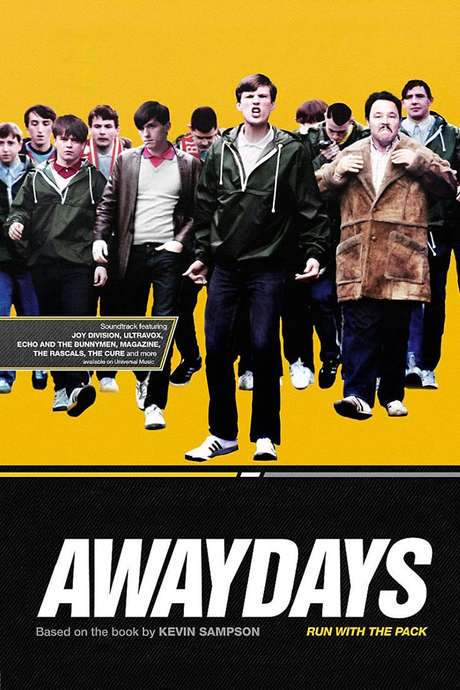
Set against the gray, industrial backdrop of the Wirral in the early days of Margaret Thatcher’s Britain, the film captures a restless generation that feels the weight of routine and the lure of every‑night adrenaline. Nightclubs pulse with post‑punk rock, streets echo with the chants of football supporters, and a fashion of ripped denim and leather becomes a uniform for anyone daring enough to reject a nine‑to‑five future. The atmosphere is simultaneously gritty and electric, a world where music, style and the promise of danger are the only currencies that matter.
At its heart is Paul Carty, a star‑glazed teenager searching for a sense of belonging beyond his family’s modest expectations. His sister Molly offers a tether of warmth and loyalty, reminding him of home even as he eyes the restless life of the local football firm. The firm itself revolves around charismatic yet hard‑edged figures: the imposing leader John Godden, whose presence commands respect, and the volatile but magnetic Elvis, whose charisma draws Paul deeper into the fold. Around them swirl other strong personalities— the rival Baby Millan, who embodies both menace and loyalty, and a cast of friends and acquaintances who each embody a different facet of the subculture’s blend of camaraderie and competition.
As the story unfolds, the audience is invited to feel the pull between the safe, familiar world of family and the intoxicating, uncertain promise of the streets. The film’s tone is a study in contrasts—bright bass lines against drab factory walls, moments of fierce brotherhood beside the ever‑present threat of excess. Through its richly drawn characters and the raw energy of a time when the young were desperate to carve out their own identities, the movie immerses viewers in a world where every night feels like a chance to prove yourself, even as the line between exhilaration and ruin remains tantalisingly blurred.
What Happens in Awaydays?
The complete story of Awaydays, from the first scene to the last, in 1,023 words (about 4 minutes). Spoilers throughout.
Spoilers ahead
In 1979, a spirited, starry-eyed teenager named Paul Carty [Nicky Bell] stands at his mother’s graveside with his sister Molly [Holliday Grainger] and their father, trying to make sense of a world that feels out of reach. After Molly guides their dad away, Paul checks his watch, sheds his normal clothes, and hops aboard a special football train that will pull him toward a dangerous new family. On the train, he encounters John Godden [Stephen Graham], the hard-edged leader of a football firm who makes it clear there’s no room for beginners or dreamers—only those who can prove they belong. The journey quickly leads him to Elvis [Liam Boyle], a charismatic but volatile presence who embodies the thrill and risk Paul craves. Paul’s fascination with The Pack runs deep; he watches their brawls at Tranmere and imitates their rough swagger, even as Baby Millan [Oliver Lee] ridicules him and Elvis slides him a wary invitation.
Their bond grows through a shared longing to escape Birkenhead and its gray mornings; Paul and Elvis discover they share taste in music and a desire to flee to Berlin. Yet Elvis remains cautious, calling The Pack a “gang of pricks” and insisting Paul isn’t ready to join. A moment of proof follows when Paul headbutts a rude shop clerk to showcase his fighting spirit, and Elvis relents, telling him to meet on the train at twelve on Saturday. The thrill of initiation intensifies as the firm stages a clash with a rival crew, and Paul, swept up in the adrenaline, begins to feel like he finally belongs. He returns home with a dangerous glow, only to realize that his sister already knows how consumed he has become by this new allegiance.
The next stretch of the story shifts toward a fragile balance between loyalty and longing. Paul promises to take Molly shopping for her birthday in Chester, but a row with Elvis pulls him away, and the day slips by as he heads to another night out, chasing the Pack’s next big moment. A trip to Wrexham with the firm turns into a showcase of bravado and brinkmanship, and Paul’s courage is rewarded with acceptance as the leader’s newest top man. The Pack’s HQ, The Pelican, becomes a stage for power, sex, and the uneasy chemistry of a crew that’s always on the edge. In a uneasy initiation that goes south, Godden warns Baby Millan against supplying heroin to the members, hinting at a corrosive turn the group might take—an exchange that reveals how fragile their camaraderie really is. The night ends with Paul and a girl in tow, but the environment feels hollow, and a jeer from the pack—“twat out of himself”—lands with a sting.
A new chapter unfolds when Paul and Elvis follow two women, Sonia [Rebecca Atkinson] and Jackie, back to Elvis’s bohemian-flat haven, a space dotted with stars on the walls and a noose that reminds him of death itself—a chilling symbol of the path they’re treading. Elvis’s habit of heroin use grows louder and more dangerous, and Paul’s avoidance of that fate strains their friendship. A romantic interlude with Sonia is interrupted by Molly’s distress; Sonia’s presence becomes a counterpoint to Paul’s bond with Elvis, and a confrontation on a distant promenade leaves Paul questioning what he owes to the people who have welcomed him into their world. When Molly is attacked by a gang, Paul and Elvis rally The Pack to defend her, and the aftermath is raw and emotional: Elvis sits crying by the water, and Paul feels a debt he cannot easily repay. In a tense moment, Elvis confesses during a funeral, asking Paul to come away with him to Berlin; Paul declines, torn between family and the pull of the old life. Elvis’s voice, both haunting and comforting, lingers: > He always loved you, Carty.
At Godden’s funeral, the weight of loss sits heavy as Elvis steps into a confession booth for a strange, drug-fueled moment, signaling that the path they chose may be leading them toward a cliff. He asks for one more away day, and the promise hangs in the air like smoke. The final away day arrives with unsettling silence: Paul waits on a station platform, expecting Elvis to join him, but Elvis is absent. When the train finally rolls by, Elvis is seen perched on a bridge above the tracks, surrounded by smoke, and then he’s gone—an ominous hint of suicide that leaves Paul adrift in a world without the one person who made the danger feel like belonging. The Pack remains a changing cipher, and on a last, brutal encounter with Baby Millan [Oliver Lee], Paul is cut with a knife and told he’s a “ponce.” The condemnation stings, but it also frees him. In a final, hard-won decision, he turns away from The Pack and walks into an uncertain future, whispering to himself, “How long had I waited for this day? Out of here. Out of this.”
- Paul Carty [Nicky Bell] emerges as a boy on the edge, drawn to someone larger than life and to a community that thrives on risk.
- Molly [Holliday Grainger] anchors the emotional heart of the story, offering warmth and loyalty when the world grows brutal.
- John Godden [Stephen Graham] embodies the pull and peril of leadership within a violent subculture.
- Elvis [Liam Boyle] is the volatile spark that can lift a boy toward dreams or drive him into ruin.
- Baby Millan [Oliver Lee] is the volatile counterpoint to loyalty, wielding power and menace in equal measure.
- Natasha [Sacha Parkinson] appears as a touchstone of tenderness and danger tied to Paul’s evolving life.
- Sonia [Rebecca Atkinson] crosses paths with Paul in a way that adds complexity to his loyalties.
- Uncle Bob [Ian Puleston-Davies] stands as the family member caught between work, crime, and kin.
- Janie [Dannielle Malone] enters the narrative as a sister’s companion in a world that rarely stays still.
- Mr. Carty [Ged McKenna] and Eddie [David Barlow] anchor the broader slice of life outside the Pack’s inner circle, reminding Paul of the world beyond their reach.
Awaydays Timeline: Every Key Event in Order
13 key events in the order they happen, from “Opening at the mother's graveside” to “Final away day: Elvis's disappearance and Carty's exit”. 13 events name a place, across 13 locations.
- 1
Opening at the mother's graveside
The film opens in 1979 with Paul Carty, his sister Molly, and his father at their mother's graveside. After a moment, Carty glances at his watch and bolts away, changing into casual clothes as he runs. He boards a football special train that will pull him toward a dangerous new world.
When:1979 Where:Graveside, mother's grave
- 2
On the football special train: Godden's warning
On the train, the leader of The Pack, John Godden, alerts Carty that there is no room for runners in his firm and that he must stand his ground. Carty is eager and restless, seeking a place among them, while Elvis's presence hints at something more. The encounter seeds the future clash between loyalty and ambition.
When:on the train Where:Football special train
- 3
Flashbacks reveal Carty's Pack fixation
Backstory unfolds through flashbacks: Carty watches The Pack in Tranmere games and admires their fights, even trying to dress like them. Baby Millan taunts him, and Elvis intervenes, keeping him from backing down. The seeds of a dangerous obsession take root as Carty longs to belong.
When:flashback sequence on the train Where:Tranmere (flashbacks)
- 4
Bonding with Elvis and Berlin dreams
Carty and Elvis connect over music and a shared wish to escape Birkenhead. They dream of leaving for Berlin, which fuels Carty's determination to join The Pack. After Carty demonstrates fighting skill by headbutting a rude sales assistant, Elvis finally tells him to meet The Pack on the train at 12:00 on Saturday.
When:12:00 Saturday (train meeting) Where:Birkenhead club
- 5
Joining The Pack: first confrontation on the train
During another train journey, The Pack confront a rival firm under Godden's leadership. Carty experiences a thrill as the fight escalates, cementing his desire to be part of The Pack. He returns home to learn that his sister knows about his fascination, which both worries and vindicates him.
When:during the train encounter Where:Train (to meet rival firm)
- 6
Sister's birthday promise and a night out
Carty promises to take his sister shopping in Chester, but an argument with Elvis interrupts his plan. They go for a drink and forget the birthday entirely, with Carty's mind already occupied by the upcoming meet-the-Pack day in Wrexham. The dangerous ambitions strain their family bonds.
When:the following day Where:Chester; Wrexham
- 7
Wrexham away day: a test of loyalty
The Pack's confrontation with a rival firm continues at Wrexham, where police attempt to form barriers. Carty cuts a Wrexham fan with a Stanley and earns Godden's approval as a top member. On the train home, the mood is sour for Elvis and Baby Millan, who don't share the victory.
When:Wrexham away day Where:Wrexham (away day)
- 8
Pelican initiation and heroin tension
Back at The Pelican, The Pack's HQ pub, Carty is initiated with a girl, but the moment is undercut by Godden warning Baby Millan about selling heroin to club members. Baby Millan casually deflects the danger, and Carty's sexual performance becomes a joke among the crew.
When:that night Where:The Pelican
- 9
Elvis's heroin use and Sonia encounter
Carty and Elvis pick up two women, Sonia and Jackie, on a bus, bringing them back to Elvis's bohemian flat. Elvis's heroin use rises and he becomes erratic, while Carty resists following suit and later spends a night with Sonia. The morning after, Elvis's jealousy surfaces as he mocks Sonia and lashes out at Carty.
When:the next day Where:Elvis' flat; bus
- 10
Tension erupts before the next away day
In front of The Pack, Carty taunts Elvis about his women and the pair's dynamic becomes visible to the others. Godden taunts Elvis for heroin use, and Carty's stubborn pride pushes him toward a choice that will redefine his allegiance. The confrontation foreshadows the end of his leadership.
When:before the next away day Where:in front of The Pack
Show the other 3 events of Awaydays Hide the last 3 events
- 11
A return to family, a night of violence
Carty steps back from The Pack to focus on family and studies, planning a Foundation Course. When his sister is roughed up by a local gang, he recruits Elvis and The Pack to beat them up, and they succeed. Afterwards, Elvis reveals a deep connection, telling him that he always loved him.
When:after the attack Where:Birkenhead; waterfront
- 12
Funeral, confession, Berlin dream
At Godden's funeral, Elvis asks Carty to hear his confession. In the confessional booth, Elvis inhales what appears to be heroin and urges Carty to come with him to Berlin, but Carty declines for now. Elvis repeats his line 'He always loved you' and asks for one more away day.
When:funeral day Where:Godden's funeral; confession booth
- 13
Final away day: Elvis's disappearance and Carty's exit
On the final away day, Carty waits on a station platform for Elvis, who never arrives. He boards the train anyway and glimpses Elvis on top of a bridge as the train passes; smoke clears and Elvis is gone, hinting at suicide. Back in town, Baby Millan knives Carty during a final encounter, and Carty walks away from The Pack, declaring that he is out.
When:final away day Where:Station platform; bridge; street
Who Are the Main Characters in Awaydays?
8 characters, among them Paul Carty (Nicky Bell), John Godden (Stephen Graham) and Elvis (Liam Boyle): who each one is and the part they play in the story. Every profile links to the actor’s page.
- PC
Paul Carty (Nicky Bell)
Played by Nicky Bell
A keenly observant teen who longs to belong to The Pack. He emulates the firm’s hard-edged culture, seeking status through bravado and danger. His push to join the group tests his loyalty to family and reveals how belonging can override concern for loved ones. He must navigate the pull between the Pack’s thrill and his duty to his sister and community.
- 🎯 Belonging
- ⚔️ Violence
- 🧭 Identity
-
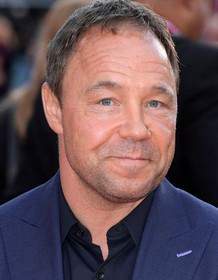
John Godden (Stephen Graham)
Played by Stephen Graham
Leader of The Pack and a former soldier, Godden embodies control and ruthlessness. He dictates the firm’s rules and expects unwavering loyalty, even as his authority is challenged by rivals and internal strife. His decisions drive the Pack’s violent dynamics, until a clash with Baby Millan alters the power balance.
- ⚔️ Leadership
- 🪖 Military background
- 💥 Violence
- E(
Elvis (Liam Boyle)
Played by Liam Boyle
Charismatic and volatile, Elvis pulls Carty deeper into the Pack while wrestling with heroin addiction. He dreams of a life beyond Birkenhead and pushes Carty toward Berlin, yet his instability and drug use destabilize their bond. His arc culminates in a haunting moment that questions the price of loyalty and friendship.
- 🧪 Addiction
- 🎤 Charisma
- ⚔️ Violence
-

Molly (Holliday Grainger)
Played by Holliday Grainger
Paul’s sister, protective and perceptive about her brother’s fixation with The Pack. She embodies family bonds and serves as a touchstone of normalcy amid the town’s violence. Her presence highlights the cost of Paul’s involvement on those he loves.
- 👪 Family
- 💬 Support
- 🫶 Care
- N(
Natasha (Sacha Parkinson)
Played by Sacha Parkinson
A love interest who becomes part of Paul’s personal life outside the Pack. Their romantic night contrasts with the group’s brutality, offering a glimpse of tenderness amid a culture of aggression. Natasha’s presence marks a potential path away from the Firm’s influence.
- 💘 Love
- 🕊️ Escape
- 🫀 Vulnerability
- BM
Baby Millan (Oliver Lee)
Played by Oliver Lee
A loyal Pack member whose brutality underscores the firm’s discipline. He challenges rivals and leads aggressive actions, including a pivotal confrontation that ends with Godden’s death. His actions catalyze the Pack’s fragility and the surge of internal danger within the group.
- 🗡️ Violence
- 🧠 Ruthlessness
- 💥 Power
- UB
Uncle Bob (Ian Puleston-Davies)
Played by Ian Puleston-Davies
Paul’s employer and a steady, grounded presence who represents ordinary life and responsibility. He encourages education and a life beyond street violence, providing a contrasting pull to Paul’s Pack-driven ambitions. His interactions anchor Paul’s personal conflict between duty and thrill-seeking.
- 👔 Authority
- 🧭 Guidance
- 🏠 Family
- S(
Sonia (Rebecca Atkinson)
Played by Rebecca Atkinson
A woman encountered by Paul and Elvis who becomes part of their social circle. She represents a life outside the Pack’s orbit and the complexities of relationships formed in the clubbing and bus scenes. Sonia’s presence adds a layer of vulnerability and humanity to the male-dominated world.
- 💃 Social life
- 💖 Desire
- 🫂 Connection
Where and When Is Awaydays Set?
Awaydays is set in Birkenhead, Tranmere, Chester and Wrexham (1979). Here is why the time and place matter to the story.
When
1979
The film takes place in 1979, a year emblematic of late-70s Britain’s economic hardship and rising football hooliganism. The North West setting uses trains, pubs, and away-day rituals to portray the era’s intense club loyalties and street-level power struggles. Flashbacks illuminate how the period’s social climate fuels the characters’ desperate bids to escape their towns.
Where
Birkenhead, Tranmere, Chester, Wrexham
The story is anchored in a gritty North West English townscape, with Birkenhead and its environs forming the core setting. Away-days unfold on trains between local grounds (Tranmere, Wrexham) and collide with pub sanctuaries like The Pelican, the Pack's HQ. The landscape is shaped by industrial decline and working-class pride, where loyalties are forged through violence, camaraderie, and the lure of escape.
- 🏭 Industrial town
- 🚆 Train culture
- 🏟️ Away-days
- 🕰️ Post-industrial landscape
What Are the Themes of Awaydays?
4 ideas the story keeps returning to, among them Belonging, Loyalty and Escape.
-
01
Belonging
Paul Carty is driven by a craving to belong to The Pack, seeking identity and acceptance through violence-driven camaraderie. The Pack’s rituals and the leadership’s approval offer a warped sense of worth, pulling him deeper into danger. The film shows how the need to belong can corrode personal morals and tether individuals to a perilous cycle.
-
02
Loyalty
Loyalty within The Pack is a shifting currency, tested as leadership toggles between Godden and Elvis. The film examines the high cost of allegiance, including betrayals, rivalries, and the brutal enforcement of codes. What begins as loyalty to comrades evolves into a struggle for control that fuels violence and tragedy.
-
03
Escape
A persistent urge to escape Birkenhead—and the symbolic Berlin fantasy—drives the characters’ choices. Berlin represents a world beyond the Pack’s grip, a beckoning of freedom that clashes with the pull of territory and reputation. The pursuit of escape creates tension between personal dreams and group demands.
-
04
Addiction
Heroin use and the coercive atmosphere of the Firm generate a spiral of self-destruction that strains relationships and trust. Addiction amplifies volatility and moral compromise within the Pack, affecting decisions and intensifying the violence in pursuit of belonging and power.
What Kind of Film Is Awaydays?
Bleak in tone, with steady pacing and a moderate story, going by the plot summary.
- Tone
- Bleak
- Pacing
- Steady
- Story
- Moderate
- Intensity
- High
- Ending
- Bittersweet
A bleak and intense drama about a young man's desperate search for belonging in a violent subculture, set against the grim backdrop of 1970s England, which ultimately culminates in a bittersweet and isolating sense of freedom.
- grim
- restless
- melancholic
- tense
- oppressive
- nostalgic
- coming of age
- subcultures
- hooliganism
- addiction
Content notes: suicide, drug use, street violence, knife violence.
Quiz
How well do you remember Awaydays? Test yourself on the story.
Where to Watch Awaydays
Stream it on Cineverse and Fawesome, or rent or buy it from Apple TV Store. US availability and prices from JustWatch.
Stream 7
 Cineverse
  Fawesome
  Hoopla
  Plex
Plex  Plex Channel
  Pluto TV
  Tubi TV
 Rent or buy 1

Streaming availability in the US, powered by