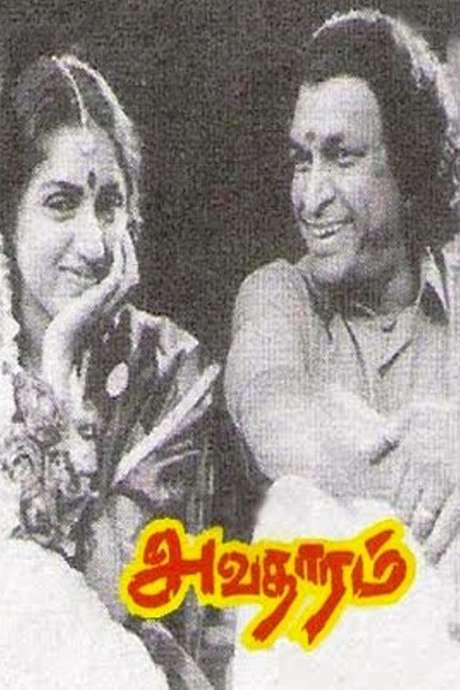


Avatharam Plot Summary
Read the complete plot summary and ending explained for Avatharam (1995). From turning points to emotional moments, uncover what really happened and why it matters.
Nassar plays Kuppusamy, an innocent man whose quiet dream is to join Paandi’s folk theatre troupe, a group that travels from festival to festival, bringing vibrant performances to rural Tamil Nadu during Hindu celebrations. The troupe carries a rough edge as well, and Baasi, a troublemaking member, is expelled from the group for his ill behavior. Yet hope persists: the troupe’s charismatic leader, Delhi Ganesh as Paandi, eventually welcomes Kuppusamy into the fold, and Ponnama, Paandi’s blind daughter, played by Revathi, finds herself drawn to Kuppusamy’s earnest spirit. The budding romance between Kuppusamy and Ponnama adds a fragile warmth to the troupe’s daily grind, a life spent chasing stages and festival lights in a landscape where luck can flip in an instant.
As the temple committee undergoes a change in leadership, the festival organizers tilt in favor of female dancers, sidelining Paandi’s troupe despite their long-standing presence at village temple celebrations. The shift brings new strains and open mistreatment, with Baasi and the new temple chairman turning the troupe into a target of abuse. Paandi makes a heartfelt plea, arguing that the troupe’s performances are part of the village’s cultural fabric and have sustained generations of artists. But the plea comes too late: the hard reality of economic dependence on folk drama bites hard, and the tragedy of a stage death strikes during a crucial festival performance. Paandi dies on stage, a blow that reverberates through the troupe and fractures their unity; with pride wounded and livelihoods at stake, the members drift apart, each facing an uncertain future outside the familiar echo of drums and chants.
Driven by a stubborn hope, Kuppusamy and Ponnama leave the village for Chennai, dreaming of a break into cinema. Their journey brings them to the doorstep of an advocate who offers shelter for the night and counsel about returning to the village to rebuild what might still be salvaged. The advocate, portrayed by Srividya, becomes a pivotal but fleeting beacon in their attempt to navigate a cruel, indifferent city. One last encounter with Baasi tests their fragile plans: Baasi offers a dangerous alliance, and his willingness to accommodate them comes with a horrifying price. He rapes and kills Ponnama, leaving Kuppusamy crushed and the world around him spinning with outrage and injustice.
Wrongly accused, Kuppusamy is branded a lunatic by a harsh judge and is confined to a mental hospital, from which he eventually escapes. The escape fuels a singular, consuming resolve: to avenge Ponnama and to confront the man who shattered their fragile dreams. Baasi, sensing the danger closing in, seeks police protection to shield himself as the net tightens around Kuppusamy. The chase culminates in a brutal confrontation: Kuppusamy eliminates the first line of opposition by killing the policemen who stand in his way, and a violent clash with Baasi follows. In the end, the conflict reaches its deadly peak as Kuppusamy defeats Baasi, a grim closure to a story built on faith, artistry, betrayal, and the merciless price of revenge.
Avatharam Timeline
Follow the complete movie timeline of Avatharam (1995) with every major event in chronological order. Great for understanding complex plots and story progression.
Kuppusamy dreams of joining Paandi's folk troupe
Kuppusamy, an innocent man, dreams of performing in Paandi's folk theatre troupe. He imagines bringing life to village Hindu festival stages through their performances. The troupe stands as a beacon of culture in rural Tamil Nadu, and his longing sets the course for what follows.
Baasi is expelled from the troupe
Baasi is expelled from the troupe for his bad behaviour. The other members regard him as a disruptive influence, and his removal reshapes the group dynamics. This decision marks the first major fracture in the troupe's unity.
Paandi accepts Kuppusamy into the troupe
Paandi ultimately welcomes Kuppusamy into the troupe, giving him a chance to prove himself. The inclusion signals a new opportunity for Kuppusamy's ambitions and place within the troupe. The hopeful pact reinforces the changing fortunes of the group.
Ponnamma falls in love with Kuppusamy
Ponnamma, Paandi's blind daughter, falls in love with Kuppusamy, adding a personal stake to the troupe's dynamics. Their budding romance complicates loyalties and future choices for everyone involved. The romance binds the troupe to a fragile hope.
Leadership change shifts festival expectations
A change in temple committee leadership leads organisers to prefer female dancers over Paandi's troupe. The troupe faces abuse from Baasi and the new temple chairman, challenging their place at the village festival. The pressures threaten the troupe's ability to perform as they used to.
Paandi dies on stage
During a festival performance, Paandi dies on stage, delivering a devastating blow to the troupe. The tragedy sparks a crisis of purpose and leaves the group fractured and unsure how to survive without their leader. The death intensifies the strain from the festival's changing priorities.
The troupe splits apart
Following Paandi's death, the troupe splits up as members realize they cannot sustain themselves solely through folk drama. They confront the harsh reality of life beyond the stage and the lack of stable livelihoods. The division marks an end of an era for their village art form.
Kuppusamy and Ponnamma travel to Chennai
Kuppusamy leaves the village with Ponnamma for Chennai to pursue film acting opportunities. They hope cinema will offer a livelihood beyond festival stages and rural performances. The journey signals a new, uncertain chapter in their lives.
Shelter with the advocate and advice to return
An advocate offers them shelter for a night and advises Kuppusamy to return to the village to rebuild their lives. The encounter underscores the precariousness of the path to stardom and the pull of home. The counsel plants the seed for a possible return.
A last attempt and Baasi's hospitality
Back in the city, Kuppusamy makes one last attempt and reconnects with Baasi, who agrees to accommodate them. This uneasy reunion foreshadows the danger that still shadows Ponnamma. The arrangement seals a fateful turn of events.
Baasi rapes and kills Ponnamma
Baasi rapes and murders Ponnamma, shattering the fragile hopes of the couple. Kuppusamy is then framed for the crimes, facing public outrage and a judge's condemnation. The tragedy propels him into a dire fight for truth and justice.
Kuppusamy is jailed and escapes
Kuppusamy is branded a lunatic and sent to a mental hospital after the court's ruling. He manages to escape, fueling his determination to seek revenge. The escape marks a turning point as he moves from victim to avenger.
Kuppusamy vows revenge
Kuppusamy becomes determined to take revenge on Baasi, vowing to clear his name and avenge Ponnamma. He trains himself for the confrontation and builds a plan to face his foe. The quest for justice drives the remainder of the story.
Baasi seeks protection and the hunt begins
Baasi, fearing for his life, seeks police protection to catch Kuppusamy. Meanwhile, Kuppusamy tracks Baasi, escalating the tension and violence between the two men. The pursuit culminates in a climactic confrontation.
Final confrontation and Baasi's death
In the climactic fight, Kuppusamy defeats Baasi and ends his threat. The film closes on the protagonist's hard-won revenge and the consequences of a life built on struggles for identity and justice. The cycle of tragedy and vengeance comes full circle.
Avatharam Characters
Explore all characters from Avatharam (1995). Get detailed profiles with their roles, arcs, and key relationships explained.
Kuppusamy (Nassar)
An innocent man who dreams of joining Paandi’s folk theatre troupe. He remains hopeful and loyal, but is drawn into a cycle of injustice after Baasi's crimes and the murder of Ponnamma. Branded a lunatic by a biased judge, he escapes from a mental hospital and resolves to take revenge on Baasi.
Ponnama (Revathi)
Paandi's blind daughter who falls in love with Kuppusamy. Her close bond with the troupe and her tragic fate underline the vulnerability of women within the story's social frame. She is raped and killed by Baasi, a crime that sets the revenge arc in motion.
Paandi (Delhi Ganesh)
Leader of the folk troupe, he champions the group's tradition but faces bureaucratic and violent opposition. He dies on stage during a festival, an event that shatters the troupe and exposes their economic fragility. His death marks the collapse of their collective dream and the powerlessness to survive on folk art alone.
Baasi (Bala Singh)
The antagonist who is expelled from the troupe for misbehavior and who later rapes and murders Ponnama. He evades consequences for a time, forcing Kuppusamy into a vengeful path. His violence and fear of retaliation drive the climactic confrontation with the protagonist.
Singaram (Venniradai Moorthy)
Head of the temple committee whose leadership change shifts support away from Paandi’s troupe, reflecting how religious and civic power shape artistic opportunities. His influence helps maintain the oppressive status quo and controls the terms of festival performances.
Singaram's Wife (Sachu)
Wife of Singaram, part of the village social fabric. Her presence provides a window into how the troupe's decline affects family life and the broader community that relies on festival culture for identity.
Advocate (Srividya)
An advocate who offers shelter to Kuppy and Ponnama and counsels them as they navigate the legal system. She represents a glimmer of institutional help in a web of abuse and misunderstanding, highlighting the opportunity for mercy within law.
Avatharam Settings
Learn where and when Avatharam (1995) takes place. Explore the film’s settings, era, and how they shape the narrative.
Location
Rural Tamil Nadu, Chennai
The story unfolds mainly in the rural heartland of Tamil Nadu, where temple festivals and village folk theatre anchor daily life. The troupe travels between the village temple grounds and the city streets of Chennai, reflecting a clash between traditional art and modern opportunities. The rural setting highlights social hierarchies, community pressure, and the precarious livelihood of performers who depend on festival cycles.
Avatharam Themes
Discover the main themes in Avatharam (1995). Analyze the deeper meanings, emotional layers, and social commentary behind the film.
⚖️
Injustice
The film shows how Kuppusamy is branded a lunatic by a biased court after Baasi's crimes, illustrating systemic unfairness toward the innocent. Abuse from Baasi and the temple leadership reveals how power can silence and control a vulnerable artistic community. The tragedy of Ponnamma's fate and the troupe's struggle underscores the social penalties levied on those who challenge the status quo. Kuppusamy's pursuit of justice becomes the emotional engine of the story.
🎭
Folk Art
The troupe's livelihood hinges on folk theatre performed at temple festivals, highlighting the fragility of art as a wage. They face exploitation and neglect from authorities who would rather favor different acts or voices. The death of Paandi and the subsequent split of the troupe show how fragile traditional art can be when the economic and political winds shift. The film uses the folk-art world to explore loyalty, craft, and the costs of keeping tradition alive.
💔
Love & Revenge
A central romance unfolds between Kuppusamy and Ponnama, offering a glimmer of tenderness in a harsh social environment. Ponnama's murder becomes the catalyst that drives Kuppusamy toward vengeance, blurring lines between justice and cruelty. The pursuit of revenge tests loyalties and morality, culminating in a violent confrontation with Baasi. The finale circles back to the tension between personal loss and the need to confront cruelty.

Coming soon on iOS and Android
The Plot Explained Mobile App
From blockbusters to hidden gems — dive into movie stories anytime, anywhere. Save your favorites, discover plots faster, and never miss a twist again.
Sign up to be the first to know when we launch. Your email stays private — always.
Explore the mobile appAvatharam Spoiler-Free Summary
Discover the spoiler-free summary of Avatharam (1995). Get a concise overview without any spoilers.
In the dusty lanes of rural Tamil Nadu, folk theatre blooms alongside the rhythm of Hindu festivals, its colors and drums echoing the heartbeat of the village. The troupe, a tight‑knit community of performers, moves from shrine to shrine, turning ancient myths into living spectacle. This world is steeped in tradition yet trembles under the weight of modern expectations, creating an atmosphere both celebratory and edged with quiet tension.
Kuppusamy is a gentle dreamer, haunted by a yearning to step onto the stage that has long captivated his imagination. When the venerable Pandi finally opens his troupe’s doors to the eager newcomer, the young man finds more than a role—he discovers a fragile connection with Ponnamma, Pandi’s blind daughter, whose quiet affection adds a tender layer to the already close‑knit troupe. Their blossoming bond unfolds against the backdrop of ritual performance, where art and devotion intertwine.
A sudden shift in the village’s temple committee reshapes priorities, favoring a different style of dance and leaving the troupe’s future uncertain. The ensuing strain tests loyalties and forces Pandi into a pivotal moment that ripples through the group, ultimately prompting Kuppusamy and Ponnamma to venture beyond their familiar fields toward the glittering promise of Chennai’s film world. The city’s bustling streets and flashing lights contrast sharply with the village’s earthy rhythms, offering both hope and new complexities.
Amid the bright allure of cinema, an old acquaintance named Baasi reappears, pulling the pair into a web of legal and institutional challenges that threaten to derail their aspirations. As the duo navigates unfamiliar corridors of power and judgment, Kuppusamy is forced to confront forces far darker than any stage they have known, setting the tone for a gripping struggle between innocence and an unforgiving reality.
Featured on this page

What's After the Movie?
Not sure whether to stay after the credits? Find out!
Check out our other apps:

SAT Sphere
Build confidence for the Digital SAT.

Mori Atlas
Discover wild places worth protecting.

Luntero
Search smarter for a home in Amsterdam.

Plot Explained
Unravel movie endings and hidden clues.

Pokechamp
Dive into Pokémon data and battle logic.

Driving Theory
Get ready for your European theory test.

Movie Dust
Plan your next cinema trip with ease.

Musemap
Find art and culture as you travel.

Selkobase
Compare credentials before committing.

Local Manual
Turn an unfamiliar country into practical next steps.

Lernavi
Compare school systems before your next move.

GymRoam
Find a workout stop wherever your plans take you.
Explore Our Movie Platform
New Movie Releases (2026)
Famous Movie Actors
Top Film Production Studios
Movie Plot Summaries & Endings
Major Movie Awards & Winners
Best Concert Films & Music Documentaries
Movie Collections and Curated Lists
© 2026 What's After the Movie. All rights reserved.
Privacy Policy