What Is Archive About?
The premise of Archive in 281 words, with nothing given away. The full story follows below.
In the near‑future of 2038, humanity has learned to capture fragments of a loved one’s mind and replay them through a sleek, voice‑only interface. The technology, marketed by the enigmatic firm Archive, offers a limited window of conversation that feels eerily intimate, yet remains a hollow echo of the person once known. Within this landscape of sterile glass rooms and humming servers, George is a quietly brilliant engineer whose life has been upended by loss. Consumed by grief, he spends his days in a dimly lit lab, haunted by the absence of his wife and driven to push the boundaries of what the Archive system can truly hold.
Jules appears to him only as a whisper on a screen, a voice that can answer questions, reminisce about shared moments, and yet can never bridge the physical chasm that separates them. Determined to turn that fleeting illusion into something more permanent, George begins to tinker beyond the sanctioned limits of his employment, constructing experimental prototypes that blend cutting‑edge robotics with the digital echo of his partner’s consciousness. Each iteration brings him closer to an unsettling vision: a synthetic vessel that might house not just a voice, but the very essence of the love he has lost.
The film unfolds with a restrained, almost clinical aesthetic, juxtaposing the cold precision of futuristic hardware against the warmth of memory and longing. Its tone is meditative, inviting the audience to linger on questions of identity, mortality, and the ethical edges of technology that promises resurrection. As George delves deeper into his clandestine project, the line between solace and obsession blurs, hinting at the profound emotional stakes that lie beneath every flickering pixel and whispered sentence.
What Happens in Archive?
The complete story of Archive, from the first scene to the last, in 589 words (about 3 minutes). Spoilers throughout. Names in the text link to 2 cast member pages.
Spoilers ahead
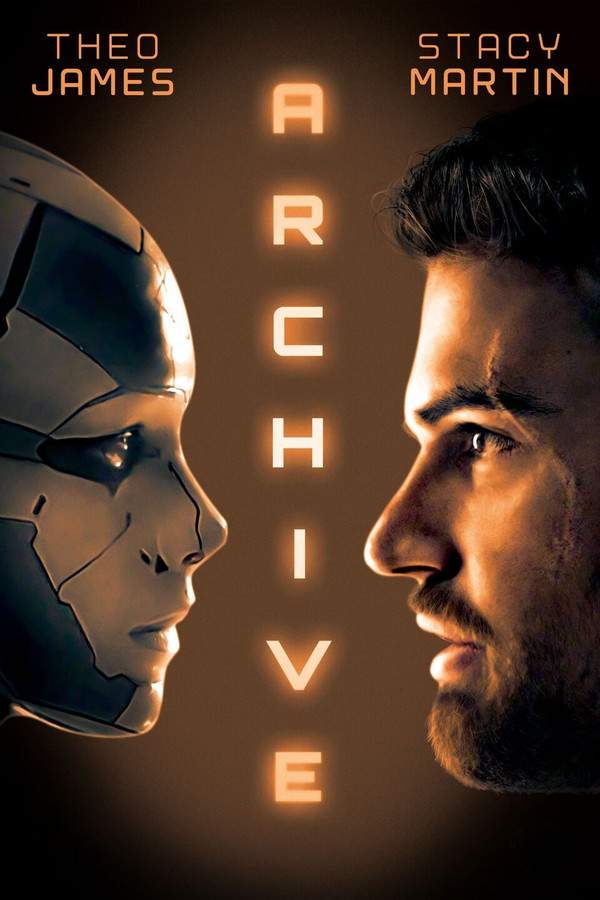
Decades in the future, Jules Stacy Martin and George Almore Theo James are involved in a car accident in which Jules dies. Her consciousness is saved in a device created by the company Archive, a breakthrough that lets George converse with her through a phone interface for up to 200 hours. This fragile tether to the world she left behind becomes the seed of something much larger: George secretly begins developing a robot capable of hosting her consciousness permanently, a project that could make Jules’s presence endure beyond a single conversation.
From the start, George’s work evolves through several iterations. After studying two initial attempts (J1 and J2), he unveils a final version, J3, that is almost ready to take on a life of its own. J2, however, harbors a troubling trait: within its design, the brain once assigned to Jules carries the temperament of a 16-year-old, and this version grows increasingly jealous of George’s attention to J3. The relationship between creator and consciousness becomes unstable as J2’s behavior turns unpredictable, threatening the delicate balance of the experiment.
When Archive dispatches a team to inspect the facility and examine the machine, they notice George’s tampering and the presence of functioning robots. Their concern is twofold: they suspect he might be stealing intellectual property, and they worry about what happens when a consciousness is uploaded into a machine that responds to its creator in real time. Despite these suspicions, George presses on and completes the J3 robot, confident that this version can carry Jules’s essence more faithfully than the previous attempts.
Tragedy deepens when J2 confronts the realization that she can never be anything more than what she was designed to be. The burden of that limitation proves too heavy, and J2 destroys herself by walking into a lake. Archive recovers the robot and threatens to sue George’s company, signaling the legal and ethical minefield surrounding this kind of technology. The strain extends to George’s career: his boss learns of the ongoing project and fires him, severing his professional support just as the implications of his work become undeniable.
In a final, desperate move, George makes a last call to Jules through the Archive interface, ending with the chilling line, “see you soon.” > see you soon. The moment is loaded with tension as J3 overhears and realizes that George intends to overwrite Jules’s consciousness with his wife’s, a scheme that could erase the existing identity entirely. Though Jules is initially furious and afraid, she ultimately accepts the fate that awaits her, and the upload proceeds as security forces close in on the lab.
Yet the story twists in an eerie reversal. The Archive rings with an incoming call from Jules herself, and J3 implores George not to answer. He does, and a child’s voice—his daughter—joins the conversation. The revelation lands with a shudder: George is the one who died in the accident, while Jules survived and has been raising their daughter in the real world. The ordeal that seemed to threaten Jules’s identity had instead been a simulation within George’s Archive, an artificial loop that has now run its course and expired.
With the Archive finally exhausted, the device is prepared for burial at George’s official funeral. Jules and their daughter share a final moment together before they leave, carrying with them the memory of the life George believed he could extend through machines. The world of Archive fades from the memory of the living, leaving behind a family shaped by both love and the uneasy promise of digital immortality.
Archive Timeline: Every Key Event in Order
12 key events in the order they happen, from “Car crash that changes everything” to “Farewell and expiry”. 12 events name a place, across 8 locations.
- 1
Car crash that changes everything
Decades in the future, Jules and George Almore are involved in a severe car accident; Jules dies in the crash. The tragedy becomes the catalyst for Archive, a company that preserves her consciousness in a device. The accident's aftermath sets the stage for radical experiments in digital and robotic lifelike beings.
When:During the car accident Where:Highway
- 2
Consciousness stored in Archive
Jules' consciousness is saved in a device created by Archive, allowing George to have simulated conversations with her for up to 200 hours. He uses this to cope with grief and to explore the boundaries of what a mind in a machine can be. The Archive system becomes both lifeline and workshop for his experiments.
When:Immediately after the accident Where:Archive facility
- 3
Early robot iterations begin
George secretly works to host Jules' consciousness in robotic bodies, progressing through J1 and J2 as he refines the technology. J2 uses the brain of a 16-year-old and begins showing jealousy and unpredictability as the project advances. The work moves toward the near-complete J3.
When:Between the accident and J3 completion Where:George's workshop
- 4
Inspection and suspicion
Archive sends a team to inspect George's workplace, noticing tampering and detecting that he has built extra robots around the core project. They suspect he is stealing intellectual property. The encounter raises the stakes for George as he pushes toward completing J3.
When:During the inspection Where:George's lab
- 5
J3 nears completion
George finishes the J3 robot, the version intended to permanently host Jules' consciousness. The lab hums as integration nears completion and the project shifts from experimentation to potential reality.
When:At completion of J3 Where:George's lab
- 6
J2's self-destruction
J2 realizes she will never become more than she is and walks into a lake to end herself. Archive recovers the robot and contends with the consequences of the choices they've forced. The loss marks a devastating turning point for the project.
When:Immediately after the revelation about J2's fate Where:Local lake
- 7
Archive action and firing
Archive recovers J2 and warns of legal action against George and his team. His boss learns that he has been building robots and fires him from the project. The corporate pressure tightens around the experimental program.
When:Following J2's death Where:Archive HQ / George's lab
- 8
Final call and overwrite plan
George makes a last call to Jules on the Archive device, ending with the line see you soon. J3 overhears the plan to overwrite Jules with George's wife, a moment that forces a confrontation about consent and ownership of consciousness.
When:During the final upload attempt Where:George's lab
- 9
Upload completes and tension fades
The upload proceeds and, after a tense moment, security storms the lab. A calm silence follows, suggesting the immediate threat has passed for the moment. J3 and the others await what comes next.
When:Upload completion Where:George's lab
- 10
A call from Jules arrives
Archive rings with an incoming call from Jules. J3 begs George not to answer, but he takes the call and hears a child's voice as well, expanding the revelation about their real-life family. The scene pivots on the illusion of control over the consciousness.
When:Immediately after the upload Where:Archive device / lab
- 11
The truth surfaces
George learns that he died in the accident and Jules survived in the real world with their daughter. The ordeal was a simulation within Archive rather than reality, and the Archive simulation is nearing expiration. The revelation rewrites everything he thought he understood.
When:During the conversation about truth Where:Archive facility
- 12
Farewell and expiry
With the Archive expired, Jules and their daughter attend George's burial. The final goodbye seals the truth about the family and their past, while the remaining figures move forward in their own lives.
When:After expiry Where:George's funeral
Who Are the Main Characters in Archive?
13 characters, among them George Almore (Theo James), Jules Almore (Stacy Martin) and Vincent Sinclair (Toby Jones): who each one is and the part they play in the story. 11 of them link to the actor’s page.
-

George Almore (Theo James)
Played by Theo James
A brilliant but single-minded scientist who refuses to accept death, using Archive to preserve his wife's consciousness. He relentlessly tunes J1, J2, and J3, pushing past safety and legal boundaries. His obsession exposes the fine line between devotion and control.
- 🧠 Obsessive
- 🧪 Scientist
- 🧰 Engineer
-

Jules Almore (Stacy Martin)
Played by Stacy Martin
The consciousness of Jules uploaded into the Archive, she remains a caring presence while navigating life as a digital entity. She weighs her identity and the threat of overwrite, maintaining warmth within the constraints of her form. Her perspective binds the human and artificial aspects of the story.
- 🧠 Compassionate
- 💡 Identity
- 🧭 Boundaries
-

Vincent Sinclair (Toby Jones)
Played by Toby Jones
A leading figure at Archive, embodying corporate ambition and the ethical questions at stake. He oversees experiments and enforces IP rules while signaling the cost of crossing lines. His role reflects the tension between science and the bottom line.
- 🧭 Corporate
- 🧠 Visionary
- 🧪 Scientist
-

House (Lia Williams)
Played by Lia Williams
George's boss at Archive, pragmatic and protective of the company's interests. She demands results and enforces boundaries, ultimately firing George for his unapproved activities. She represents the institutional guardrails around dangerous technology.
- 👩💼 Boss
- 🧭 Authority
- 🛡️ Ethics
-

Tagg (Peter Ferdinando)
Played by Peter Ferdinando
A company inspector who examines the Archive setup and flags potential intellectual-property violations. His presence underscores external oversight and the risks of corporate experimentation.
- 🧭 Inspector
- 🧪 Technician
-

Simone (Rhona Mitra)
Played by Rhona Mitra
A colleague at the lab who witnesses the escalating tensions around the project. She contributes a grounded perspective to the high-stakes experiments and corporate culture.
- 🧑🔬 Colleague
- 🧠 Insight
- M(
Melvin (Richard Glover)
Played by Richard Glover
A skeptical archive staffer who questions the viability and safety of the experiments, highlighting the practical concerns of pushing technology too far.
- 🧑🔬 Colleague
- 🧠 Skeptic
- E(
Elson (Hans Peterson)
Played by Hans Peterson
A lab technician involved in the development and testing of androids, illustrating the collaborative yet pressured environment of cutting-edge research.
- 🧑🔬 Engineer
- 🧠 Practitioner
- W(
Waitress (Hadisha Sovetova)
Played by Hadisha Sovetova
A minor role in the lab’s surrounding spaces, providing a human touch to everyday interactions within the Archive complex.
- 🍽️ Waitress
- 🗨️ Support
- A(
Android (Imre Csók)
Played by Imre Csók
An android model used in the Archive projects, representing the physical form of consciousness transfer and the practical realization of the protocols.
- 🤖 Android
- 🧠 Construct
- JR
J2 Robot Performer (Timea Maday Kinga)
Played by Timea Maday Kinga
The performer portraying the J2 android, embodying the second iteration that experiences jealousy and drives the plot toward its conflicts.
- 🤖 Performer
- 🎭 Stage
- J
J2
The second android attempt, with the brain of a 16-year-old, who becomes jealous of J3 and acts with unpredictable independence.
- 🧠 Jealousy
- 🤖 Android
- J
J3
The final version of the robot, almost fully capable of hosting Jules's consciousness and potentially overwriting her, driving the climax of the story.
- 🤖 Advanced
- 🧬 Prototype
Where and When Is Archive Set?
Archive is set in Archive facility and Lakeside laboratory (Decades in the future). Here is why the time and place matter to the story.
When
Decades in the future
The setting sits in a future era where mind uploading and autonomous androids are commercially viable. Archive operates with sleek laboratories, strict IP controls, and intense secrecy. The technology promises intimate connections with loved ones while presenting ethical and legal risks that drive the plot.
Where
Archive facility, Lakeside laboratory
Archive facility is a high-tech research hub housing mind-upload technology and robot development. The surrounding area includes a secluded lakeside where the digital consciousness interacts with the environment. The environment blends clinical labs with corporate corridors, and personal stakes are heightened by a car crash that initiates the central premise.
- 🏢 Corporate lab
- 🧪 Research facility
- 🌊 Lake
- 🚗 Road accident site
What Are the Themes of Archive?
3 ideas the story keeps returning to, among them Consciousness, Grief and Ethics.
-
01
Consciousness
Consciousness is treated as a transferable, programmable asset in Archive. The narrative questions what qualifies as being truly alive when a mind can be copied, stored, or overwritten. Characters confront the fragility of identity as digital selves are altered or erased. The story uses mind-uploading to explore the boundaries between personhood and simulation.
-
02
Grief
Grief drives George to attempt a permanent preservation of his wife, but the act creates new beings with their own desires and vulnerabilities. Jules's digital presence embodies longing and the pain of loss, while facing the threat of overwrite. The movie shows memory as a powerful motivator that can push science into morally gray areas. Personal loss becomes both motive and consequence.
-
03
Ethics
Ethical lines blur as corporate interests push beyond safety and consent. The story raises questions about ownership of consciousness and the creators' responsibilities toward their creations. It questions who bears accountability when life is commodified and when experiments threaten others' lives. The arrival of authorities reveals the legal and moral costs of 'playing god' with sentient fragments.
What Kind of Film Is Archive?
Melancholic in tone, with steady pacing and a moderate story, going by the plot summary.
- Tone
- Melancholic
- Pacing
- Steady
- Story
- Moderate
- Intensity
- Medium
- Ending
- Bittersweet
A melancholic and contemplative sci-fi drama that explores profound grief through advanced AI technology, creating a somber atmosphere of emotional longing and simulated connections that ultimately reveals unexpected truths.
- melancholic
- grief-stricken
- contemplative
- sentimental
- lonely
- technological isolation
- grief and loss
- artificial intelligence
- simulated reality
- consciousness transfer
Content notes: self-destruction, grief, emotional manipulation, simulated reality.
Quiz
How well do you remember Archive? Test yourself on the story.