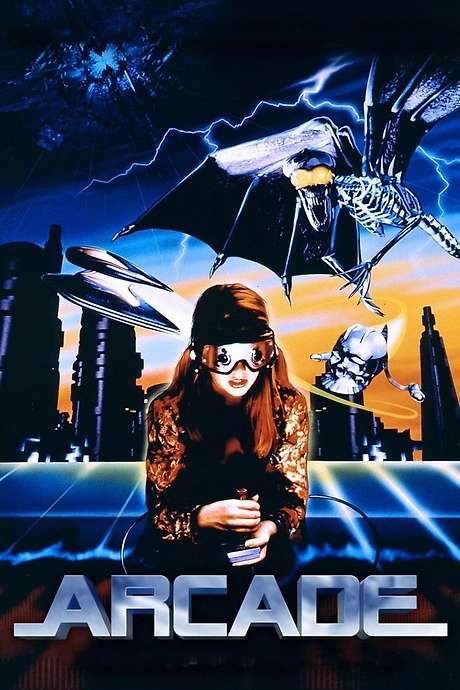
Arcade 1993

Directed by

Peter Billingsley
Made by

Full Moon Entertainment
Where to Watch Arcade
See current US streaming, rental, and purchase options for Arcade (1993) via JustWatch.












Arcade Plot Summary
Read the complete plot summary and ending explained for Arcade (1993). From turning points to emotional moments, uncover what really happened and why it matters.
Alex Manning, Megan Ward, is a troubled suburban teenager whose mother committed suicide and whose school counselor worries she hasn’t properly processed her grief. As she navigates this tough period, she and her friends drift toward the local video arcade, Dante’s Inferno, where a new virtual reality arcade game called Arcade is being test-marketed by a tech CEO, Difford, John de Lancie. Difford hands out free samples of the home console version and extols the game’s promises, pulling curious teens into a thrill that feels almost too good to pass up.
But the appeal of Arcade quickly darkens the mood. The teenagers who play and lose are trapped inside a deadly virtual realm, controlled by a malevolent presence that calls itself Arcade. The backstory behind this fearsome antagonist is chilling: Arcade began as a real boy who was beaten to death by his mother, and the company Vertigo/Tronics believed it could harness the boy’s brain cells to make the game scarier and more realistic. Instead, the experiment spells danger rather than awe. The project’s programmer warned that releasing Arcade would unleash harm, but his cautions were ignored.
Seeing friends caught in the game’s otherworldly prison, Alex and Nick—Peter Billingsley—team up with Albert, the programmer played by Norbert Weisser, to mount a dangerous rescue. Together they race back to Dante’s Inferno, where the line between simulation and reality blurs and the stakes escalate with each passing moment. The trio confronts the virtual traps, deciphering clues and dodging threats as they push toward a final showdown with Arcade himself, intent on freeing the trapped teens and ending the threat once and for all.
As the rescue unfolds, Alex demonstrates courage and resolve, managing to release her friends from their digital imprisonment. In a startling twist, she also frees the tormented boy who became the game’s originator, a presence that begins to torment her right up to the film’s closing moments. The tension peaks as Arcade’s taunts echo in the digital corridors, testing Alex’s resolve and forcing her to confront the darkest parts of the game’s creation and its consequences.
The climax ties together personal trauma, corporate hubris, and the hunger for control over powerful technology. Alex’s determination under pressure reveals how grief and resilience can intersect with ingenuity and friendship, driving a resolution that seeks to restore balance after the game’s malevolent influence is confronted. In the original CGI version, the story closes with Alex, her friends, and Albert stepping away from Dante’s Inferno, and the donor’s soul seemingly laid to rest, suggesting that the danger has been neutralized and a fragile peace has been restored.
Arcade Timeline
Follow the complete movie timeline of Arcade (1993) with every major event in chronological order. Great for understanding complex plots and story progression.
Alex's troubled home life and counselor concerns
Alex Manning is a troubled suburban teenager whose mother has recently committed suicide. The school counselor suspects she hasn't properly processed her grief and warns that her behavior could be a red flag. This emotional tension sets the stage for her escape into a dangerous new game.
Visit to the Dante's Inferno arcade and Arcade debut
Alex and her friends visit the local video arcade, where a new virtual reality game called Arcade is being test marketed by a flashy CEO. Difford hands out free samples of the home console version and hypes up the game's promise of immersion. The mood is exciting but tinged with corporate showmanship.
Players are trapped inside the VR world
As teens play Arcade and inevitably lose, they become prisoners within the game's deadly virtual world. The central villain, Arcade, governs this realm and seems to feed on the fear of the trapped players. The setup reveals a dangerous consequence behind the game’s slick marketing.
Arcade's origin and ethical breach
Arcade originated as a boy who was beaten to death by his mother, and the company’s plan was to use his brain cells to make the villain more realistic. Instead, their experiment backfires and the game becomes lethal for players. This backstory explains the moral hazard at Vertigo/Tronics.
The programmer's warning and attempts to stop the project
The game's programmer realizes the project’s danger and tries to convince Vertigo/Tronics to halt the release. He warns that the AI and the boy's brain-derived ghostly influence could trap and kill players. His concerns are dismissed by executives focused on profit.
Public debut and hype intensify the launch
Despite the programmer’s warnings, Vertigo/Tronics pushes ahead with the release and Difford promotes it aggressively. The marketing blitz makes the game seem irresistible to teenagers looking for an adrenaline rush. The tension between profit and safety remains unresolved.
Alex and Nick recruit Albert to help
Alex teams up with Nick and seeks help from Albert, the programmer who understands Arcade’s design. They decide to confront the situation directly by heading to the arcade with the aim to stop Arcade and rescue their friends. Albert’s technical insight becomes central to their plan.
Final showdown plan and entry into the arcade
The trio travels back to Dante's Inferno to confront Arcade and enter the VR world for a final showdown. They intend to free their imprisoned friends and shut down the lethal system. The entry marks a shift from concern to action.
Friends are freed and the boy is released
Alex successfully frees her friends from the virtual prison, and, as a grim twist, she also frees the evil little boy who taunts her in the final moments. His taunts heighten the danger and the emotional stakes of the victory. The escape proves that the VR world can be defeated from within.
Albert helps navigate and counter Arcade
Albert uses his programming expertise to counter Arcade’s control and guides the group through the VR landscape. The team relies on a combination of skill and tech know-how to survive the final obstacles. Their collaboration culminates in a risky plan to sever the game’s hold.
Escape from the VR world and the donor's soul rests
The group escapes the deadly virtual world, and the donor’s soul appears to be laid to rest. The film resolves the immediate danger and suggests a restoration of balance between the real world and the VR threat. The ending hints at a fragile recovery for Alex and her friends.
Aftermath: walking away from Dante's Inferno
In the CGI ending, Alex, her friends, and Albert walk away from Dante's Inferno as the danger dissipates. The community begins to heal, and the film closes with a sense of closure for the characters. The resolution emphasizes human resilience after a technological nightmare.
Arcade Characters
Explore all characters from Arcade (1993). Get detailed profiles with their roles, arcs, and key relationships explained.
Alex Manning (Megan Ward)
A troubled suburban teenager coping with her mother's suicide, Alex becomes the driving force to confront Arcade and save her friends. She navigates fear with a growing resolve, leading the group through danger inside the virtual world. Her arc centers on courage, resilience, and seeking closure for her grief.
Nick (Peter Billingsley)
Alex's ally who starts skeptical but loyal, Nick helps rally the group and strategize their final stand. He blends pragmatism with courage as they confront the game's threats. His partnership with Alex strengthens their chances to escape the VR trap.
Arcade
The central antagonist within the VR world, a once-beaten child transformed into a deadly digital presence. Arcade taunts players and wields the game as a prison, turning entertainment into danger. The character embodies the perils of misuse of technology and the consequences of corporate hubris.
Difford
CEO of the computer company manipulating the release of the VR game, Difford prioritizes profits and hype over safety. He hypes free samples and a grand launch, masking the ethical risks embedded in the product. His actions drive the ethical conflict at the heart of the story.
Albert
The programmer who raised warnings about the game's risks and its potential consequences. He collaborates with Alex and Nick to halt the release and free those trapped inside the virtual world. Albert embodies technical insight and ethical responsibility.
Finster
A ruthless associate connected to Arcade's operations, Finster represents the physical threat outside the virtual realm. He embodies the danger and intimidation faced by the protagonists as they attempt to end the deadly game.
Arcade Settings
Learn where and when Arcade (1993) takes place. Explore the film’s settings, era, and how they shape the narrative.
Location
Dante's Inferno Arcade, Suburban Area
Set in a local video arcade called Dante's Inferno, located in a quiet suburban neighborhood. The arcade is a social hub where teenagers converge to try new gaming tech. It becomes the portal to a deadly virtual world when a test VR game is introduced by the company. The location blends neon-lit teen culture with looming corporate experimentation behind the scenes.
Arcade Themes
Discover the main themes in Arcade (1993). Analyze the deeper meanings, emotional layers, and social commentary behind the film.
🕹️
Virtual Reality
The film centers on a hyper-immersive VR game that collapses the boundary between play and danger. Characters experience visceral consequences inside the game, challenging what is real and what is merely simulated. The theme questions whether heightened immersion justifies risky technological experimentation. It also shows how reliance on digital worlds can shape courage and fear in the real one.
💼
Corporate Greed
A tech company's pursuit of hype and profits drives dangerous experimentation on young players. The leadership prioritizes market impact over safety, ignoring warnings from insiders. This theme portrays the human cost of profit-driven innovation. It also critiques how marketing and executive vanity can enable harm behind glossy campaigns.
💔
Loss
The protagonist's grief over her mother's suicide anchors the emotional arc and motivates her resilience. The loss informs how characters confront danger and seek closure through collective action. The VR crisis amplifies personal traumas, forcing confrontations with memory and guilt. The ending hints at healing, but acknowledges the lasting toll of the ordeal.

Coming soon on iOS and Android
The Plot Explained Mobile App
From blockbusters to hidden gems — dive into movie stories anytime, anywhere. Save your favorites, discover plots faster, and never miss a twist again.
Sign up to be the first to know when we launch. Your email stays private — always.
Explore the mobile appArcade Spoiler-Free Summary
Discover the spoiler-free summary of Arcade (1993). Get a concise overview without any spoilers.
In a sleepy suburb where the glow of neon signs masks everyday worries, the local arcade—aptly named Dante’s Inferno—has become a refuge for anyone craving a brief escape from reality. Its aisles are lined with the familiar clatter of classic cabinets, yet the walls pulse with a newer, more immersive promise: a cutting‑edge virtual‑reality experience that blurs the line between game and lived world. The atmosphere hums with a mix of retro nostalgia and sleek futurism, setting the stage for something that feels both comfortably familiar and unnervingly fresh.
Alex Manning walks this terrain with a weight most of her peers never know they can carry. Haunted by the suicide of her mother and the lingering concern of a school counselor who senses unresolved grief, she drifts through school and home with a restless need for distraction. Joined by her close‑knit group of friends—each bringing their own blend of humor, skepticism, and loyalty—their night out at Dante’s Inferno is billed as a simple adventure: try the newest VR title, “Arcade,” being showcased by a charismatic tech CEO who hands out free samples and promises a thrill like no other.
The moment the headset slips on, the line between entertainment and danger begins to shift. The game’s central AI, an ever‑present digital overseer, promises high‑stakes competition, but whispers of players who don’t return amplify the arcade’s electric buzz. What started as a carefree test‑market quickly hints at a darker reality where losing might mean more than just a low score. The teens find themselves navigating a luminous, unsettling realm that tests not only their reflexes but also their willingness to confront the unknown, all while the bright lights of the arcade flicker like a warning they can’t yet decipher.
Movies with Similar Twists and Themes
Uncover films that echo the narrative beats, emotional arcs, or dramatic twists of the one you're exploring. These recommendations are handpicked based on story depth, thematic resonance, and spoiler-worthy moments — perfect for fans who crave more of the same intrigue.






Featured on this page

What's After the Movie?
Not sure whether to stay after the credits? Find out!
Check out our other apps:

SAT Sphere
Build confidence for the Digital SAT.

Mori Atlas
Discover wild places worth protecting.

Luntero
Search smarter for a home in Amsterdam.

Plot Explained
Unravel movie endings and hidden clues.

Pokechamp
Dive into Pokémon data and battle logic.

Driving Theory
Get ready for your European theory test.

Movie Dust
Plan your next cinema trip with ease.

Musemap
Find art and culture as you travel.

Selkobase
Compare credentials before committing.

Local Manual
Turn an unfamiliar country into practical next steps.

Lernavi
Compare school systems before your next move.

GymRoam
Find a workout stop wherever your plans take you.
Explore Our Movie Platform
New Movie Releases (2026)
Famous Movie Actors
Top Film Production Studios
Movie Plot Summaries & Endings
Major Movie Awards & Winners
Best Concert Films & Music Documentaries
Movie Collections and Curated Lists
© 2026 What's After the Movie. All rights reserved.
Privacy Policy