
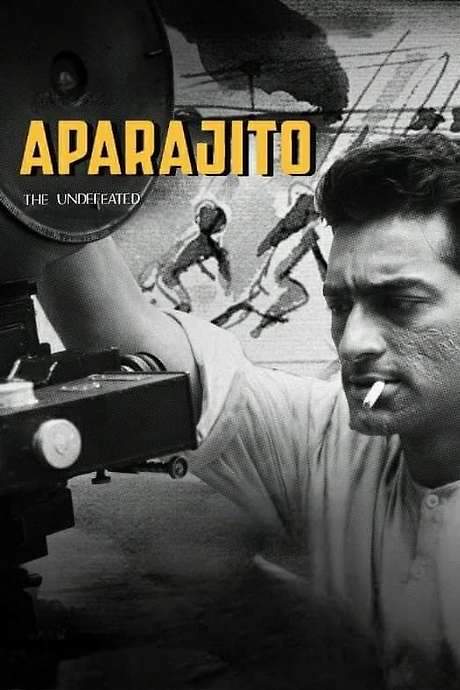
What Is Aparajito About?
The premise of Aparajito in 299 words, with nothing given away. The full story follows below.
In the early 1920s, the river‑lit ghats of Varanasi pulse with ritual and the quiet hopes of a family newly arrived from rural Bengal. Within a modest apartment, a young boy watches his father, a priest whose voice carries prayers over the water, while the city’s timeless rhythm seeps into his childhood. The atmosphere is one of gentle reverence mixed with the restless energy of a place where ancient tradition meets the promise of modern life.
When the household’s cornerstone is suddenly struck by illness, the fragile balance shifts. The mother, forced into service as a maid, bears the weight of survival with a stoic grace that steadies the home. Their great‑uncle, a figure of quiet authority, offers a bridge back to the village they once called home, where the boy’s future begins to take shape among familiar fields and simple temples.
Apu awakens to a yearning that extends beyond the riverbanks of his childhood. Drawn to the promise of learning, he steps into a village school, quickly distinguishing himself through an innate curiosity and a talent that catches the eye of a visiting dignitary. The encouragement of a devoted headmaster opens a path to scholarship, leading him toward the bustling streets of Kolkata—a city that glitters with possibility yet feels distant from the roots that nurtured him.
As he journeys toward the metropolis, the story balances the tenderness of familial bonds with the quiet tension of ambition. The mother’s love remains a steady, unseen current, even as the boy prepares to leave the familiar for the unknown. The tone is reflective and lyrical, inviting viewers to feel the pull between devotion to one’s origins and the restless drive to discover a wider world, all set against a backdrop of a rapidly changing India on the cusp of modernity.
What Happens in Aparajito?
The complete story of Aparajito, from the first scene to the last, in 420 words (about 2 minutes). Spoilers throughout.
Spoilers ahead
In 1920, Apu and his parents leave their rural Bengal home and start anew in a small apartment in Varanasi, where Harihar works as a priest, devoting himself to prayer, song, and rituals along the ghats of the sacred Ganges. The family’s quiet world is upended when Harihar falls ill with a fever and soon dies, leaving Sarbajaya to shoulder the heavy burden of work as a maid to keep them afloat.
With the help of a kind, supportive great-uncle, Apu and his mother return to Bengal and settle in the village of Mansapota. There, Apu apprentices as a priest, but his heart is moved by a different calling: an education that could expand his future. His mother’s encouragement and persuasive kindness allow him to attend the local school, and he quickly proves himself capable, excelling in his studies and catching the eye of a visiting dignitary and, more importantly, the village headmaster who takes a personal interest in his talent.
As years pass, the teenage Apu earns a scholarship to continue his studies in Kolkata. Sarbajaya, though frightened by the idea of separation and the looming distance between them, supports him with quiet love, packing his suitcase with care. Apu travels by train to the city and begins to work at a printing press after school to help fund his education, gradually growing more used to the bustle and life of the metropolis while the village life he left behind feels increasingly distant. He hopes for visits from his mother, but they come only sporadically, and her loneliness becomes a weight she bears in silence.
Sarbajaya’s health declines, though she keeps her illness hidden to avoid disturbing Apu’s studies. When Apu finally realizes how unwell she is, he returns to Mansapota, only to learn that his mother has died. The loss marks a turning point, as the family’s quiet, stubborn endurance is tested to its limit. In the wake of her death, the question of where Apu belongs—between the village’s familiar rhythms and the city’s restless pull—intensifies.
Soon after, Bhabataran, Apu’s great-uncle, asks him to stay in the village to perform the last rites for his mother. Yet Apu makes a decisive choice: he will carry out the rites in Kolkata and begin his journey back toward the city, where a new chapter of his life and education awaits. The film’s arc lingers on the tension between duty and ambition, between home’s intimate memories and the inexorable draw of the wider world, as Apu moves forward with quiet resolve.
Aparajito Timeline: Every Key Event in Order
14 key events in the order they happen, from “Family moves to Varanasi” to “Apu departs for Kolkata to perform last rites”. 14 events name a place, across 5 locations.
- 1
Family moves to Varanasi
In 1920, Apu and his parents leave rural Bengal for the city of Varanasi, seeking a new life. Harihar begins to work as a priest among the ghats on the Ganges, and Apu starts adjusting to the bustle of urban life.
When:1920 Where:Varanasi
- 2
Harihar falls ill and dies
Harihar contracts a fever and dies, leaving the family to cope with loss. Sarbajaya is left to shoulder the burden by taking work as a maid to support Apu and themselves.
When:early 1920s Where:Varanasi
- 3
Sarbajaya becomes a maid
Sarbajaya is forced to take a job as a maid to keep the family afloat after Harihar's death. Her sacrifice underscores the new hardships and the distance between mother and son.
When:early 1920s Where:Varanasi
- 4
Return to Bengal and settle in Mansapota
With help from a great-uncle, the family returns to rural Bengal and settles in the village of Mansapota. Apu leaves the city life behind for a quieter but challenging rural upbringing.
When:early 1920s Where:Mansapota, Bengal
- 5
Apu apprentices as a priest
Apu begins an apprenticeship as a priest, learning temple rites and village religious duties. He also starts to feel a pull toward other opportunities beyond his rural role.
When:1920s Where:Mansapota
- 6
Desire to attend school
Young Apu pines to attend the local school, and Sarbajaya is persuaded to let him enroll. The possibility of formal education becomes a bright thread in an otherwise constrained life.
When:late 1920s Where:Mansapota
- 7
Academic promise attracts attention
Apu excels in his studies, catching the eye of a visiting dignitary who takes a special interest in the boy. The headmaster offers guidance and support to help him pursue more education.
When:late 1920s Where:Mansapota
- 8
Scholarship to Kolkata
Teenage Apu earns a scholarship to Kolkata for further studies, a prospect that fills Sarbajaya with both pride and fear. She reluctantly packs his belongings and sends him off.
When:late 1920s Where:Kolkata
- 9
Train to Kolkata and work at a printing press
Apu travels by train to the city and, after school, works at a printing press to subsist. The urban pace draws him, while he often feels detached from village life.
When:late 1920s–early 1930s Where:Kolkata
- 10
Adapting to city life
As he grows more accustomed to city life, he begins to feel out of place in the village he left behind. The urban environment offers freedom, but distance grows between him and his family.
When:late 1920s–early 1930s Where:Kolkata
Show the other 4 events of Aparajito Hide the last 4 events
- 11
Sarbajaya's loneliness and illness
Sarbajaya's loneliness deepens as she yearns for her son. She becomes seriously ill but keeps her condition secret to avoid disturbing his studies.
When:during Apu's Kolkata years Where:Mansapota
- 12
Apu returns and finds his mother's death
When Apu finally realizes his mother's illness, he travels back to the village to see her, only to discover that she has already died. The loss marks a turning point in his life, widening the gap between his old world and the city.
When:late 1920s–early 1930s Where:Mansapota
- 13
Great-uncle's request for last rites
Bhabataran, Apu's great-uncle, asks him to stay in the village to perform his mother's last rites. Apu confirms that he will perform the last rites in Kolkata, signaling a new direction for his life.
When:immediately after mother's death Where:Mansapota
- 14
Apu departs for Kolkata to perform last rites
Apu declares that he will perform the last rites in Kolkata, signaling his commitment to his studies and life in the city. He begins his journey back to the city, marking the continuation of his urban pursuit.
When:immediately after decision Where:Between Mansapota and Kolkata
Who Are the Main Characters in Aparajito?
4 characters, among them Apu, Sarbajaya and Harihar: who each one is and the part they play in the story. 1 of them link to the actor’s page.
- A
Apu
A curious, ambitious boy who oscillates between his rural roots and the opportunities of the city. He excels in his studies, takes a printing job to support himself while learning, and grapples with the pull of home and city life.
- 🎓 Education
- 👪 Family
- 🌆 Identity
- S
Sarbajaya
Played by Anjana Basu
Apu’s mother, who, after Harihar’s death, takes on work as a maid to support the family. She endures loneliness and strain with quiet strength, striving to keep Apu's schooling intact while safeguarding him from hardship.
- 👩👧 Family
- 💪 Resilience
- 🧹 Labor
- H
Harihar
Apu’s father, a devoted priest whose fever and death force the family to confront new challenges. His religious devotion and early loss set the emotional stakes for Apu and Sarbajaya’s survival.
- 👨👩👦 Family
- 🕍 Faith
- B
Bhabataran
Apu’s great-uncle who provides support after Harihar’s death, assisting the family with duties and offering guidance during a difficult period.
- 👴 Family
- 🛖 Guidance
Where and When Is Aparajito Set?
Aparajito is set in Varanasi, Mansapota (Bengal) and Kolkata (1920). Here is why the time and place matter to the story.
When
1920
The story unfolds in the year 1920, placing Apu’s coming-of-age in a Bengal still rooted in tradition but increasingly touched by urban opportunities. The era emphasizes family duty, schooling, and the contrast between village life and city modernity. Events unfold as migrant rhythms between rural Bengal and the cosmopolitan atmosphere of Kolkata shape Apu's path.
Where
Varanasi, Mansapota (Bengal), Kolkata
The action moves from the ghats of Varanasi where Harihar serves as a priest along the sacred Ganges to the rural village of Mansapota in Bengal, where Apu studies and his mother keeps the family together. Kolkata later appears as the urban center of education and work, where Apu takes a job at a printing press while continuing his schooling. The setting captures early 20th-century Bengal, balancing religious tradition with the pull of city life.
- 🗺️ Settings
- 🛕 Culture
- 🏞️ Bengal Landscape
What Are the Themes of Aparajito?
4 ideas the story keeps returning to, among them Family, Education and Urban-Rural.
-
01
Family
The film centers on Apu’s family, highlighting parental sacrifice after Harihar’s illness and death and Sarbajaya’s quiet strength. It explores how love, obligation, and resilience bind a family through hardship. Education and aspiration are framed within the family’s need to survive.
-
02
Education
Education drives Apu’s ambitions, propelling him from rural schooling to a Kolkata printing job that supports his studies. The headmaster and dignitaries who notice his potential underscore the transformative power of learning. The pursuit of knowledge becomes a means of escape and self-definition.
-
03
Urban-Rural
The narrative contrasts village Bengal with the magnetic pull of the city, showing how urban life promises opportunity but also distance from home. Apu’s comfort grows in Kolkata as he grows more independent, while longing for his roots remains. The tension highlights the changing social fabric of early 20th-century Bengal.
-
04
Loss and Endurance
Loss—the illness and death of Harihar, and Sarbajaya’s sacrifice—tests the family’s endurance. Apu learns to carry responsibilities beyond his years, balancing filial duties with personal growth. The theme centers on resilience in the face of hardship.
What Kind of Film Is Aparajito?
Melancholic in tone, with slow pacing and a straightforward story, going by the plot summary.
- Tone
- Melancholic
- Pacing
- Slow
- Story
- Straightforward
- Intensity
- Medium
- Ending
- Sad
A quietly melancholic and reflective drama that follows a young man's journey from rural roots to city life, marked by poignant losses and the emotional weight of separation.
- melancholic
- nostalgic
- homesick
- lonely
- reflective
- quiet
- coming of age
- grief and loss
- family separation
- education
Content notes: parental death.
Quiz
How well do you remember Aparajito? Test yourself on the story.

