What Is An Inn in Tokyo About?
The premise of An Inn in Tokyo in 335 words, with nothing given away. The full story follows below.
Against the sprawling industrial backdrop of Depression-era Tokyo, the Koto district stretches out as a maze of factories and open flats, indifferent to the lives navigating its dusty streets. In this landscape defined by economic despair, Kihachi wanders alongside his two young sons, Zenko and Masako, searching for a foothold in a world that offers few certainties. The atmosphere is heavy with quiet resilience, capturing a time when the vastness of the city seemed to dwarf the individual, contrasting sharply with the small, daily battles for basic survival.
Employment remains elusive, forcing the family to scrape by on the margins of a society that has little room for the unanchored. Their journey is one of drifting—moving from street to street in search of work that rarely materializes. The bond between father and sons is both their greatest strength and a source of tender anxiety, as Kihachi tries to shield his children from the harshness of their reality. Their struggle is palpable, painting a portrait of paternal devotion tested by the grinding pressure of poverty.
A shift in fortune appears possible when they encounter Otsune, an old friend who recognizes their plight and offers a rare moment of shelter. Her kindness serves as an anchor, allowing the weary travelers a brief respite from the uncertainty of the road. It is here that Kihachi’s path crosses with Otaka and her young daughter, Kimiko, another family unit strained by the same unforgiving era. As these lives intersect, a fragile community forms, bound by mutual hardship and the shared necessity of compassion.
The story delves into the moral complexities of survival, exploring how dignity and desperation coexist in the lives of the working poor. As the characters lean on one another, the narrative asks what obligations bind us to strangers and kin alike. Without revealing the specific trials that await, the film sets the stage for a poignant exploration of sacrifice, framing a world where every decision carries the weight of survival and the hope for a kinder tomorrow.
What Happens in An Inn in Tokyo?
The complete story of An Inn in Tokyo, from the first scene to the last, in 457 words (about 2 minutes). Spoilers throughout. Names in the text link to 3 cast member pages.
Spoilers ahead
In the maze of industrial flats that spread across Tokyo’s Koto district, Kihachi drifts with his two young sons, Zenko and Masako, as they trawl the streets in search of any kind of work. The city feels vast and often indifferent, offering few real chances for a steady livelihood. When jobs remain out of reach, [Kihachi] scrapes by by teaching his boys to catch stray dogs for the rewards, a gritty routine born from necessity rather than function. Yet the small street economy carries its own perils, and [Zenko] buys himself an officer’s cap, a brief symbol of pride that sharpens the ache of their precarious life. A quarrel erupts between the brothers and the family bundle disappears, unveiling how fragile their balance has become. With money stretched thin, they face a stark truth: there isn’t enough to cover both a meal and a bed for the night. They choose a meal, clinging to a moment of warmth amid the cold realities outside the cafe doors.
At a cafe in the bustling district, they encounter [Otsune], who knows hardship when she sees it and steps in with something steadier than luck. She helps [Kihachi] find a job and offers the family a room above the cafe, a small harbor where they can rest after long days and uncertain nights. The shelter she provides becomes a quiet anchor in their shifting lives.
Later, [Otaka], a woman with her own burdens, crosses paths with [Kihachi], and her young daughter [Kimiko] is introduced into the tale. Otaka has also struggled to find work, and the thread of her predicament pulls [Kihachi] to bring Otaka and Kimiko to the cafe for a shared meal, a gesture that deepens the web of kinship and obligation surrounding these families.
[Otaka] soon finds employment as a waitress in a sake house, but the family’s troubles multiply when Kimiko falls ill and the mounting hospital bills loom large. When [Kihachi] cannot borrow money from [Otsune] to cover the expenses, he turns to theft, and the boys are left to carry the proceeds to Otaka in a bid to ease her burden. This choice marks a turning point, revealing the moral tension between familial duty and desperate acts.
Feeling the weight of his decision and the strain it places on his children, [Kihachi] confides in Otsune, who scolds him for carrying his worries alone instead of sharing them. The moment crystallizes a painful truth: the family’s safety relies on transparency and support, not silence. With a heavy heart, he leaves the boys in Otsune’s care and sets off for the police station to surrender himself, hoping to face consequences and perhaps restore a sliver of dignity to a life weighed down by poverty and hard choices.
An Inn in Tokyo Timeline: Every Key Event in Order
11 key events in the order they happen, from “Search for work in the Koto district” to “Kihachi heads to the police station”. 11 events name a place, across 9 locations.
- 1
Search for work in the Koto district
Kihachi and his two young sons roam the industrial flatlands of Tokyo's Koto district in search of work. With no steady jobs in sight, Kihachi keeps hoping for a break while the boys help by looking for odd jobs around town. The harsh environment underlines their fragile financial situation.
Where:Koto district, Tokyo
- 2
Dog-catching for rewards becomes a stopgap income
Unable to find formal work, Kihachi has his sons catch stray dogs to collect the reward money. Zenko wastes part of the bounty buying an officer's cap, illustrating how quickly rewards can tempt a child. The family relies on these meager earnings to survive another day.
Where:Streets of Koto district
- 3
The brothers' quarrel costs the family money
A fight between Zenko and Masako over the bounty leads to the loss of the family's bundle. The money's disappearance deepens their desperation and highlights the fragility of their improvised income. The tension foreshadows tougher choices ahead.
Where:Home
- 4
They can't afford both a meal and a bed
Kihachi tells the boys they cannot pay for both a meal and a bed for the night. They opt to eat, choosing nourishment over sleep because shelter remains precarious. This moment underscores the daily compromises of their poverty.
Where:Home
- 5
A cafe encounter with Otsune offers a lifeline
The family visits a cafe to eat and rekindle a sense of security. There, Kihachi reunites with his old friend Otsune who can help him find a job and offers the family a room at the cafe. The cafe becomes a tentative shelter amid the hardship.
Where:Otsune's cafe, Tokyo
- 6
Kihachi meets Otaka and Kimiko
Kihachi encounters the impoverished Otaka and her ill daughter Kimiko. Otaka's plight mirrors their own, as she struggles to secure work for herself and her child. The encounter deepens the sense of shared hardship in the neighborhood.
Where:Cafe vicinity
- 7
Otaka's new job and mounting hospital bills
Otaka reveals she has found work as a sake-house waitress. She explains that Kimiko has fallen ill and the family cannot afford hospital bills, underscoring the cost of illness in their poverty. The moment sharpens the stakes for everyone involved.
Where:Sake-house
- 8
Kihachi resorts to theft to help Otaka
Unable to borrow money from Otsune, Kihachi turns to theft to provide funds for Otaka's hospital bills. He has his two sons deliver the stolen money to Otaka, attempting to bridge the gap between need and resources.
Where:Otaka's home
- 9
Kihachi confides in Otsune
Kihachi opens up to Otsune about his worries and the strain of poverty. Otsune rebukes him for keeping his troubles to himself, urging openness and shared responsibility. Her counsel emphasizes the human consequences of their secretive approach.
Where:Otsune's cafe
- 10
A plan to protect the family through shelter
Kihachi leaves the boys in Otsune's care and prepares to face the consequences of their actions. The sense of duty to his family motivates him to take responsibility rather than disappear. The act signals a turning point toward accountability.
Where:Otsune's cafe
- 11
Kihachi heads to the police station
Kihachi sets off for the police station to turn himself in, choosing to bear the consequences of his actions. The moment frames a crucial shift from private desperation to public accountability.
Where:Police station, Tokyo
Who Are the Main Characters in An Inn in Tokyo?
7 characters, among them Kihachi (Takeshi Sakamoto), Zenko (Tomio Aoki) and Masako (Takayuki Suematsu): who each one is and the part they play in the story. Every profile links to the actor’s page.
- K(
Kihachi (Takeshi Sakamoto)
Played by Takeshi Sakamoto
A wandering father who struggles to find steady work and turns to dog-catching, and at times theft, to keep his family fed. He is proud and protective, carrying the burden of responsibility and the fear of letting his sons down. His moral compass is tested as hunger and honor collide, driving him toward a pivotal choice to surrender to the police.
- 👨 Father
- 💼 Struggle
- ⚖️ Moral conflict
- Z(
Zenko (Tomio Aoki)
Played by Tomio Aoki
The elder son who dreams of small luxuries and sometimes acts impulsively to obtain them. He demonstrates streetwise perseverance and a sense of loyalty to his family, even when his actions create further hardship. His presence highlights how poverty can shape a child's desires and sense of responsibility.
- 👦 Son
- 🔎 Curiosity
- 🫶 Loyalty
- M(
Masako (Takayuki Suematsu)
Played by Takayuki Suematsu
The younger son who participates in the family’s efforts to survive, influenced by his brother yet displaying a quieter, hopeful resilience. His involvement underscores the impact of poverty on childhood and the ways siblings support one another under strain. He embodies innocence tested by harsh circumstances.
- 👦 Son
- 🫶 Family ties
- 🤝 Cooperation
- O(
Otaka (Yoshiko Okada)
Played by Yoshiko Okada
A destitute mother who struggles to support her sick daughter while seeking work. Her resolve and vulnerability illustrate the toll illness and debt take on a struggling family, and her presence anchors the film’s emotional core. She embodies endurance and quiet dignity amid hardship.
- 👩 Mother
- 💔 Illness
- 🤝 Dependency
- O(
Otsune (Chōko Iida)
Played by Chōko Iida
A longtime friend of Kihachi who runs a cafe and offers shelter and meals to the family. She serves as a stabilizing, nurturing figure within an unstable urban world, showing compassion that helps keep the family afloat. Her generosity reflects the communal support that sustains people in hard times.
- 👵 Caregiver
- ☕ Cafe owner
- 🏠 Shelter
- K(
Kuniko (Kazuko Ojima)
Played by Kazuko Ojima
The young daughter of Otaka’s family, representing innocence and vulnerability in the city’s hardships. Kuniko’s circumstances heighten the emotional stakes and deepen the sense of urgency surrounding the family’s needs. She embodies the stakes of care and protection in a precarious environment.
- 👧 Child
- 💓 Vulnerability
- 🏥 Care
-
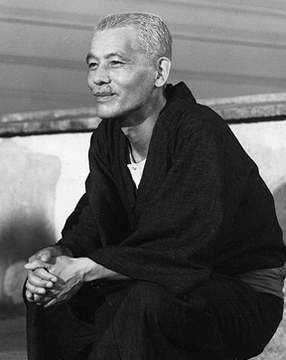
Policeman (Chishû Ryû)
Played by Chishû Ryû
A local police figure who becomes involved when Kihachi decides to surrender. He represents institutional authority rather than antagonism, highlighting the tension between law and the realities of urban poverty. The officer’s presence frames the ethical dimension of Kihachi’s decision.
- 👮 Authority
- ⚖️ Law
- 🕊️ Mercy
Where and When Is An Inn in Tokyo Set?
An Inn in Tokyo is set in Koto district and Tokyo (1933). Here is why the time and place matter to the story.
When
1933
The film is set in 1933 Tokyo, during the early Showa era, a time of economic strain and rapid urbanization. The urban landscape embodies scarcity and resilience as families seek work and shelter. In this milieu, daily decisions are driven by hunger, pride, and a desire to protect loved ones.
Where
Koto district, Tokyo
The story unfolds in the industrial flats of Tokyo’s Koto district, a dense, working-class neighborhood framed by factories and crowded streets. The area is a hub for low-wage labor, makeshift lodging, and small eateries where people scrape by. The cafes and shopfronts become temporary havens in a city that favors endurance over comfort.
- 🏭 Industrial district
- 🗺️ Urban setting
- ☕ Cafe culture
What Are the Themes of An Inn in Tokyo?
3 ideas the story keeps returning to, among them Poverty, Family and Morality.
-
01
Poverty
The narrative centers on extreme economic hardship and the means a family adopts to survive. We see scavenging for meals, a dog-catching scheme for reward money, and the pull between necessity and morality. The setting of scarcity heightens tension and forces characters to balance dignity with practical desperation.
-
02
Family
Family ties anchor the story as Kihachi struggles to provide for his two sons. The brothers’ actions test loyalty, responsibility, and mutual care in a hostile environment. The film portrays how love and duty push characters to make painful choices for the sake of others.
-
03
Morality
Moral lines blur under pressure: theft versus debt, pride versus dependence, and the decision to surrender to authority. Acts of kindness from Otsune and Otaka juxtapose against Kihachi’s escalating desperation. The outcome probes what is right when survival hangs in the balance.
What Kind of Film Is An Inn in Tokyo?
Melancholic in tone, with slow pacing and a straightforward story, going by the plot summary.
- Tone
- Melancholic
- Pacing
- Slow
- Story
- Straightforward
- Intensity
- Medium
- Ending
- Ambiguous
A quietly devastating portrait of poverty-driven desperation and paternal sacrifice set against the bleak industrial landscape of Depression-era Japan.
- bleak
- poverty
- fatherhood
- melancholy
- despair
- family
- unemployment
- sacrifice
- parental love
Content notes: poverty, child endangerment.