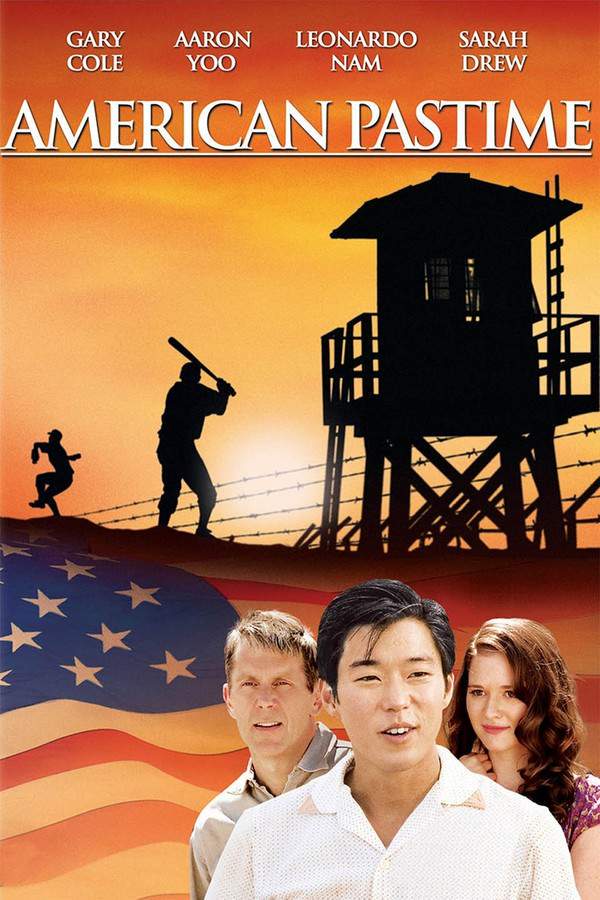
American Pastime 2007

Directed by

Desmond Nakano
Made by

Warner Home Video
Where to Watch American Pastime
See current US streaming, rental, and purchase options for American Pastime (2007) via JustWatch.

Streaming availability powered by 
American Pastime Plot Summary
Read the complete plot summary and ending explained for American Pastime (2007). From turning points to emotional moments, uncover what really happened and why it matters.
The film opens with a poignant depiction of the Nomura family, a quintessential American family of Japanese heritage living in 1941. This family consists of Japanese-born parents and their two American-born sons, Lane and Lyle. Their lives take a dramatic turn when they are compelled to vacate their Los Angeles home due to the infamous Executive Order 9066, enacted by President Franklin Delano Roosevelt. This decree permitted the forced removal of Japanese Americans from the West Coast, and the film showcases real historical footage illustrating the harrowing roundup of families, many of whom, like the Nomura siblings, were American citizens by birth.
The Nomuras find themselves relocated to a desolate and dusty desert camp, vividly portrayed with actual footage from the Topaz War Relocation Center, expertly captured by Dave Tatsuno using a secretly smuggled camera. The patriarch of the Nomura family, once a celebrated professional baseball player, quickly organizes an in-camp baseball league. Among the guards is Billy Burrell, played by Gary Cole, a minor-league baseball player who harbors resentment after being overlooked by a New York Yankees scout. With many top players off serving in the war, Burrell sees this as a potential opportunity.
Meanwhile, Lane Nomura, the eldest son, makes the selfless decision to enlist in the army, joining the esteemed 442nd Regimental Combat Team, famously known as the “Purple Heart Battalion.” One guard, who initially disapproves of Japanese Americans joining the military, undergoes a transformation upon learning about the brave men from Topaz who have sacrificed their lives in the line of duty, rescuing a Texas battalion.
The younger son, Lyle, becomes increasingly rebellious and infuriated by the injustices of internment. However, his anger begins to shift towards a desire to prove himself when the Topaz team faces off against Burrell and a local minor league team, where some members openly display their bigotry and disdain for the internees. This highlights not only the struggles of the Nomura family but also the resilience of Japanese Americans who fought for their dignity and rights amidst adversity.
American Pastime Timeline
Follow the complete movie timeline of American Pastime (2007) with every major event in chronological order. Great for understanding complex plots and story progression.
Introduction of the Nomura Family
The film opens with a poignant depiction of the Nomura family, showcasing their life as a typical American family of Japanese heritage in 1941. The family consists of Japanese-born parents and their two American-born sons, Lane and Lyle, setting the stage for the challenges they will soon face.
Executive Order 9066 Enacted
The lives of the Nomura family take a dramatic turn with the enactment of Executive Order 9066 by President Franklin Delano Roosevelt. This order allows for the forced removal of Japanese Americans from the West Coast, leading to the family's imminent displacement from their home in Los Angeles.
Forced Removal from Home
As a direct consequence of the executive order, the Nomura family is compelled to vacate their Los Angeles home. The film portrays the real historical footage of families being rounded up, highlighting the emotional toll and the injustice faced by many, including the Nomura siblings who are American citizens.
Relocation to Topaz War Relocation Center
The Nomuras are relocated to the Topaz War Relocation Center, depicted through vivid footage showcasing the desolate desert environment. This relocation highlights the stark conditions faced by interned families and paints a grim picture of their new reality.
Formation of In-Camp Baseball League
In the desolate surroundings of the camp, the patriarch of the Nomura family organizes an in-camp baseball league. This effort serves as a way to bring joy and normalcy to the interned families while also emphasizing the importance of community amidst adversity.
Introduction of Billy Burrell
One of the guards at the camp, Billy Burrell, is introduced as a minor-league baseball player who feels resentment due to being overlooked by a New York Yankees scout. Burrell's character brings complexity to the narrative, illustrating the intertwining of personal ambition and prejudice.
Lane Nomura Enlists in the Army
Demonstrating bravery and commitment to his country, Lane Nomura makes the selfless decision to enlist in the army. He joins the esteemed 442nd Regimental Combat Team, known as the 'Purple Heart Battalion,' which has become a symbol of the sacrifices made by Japanese American soldiers during WWII.
Guard's Transformation
A guard at the camp who initially disapproves of Japanese Americans serving in the military experiences a profound transformation. After learning about the sacrifices made by men from Topaz, including those who rescued a Texas battalion, his perception shifts as he acknowledges their bravery.
Lyle's Rebellion
The younger son, Lyle, becomes increasingly rebellious, fueled by anger over the injustices faced by his family and others in the camp. His frustration reflects a broader sentiment among the internees, struggling against their imposed circumstances and loss of dignity.
Confrontation with Local Minor League Team
As tensions rise, the Topaz team faces off against Burrell and a local minor league team. This event becomes a significant moment for Lyle, revealing the bigotry and disdain some community members openly display, challenging the athletes to prove their worth amidst prejudice.
Highlighting Resilience of Japanese Americans
Throughout the film, the narrative emphasizes the resilience of the Japanese American community as they navigate their forced internment. Despite facing extreme adversity, the Nomura family and their peers showcase their dignity and unwavering spirit in the face of injustice.
American Pastime Characters
Explore all characters from American Pastime (2007). Get detailed profiles with their roles, arcs, and key relationships explained.
Lane Nomura
Lane Nomura, the eldest son, embodies courage and selflessness as he chooses to enlist in the army, joining the esteemed 442nd Regimental Combat Team. His character highlights the internal conflict faced by many Japanese Americans; he seeks to prove his loyalty to the country despite the ongoing injustices that his family endures.
Lyle Nomura
Lyle Nomura, the younger son, represents the voice of discontent and rebellion against the oppressive conditions faced by his family. His character evolves from anger to a desire for validation as he finds ways to stand up against bigotry while supporting his family's dignity.
Billy Burrell
Billy Burrell, a minor-league baseball player and camp guard, initially demonstrates resentment towards Japanese Americans. However, his character undergoes a transformation as he learns of the sacrifices made by the Topaz internees, highlighting themes of prejudice, understanding, and redemption.
American Pastime Settings
Learn where and when American Pastime (2007) takes place. Explore the film’s settings, era, and how they shape the narrative.
Time period
1941
The film is set in 1941, during the buildup to World War II, a period marked by widespread prejudice and the internment of Japanese Americans following the attack on Pearl Harbor. This era reflects the struggles of a community facing systemic racism and the loss of civil liberties, highlighting the resilience of those affected.
Location
Los Angeles, Topaz War Relocation Center
Los Angeles serves as the initial home of the Nomura family, a vibrant city known for its diverse population and thriving culture. However, their journey leads them to the Topaz War Relocation Center, a dusty desert camp where Japanese Americans are forcibly relocated during World War II, revealing the stark contrast between their former lives and the harsh conditions of internment.
American Pastime Themes
Discover the main themes in American Pastime (2007). Analyze the deeper meanings, emotional layers, and social commentary behind the film.
⚾
Baseball & Resilience
Baseball serves as a powerful symbol of hope and normalcy for the Nomura family amidst their turmoil. The creation of an in-camp baseball league showcases the spirit of resilience and camaraderie among the internees, providing them with an avenue to assert their identity and counter the injustices they face.
✊
Identity & Injustice
The film delves into themes of identity, illustrating the struggles of Japanese Americans to assert their citizenship and rights in the face of prejudice. The characters’ journeys reflect deeper narratives of fighting for equality and honor, especially as Lane joins the military to prove his patriotism.

Coming soon on iOS and Android
The Plot Explained Mobile App
From blockbusters to hidden gems — dive into movie stories anytime, anywhere. Save your favorites, discover plots faster, and never miss a twist again.
Sign up to be the first to know when we launch. Your email stays private — always.
Explore the mobile appAmerican Pastime Spoiler-Free Summary
Discover the spoiler-free summary of American Pastime (2007). Get a concise overview without any spoilers.
In the early 1940s, a quiet California suburb is uprooted by a sweeping wartime decree that forces an entire community of Japanese Americans onto a remote desert reservation. The atmosphere is heavy with the stark contrast between the sun‑baked barracks and the lingering promise of a nation still at war, while a subtle undercurrent of quiet determination threads through every dusty lane. The film’s tone balances melancholy with a steady beat of hope, hinting at the resilience that can arise when ordinary lives are thrust into extraordinary circumstances.
At the heart of this world lives the Nomura family, a close‑knit household whose parents once dreamed of baseball diamonds before the war. Their American‑born sons, Lane and Lyle, embody two different responses to the upheaval: one son feels a pull toward service and duty, while the other wrestles with anger and a yearning to prove his worth. The family’s dynamic is a study in generational love, cultural pride, and the search for identity amid forced dislocation.
Amid the barbed wire and sand, a former professional player among the interned fathers organizes an impromptu baseball league, turning a simple game into a lifeline. Guarded by Billy Burrell, a hard‑nosed minor‑league pitcher watching the camp from the outside, the sport becomes a quiet battlefield where pride, prejudice, and perseverance intersect. The league’s existence offers a rare sanctuary where the internees can reclaim a piece of normalcy and display an unwavering loyalty to a country that has cast them aside.
Through the echo of cracked bats and whispered cheers, the story paints a portrait of community stitched together by shared hardship and the timeless rhythm of a baseball game. It hints at the ways hope can be cultivated in the most unlikely of fields, inviting viewers to wonder how far the power of sport—and the human spirit—can carry them when the world seems to have turned its back.
Movies with Similar Twists and Themes
Uncover films that echo the narrative beats, emotional arcs, or dramatic twists of the one you're exploring. These recommendations are handpicked based on story depth, thematic resonance, and spoiler-worthy moments — perfect for fans who crave more of the same intrigue.



Featured on this page

What's After the Movie?
Not sure whether to stay after the credits? Find out!
Check out our other apps:

SAT Sphere
Build confidence for the Digital SAT.

Mori Atlas
Discover wild places worth protecting.

Luntero
Search smarter for a home in Amsterdam.

Plot Explained
Unravel movie endings and hidden clues.

Pokechamp
Dive into Pokémon data and battle logic.

Driving Theory
Get ready for your European theory test.

Movie Dust
Plan your next cinema trip with ease.

Musemap
Find art and culture as you travel.

Selkobase
Compare credentials before committing.

Local Manual
Turn an unfamiliar country into practical next steps.

Lernavi
Compare school systems before your next move.

GymRoam
Find a workout stop wherever your plans take you.
Explore Our Movie Platform
New Movie Releases (2026)
Famous Movie Actors
Top Film Production Studios
Movie Plot Summaries & Endings
Major Movie Awards & Winners
Best Concert Films & Music Documentaries
Movie Collections and Curated Lists
© 2026 What's After the Movie. All rights reserved.
Privacy Policy