What Is All the Beauty and the Bloodshed About?
The premise of All the Beauty and the Bloodshed in 293 words, with nothing given away. The full story follows below.
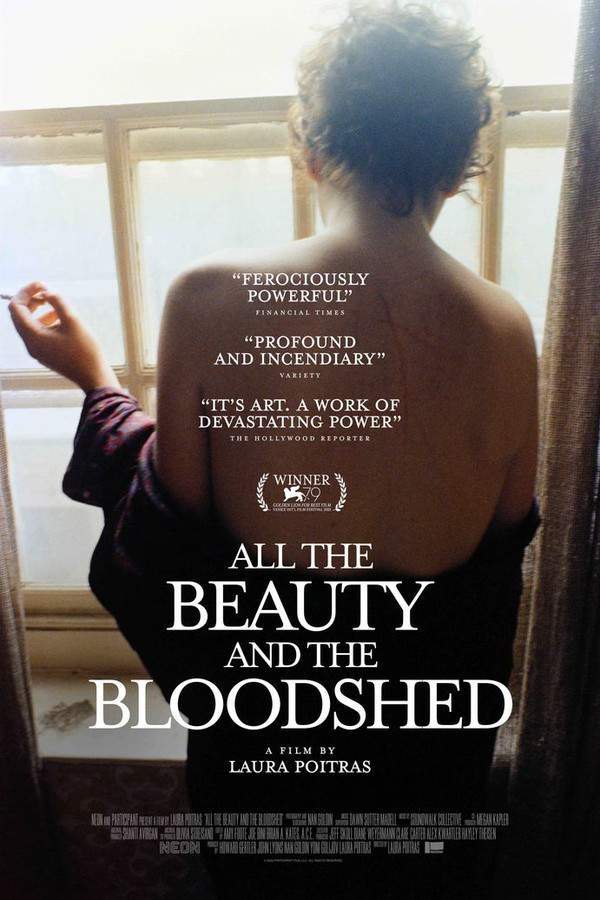
Academy Award–winning director Laura Poitras frames this documentary as an intimate portrait of Nan Goldin, a photographer whose candid, often piercing work has chronicled LGBTQ+ subcultures, intimacy, illness, and the HIV/AIDS crisis. Now an activist confronting the Sackler family’s role in the opioid epidemic, Goldin brings an artist’s eye and personal urgency to a stark question of institutional responsibility. The film’s tone moves between lyrical intimacy and pointed outrage, using her photographs not merely as illustrations but as a language for memory, identity, and collective grief.
Across seven chapters, archival images and moving sequences from Goldin’s career give way to present-day footage of demonstrations organized by P.A.I.N. (Prescription Addiction Intervention Now), the advocacy group she founded in 2017. Her slideshows carry the emotional weight of the story, while protests at the Metropolitan Museum of Art, the Louvre, and the Guggenheim place private history against the public visibility of major cultural institutions. The repeated visual motif of photographs turning into action creates a compelling tension: the beauty and cultural importance of the art world are set against the human cost of a crisis enriched by Sackler-linked philanthropy.
Goldin serves as the film’s primary narrator and guiding presence, with additional perspectives from journalist Patrick Radden Keefe and P.A.I.N. member Megan Kapler. Her own experience with prescription addiction gives the campaign a deeply personal dimension, while her collaborators suggest a broader network of artists, journalists, and organizers. Poitras allows these voices to coexist without making the film feel like a conventional lecture; instead, the documentary builds through associations, pauses, and contrasts. As Goldin moves through galleries, streets, and protest spaces, the film poses an unresolved challenge: how can institutions that profit from reputation and patronage also reckon with the harm associated with the money they accept?
What Happens in All the Beauty and the Bloodshed?
The complete story of All the Beauty and the Bloodshed, from the first scene to the last, in 193 words (about 1 minute). Spoilers throughout. Names in the text link to 1 cast member page.
Spoilers ahead
This film provides an intimate look at the life and career of photographer and activist Nan Goldin, focusing on her determined efforts to hold the Sackler family and their company, Purdue Pharma, accountable for the devastating opioid epidemic. Having previously documented LGBT subcultures and the HIV/AIDS crisis, Goldin transitioned into advocacy by founding P.A.I.N. (Prescription Addiction Intervention Now) in 2017, following her own struggle with Oxycontin addiction and a near-fatal fentanyl overdose.
The advocacy group specifically targets museums and arts institutions, challenging the art community’s willingness to accept financial support from the Sacklers. These efforts proved successful, as most targeted museums eventually severed ties with the family, and Purdue Pharma filed for bankruptcy in 2021.
The movie is organized into seven chapters, blending archival footage and photographic sequences with modern recordings of protests. This structure mirrors Goldin’s own artistic style, reminiscent of her famous series, The Ballad of Sexual Dependency. The film features footage from high-profile demonstrations at the Louvre, the Guggenheim Museum, and the Metropolitan Museum of Art. While Nan Goldin serves as the primary narrator, the story is supplemented by interviews with P.A.I.N. member Megan Kapler and journalist Patrick Radden Keefe.
All the Beauty and the Bloodshed Timeline: Every Key Event in Order
12 key events in the order they happen, from “A photographer of her own community” to “Purdue Pharma files for bankruptcy”. 5 events name a place, across 4 locations.
- 1
A photographer of her own community
Nan Goldin builds her reputation as a photographer devoted to documenting the lives of her friends and the LGBT subcultures around her. Her intimate, unvarnished images capture communities that mainstream society largely overlooks. This body of work establishes both her artistic voice and the personal, diary-like style that defines her career.
When:1970s–1980s Where:New York City
- 2
The Ballad of Sexual Dependency
Goldin creates The Ballad of Sexual Dependency, her landmark work of hundreds of photographs assembled into a musical slideshow about love, intimacy and dependency among her circle. The slideshow becomes one of her signature artistic forms. The documentary mirrors this practice, with its chapters opening on photographic sequences set to music.
When:1985
- 3
Bearing witness to the HIV/AIDS crisis
As the HIV/AIDS crisis devastates her community, Goldin photographs her friends and the world around them, creating some of the most enduring images of the epidemic. She also steps into the role of activist, using her visibility to demand attention and care for those affected. These years of loss and protest plant the seeds for the advocacy work to come.
When:1980s Where:New York City
- 4
The Sacklers' fortune and the art world
Purdue Pharma, owned by the Sackler family, grows enormously wealthy from the prescription opioid Oxycontin, which fuels the opioid epidemic. The family publicly channels much of its fortune into generous donations to museums and cultural institutions, with its name adorning galleries and wings around the world. This deep entanglement between the Sacklers and the art world later becomes the focus of protest.
- 5
Addiction to Oxycontin
Goldin becomes addicted to Oxycontin after being prescribed the drug, joining the millions of people swept up in the opioid crisis. The addiction turns her personal struggle into a direct confrontation with Purdue Pharma's flagship product. In the film she reflects openly and painfully on this chapter of her life.
When:2014
- 6
A near-fatal fentanyl overdose
Goldin's addiction culminates in a near-fatal overdose of fentanyl, an even more powerful synthetic opioid. She survives the ordeal, but the experience marks a breaking point in her life. Rather than retreat, she resolves to channel her grief and rage into organized action against the family behind the drug.
When:2017
- 7
Founding P.A.I.N.
In 2017 Goldin founds P.A.I.N. (Prescription Addiction Intervention Now), an advocacy group born from her near-fatal overdose and the deaths of so many in the opioid epidemic. The group's strategy is distinctive: it targets museums and arts institutions that accept Sackler money rather than only confronting the drugmaker itself. Its goal is to hold the art community accountable for its collaboration with the Sackler family.
When:2017
- 8
First protest at the Temple of Dendur
P.A.I.N. stages its first demonstration at the Metropolitan Museum of Art's Temple of Dendur, one of the most visible monuments bearing the Sackler name. Protesters gather inside the gallery to demand the museum refuse Sackler money and strip the family's name from its walls. The action brings national attention to the campaign and sets the template for everything that follows.
When:2018 Where:Metropolitan Museum of Art – Temple of Dendur, New York
- 9
Taking the campaign to the Louvre
P.A.I.N. carries its protest across the Atlantic to the Louvre in Paris, where a wing of the museum also bears the Sackler name. Activists unfurl protest banners demanding the removal of the family's name from the institution. The action demonstrates that the movement's reach extends far beyond New York.
When:2019 Where:The Louvre, Paris
- 10
Protest at the Guggenheim
The group turns the Guggenheim Museum in New York into a stage, releasing long banners from the top of its iconic rotunda that spiral down toward the museum floor, demanding an end to Sackler money and the removal of the name. The striking imagery of the action circulates widely in the press. Demonstrations like this put the museums' relationship with the Sacklers under intense public scrutiny.
When:2019 Where:Guggenheim Museum, New York
- 11
Museums sever ties with the Sacklers
Under sustained pressure from P.A.I.N. and growing public scrutiny, most of the museums and institutions targeted by the group sever all ties with the Sackler family. Several announce they will no longer accept the family's donations and move to remove the Sackler name from their galleries. The retreat stands as the clearest evidence that the protesters' strategy has worked.
When:2019–2022
- 12
Purdue Pharma files for bankruptcy
With litigation over the opioid crisis piling up, Purdue Pharma files for bankruptcy in 2021. The filing marks a dramatic turn in the reckoning over the epidemic the company helped ignite. For Goldin and P.A.I.N., it signals the fall of the company whose product nearly took her life and took so many others.
When:2021
Who Are the Main Characters in All the Beauty and the Bloodshed?
Nan Goldin: who they are and the part they play in the story. The profile links to the actor’s page.
-
Nan Goldin
Played by Nan Goldin
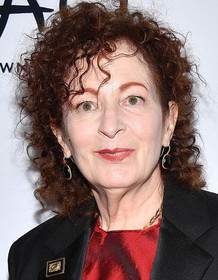
Nan Goldin is a renowned photographer and the central figure of the film. She is depicted as a passionate activist who transforms her personal struggles with addiction into a collective fight against the pharmaceutical companies fueling the opioid crisis. Her resilience and determination to hold influential art institutions accountable for their ties to the Sacklers showcase her commitment to both her art and activism.
- 📸 Photographer
- ✊ Activist
- 🌈 LGBTQ+
Where and When Is All the Beauty and the Bloodshed Set?
All the Beauty and the Bloodshed is set in Metropolitan Museum of Art, Louvre and Guggenheim Museum (2010s to present). Here is why the time and place matter to the story.
When
2010s to present
The events of the film primarily unfold from the 2010s to the present day, a period marked by increasing awareness of the opioid crisis in America. This timeframe has seen a rise in activism against pharmaceutical companies and a growing conversation about accountability in the art world. The emergence of advocacy groups like P.A.I.N. reflects a pivotal moment in social activism against addiction.
Where
Metropolitan Museum of Art, Louvre, Guggenheim Museum
The film features several iconic art institutions, such as the Metropolitan Museum of Art in New York, the Louvre in Paris, and the Guggenheim Museum. These museums are known for their vast collections and cultural significance. They have recently been called into question regarding their associations with the Sackler family and their sponsorship of the arts.
- 🎨 Art
- 🏛️ Museums
- 🌍 Global
What Are the Themes of All the Beauty and the Bloodshed?
2 ideas the story keeps returning to, among them Advocacy and Art & Activism.
-
01
Advocacy
The film explores the theme of advocacy through Goldin's efforts with P.A.I.N. to expose the link between the art world and the pharmaceutical industry. It highlights the importance of holding powerful institutions accountable for their actions and the impact of addiction on society. This theme resonates deeply in contemporary discussions surrounding social justice.
-
02
Art & Activism
Goldin’s background as a photographer is integral to the film, showcasing how art can be a tool for activism. The use of her photographic sequences emphasizes the connection between personal narrative and social issues. This theme illustrates the power of visual storytelling in raising awareness and prompting change.
What Kind of Film Is All the Beauty and the Bloodshed?
Dark in tone, with variable pacing and a complex story, going by the plot summary.
- Tone
- Dark
- Pacing
- Variable
- Story
- Complex
- Intensity
- High
- Ending
- Bittersweet
A sober, urgent documentary that turns Nan Goldin's photography and confrontational activism into an emotionally draining indictment of art-world complicity in the opioid epidemic.
- somber
- defiant
- confrontational
- reflective
- urgent
- grief-stricken
- opioid crisis
- addiction and recovery
- art activism
- institutional accountability
Content notes: suicide, drug addiction, overdose, sex work, nudity, child death.
Quiz
How well do you remember All the Beauty and the Bloodshed? Test yourself on the story.