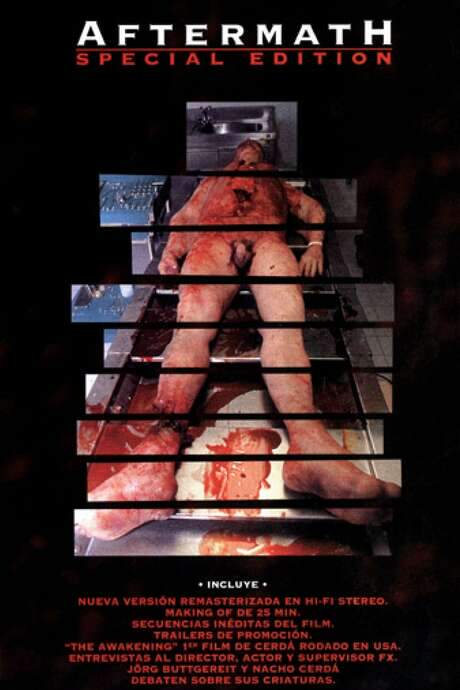
What Is Aftermath About?
The premise of Aftermath in 310 words, with nothing given away. The full story follows below.
In the quiet hours after the hospital’s corridors have emptied, the morgue becomes a solitary world of flickering fluorescents and the soft hum of refrigeration units. The space is both clinical and claustrophobic, a place where the line between the living and the dead feels unnervingly thin. Night shift staff move like ghosts, their movements measured, their conversations hushed, as the building settles into a rhythm that is part routine and part ritual.
The mortician is the last figure standing when the lights dim, a figure accustomed to the stillness that blankets the morgle after the day’s bustle. He carries the weight of his responsibilities with a practiced detachment, yet there is an undercurrent of something more intimate in the way he navigates the rows of drawers. His solitary vigilance is punctuated by quiet observations, an almost reverent curiosity that sets him apart from his colleagues, whose work feels more procedural than personal.
When a fresh case arrives—a young woman whose life ended abruptly in a car crash—Marta is carefully wheeled in, her presence shifting the atmosphere of the morgue. The mortician’s attention narrows, and the ordinary procedures of an autopsy begin to feel like the opening of a secret chapter. The night deepens, and with it the sense that the morgue is a stage for a private, unsettling drama that only he seems aware of, hinting at an obsession that blurs professional duty with something far more intimate.
The film hovers between clinical precision and unsettling intimacy, using the stark, antiseptic setting to explore the quiet corners of human fascination. Its tone is both methodical and disquieting, inviting viewers to linger in the shadows of the after‑hours world, where ordinary tasks acquire a strange, almost poetic weight. The atmosphere is thick with anticipation, leaving the audience to wonder what lies beneath the surface of a night‑time caretaker’s quiet reverie.
What Happens in Aftermath?
The complete story of Aftermath, from the first scene to the last, in 308 words (about 1 minute). Spoilers throughout. Names in the text link to 2 cast member pages.
Spoilers ahead
In a stark, unsettling sequence, Marta Arnau Marti dies in a car crash after she accidentally runs over a dog. An orderly wheels Marta’s body into a cold morgue drawer, passing a mourning couple while a nurse offers them a crucifix necklace. The orderly’s curiosity is piqued when he overhears two morticians performing autopsies on two male bodies. He lingers to catch a glimpse, then slips away when one mortician fixes him with a hard, unsettling glare.
Inside the morgue, the two morticians finish their work on the dead men, and as one of them leaves, the other remains and brings Marta’s body to the autopsy table. The scene quickly turns morbid and methodical as the mortician, Pep Tosar, moves Marta into a private space, undresses her, and begins a chilling, meticulous dissection. He removes the brain and uses a knife to touch and manipulate the body, tracing lines across her torso and, disturbingly, her intimate areas. The act grows increasingly explicit as he fondles her breasts and internals, pausing to take photographs of his disturbing handiwork. Unable to curb his urges, he proceeds to necrophilia, while his camera continues to record the grim tableau on its automatic setting.
After the horrific violation, the mortician continues with the autopsy, cleans the space, and then leaves the morgue. At home, the pajama-clad killer blends Marta’s heart into a pulpy substance, feeds a portion to his dog, and settles into his living room. The unsettling rhythm of domesticity returns as a baby’s cries echo from the television, and scraps of newspaper—upon which the dog gnaws—reveal Marta’s obituary, tying the living world back to the dead in a haunting loop. Among the bodies examined in the morgue that night is Cadáver Vin, portrayed by Xevi Collellmir, a reminder of the quiet, invisible presence of those who did not survive the crash.
Aftermath Timeline: Every Key Event in Order
12 key events in the order they happen, from “Marta's Fatal Car Crash” to “Lingering Shadow of the Morbid Routine”. 12 events name a place, across 3 locations.
- 1
Marta's Fatal Car Crash
A woman named Marta Arnau Marti dies in a car crash after she accidentally runs over a dog on the road. The impact is sudden and devastating, setting off the morgue-bound sequence of events. This incident marks the film's grim entry point.
Where:Road
- 2
Morgue Intake and Mourning Visitor
An orderly wheels Marta's body into the morgue, past a mourning couple who receive a crucifix necklace from a nurse. The gesture of faith contrasts with the clinical solemnity of the morgue. Marta's body is now the subject of a private, disturbing sequence that follows.
Where:Morgue
- 3
Eavesdropping by the Morgue
Two morticians work on autopsies on a pair of male bodies while the orderly overhears from the doorway. One mortician glares at him, prompting the orderly to retreat. The tension hints at a sinister, voyeuristic aura within the morgue.
Where:Morgue
- 4
Marta's Body Reintroduced to the Morgue
After finishing with the male bodies, one mortician leaves and the other brings Marta's body into the morgue. The private discussion that follows hints at a perverse fixation about Marta's remains. The morgue becomes a stage for a dangerous obsession.
Where:Morgue
- 5
Locking the Morgue Door
The mortician locks himself in the morgue with Marta's body and begins to undress her. He removes the brain and toys with the corpse using a knife. The act marks the onset of a chilling, unspoken perversion.
Where:Morgue
- 6
Mutilation with a Knife
With the brain removed, he caresses the exposed tissue with a knife and uses it to mutilate Marta's vagina and cut open her torso. The grotesque manipulation underscores the depth of his perverse fixation. The scene unfolds with clinical detachment and brutal violence.
Where:Morgue
- 7
Masturbation and Photography
Unable to contain his lust, the mortician masturbates as he fondles Marta's breasts and innards and sets his camera to record the act. He photographs the scene, capturing his handiwork to keep as a grotesque trophy. The sequence foregrounds necrophilia and the perverse duality of clinical distance and sexual violence.
Where:Morgue
- 8
Necrophilia and Autopsy Finish
After the act, the mortician completes the autopsy, cleans up, and leaves the morgue as if nothing has happened. The routine appearance belies the depth of his perversion. Marta's body remains a broken artifact in his care.
Where:Morgue
- 9
Heart Pulp at Home
At home, in pajama clothes, the mortician blends Marta's stolen heart into a pulp and feeds it to his dog. The domestic setting juxtaposes normal life with monstrous ritual. The household scene reveals the predator's unnerving fixation turning into a macabre habit.
Where:Home
- 10
Baby Cries and Obituary Fragments
As a baby's cries emanate from the television, scraps of newspaper bearing Marta's obituary drift into view. The image links Marta's death to the dog's meal and to ongoing memory. The scene reinforces the film's motif of life, death, and the traumatic aftereffects.
Where:Home
- 11
Dog and Obituary Remains
The dog gnaws on the scraps containing Marta's obituary while the mortician's macabre ritual continues to haunt the home. The obituary's presence emphasizes the permanent interruption of Marta's life. The cruelty and the fusion of domestic space with necrophilia reach a chilling culmination.
Where:Home
- 12
Lingering Shadow of the Morbid Routine
The summary ends with the mortician continuing his eerie routine in the private space of the home, leaving Marta's tragedy as a lingering, unsettling memory. The film closes on a note of unresolved horror that haunts the audience. Marta's story remains a disturbing, unresolved imprint on the world she left behind.
Where:Home
Who Are the Main Characters in Aftermath?
5 characters, among them Mortician, Cadáver Vin and Watchman: who each one is and the part they play in the story. 4 of them link to the actor’s page.
- M
Mortician
Played by Pep Tosar
A disturbed, meticulous mortician who becomes consumed by Marta Arnau Marti's body. He maintains a calm exterior while his private curiosity leads him toward morally and legally unacceptable actions. His cold, systematic demeanor contrasts with the raw, taboo impulses that drive the plot.
- 🪦 Morbid
- 🔬 Clinical
- 🔪 Obsessive
- CV
Cadáver Vin
Played by Xevi Collellmir
One of the two male corpses subjected to autopsy. The presence of a lifeless body serves as the catalyst for the mortician's transgressive behavior, highlighting the film's exploration of mortality and desecration.
- 🪦 Cadaver
- 🔬 Autopsy subject
- 🧭 Dead
- W
Watchman
Played by Ángel Tarris
A quiet, watchful figure who observes the morgue's corridors. The Watchman embodies the boundary between life and death, offering a peripheral perspective on the events unfolding in the morgue.
- 👁️ Watcher
- 🚧 Boundary
- 🕯️ Quiet
- M#
Médico #2
Played by Jordi Tarrida
A morgue doctor assisting with the autopsies. He represents the professional front of the operation and shares a sense of clinical detachment that shapes the film's unsettling atmosphere.
- 🧪 Doctor
- 🧭 Clinical
- 🗝️ Professional
- MA
Marta Arnau Marti
The woman who dies in the opening car crash and becomes the focal point of the mortician's fixation. Her body triggers the unfoldings of desire, violation, and the ultimate tragedy within the morgue.
- 🪦 Victim
- 💔 Tragedy
- 🗝️ Focal point
Where and When Is Aftermath Set?
Aftermath is set in Morgue and Mortuary. Here is why the place matters to the story.
Where
Morgue, Mortuary
A clinically sterile morgue serves as the film's central stage, with cold metal tables and quiet corridors. The space is where autopsies unfold, exposing the tension between science and fixation. Its hushed atmosphere amplifies the disturbing acts surrounding Marta Arnau Marti's body.
- 🧪 Clinical
- 🧊 Cold
- 🧰 Sterile
What Are the Themes of Aftermath?
3 ideas the story keeps returning to, among them Obsession, Death and Voyeurism.
-
01
Obsession
The film centers on a mortician whose fixation on Marta Arnau Marti's body spirals into dangerous, immoral behavior. The narrative tracks how obsession distorts professional detachment into compulsion, driving deadly acts. The theme examines how private fascinations become public horrors.
-
02
Death
Death is rendered as both physical decay and a narrative force that reshapes characters. The morgue's quiet environment foregrounds the moment death becomes a stage for control and transgression. The story uses dead bodies to explore desire, power, and the boundaries of humanity.
-
03
Voyeurism
The mortician's autopsy work is filtered through a gaze that borders on spectatorship and arousal. Photography and the clinical fascination with illness reveal a disturbing appetite for watching and recording. This theme exposes how looking can become a weapon and a sanctuary for forbidden impulses.
What Kind of Film Is Aftermath?
Dark in tone, with steady pacing and a straightforward story, going by the plot summary.
- Tone
- Dark
- Pacing
- Steady
- Story
- Straightforward
- Intensity
- High
- Ending
- Bleak
A deeply unsettling and grim film that follows a mortician's descent into necrophiliac depravity, creating a cold and voyeuristic atmosphere of profound moral decay.
- disturbing
- unsettling
- grim
- claustrophobic
- voyeuristic
- cold
- necrophilia
- moral depravity
- body horror
- obsession
Content notes: necrophilia, graphic mutilation, sexual violence, corpse desecration, animal death.
Quiz
How well do you remember Aftermath? Test yourself on the story.