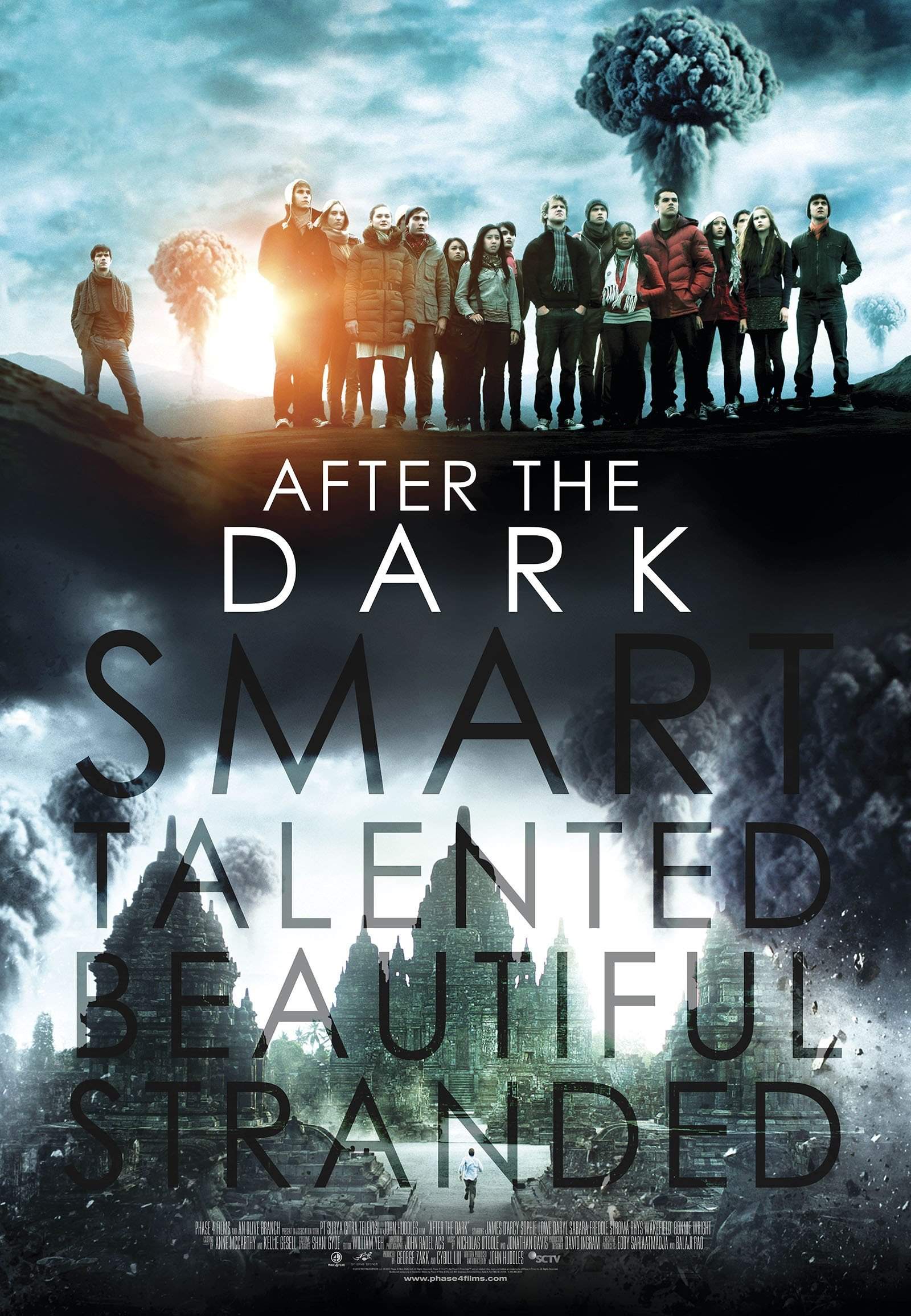
After the Dark 2014
Directed by

John Huddles
Made by
Phase 4 Films
Where to Watch After the Dark
See current US streaming, rental, and purchase options for After the Dark (2014) via JustWatch.



Streaming availability powered by 
After the Dark Plot Summary
Read the complete plot summary and ending explained for After the Dark (2014). From turning points to emotional moments, uncover what really happened and why it matters.
In the oppressive heat of Jakarta, Mr. Zimit, a philosophy teacher at an international school, introduces his students to a challenging thought experiment that delves deep into their ethics and moral fortitude. Approaching the final day of the term, he presents a dire hypothetical: an imminent atomic apocalypse threatens their lives, and the only escape lies in a bunker that can hold only ten individuals. With the odds stacked against them, Zimit’s class of twenty must grapple with the harsh and brutal reality of survival, where only the strongest will prevail.
Initially, top student Petra is resistant to participate, but Zimit’s subtle warning about jeopardizing her boyfriend James’ academic standing prompts her to get involved. As the situation unfolds, the students receive cards that define their roles: James, depicted as an organic farmer skilled in self-sufficiency, and Petra, an engineer possessing vital technical know-how.
The class engages in tense discussions, advocating for their places in the bunker while debating who deserves to be chosen. Skills deemed essential for survival help elevate some, like James and Petra, while others, like Beatrice, a fashion designer, are deemed expendable and left outside. Throughout this exercise, Zimit remains an inscrutable figure, keeping his own abilities hidden and allowing the students to navigate based on their perceptions of him.
As tensions mount and decisions are made, the students initially agree to let Zimit join their refuge. But he horrifies them with his revelation that those excluded will be euthanized, asserting it’s a more merciful option compared to a slow death by radiation. In a panic, the remaining students rush into the bunker, locking Zimit out and shutting themselves away from his disturbing plans.
Years down the line, the survivors finally exit the bunker only to discover that Zimit held the exit code all along. In despair over their futile attempts at freedom, they tragically succumb to their hopelessness, choosing to end their own lives within the very sanctuary that promised to save them.
As they regroup, they are forced to confront a disturbing truth: their decisions were heavily influenced by misguided information. The innocuous cards, initially believed to be straightforward indicators of their roles, now unveil a more intricate layer that drastically shifts the dynamics of their group. For instance, Georgina’s previously accepted role is threatened by the revelation of her potential exposure to the Ebola virus, disqualifying her from consideration. Meanwhile, Petra and James continue to benefit from their prior acceptance, with James’s identity as a gay man not hindering his eligibility.
With unease settling in as they reluctantly agree to reproduce within the bunker, Zimit pushes for immediate procreation, eliciting mixed reactions from the group. Some heterosexual couples welcome this challenge, while others feel apprehensive. James finds himself increasingly uncomfortable, especially when his companion Petra is coerced into a pairing with Zimit.
As time progresses without any pregnancies, tension simmers beneath the surface. Zimit’s frustration escalates, leading him to suggest a shift in partnerships, a demand firmly rejected by Bonnie, the soldier with a remarkable memory. In a moment of desperation, Zimit draws a gun, prompting Jack to intervene decisively, resulting in chaos when Zimit forcibly opens the bunker doors, leading to catastrophic consequences.
In the aftermath, James ponders Zimit’s motives for this twisted experiment. A careful look at the cards unveils a shocking truth: his fate had been predetermined, deepening his distrust of Zimit’s intentions. Zimit claims the exercise’s purpose is to make James confront the brutalities of his privileged life, a message that falls on skeptical ears.
Unfazed by the turmoil she has instigated, Petra takes control and insists on a third iteration of the experiment. This time, she selects participants whose skills are deemed risky or peripheral, inciting further aggravation from Zimit as an opera singer and poet join the fray.
In a bold act of rebellion, Chips covertly takes Petra’s place just as the bunker doors are about to seal shut, ensuring her salvation while pushing Zimit out. Bonnie’s eidetic memory proves invaluable, recalling the exit code that thwarts Zimit’s efforts.
When the group finally emerges from the bunker, they are confronted with a shocking reality: the bombs did not fall as feared. Zimit’s ominous narrative suggests they will perish due to their lack of technical skills, yet Petra counters this outlook, arguing that their time in the bunker was filled with creativity and joy, making the expected doom even more insipid.
Left alone on a beach, Zimit miraculously survives in a cave for a whole year, while his sinister designs now target James. Nonetheless, the remaining survivors band together, forming a united front that dismantles Zimit’s schemes, revealing the profound truth of their existence.
As the class comes to a close, Zimit’s internal struggle with his ethics becomes increasingly apparent. As his students disperse, Petra remains, her accusatory gaze challenging Zimit about his true motivations. Their history complicates their exchange as Petra criticizes Zimit for attempting to boil human interactions down to mere variables and metrics, asserting that intelligence is but one aspect of the intricate human experience.
Their conversation crackles with tension, culminating in the echo of a gunshot through the empty classroom, isolating Zimit further. However, this event does not signify an ordinary conclusion; instead, it launches a series of diverging scenarios, each representing a hypothetical outcome stemming from the exercises they endured. In conjuring alternate realities from his own psyche, Zimit’s actions catalyze multiple potential worlds, each reflecting the boundless potential and uncertainty intrinsic to the human experience.
After the Dark Timeline
Follow the complete movie timeline of After the Dark (2014) with every major event in chronological order. Great for understanding complex plots and story progression.
Zimit's Thought Experiment
In the oppressive heat of Jakarta, Mr. Zimit introduces his class to a challenging thought experiment on ethics and survival. He presents a dire hypothetical scenario: an atomic apocalypse is imminent, and only ten students can escape to a survival bunker due to limited space.
Petra's Hesitation
Initially, top student Petra is resistant to engage in the exercise. However, when Zimit subtly warns her about the potential jeopardy her boyfriend James might face academically, she reluctantly decides to participate, feeling the pressure to protect him.
Role Assignments
As the students begin to navigate the dilemma, they receive cards that define their roles for the hypothetical scenario. James's background as an organic farmer enhances his viability for survival, while Petra's engineering skills make her indispensable.
Debates for Survival
The class engages in intense discussions regarding who gets to enter the bunker, as each student advocates for their essential skills. This leads to heated debates about who deserves to go, exposing varying perceptions of worth within the group.
Zimit's Shocking Revelation
As decisions solidify, the students initially agree to let Zimit join them in the bunker, but he shocks them by revealing that those excluded will be euthanized. This horrifying admission sends the group into a panic as they rush into the bunker, locking Zimit out.
The Exit Code
Years later, the survivors finally leave the bunker only to discover a devastating truth: Zimit held the exit code all along. Faced with despair and futility, the survivors find themselves trapped in hopelessness, leading to tragic outcomes.
Misguided Decisions
As the survivors regroup, they confront the facts that their choices were based on flawed information. The roles they accepted through their cards reveal hidden truths that threaten their dynamics and decisions going forward.
Pressure to Reproduce
With unease settling in, Zimit insists on procreation within the bunker, stirring mixed reactions among the group. While some couples embrace the challenge, it raises discomfort for others, specifically for James regarding Petra's forced pairing with Zimit.
Tensions Rise
As time passes without any pregnancies, tensions in the bunker reach a boiling point. Zimit's growing frustration leads him to propose shifting partnerships, a demand vehemently rejected by Bonnie, a soldier with an exceptional memory.
Chaos Unleashed
In a moment of desperation, Zimit draws a gun, prompting intervention from Jack. In the ensuing chaos, Zimit forcibly opens the bunker doors, resulting in catastrophic consequences for the entire group caught in the turmoil.
James's Realization
Post-chaos, James reflects deeply on Zimit's motives for conducting this twisted experiment. Upon further scrutinizing the cards, he discovers that his fate may have been predetermined all along, intensifying his distrust in Zimit's intentions.
Petra's Rebellion
Unfazed by the chaos, Petra takes charge and initiates a third iteration of the experiment. This time, she selects participants viewed as risky, much to Zimit's dismay as unorthodox members like an opera singer and a poet join the fray.
Escape Plan
In a courageous act, Chips takes Petra's place just as the bunker doors are sealing, effectively pushing Zimit out. Meanwhile, Bonnie recalls the exit code crucial for countering Zimit's plans, leading to their eventual escape.
Reality Check
Upon emerging from the bunker, the survivors are stunned to discover that the feared atomic bombs never fell. While Zimit warns of their doom due to a lack of skills, Petra argues that their experiences in the bunker fostered creativity and joy.
Final Confrontation
Faced with the remnants of their experiences, Zimit engages in a tense conversation with Petra. As she challenges his motives and reveals the futility of his calculations, their exchange culminates in a haunting gunshot, setting the stage for countless hypothetical outcomes of their journey.
After the Dark Characters
Explore all characters from After the Dark (2014). Get detailed profiles with their roles, arcs, and key relationships explained.
Mr. Zimit
Mr. Zimit is a philosophy teacher whose deep understanding of human behavior manipulates his students into a grueling moral quandary. He embodies the ambiguity of ethics, exhibiting a facade of wisdom while harboring alarming intentions. His actions reveal a complex character battling with his own moral compass.
Petra
Petra is a top student who initially resists Zimit's controversial experiment but later takes a leadership role. Her technical skills as an engineer prove vital, showcasing her strong will, intelligence, and emotional resilience as she grapples with difficult choices and the implications of survival.
James
James is a skilled organic farmer who represents the balance of vulnerability and strength within the group. As a gay man, he contends with societal norms while navigating complex relationships. His insights into self-sufficiency and moral choice enhance the group's survival dynamic.
Zimit
Zimit is a manipulative figure who casts a long shadow over the students' lives, believed to have all the answers yet cloaked in mystery. His actions and ideology provoke deep philosophical debates that challenge the very essence of humanity's moral fabric.
Beatrice
Beatrice is a fashion designer whose initial excitement turns to despair as her skills are deemed irrelevant for survival. Her character reflects societal values placed on superficial talents and the fragility of self-worth in life-or-death scenarios.
Bonnie
Bonnie is a soldier equipped with an incredible memory, showcasing her strength and tactical prowess. Her resilience and tenacity make her a key player in the survival dynamic, especially when facing Zimit's sinister plans.
Georgina
Georgina's character evolves from one of initial acceptance to scrutiny as her potential danger from exposure to an infectious disease changes her role in the group. Her storyline highlights the unpredictability of survival scenarios.
Chips
Chips acts heroically to save Petra, representing selflessness and the instinct to protect others in dire situations. His actions highlight themes of friendship and sacrifice amid chaos and uncertainty.
After the Dark Settings
Learn where and when After the Dark (2014) takes place. Explore the film’s settings, era, and how they shape the narrative.
Time period
Modern Day
The events of the movie unfold in a contemporary setting, where the realities of survival and ethical decision-making are brought into sharp focus. As technology and societal expectations clash, the students are forced to confront their values and instincts in a high-stakes simulation.
Location
Jakarta
Jakarta, the capital of Indonesia, is known for its vibrant culture and bustling city life. The oppressive heat underscores the tension in Mr. Zimit's classroom as students are faced with a life-altering thought experiment. The city's stark contrasts between wealth and poverty also reflect the moral dilemmas explored in the film.
After the Dark Themes
Discover the main themes in After the Dark (2014). Analyze the deeper meanings, emotional layers, and social commentary behind the film.
⚖️
Ethics
The central theme of the film revolves around ethical dilemmas and the moral choices individuals must make under pressure. Students challenge each other's values and confront harsh realities of survival, leading to existential discussions about humanity and the consequences of their decisions.
😱
Survival
Survival in the face of catastrophic scenarios is a dominant theme, accentuated by the thought experiment's premise. The characters must grapple with their instincts and the ruthless nature of their society, revealing vulnerabilities and strengths that shape their fates.
🤯
Reality vs. Illusion
The film explores the thin line between reality and the illusions created by human perceptions. As students discover the reality of their roles and decisions, they face the unsettling truth about their identities and the hidden motives of their teacher, Zimit.

Coming soon on iOS and Android
The Plot Explained Mobile App
From blockbusters to hidden gems — dive into movie stories anytime, anywhere. Save your favorites, discover plots faster, and never miss a twist again.
Sign up to be the first to know when we launch. Your email stays private — always.
Explore the mobile appAfter the Dark Spoiler-Free Summary
Discover the spoiler-free summary of After the Dark (2014). Get a concise overview without any spoilers.
In a remote, snow‑capped valley where the echo of tractors and marching boots mingles with the rustle of pine, a once‑tight community has been cleaved by the hard lines of a nascent communist doctrine. The village, once bound by shared harvests and folklore, now walks a precarious tightrope between collective idealism and the lingering shadows of old loyalties. The atmosphere is thick with the chill of suspicion, yet the landscape itself breathes a melancholy beauty that hints at hope underneath the ideological frost.
Katerina grew up amid the cracked hearths and whispered lullabies of this place, her spirit forged by the rhythms of daily labor and the quiet resilience of her family. Stefan, her childhood companion, learned the art of survival in the same fields, his laughter once echoing through the same narrow lanes that now seem divided by invisible barriers. Their bond, rooted in shared secrets and dreams, was torn apart when the political tempest forced them onto opposite sides of the emerging order.
Decades later, serendipity draws them back into each other’s orbit, awakening a passion that feels both inevitable and forbidden. Their reunion is a quiet storm, stirring emotions that have lain dormant beneath the surface of the village’s fragile peace. As the community earnestly strives toward a tentative unity, the rekindled connection between the two former friends becomes a subtle catalyst, urging everyone to confront the lingering wounds of the past while quietly testing the limits of what can be permitted in a world seeking cohesion.
The film moves with a contemplative pulse, marrying stark, wintry visuals with an intimate, character‑driven narrative. It explores how love can bloom in the cracks of ideological walls, and how the pursuit of harmony can be both a balm and a source of tension. Amidst the hush of snow‑laden fields, the story invites viewers to linger on the delicate balance between personal desire and collective duty, promising a thoughtful meditation on forgiveness, memory, and the stubborn endurance of the human heart.
Movies with Similar Twists and Themes
Uncover films that echo the narrative beats, emotional arcs, or dramatic twists of the one you're exploring. These recommendations are handpicked based on story depth, thematic resonance, and spoiler-worthy moments — perfect for fans who crave more of the same intrigue.


Featured on this page

What's After the Movie?
Not sure whether to stay after the credits? Find out!
Check out our other apps:

SAT Sphere
Build confidence for the Digital SAT.

Mori Atlas
Discover wild places worth protecting.

Luntero
Search smarter for a home in Amsterdam.

Plot Explained
Unravel movie endings and hidden clues.

Pokechamp
Dive into Pokémon data and battle logic.

Driving Theory
Get ready for your European theory test.

Movie Dust
Plan your next cinema trip with ease.

Musemap
Find art and culture as you travel.

Selkobase
Compare credentials before committing.

Local Manual
Turn an unfamiliar country into practical next steps.

Lernavi
Compare school systems before your next move.

GymRoam
Find a workout stop wherever your plans take you.
Explore Our Movie Platform
New Movie Releases (2026)
Famous Movie Actors
Top Film Production Studios
Movie Plot Summaries & Endings
Major Movie Awards & Winners
Best Concert Films & Music Documentaries
Movie Collections and Curated Lists
© 2026 What's After the Movie. All rights reserved.
Privacy Policy