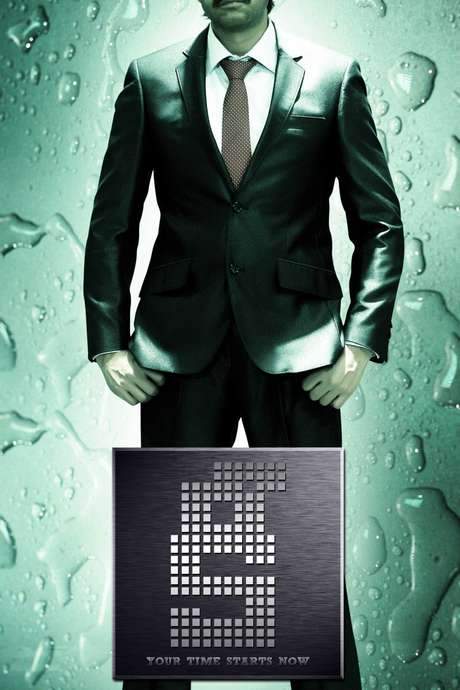
Key 2011


Directed by

Sukumar
Made by

Dream Theater Entertainments
Where to Watch Key
See current US streaming, rental, and purchase options for Key (2011) via JustWatch.









Key Plot Summary
Read the complete plot summary and ending explained for Key (2011). From turning points to emotional moments, uncover what really happened and why it matters.
Inside a stark, sealed room, a high-stakes examination is set for a coveted post in a prestigious company. Nine candidates stand under watchful eyes as the Invigilator oversees a test that hinges on a single idea: the person who can solve the implicit riddle within the allotted time will win. The room hums with quiet tension as the task begins, and a blank paper is handed out—no question appears on the page. The clock ticks toward the critical 90-minute mark, and the air grows tense with anticipation. The Invigilator Jagapati Babu emphasizes discipline, but the rules themselves become a challenge: the paper is blank, the question unseen, and yet every move could make or break a career.
Nine hopefuls sit in guarded stillness, each acutely aware that crossing the invisible line will determine whether they pass the threshold or lose everything. Among them is Candidate 9 Swapna, whose presence hints at a hidden layer to the competition. They are warned of four conditions that will disqualify them from crossing the proverbial bridge to success:
- The applicants should not talk with the Invigilator.
- They cannot talk with Security.
- They must not leave the room.
- They may not spoil their paper either intentionally or accidentally.
The Invigilator locks the door, and the test officially begins. It isn’t long before the contestants realize the paper is blank, save for the absence of any question. One candidate falters immediately—writing the word God upon the page—to the shock of everyone else. That single act seals his fate and marks the start of a careful, collective push to decipher the puzzle without overtly violating the rigid rules.
To navigate the mystery, the nine candidates decide to introduce themselves and reveal their professions, hoping that a mix of caste, community, numerology, and color bias can be set aside in the pursuit of the truth. The lineup of roles includes:
- Criminal Lawyer
- Professor
- Psychologist
- Optic Engineer
- Scientist
- MBA Graduate
- Business Consultant
- Journalist
- (and the remaining candidate, Swapna, as Candidate 9)
With secrets laid bare, the group leans on expertise from their diverse fields to dissect the unspoken question. They experiment with light and shadow, analyze bodily fluids, trigger fire sprinklers, and piece together shards of glass. The room becomes a testing ground not just for intellect but for teamwork, strategy, and trust. Inevitably, tensions flare as rivalries surface and alliances form, each choice carrying consequences that ripple through the fragile balance of the group.
As pressure mounts, the optic engineer is eliminated in a dramatic moment when the paper is torn, removing one technical perspective from the mix. The Criminal Lawyer makes a blunt, morally gray move, turning on the MBA Graduate and the Business Consultant, driven by a belief that he can identify a winner by eliminating perceived threats. The Journalist, sensing opportunity and danger in equal measure, strikes back when the Lawyer collapses under the strain, cutting off any chance of mercy. The Lawyer pleads for a medication he must take hourly; without it, he fears slipping into a coma. The Journalist, relentlessly pragmatic, discards the medication, arguing that the rules require a clear, unassailable path to victory.
The Psychologist, drawing on her knowledge of human behavior, recognizes a clue in the Lawyer’s pattern and uses a quiet, strategic approach by engaging with the Invigilator. Her intervention shifts the balance of power just enough to challenge the dying momentum of the Lawyer’s drive. The Professor remains a steady presence throughout, often the voice of reason, who keeps her wits about her even as the conflict escalates. Her calm resolve allows her to recover the critical medicine and to outmaneuver the Lawyer with a blend of intellect and composure. In a tense twist, the Lawyer manages to steal the guard’s revolver and issue a final warning to clear the room, only for the attempt to be thwarted when the Journalist feigns a shot and the Scientist quietly steps out of the line of fire.
A moment of suspense gives way to a reveal that is both practical and narrative: the bullet the Lawyer fires is a dummy, a staged threat that serves to expose the brittle bravado of the room’s dynamics. The tension defuses, and the Invigilator re-enters the scene to deliver a quiet victory for the Professor. With strategic reasoning, resilience, and the ability to stay composed under extreme pressure, she proves herself the winner, not by answering a straight question but by demonstrating the qualities the company values most: leadership, crisis management, and an unshakeable calm under fire.
In the final cadence, the Invigilator makes a revealing statement: he does not ask questions of the candidates at the end; instead, he reads the room through their actions, their ethics, and their ability to cope with crisis. The film closes on a pivotal moment of judgment and recognition: the CEO’s influence aligns with the professor’s strengths, and the Professor is appointed to the top executive role. The room slowly empties, leaving behind a quiet sense of accomplishment and a future shaped by skill rather than a single correct answer.
- The film’s central arc is a portrait of how leadership and decision-making can emerge from pressure, collaboration, and the ability to navigate uncertainty.
- It highlights how a group can move beyond personal agendas when faced with a shared challenge, using each member’s expertise to illuminate the path forward.
- The ending reinforces a message about merit and readiness for responsibility, suggesting that the true test of a professional is how they rise when the stakes demand total composure and strategy.
Ultimately, the story is less about the one correct solution and more about the cultivation of resilience, teamwork, and principled action under scrutiny. The Professor’s ascent to CEO stands as a testament to the idea that leadership is earned through tested character, not merely through having the right degree or title.
Key Timeline
Follow the complete movie timeline of Key (2011) with every major event in chronological order. Great for understanding complex plots and story progression.
Examination setup and opening rules
The Invigilator begins a high-stakes test inside a closed room for a prestigious post. Nine candidates must avoid talking to the Invigilator or Security, must not leave, and must not spoil their paper, all within 90 minutes. The room is locked, and the contestants realize a blank paper has replaced the question.
Blank paper and early disqualification
A candidate is deemed ineligible when he spoils the paper by writing God's name. The absence of a question on the page puzzles everyone, forcing them to rethink the challenge.
Candidates introduce themselves
The participants reveal their professions to offset bias and evince their strengths. The lineup includes a Criminal Lawyer, Professor, Psychologist, Optic Engineer, Scientist, MBA Graduate, Business Consultant, and Journalist.
Team strategy and collaboration
They choose to work as a team rather than competing, using each member's specialty to deduce the hidden question. They communicate and build trust while adhering to the rules.
Optic Engineer eliminated for tearing the paper
The Optic Engineer tears the sealed paper in a move that disqualifies him. The group recognizes the breach of rules and removes him from the competition.
Lawyer's backstabbing and eliminations
The Criminal Lawyer betrays the MBA Graduate and the Business Consultant, removing them from consideration. His suspicion is that only one finalist will remain, so he acts to eliminate potential rivals.
Journalist confronts the Lawyer; medication issue arises
The Journalist strikes the Lawyer as tensions rise and takes hold of the situation. The Lawyer relies on hourly medication, but it is withheld, sending him toward a dangerous collapse.
Psychologist seeks help from the Invigilator
The Lawyer's coercion targets the Psychologist, who had previously been a firm employee. She speaks with the Invigilator to de-escalate and safeguard the others.
Professor intervenes and stabilizes the situation
The Professor remains steady, recovers the medication, and uses wit to turn the situation around. She helps stabilize the Lawyer and maintains a steady course for the group.
Climax: the gun and the standoff
The Lawyer steals the guard's revolver and warns everyone to leave. He fires at the Journalist, but the shot is revealed as a dummy bullet when the Journalist resumes activities, and the Scientist exits while the Professor pretends to be shot.
Ejection and regrouping
The guard ejects the Lawyer; the Journalist regains composure as the fake bullet is revealed. The room settles into a tense quiet, signaling the shifting balance of power.
Invigilator’s verdict and recognition
The Invigilator arrives to congratulate the Professor and states that he was not asking questions but assessing traits, abilities, and crisis management. The Professor emerges as the winner.
Appointment and ending
In the final scene, the Invigilator and the CEO appoint the Professor to the post. The film ends with the Professor's victory and the recognition of her leadership.
Key Characters
Explore all characters from Key (2011). Get detailed profiles with their roles, arcs, and key relationships explained.
Invigilator (Jagapati Babu)
The calm, authoritative overseer who enforces the rules and seals the room. He ultimately reveals that the test is about traits rather than questions, culminating in the decision to appoint the Professor. His presence frames the crisis as a test of character, not just intellect.
Criminal Lawyer (Sampath Raj)
A cunning participant who uses manipulation to outmaneuver rivals. He targets the MBA Graduate and the Business Consultant, aiming to thin the field and secure victory. His tactics reveal a willingness to bend or break rules for advantage, but his methods ultimately backfire under collective scrutiny.
Professor (Sukumar)
A steadfast, rational thinker who keeps the team grounded under pressure. She recovers the missing medicine and outsmarts danger with wit, ultimately earning the Invigilator's recognition. Her leadership embodies calm analysis and decisive action in a crisis.
Psychologist (Deepthi Vajpayee)
A former firm employee who navigates the tension with psychological insight. She communicates with the Invigilator to manage group dynamics and protect a colleague, illustrating how empathy and understanding can influence outcomes. Her presence highlights the power of social intelligence under stress.
Optic Engineer
A methodical thinker whose technical perspective helps interpret clues, though he is ultimately torn paper-wise and eliminated. His approach emphasizes precise analysis and incremental problem solving within a high-stakes puzzle.
Scientist
An analytical participant who steps out of the room at a pivotal moment, shifting the room’s dynamics. His departure alters how the remaining contestants approach the deduction, underscoring the fragility of control in a pressure cooker scenario.
MBA Graduate
Represents the corporate strategist track and becomes a target of the Lawyer’s scheming. The tension between credentialed background and real-time crisis management is highlighted as he is pushed out of the room.
Business Consultant
A professional with strategic insight who is sidelined by the Lawyer’s manipulation. His removal marks a turning point in the group’s dynamics, eroding trust and escalating the stakes.
Journalist
A ruthless, results-driven participant who disrupts others and manipulates appearances, including a dramatic moment with a fake medication. His actions intensify the moral ambiguity of the test as he scrambles to recover afterwards.
Candidate 9 (Swapna)
One of the nine contenders, participating in the cross-disciplinary collaboration. The summary does not detail this character’s specific moves, but as Candidate 9, she contributes to the collective effort that drives the solution.
Key Settings
Learn where and when Key (2011) takes place. Explore the film’s settings, era, and how they shape the narrative.
Time period
Present day
The events unfold in a contemporary corporate setting, with a 90-minute time limit and constant monitoring. The modern security measures and the formal exam format underline the high-stakes nature of the challenge. The atmosphere focuses on competition, strategy, and instantaneous decision-making under pressure.
Location
Closed examination room, Prestigious Company building
The action takes place inside a sealed, high-security examination room within a prestigious company. The room is sparse and oppressive, emphasizing isolation as the nine candidates confront a mysterious blank paper. Security and strict rules frame the environment, turning a test into a crucible for leadership and crisis management.
Key Themes
Discover the main themes in Key (2011). Analyze the deeper meanings, emotional layers, and social commentary behind the film.
🧠
Crisis Management
The room becomes a testbed for crisis leadership. Characters must marshal their distinct expertise to decipher the impossible blank paper. Tactics shift rapidly as alliances form and dissolve under pressure. The outcome hinges on calm, clear thinking rather than mere technical knowledge.
🤝
Teamwork
Despite diverse backgrounds, the candidates collaborate to uncover the solution. Each professional perspective contributes a piece of the puzzle, highlighting how cross-disciplinary cooperation can overcome individual limitations. The narrative emphasizes trust, communication, and coordinated problem-solving.
⚖️
Ethics
Power struggles and cutthroat tactics test the characters' moral boundaries. The Lawyer's manipulation contrasts with the Psychologist's and Professor's ethical restraint, forcing choices between advancement and integrity. The story ultimately rewards principled leadership over ruthless ambition.

Coming soon on iOS and Android
The Plot Explained Mobile App
From blockbusters to hidden gems — dive into movie stories anytime, anywhere. Save your favorites, discover plots faster, and never miss a twist again.
Sign up to be the first to know when we launch. Your email stays private — always.
Explore the mobile appKey Spoiler-Free Summary
Discover the spoiler-free summary of Key (2011). Get a concise overview without any spoilers.
In a stark, windowless room the film unfolds like a pressure‑cooker, where a single vacancy at a prestigious company becomes the prize for whoever can decipher an unseen test. The atmosphere is tight‑knit and clinical, the hum of fluorescent lights underscored by a relentless tick of a clock that promises both opportunity and ruin. The tone is unmistakably psychological, blending the sleek menace of a corporate audition with the claustrophobic suspense of a thriller.
The overseer of this experiment, Jagapati Babu, presides with an air of unyielding authority, laying down four immutable rules that turn the space into a battlefield of discipline and subtle subversion. Nine candidates enter the room, each clutching a blank sheet of paper that holds no question yet demands an answer. Among them is Swapna, whose presence hints at an additional layer of intrigue, while the others represent a spectrum of expertise—from law and academia to science and business—setting the stage for an intense clash of intellects and instincts.
As the candidates introduce themselves, their diverse backgrounds begin to shape a fragile ecosystem of collaboration and competition. The psychologist watches body language, the engineer eyes the lighting, the lawyer weighs ethical boundaries, and the professor steadies the discourse with measured reasoning. The room becomes a living laboratory, where every gesture, whispered theory, and hesitant scribble contributes to a collective attempt to read between the lines of an invisible riddle.
All of this unfolds within a meticulously crafted world where success is measured not by a single correct answer but by the ability to remain composed, strategic, and humane under extreme scrutiny. The film invites the audience to wonder how far people will go when a career, pride, and survival hinge on the quiet choices made in a sealed chamber, leaving the true nature of the test tantalizingly ambiguous.
Featured on this page

What's After the Movie?
Not sure whether to stay after the credits? Find out!
Check out our other apps:

SAT Sphere
Build confidence for the Digital SAT.

Mori Atlas
Discover wild places worth protecting.

Luntero
Search smarter for a home in Amsterdam.

Plot Explained
Unravel movie endings and hidden clues.

Pokechamp
Dive into Pokémon data and battle logic.

Driving Theory
Get ready for your European theory test.

Movie Dust
Plan your next cinema trip with ease.

Musemap
Find art and culture as you travel.

Selkobase
Compare credentials before committing.

Local Manual
Turn an unfamiliar country into practical next steps.

Lernavi
Compare school systems before your next move.

GymRoam
Find a workout stop wherever your plans take you.
Explore Our Movie Platform
New Movie Releases (2026)
Famous Movie Actors
Top Film Production Studios
Movie Plot Summaries & Endings
Major Movie Awards & Winners
Best Concert Films & Music Documentaries
Movie Collections and Curated Lists
© 2026 What's After the Movie. All rights reserved.
Privacy Policy