Key 2011


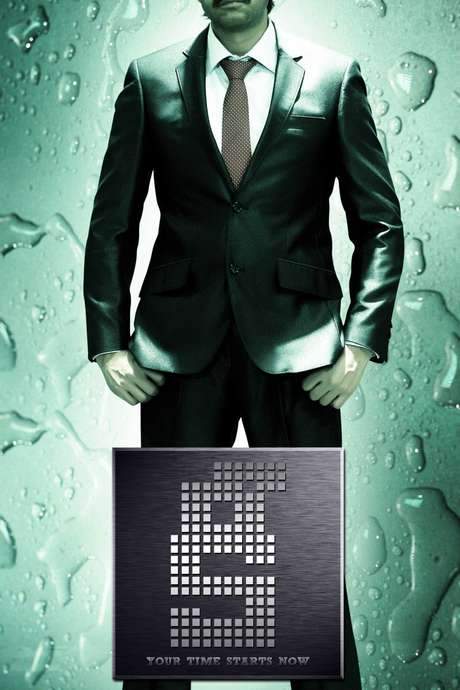
A 2011 Telugu psychological thriller produced by Sukumar Reddy for Dream Theater Entertainments and directed by Nagendra Prasad, starring Jagapathi Babu in the lead. Vijay Kurakula provides the film’s score. The story adapts the premise of the English film Exam, delivering tense, mind‑bending challenges for its characters.


Does Key have end credit scenes?
No!
Key does not have end credit scenes. You can leave when the credits roll.
Where to Watch Key
See current US streaming, rental, and purchase options for Key (2011) via JustWatch.









Meet the Full Cast and Actors of Key
Explore the complete cast of Key, including both lead and supporting actors. Learn who plays each character, discover their past roles and achievements, and find out what makes this ensemble cast stand out in the world of film and television.

External Links and Streaming Options
Discover where to watch Key online, including streaming platforms, rental options, and official sources. Compare reviews, ratings, and in-depth movie information across sites like TMDb, Wikipedia, JustWatch or Letterboxd.




Full Plot Summary and Ending Explained for Key
Read the complete plot summary of Key, including all major events, twists, and the full ending explained in detail. Explore key characters, themes, hidden meanings, and everything you need to understand the story from beginning to end.
Inside a stark, sealed room, a high-stakes examination is set for a coveted post in a prestigious company. Nine candidates stand under watchful eyes as the Invigilator oversees a test that hinges on a single idea: the person who can solve the implicit riddle within the allotted time will win. The room hums with quiet tension as the task begins, and a blank paper is handed out—no question appears on the page. The clock ticks toward the critical 90-minute mark, and the air grows tense with anticipation. The Invigilator Jagapati Babu emphasizes discipline, but the rules themselves become a challenge: the paper is blank, the question unseen, and yet every move could make or break a career.
Nine hopefuls sit in guarded stillness, each acutely aware that crossing the invisible line will determine whether they pass the threshold or lose everything. Among them is Candidate 9 Swapna, whose presence hints at a hidden layer to the competition. They are warned of four conditions that will disqualify them from crossing the proverbial bridge to success:
- The applicants should not talk with the Invigilator.
- They cannot talk with Security.
- They must not leave the room.
- They may not spoil their paper either intentionally or accidentally.
The Invigilator locks the door, and the test officially begins. It isn’t long before the contestants realize the paper is blank, save for the absence of any question. One candidate falters immediately—writing the word God upon the page—to the shock of everyone else. That single act seals his fate and marks the start of a careful, collective push to decipher the puzzle without overtly violating the rigid rules.
To navigate the mystery, the nine candidates decide to introduce themselves and reveal their professions, hoping that a mix of caste, community, numerology, and color bias can be set aside in the pursuit of the truth. The lineup of roles includes:
- Criminal Lawyer
- Professor
- Psychologist
- Optic Engineer
- Scientist
- MBA Graduate
- Business Consultant
- Journalist
- (and the remaining candidate, Swapna, as Candidate 9)
With secrets laid bare, the group leans on expertise from their diverse fields to dissect the unspoken question. They experiment with light and shadow, analyze bodily fluids, trigger fire sprinklers, and piece together shards of glass. The room becomes a testing ground not just for intellect but for teamwork, strategy, and trust. Inevitably, tensions flare as rivalries surface and alliances form, each choice carrying consequences that ripple through the fragile balance of the group.
As pressure mounts, the optic engineer is eliminated in a dramatic moment when the paper is torn, removing one technical perspective from the mix. The Criminal Lawyer makes a blunt, morally gray move, turning on the MBA Graduate and the Business Consultant, driven by a belief that he can identify a winner by eliminating perceived threats. The Journalist, sensing opportunity and danger in equal measure, strikes back when the Lawyer collapses under the strain, cutting off any chance of mercy. The Lawyer pleads for a medication he must take hourly; without it, he fears slipping into a coma. The Journalist, relentlessly pragmatic, discards the medication, arguing that the rules require a clear, unassailable path to victory.
The Psychologist, drawing on her knowledge of human behavior, recognizes a clue in the Lawyer’s pattern and uses a quiet, strategic approach by engaging with the Invigilator. Her intervention shifts the balance of power just enough to challenge the dying momentum of the Lawyer’s drive. The Professor remains a steady presence throughout, often the voice of reason, who keeps her wits about her even as the conflict escalates. Her calm resolve allows her to recover the critical medicine and to outmaneuver the Lawyer with a blend of intellect and composure. In a tense twist, the Lawyer manages to steal the guard’s revolver and issue a final warning to clear the room, only for the attempt to be thwarted when the Journalist feigns a shot and the Scientist quietly steps out of the line of fire.
A moment of suspense gives way to a reveal that is both practical and narrative: the bullet the Lawyer fires is a dummy, a staged threat that serves to expose the brittle bravado of the room’s dynamics. The tension defuses, and the Invigilator re-enters the scene to deliver a quiet victory for the Professor. With strategic reasoning, resilience, and the ability to stay composed under extreme pressure, she proves herself the winner, not by answering a straight question but by demonstrating the qualities the company values most: leadership, crisis management, and an unshakeable calm under fire.
In the final cadence, the Invigilator makes a revealing statement: he does not ask questions of the candidates at the end; instead, he reads the room through their actions, their ethics, and their ability to cope with crisis. The film closes on a pivotal moment of judgment and recognition: the CEO’s influence aligns with the professor’s strengths, and the Professor is appointed to the top executive role. The room slowly empties, leaving behind a quiet sense of accomplishment and a future shaped by skill rather than a single correct answer.
- The film’s central arc is a portrait of how leadership and decision-making can emerge from pressure, collaboration, and the ability to navigate uncertainty.
- It highlights how a group can move beyond personal agendas when faced with a shared challenge, using each member’s expertise to illuminate the path forward.
- The ending reinforces a message about merit and readiness for responsibility, suggesting that the true test of a professional is how they rise when the stakes demand total composure and strategy.
Ultimately, the story is less about the one correct solution and more about the cultivation of resilience, teamwork, and principled action under scrutiny. The Professor’s ascent to CEO stands as a testament to the idea that leadership is earned through tested character, not merely through having the right degree or title.

Coming soon on iOS and Android
The Plot Explained Mobile App
From blockbusters to hidden gems — dive into movie stories anytime, anywhere. Save your favorites, discover plots faster, and never miss a twist again.
Sign up to be the first to know when we launch. Your email stays private — always.
Explore the mobile appDiscover Film Music Concerts Near You – Live Orchestras Performing Iconic Movie Soundtracks
Immerse yourself in the magic of cinema with live orchestral performances of your favorite film scores. From sweeping Hollywood blockbusters and animated classics to epic fantasy soundtracks, our curated listings connect you to upcoming film music events worldwide.
Explore concert film screenings paired with full orchestra concerts, read detailed event information, and secure your tickets for unforgettable evenings celebrating legendary composers like John Williams, Hans Zimmer, and more.


Unlock the World of Movies with Our Comprehensive Wiki
Dive into our Movie Wiki for in-depth film encyclopedia entries, including cast biographies, production trivia, plot synopses, behind-the-scenes facts, and thematic analyses. Whether you’re researching iconic directors, exploring genre histories, or discovering hidden easter eggs, our expertly curated movie database has everything you need to fuel your cinematic passion.
Quick Links: Summary, Cast, Ratings, More

What's After the Movie?
Not sure whether to stay after the credits? Find out!
Check out our other apps:

SAT Sphere
Build confidence for the Digital SAT.

Mori Atlas
Discover wild places worth protecting.

Luntero
Search smarter for a home in Amsterdam.

Plot Explained
Unravel movie endings and hidden clues.

Pokechamp
Dive into Pokémon data and battle logic.

Driving Theory
Get ready for your European theory test.

Movie Dust
Plan your next cinema trip with ease.

Musemap
Find art and culture as you travel.

Selkobase
Compare credentials before committing.

Local Manual
Turn an unfamiliar country into practical next steps.

Lernavi
Compare school systems before your next move.

GymRoam
Find a workout stop wherever your plans take you.
Explore Our Movie Platform
New Movie Releases (2026)
Famous Movie Actors
Top Film Production Studios
Movie Plot Summaries & Endings
Major Movie Awards & Winners
Best Concert Films & Music Documentaries
Movie Collections and Curated Lists
© 2026 What's After the Movie. All rights reserved.
Privacy Policy